TL;DR:
- Smart heating systems connect to the internet and allow remote control through apps, voice assistants, or automation. They reduce energy use by adapting to occupants' habits, offering cost savings and enhanced comfort. Proper installation and compatibility checks ensure optimal performance and maximize energy savings.
Smart heating is defined as an internet-connected heating system that lets you control your home's temperature remotely via a smartphone app, voice assistant, or automated schedule. Heating accounts for roughly 55% of the average UK household's annual energy bill, making it the single biggest target for efficiency improvements. Smart heating systems address that directly. They replace fixed timers and manual thermostats with sensors, learning algorithms, and remote access. Your-local-plumber installs and commissions these systems across the UK, helping homeowners move from guesswork to genuine control over their heating costs.
What is smart heating and how does it differ from a standard thermostat?
A standard programmable thermostat follows a fixed schedule you set manually. A smart heating system adapts to your actual behaviour. It uses occupancy sensors, geofencing, and Wi-Fi connectivity to decide when your home needs heat and when it does not. The result is a system that heats your home when you are there and stops wasting energy when you are not.
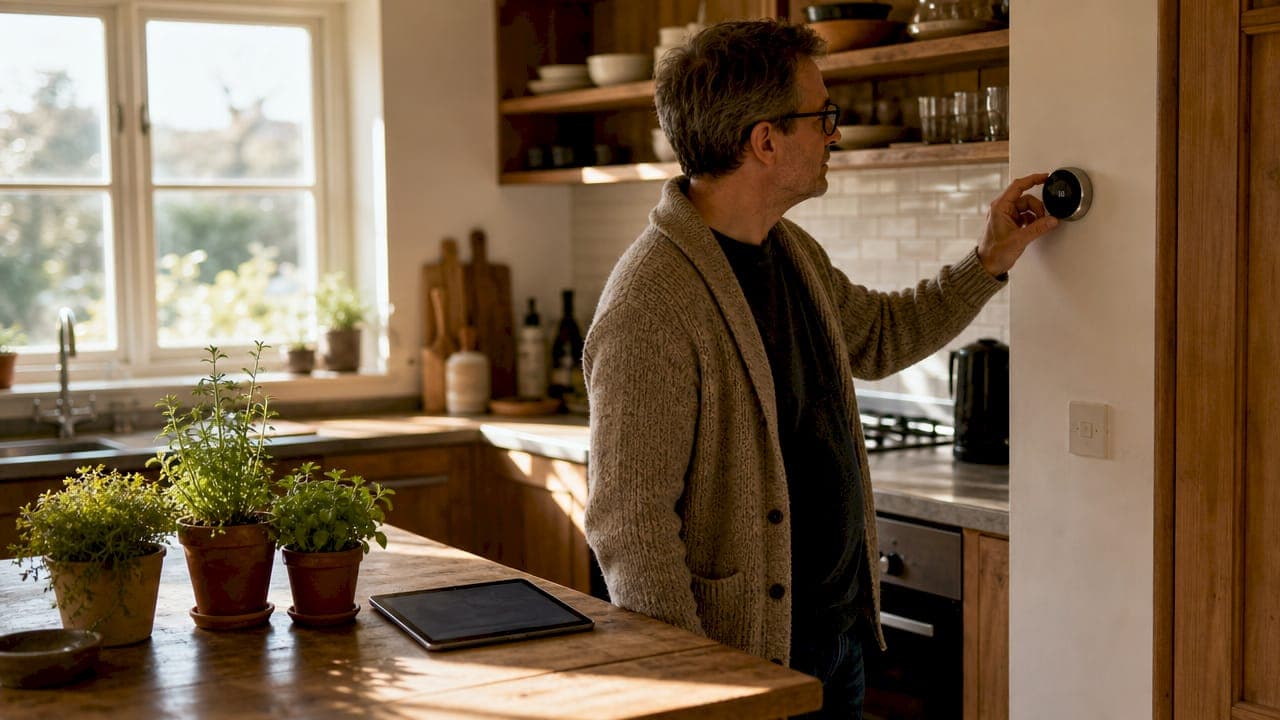
The industry term for the central device in these systems is a smart thermostat. It connects to your boiler via your home's Wi-Fi and communicates with an app on your phone. Most systems also support voice assistants such as Amazon Alexa and Google Home, so you can adjust the temperature without touching your phone. Some models use machine learning to build a profile of your daily routine over several weeks, then adjust heating schedules automatically.
Smart thermostats reduce human error by adapting to occupant behaviour through sensors and occupancy detection. That matters because the most common reason people overheat their homes is forgetting to turn the heating down when they leave. Automation removes that failure point entirely.
Pro Tip: Set your geofencing radius to at least one mile from your home. Too small a radius and your boiler fires up before you have left the road, wasting energy on a home that is still warm.
How does smart heating technology work in practice?
Smart heating systems are built from several components that work together. Understanding each one helps you choose the right setup for your home.
- Smart thermostat: The main controller. It connects to your boiler, reads room temperature, and communicates with your phone app. Most models display real-time energy usage data.
- Smart thermostatic radiator valves (TRVs): Fitted to individual radiators, these replace standard TRV heads and allow room-by-room temperature control. They are the key to zonal heating.
- Hub or bridge: Some systems use a central hub that connects all devices to your Wi-Fi router. Others connect directly without a hub.
- Smartphone app: Your control panel. You can change temperature, view schedules, check energy reports, and receive alerts from anywhere with a signal.
The scheduling feature is the most used function. You set different temperatures for different times of day, and the system follows that plan automatically. Geofencing goes further. It detects when your phone leaves a set area and switches the heating to an away mode. When you return, it starts warming the house before you arrive.
Zonal heating via smart TRVs allows precise room-by-room temperature control, preventing wasted heating in unoccupied rooms. A spare bedroom sitting at 21°C while nobody uses it is a common and entirely avoidable cost.

What are the benefits of smart heating for homeowners?
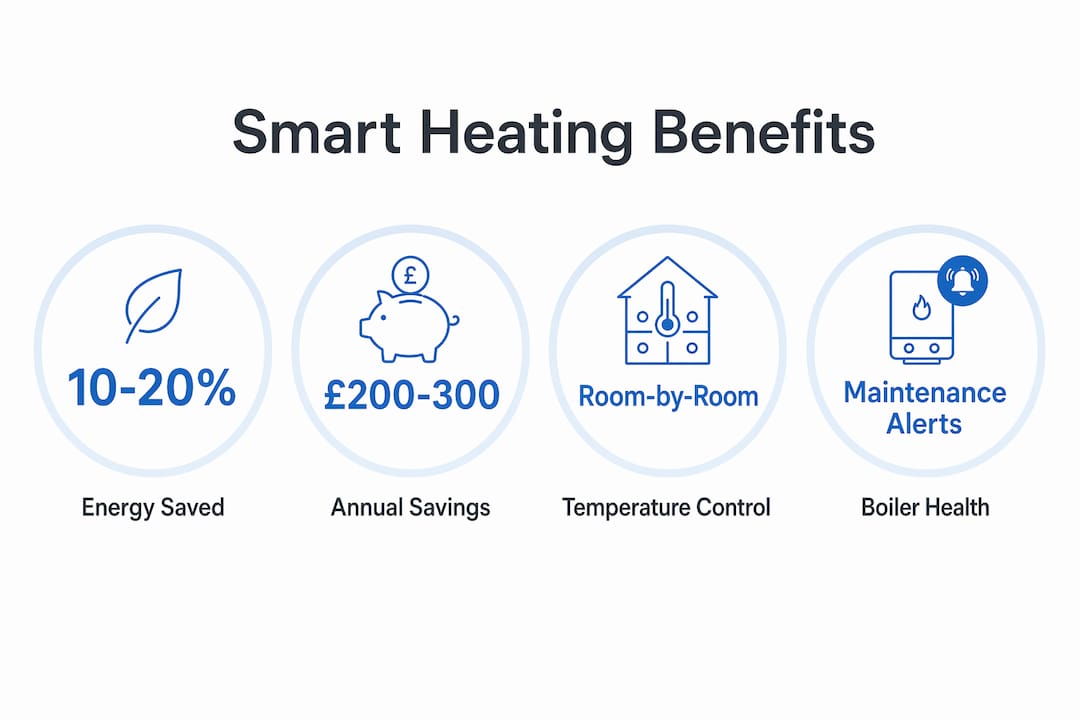
The financial case for smart heating is well established. Smart heating systems reduce annual energy consumption by 10–20%, saving UK households approximately £200–£300 each year. That saving comes from two sources: avoiding heating empty rooms and running more accurate schedules that match real occupancy patterns rather than guesses.
Energy Star-rated smart thermostats deliver an average of 8% savings on utility bills compared to manual settings. That figure comes primarily from automated away modes and geofencing, not from any exotic technology. The savings are real and consistent across different home types.
Beyond energy bills, smart heating delivers several practical advantages:
- Comfort: Zonal control means your living room can be warm while your bedroom stays cooler, matching how you actually use your home.
- Maintenance alerts: Smart thermostats provide diagnostics such as system performance warnings and filter alerts, catching problems before they become expensive breakdowns.
- Remote control: You can turn the heating on from the train home, or off if you realise you left it running after leaving for a holiday.
- Environmental impact: Lower energy consumption directly reduces your home's carbon footprint, which matters for both conscience and future property value.
The maintenance alert function is underrated. Most homeowners only discover a boiler problem when it fails completely. A smart system that flags declining performance gives you time to book a service call rather than an emergency repair. Your-local-plumber's heating engineer service covers exactly these planned and reactive visits.
What should you check before installing a smart heating system?
Compatibility is the first thing to verify. Not every boiler works with every smart thermostat, and the wiring in older UK homes can create complications.
- Check your boiler type. Most modern combi boilers are compatible with smart thermostats. Older heat-only or system boilers may need additional wiring or a different product range.
- Check for a C-wire. Many older UK heating systems lack the C-wire required for continuous power to a smart thermostat. Without it, you may need a battery-powered device or a professional to run new wiring.
- Assess your Wi-Fi coverage. A smart thermostat in a utility room with poor signal will drop its connection regularly. A Wi-Fi extender may be needed before installation.
- Decide on single zone or multi-zone. A single smart thermostat controls your whole home as one zone. Adding smart TRVs to individual radiators creates a multi-zone system. Multi-zone costs more upfront but delivers greater savings and comfort.
Pro Tip: Before buying any device, download the manufacturer's compatibility checker app or use their online tool. Entering your boiler model takes two minutes and prevents an expensive return.
Automation fatigue causes some homeowners to disable advanced features within months of installation. The fix is simple: start with a basic schedule and geofencing only. Add learning features and multi-zone control once you are comfortable with the basics. A system you actually use beats a complex one you ignore.
Professional installation is worth the cost for most homeowners. A qualified engineer checks compatibility, handles any wiring issues, and configures the system correctly from day one. The plumbing installation process for smart heating controls follows the same principles as any heating upgrade: correct specification first, then clean installation.
How does smart heating integrate with existing UK home heating setups?
Most UK homes run on a central heating system with a gas combi boiler. Smart heating integrates with these setups without replacing the boiler itself. The smart thermostat replaces your existing room thermostat and connects to the boiler's existing wiring. The boiler continues to do what it always did. The smart system simply controls when it fires.
The table below shows the most common integration scenarios for UK homes:
| Existing setup | Smart heating option | Key consideration |
|---|---|---|
| Combi boiler, single zone | Smart thermostat only | Simplest install; no C-wire usually needed |
| Combi boiler, multi-room | Smart thermostat + smart TRVs | Requires TRV compatibility check per radiator |
| System or heat-only boiler | Smart thermostat with hot water control | Hot water cylinder scheduling adds complexity |
| Older wiring, no C-wire | Battery-powered smart thermostat | Check battery life and signal reliability |
A smart thermostat alone may not solve uneven heating. If some rooms are always too hot or too cold, smart TRVs on individual radiators are the correct solution. They give each room its own temperature target and prevent the boiler from heating the whole house just to warm one room.
Voice assistant integration works well once the system is stable. Linking your smart thermostat to Amazon Alexa or Google Home takes about five minutes in the respective app. After that, a simple voice command adjusts the temperature without reaching for your phone. For homeowners who want to understand the broader context of central heating systems, the fundamentals of how heat moves through your home remain the same whether the controls are smart or manual.
Boiler efficiency underpins the whole system. A smart thermostat controlling an inefficient boiler will still save money compared to manual control, but the gains are smaller. Pairing smart controls with a well-maintained, efficient boiler delivers the best results.
Key takeaways
Smart heating delivers measurable energy savings and improved comfort by replacing fixed schedules with sensors, automation, and remote control that adapt to how you actually live.
| Point | Details |
|---|---|
| Core definition | Smart heating uses Wi-Fi, sensors, and apps to control your boiler automatically and remotely. |
| Energy savings | UK homeowners save £200–£300 annually through optimised schedules and avoiding heating empty rooms. |
| Zonal control | Smart TRVs allow room-by-room temperature control, eliminating waste in unoccupied spaces. |
| Compatibility first | Check boiler type and C-wire availability before purchasing any smart thermostat device. |
| Start simple | Begin with basic scheduling and geofencing before enabling advanced learning features. |
What I have learned from watching homeowners adopt smart heating
The biggest mistake I see is treating a smart thermostat as a set-and-forget device. Homeowners install it, let it run on default settings, and wonder why the savings are modest. The real value comes from the system learning your routine over several weeks and from you actively refining the schedule in the first month. That initial engagement is what separates a £50 annual saving from a £250 one.
The second thing I have noticed is that people underestimate how much uneven heating bothers them until they fix it. A single smart thermostat controlling a whole house is a genuine improvement. But adding smart TRVs to the bedroom and spare room changes how the house feels day to day. Rooms that were always slightly too warm or too cold settle at the right temperature without any manual adjustment.
My honest advice: get a professional to do the installation. Not because it is technically impossible to do yourself, but because the compatibility check and initial configuration done correctly saves hours of troubleshooting later. A qualified engineer from a service like Your-local-plumber will also spot wiring issues that a DIY install might miss, and those issues are exactly the ones that cause intermittent faults six months down the line.
— Michael
How Your-local-plumber can help with your smart heating upgrade
Upgrading to a smart heating system is straightforward when you have the right engineer handling the installation. Your-local-plumber's experienced heating engineers assess your existing boiler and wiring, recommend the right system for your home size and layout, and complete the installation to a professional standard.

Whether you need a single smart thermostat fitted to a combi boiler or a full multi-zone setup with smart TRVs throughout the house, Your-local-plumber covers the full scope. You can book a heating engineer online in minutes, with transparent pricing and no hidden call-out fees. For urgent heating issues, the emergency heating service operates with a 60-minute response time. Getting your smart heating working correctly from day one is the fastest route to the savings and comfort these systems genuinely deliver.
FAQ
What is a smart thermostat?
A smart thermostat is a Wi-Fi-connected device that replaces your standard room thermostat, letting you control your boiler remotely via a smartphone app and automating heating schedules based on occupancy.
How much can smart heating save on energy bills?
Smart heating systems save UK homeowners approximately £200–£300 per year by reducing energy consumption by 10–20% through smarter scheduling and geofencing.
Do I need a new boiler to install smart heating?
No. Most smart thermostats are compatible with existing combi, system, and heat-only boilers. A compatibility check before purchase confirms whether any wiring changes are needed.
What are smart TRVs and do I need them?
Smart thermostatic radiator valves replace standard TRV heads on individual radiators and allow room-by-room temperature control. They are not essential but significantly improve comfort and savings in homes with multiple rooms.
Can I install a smart thermostat myself?
Some models are designed for DIY installation, but professional installation is recommended for older UK homes where C-wire compatibility or wiring configuration may cause problems.