TL;DR:
- Regular plumbing inspections detect hidden faults early, preventing costly damage and extending system life.
- Inspections involve comprehensive checks of pipe condition, pressure, leaks, drainage, and fixtures, often using advanced techniques.
- Scheduling inspections every one to two years, especially when moving or in older homes, offers significant financial and property protection.
Most homeowners only think about their plumbing when something goes wrong. Yet many of the most expensive water-related problems, from slow leaks inside walls to cracked underground drains, develop silently over months or even years. Early detection prevents water damage, mould growth, and sky-high bills, while regular checks extend the life of your system. A plumbing inspection is a structured, professional way to catch these issues before they become serious. This guide walks you through exactly what an inspection involves, what it covers, what it costs, and why UK homeowners who schedule them regularly are quietly protecting their properties.
Table of Contents
- What is a plumbing inspection?
- What does a plumbing inspection cover?
- When and why should you schedule a plumbing inspection?
- How much does a plumbing inspection cost?
- Why plumbing inspections are the UK homeowner's secret advantage
- Book a trusted plumbing inspection for peace of mind
- Frequently asked questions
Key Takeaways
| Point | Details |
|---|---|
| Detect problems early | A plumbing inspection spots issues before they become costly emergencies. |
| Not just a survey | Homebuyer surveys check basics but only plumbers give full system reports. |
| Expert tools matter | Specialised inspections use advanced equipment like CCTV for hidden faults. |
| Prevention saves money | Routine checks protect you against expensive repairs and high water bills. |
| Know the true cost | Professional inspections typically range from £150-£250, with extra savings from avoided damage. |
What is a plumbing inspection?
A plumbing inspection is a professional assessment of your home's entire plumbing system, carried out by a qualified engineer. It goes far beyond a quick look under the sink. The engineer examines pipework, checks water pressure, tests for leaks, assesses drainage, and reviews visible fixtures such as taps, toilets, and stop valves. The goal is to identify faults, potential failures, and anything that does not meet current standards, then document findings in a written report you can act on.
It helps to understand how this differs from other types of property checks. A standard RICS homebuyer survey will glance at visible plumbing, noting obvious issues like staining or poor pressure, but RICS surveys check visible plumbing only and typically recommend a specialist plumber or CCTV survey for anything deeper. They do not test the full system or produce a detailed plumbing report. A DIY check, meanwhile, can flag obvious drips or discolouration, but basic DIY checks lack the tools, professional liability, and reporting capability that a specialist inspection provides.
Here is what a qualified plumber typically covers during a professional inspection:
- Pipework condition: Checking for corrosion, age-related wear, and material type (including older lead or galvanised pipes)
- Water pressure: Testing that pressure is within safe, functional limits throughout the property
- Leaks: Using specialist equipment to detect hidden leaks behind walls or under floors
- Drainage: Assessing flow rates and identifying blockages or damage
- Fixtures and fittings: Inspecting taps, toilets, showers, and stop valves for wear or faults
- Hot water system: Checking the boiler, cylinder, and associated pipework for safety and efficiency
Pro Tip: Before your inspection, use our plumbing maintenance checklist to note any issues you have already spotted. Sharing these with your engineer at the start saves time and helps them prioritise.
The inspection report is a valuable document. It can support insurance claims, satisfy lender requirements when buying or selling, and give you a clear action plan. To understand more about what a specialist engineer actually does on site, our guide to what a plumbing engineer does explains the role in plain terms.
What does a plumbing inspection cover?
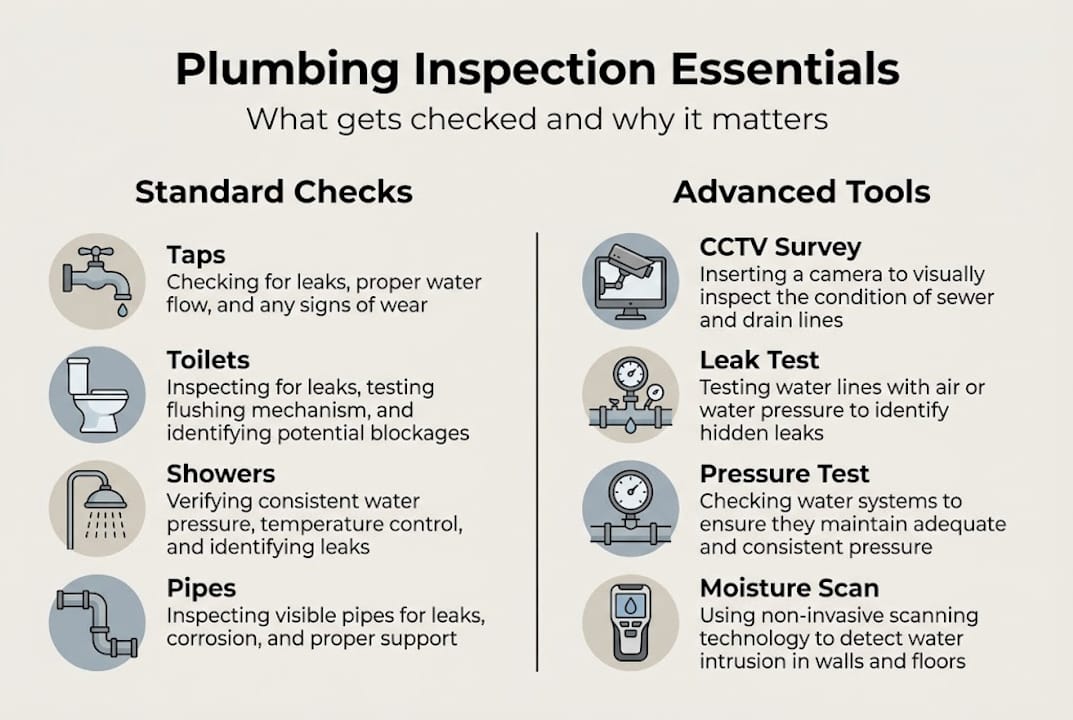
A thorough inspection covers far more than most people expect. Think of it in two layers: standard checks that every inspection should include, and advanced investigation techniques used when deeper problems are suspected.
| Standard checks | Advanced investigation |
|---|---|
| Taps, toilets, and showers | CCTV drain survey |
| Visible pipework condition | Thermal imaging for hidden leaks |
| Water pressure testing | Acoustic leak detection |
| Stop valve operation | Drain flow and capacity testing |
| Visible drainage inspection | Underground pipe condition report |
| Hot water cylinder and boiler | Soil stack and sewer connection check |
CCTV drain surveys use cameras to inspect underground drains for cracks, root ingress, and collapses. They are often recommended alongside a standard inspection for older properties or when drainage problems are suspected. A standard visual check simply cannot reveal what is happening two metres underground.
Here is what typically happens during an inspection appointment, step by step:
- Initial walkthrough: The engineer talks through any concerns you have noticed and reviews the property layout.
- System check: All accessible pipework, fixtures, and the hot water system are tested and assessed.
- Pressure test: Water pressure is measured at multiple points to identify drops that suggest leaks or blockages.
- Drainage assessment: Drainage flow is checked visually; a CCTV survey may be recommended if issues are found.
- Report and recommendations: The engineer produces a written report with findings, urgency ratings, and suggested next steps.
For properties with a history of leaks or damp, RICS surveys recommend specialist plumber involvement rather than relying on a general survey alone. Combining a standard inspection with targeted leak investigation gives you the clearest picture. Our guide to leak detection explained covers the specialist techniques used in more detail.
Pro Tip: Always ask your engineer for photos or short video clips of any issues found. These are invaluable if you need to make an insurance claim or negotiate repairs during a property sale.
When and why should you schedule a plumbing inspection?
Knowing what an inspection covers is one thing. Knowing when to book one is equally important. Certain situations make an inspection not just sensible but essential.
Four key triggers to book an inspection:
- Moving into a new property: Even a recently renovated home can have hidden plumbing faults the previous owner was unaware of.
- Noticeably higher water bills: An unexplained rise in usage almost always points to a hidden leak somewhere in the system.
- Older or extended properties: Homes built before the 1970s may have lead or galvanised pipework, which carries health risks flagged in surveys and requires specialist assessment.
- Before selling your home: A clean inspection report strengthens your position and prevents last-minute renegotiations.
| Inspection type | What it covers | Best used for |
|---|---|---|
| Standard plumbing inspection | Full system, fixtures, pressure, leaks | Annual maintenance, purchase checks |
| RICS homebuyer survey | Visible plumbing only | General property condition overview |
| Specialist plumbing inspection | Full system plus advanced tools | Older homes, suspected faults, disputes |
Regular checks extend system life, support landlord compliance, and provide evidence for insurance claims. For landlords in particular, maintaining documented inspection records is increasingly important as regulations tighten.
Hard water areas across much of England also accelerate limescale build-up inside pipes and appliances. In areas with known subsidence risks, RICS surveys recommend CCTV to check underground drainage before issues worsen. There are no mandatory UK regulations requiring routine homeowner inspections (Gas Safe certification covers boilers separately), but the financial case for regular checks is strong regardless.
Staying on top of current plumbing regulations ensures your property meets the required standards, which matters most when selling or letting. Our leak prevention tips also outline the practical steps you can take between professional visits.
How much does a plumbing inspection cost?
Cost is often the reason homeowners put inspections off. But when you compare the fee against the potential cost of undetected damage, the maths are straightforward.
| Service | Typical UK cost |
|---|---|
| Standard plumbing inspection | £150 to £250 |
| CCTV drain survey | £150 to £500 |
| Leak repair (minor) | £120 to £300 |
| Leak repair (major, e.g. burst pipe) | £400 to £800+ |
| Water damage remediation | £1,000 to £10,000+ |
Plumbing inspections cost £150 to £250, while CCTV drain surveys range from £150 to £500 depending on property size and complexity. A single missed leak that escalates to structural water damage can cost many times that figure to put right.
Here is how to get an accurate, fair quote:
- Describe your property clearly: Give the engineer the age of the property, number of bathrooms, and any known issues. This prevents surprises on the day.
- Ask what is included: Confirm whether the quote covers a written report, photos, and any follow-up recommendations, or just the visit itself.
- Request fixed pricing: A reputable plumber will give you a fixed price for the inspection rather than an open-ended hourly rate.
The real hidden value is in prevention. A £200 inspection that catches a slow leak under a ground-floor slab saves you from a potential £5,000 remediation job six months later. That is not a theoretical scenario. It is a common one.
Pro Tip: Check whether your home insurance policy offers any contribution towards inspection costs, particularly for older properties or following a claim. Some insurers actively encourage regular checks. For transparent, upfront pricing, our guide to plumbing inspection pricing sets out what to expect.
Why plumbing inspections are the UK homeowner's secret advantage
After years of working in UK homes, one pattern stands out clearly. The homeowners who avoid the biggest, most expensive plumbing disasters are rarely lucky. They are simply the ones who scheduled regular inspections.
General surveys and DIY checks consistently miss the faults that cause the most damage. A buyer might walk through a property, notice nothing unusual, and move in to discover that the main drain has a partial collapse or that a slow pinhole leak has been softening a timber floor joist for two years. RICS surveys are not a substitute for a specialist plumbing inspection, yet many buyers treat them as if they are.
The underground and concealed elements of a plumbing system are where the real risk sits. These are the areas that no amount of careful looking will reveal without the right equipment. Most homeowners do not think about their drains until they back up, by which point the repair bill is already significant.
There is also a mindset shift worth making here. An inspection is not just something you do when buying a house. It is ongoing maintenance, like a boiler service or an electrical check. Treating it that way, as a routine part of owning a home rather than a one-off event, is what separates properties that age well from those that develop expensive, avoidable problems. To understand the role of a plumber in keeping your home in good shape year-round, it is worth reading beyond the emergency callout context.
Book a trusted plumbing inspection for peace of mind
Protecting your property does not have to be complicated. A professional plumbing inspection gives you a clear, documented picture of your system's condition so you can act early, spend less, and avoid nasty surprises.

At Your Local Plumber, our experienced engineers carry out thorough inspections across the UK, providing written reports, honest recommendations, and transparent fixed pricing. Whether you are buying a new home, managing a rental property, or simply keeping on top of maintenance, we make it straightforward. You can book a plumbing inspection directly online in minutes, or book online to explore our full range of services. Get ahead of problems before they get ahead of you.
Frequently asked questions
How often should I have a plumbing inspection in the UK?
Most UK experts recommend an inspection every one to two years, or sooner if you are moving home, noticing unusual bills, or completing major works. Regular checks extend system life and help prevent costly water damage.
Do homebuyer surveys check plumbing properly?
No. RICS surveys check visible plumbing only and routinely recommend a specialist plumber for a thorough assessment. They are a useful starting point but not a replacement for a dedicated plumbing inspection.
What is included in a typical plumbing inspection?
A standard inspection covers pipework, taps, toilets, water pressure, drainage, and leaks. For underground issues, CCTV drain surveys use cameras to inspect drains for cracks, root damage, or collapse.
How much does a plumbing inspection cost in the UK?
Plumbing inspections cost £150 to £250 for a standard visit, while CCTV drain surveys range from £150 to £500 depending on the size and complexity of the property.