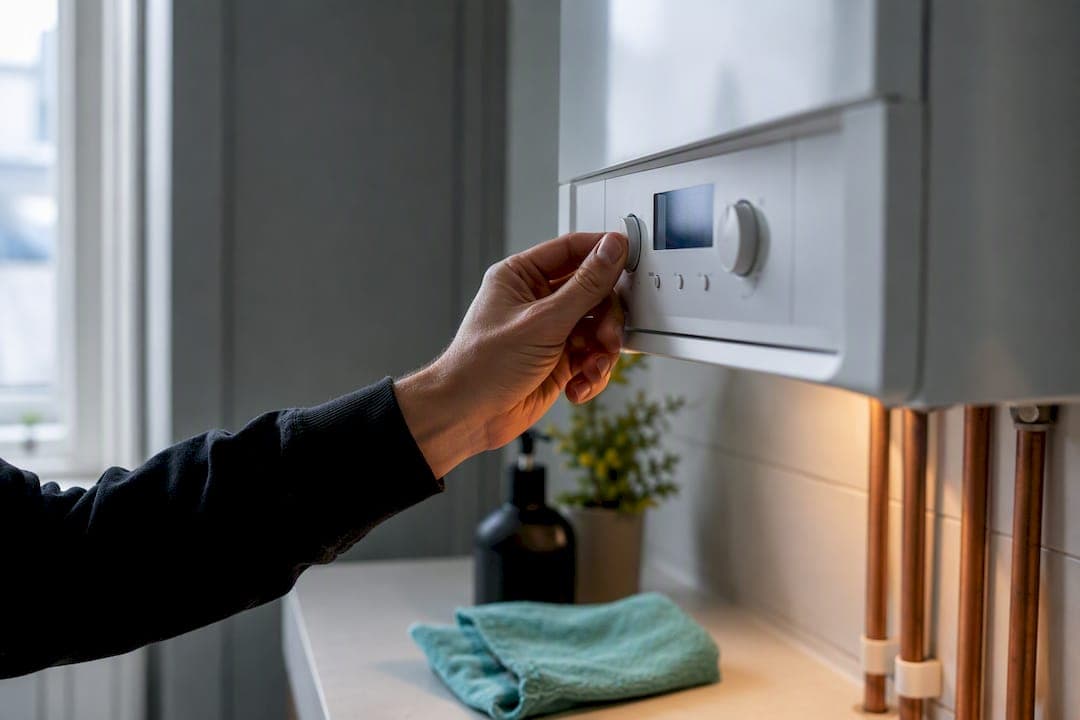
The Worcester EA fault means the boiler has failed to detect a flame during ignition and has locked out for safety. Press the reset button for around three seconds as your first safe step. If the boiler will not reset, or you smell gas or notice any warning signs of carbon monoxide, stop immediately and call a Gas Safe registered engineer.
TL;DR:
- The EA fault on Worcester boilers typically results from issues like frozen condensate pipes, blocked flues, or faulty ignition components, especially in winter.
- Performing a safe reset may temporarily clear the error but does not fix underlying causes, requiring professional diagnosis for persistent problems.
- Homeowners should check for gas supply problems, debris blocking the flue or condensate outlet, and conduct external inspections before calling an engineer.
- Gas Safe registered engineers will inspect gas pressure, flue integrity, and ignition parts, and recommend parts replacement if necessary, often requiring a quote upfront.
- Preventive measures include annual servicing, insulating condensate pipes, clearing blockages seasonally, and monitoring system pressure to reduce winter lockouts.
Table of Contents
- What "EA" means in plain English
- Safe checks a homeowner can try now
- Common causes explained (what the engineer will investigate)
- When to call a Gas Safe registered engineer and what to expect
- Preventive steps to reduce EA faults and avoid winter lockouts
- Publisher perspective: why a fast, safety-first response matters
- How we can help with your Worcester EA fault
- Sources
- FAQ
What "EA" means in plain English
When your boiler calls for heat, it opens the gas valve and tries to ignite the burner. A flame sensor then checks that ignition has actually happened. If the sensor cannot detect a flame within a set number of attempts, the boiler shuts itself down rather than keep pumping gas into an unlit chamber. That shutdown is the EA fault.

It is a safety feature, not a fault in the sensor itself, though it can feel like one when your heating and hot water suddenly stop working. The Worcester Bosch user manual lists EA as "flame not detected" and pairs it with a short list of likely causes, from gas supply problems to a blocked flue or condensate outlet. Knowing this helps you understand why a simple reset sometimes works and sometimes does not: it clears the lockout, but it does nothing to fix whatever stopped the flame forming in the first place.
Safe checks a homeowner can try now
Before you call anyone, a few checks are safe to carry out yourself. Stop straight away and call a Gas Safe registered engineer if you smell gas, notice a yellow or flickering flame where there was once a clean blue one, or suspect any sign of carbon monoxide such as soot marks, condensation on windows near the flue, or unexplained headaches.
- Check for a smell of gas or any carbon monoxide warning signs. If either is present, do not touch the boiler and call an engineer immediately.
- Press and hold the reset button for about three seconds, then watch for the display to clear and the burner to fire.
- Look at the condensate pipe outlet, usually a white plastic pipe running outside. If it is visibly frozen or blocked with debris, and it is safely accessible, gently warm it or clear the obstruction.
- Check the external flue outlet on the wall for anything blocking or damaging it, such as debris, snow or bird nesting material.
- Test another gas appliance in the house, such as a hob, to confirm you have gas supply. If nothing gas-powered is working, contact your gas supplier.
Pro Tip: Note the exact fault code and any number shown beneath it, such as EA 227, before you call an engineer. That extra digit narrows down the cause and can speed up diagnosis considerably.
If the reset does not hold, or the same fault returns within a day, stop trying and book a proper diagnosis.
Common causes explained (what the engineer will investigate)
An engineer attending an EA fault works through a fairly standard sequence of checks, because the same handful of issues account for most cases.
- No or low gas supply: a closed valve, a supplier-side issue, or low incoming pressure can all stop the burner lighting, and sometimes the fix sits with the gas supplier rather than the boiler itself.
- Frozen or blocked condensate pipe: this is a strongly seasonal fault, appearing most often in cold snaps, and Worcester Bosch's winter heating advice points to it as a common cause of lockouts in freezing weather.
- Blocked or damaged flue: debris, nesting or physical damage can disrupt the airflow the boiler needs for safe combustion and accurate flame sensing.
- Ignition electrode, spark generator or flame sensor faults: a worn or dirty electrode, a failing spark generator, or wiring and circuit board issues can all prevent the flame being detected even when gas is flowing normally.
The pattern of the fault often tells its own story. An EA that appears only during a cold spell and clears with a reset points towards a frozen condensate pipe. One that keeps returning regardless of temperature usually points to a component fault, such as a worn electrode or flame sensor, which will need parts rather than a quick fix. That distinction matters for how long the repair takes and whether it can be sorted in a single visit.
When to call a Gas Safe registered engineer and what to expect
Call a professional the moment you smell gas, spot any carbon monoxide warning sign, or find that reset either fails outright or the fault comes straight back. Gas Safe Register guidance is clear that homeowners must not attempt to open up or repair the gas-carrying parts, flue or ignition system themselves. Anything beyond the external checks above needs a qualified engineer.
Once on site, an engineer will typically check incoming gas pressure, inspect the flue and condensate run, and test the ignition electrode and flame sensor with proper equipment rather than guesswork. If a part such as the electrode, sensor or a circuit board has failed, they will usually need to order and fit a replacement, which can mean a return visit if the part is not carried on the van. Costs vary with the cause and the parts needed, so it is worth asking for a firm quote once the fault has been diagnosed rather than before. By law, only a Gas Safe registered engineer may work on gas boilers and their flues.

Preventive steps to reduce EA faults and avoid winter lockouts
Most EA faults are preventable with a small amount of seasonal care.
- Book an annual service with a Gas Safe registered engineer, as Worcester Bosch recommends, to catch a worn electrode or dirty flame sensor before it causes a lockout.
- Ask an installer about lagging or re-routing an exposed condensate pipe, since insulation or a shorter, better-protected run is the usual fix for repeated winter freezing.
- Check flue outlets are clear of debris, snow or nesting material each autumn, before the cold weather sets in.
- Keep an eye on system pressure and bleed radiators as needed, since low pressure can trigger lockouts of its own alongside EA.
Pro Tip: Set a reminder to check your condensate pipe on the first properly cold night of the year, since that is when frozen pipes cause the most call-outs. Our guide to servicing a gas boiler safely covers what a full annual service involves.
Publisher perspective: why a fast, safety-first response matters
Every EA fault we attend gets treated as a safety check first and a repair job second. Our Gas Safe registered engineers follow the same manufacturer fault-finding sequence and Gas Safe procedures described above, because guessing at a gas appliance fault is how small problems turn into dangerous ones. What homeowners actually want in a cold house is someone who turns up quickly, explains the cause plainly, and quotes honestly before touching anything.
— Michael
How we can help with your Worcester EA fault
A cold house on a winter evening is not the time to be searching for a spare part or a second opinion. Experienced Gas Safe registered engineers can diagnose and fix EA faults, covering issues from a stuck condensate pipe to a failed ignition electrode or flame sensor.
Before you call, it helps to have a few details ready:
- Your boiler model and the exact fault code shown, including any number beneath it.
- What you have already tried, such as a reset, and whether it held.
- Any symptoms you have noticed, including smells, noises or a change in flame colour.
If the fault turns out to need a part we do not carry, we will tell you honestly and quote before any work begins. Book an emergency heating engineer for a same-day response, or request a new boiler quote if repeated faults suggest your Worcester boiler is nearing the end of its working life.
Sources
For official guidance, see the Worcester Bosch user manual fault-finding tables and Gas Safe Register's consumer inspection guide on safety checks and reporting timescales.
- Worcester Bosch user manual (fault finding and reset instructions)
- Gas Safe Register — boiler appliance and home gas safety guidance
FAQ
How do you fix the EA error code on a Worcester boiler?
Press and hold the reset button for about three seconds and watch whether the burner ignites and the display clears. If reset fails, or the fault returns quickly, the cause is likely a blocked condensate pipe, flue issue or component fault that needs a Gas Safe registered engineer to diagnose.
What does the EA227 fault mean on a Worcester boiler?
EA is "flame not detected" during ignition, and the number 227 beneath it is a more specific fault reference that helps an engineer narrow down the cause. Quoting the full code, including the number, when you call for help speeds up diagnosis according to Worcester Bosch's own support literature.
What are the most common faults with Worcester Bosch boilers?
Alongside EA ignition faults, homeowners commonly encounter low system pressure, frozen or blocked condensate pipes in winter, and faults linked to the flue or ignition components. Our guide to common boiler fault codes covers several of these in more detail.
What does an EA fault code generally mean on a boiler?
Across most gas boiler brands, an EA-type code signals that the boiler tried to ignite but did not detect a flame, so it locked out for safety rather than keep releasing gas. The underlying cause can be anything from a gas supply issue to a worn ignition part, which is why a Gas Safe registered engineer needs to inspect it if a reset does not resolve things.