Most airlocks in a hot water system clear within a few minutes using the hose/crossover method between a cold and hot tap, and Water confirms this works for both separate and mixer taps. Vented systems with a loft cistern sometimes need the longer mains-backed flush at the cylinder instead. Bleeding a radiator sorts airlocks in the heating loop. If the fault won't clear after two or three attempts, or you spot a leak, call a registered plumber rather than force it.
TL;DR:
- The hose crossover method effectively clears most water system airlocks within minutes, but vented systems with loft cisterns may require a cylinder flush.
- Repeated attempts to fix an airlock are necessary if initial efforts fail, and persistent leaks or pressure drops indicate a need for professional inspection.
- Bleeding radiators addresses heating-loop airlocks, but it often lowers system pressure requiring careful re-pressurization.
- Age and system design influence airlock risk, with older cylinders and low-pressure gravity-fed systems being more susceptible.
- Always switch off the boiler before flushing or bleeding, and call a plumber if attempts repeatedly fail or if leaks, pressure issues, or scalding water are present.
Table of Contents
- What causes an airlock in hot water systems?
- How do you know if it's actually an airlock?
- The hose/crossover method: step by step
- Clearing airlocks in vented systems and hot water cylinders
- Bleeding radiators for heating-loop airlocks
- When to stop and call a registered plumber
- How to stop airlocks coming back
- What we see on call-outs for airlocks
- Book a plumber if the airlock won't budge
- Sources
- FAQ
What causes an airlock in hot water systems?
An airlock forms when a pocket of air gets trapped inside a pipe and blocks the water pushing behind it, much like a bubble stuck in a straw. Air is lighter than water, so it rises and settles at the highest point it can reach, which is usually a bend near the top of a run or just before a tap.
Some setups are far more prone to this than others:
- Gravity-fed systems with a loft cistern are the most susceptible, because the low pressure from the tank struggles to force air out once it's lodged.
- Combi boilers and sealed systems run at higher pressure and rarely trap air during normal use, though they can still pick up an airlock after a service or repair.
- The usual triggers are a cistern that's run dry, a leak letting air in somewhere in the pipework, or draining the system for maintenance work.
How do you know if it's actually an airlock?
Not every hot water problem is an airlock, so it pays to run a couple of quick checks before you reach for a hose.
- Turn on a hot tap. If it splutters, hisses, or delivers only a weak dribble while the cold tap next to it runs fine, that's the classic sign.
- Check a second or third hot tap in the house. An airlock affecting one outlet but not another usually points to trapped air rather than a boiler fault.
- Listen for banging or knocking in the pipes when the heating fires up, and feel radiators for cold patches at the top while the bottom stays warm.
- If you have a loft cistern, check its water level and watch whether the ball valve is sticking or letting the tank run low.
- Before touching anything, find your mains stopcock and know how to isolate the boiler and immersion heater, just in case.
Pro Tip: Compare hot and cold pressure at the same tap. If cold runs strong and hot barely trickles, you can rule out a mains supply issue straight away and focus on the airlock.
The hose/crossover method: step by step
This is the fastest fix for most homes, and it's the same technique Water.ie and DIY Doctor both recommend as the standard first attempt.
For separate hot and cold taps:
- Get a length of hose (a washing machine or garden hose works) with fittings to match both taps.
- Attach one end to the cold tap and the other to the hot tap, tightening jubilee clips so nothing blows off under pressure.
- Turn the hot tap on first, then open the cold tap fully.
- Let mains pressure run through for a short period, forcing air back down the hot pipe.
- Turn off both taps, disconnect the hose, then test the hot tap on its own.
For mixer taps, the process needs a bit more care. Block the outlet loosely with a cloth to build pressure without splashing scalding water, turn the hot side on, then slowly bring the cold side in to push mains pressure across and dislodge the air. Repeat the whole sequence several times if the flow doesn't fully return on the first go, DIY Doctor's guidance notes this is often necessary before the airlock clears completely. Keep the boiler switched off while you do this, and always secure hose connections properly to stop mains water siphoning back into your own pipework.
Clearing airlocks in vented systems and hot water cylinders
If your home has a loft cistern feeding a hot water cylinder, the crossover trick at a single tap sometimes won't reach far enough into the system. In such cases, the fix happens further upstream, at the cylinder itself, and DIY Fix It's step-by-step guide sets out the safer sequence for this.
- Switch off the boiler and immersion heater completely before starting.
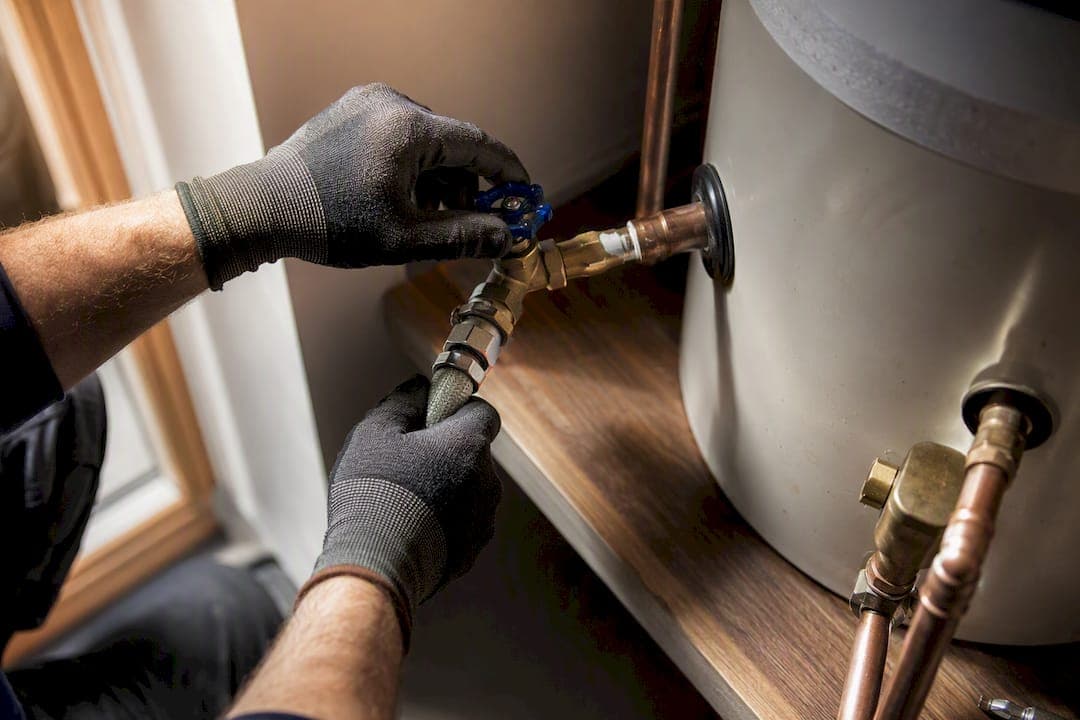
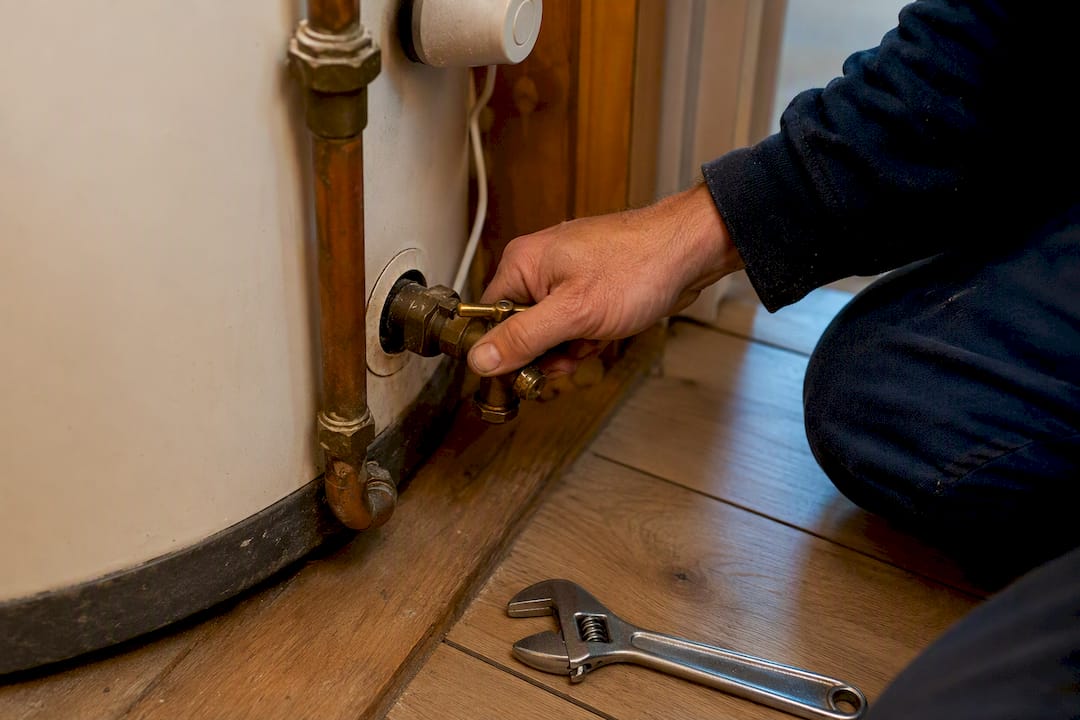
- Attach a hose from an outside mains tap to the cylinder's drain valve.
- Open the mains tap gradually, letting pressure build slowly rather than in one hard rush.
- Have a second person watch the loft cistern or vent pipe for water appearing, which signals the air has been pushed clear.
- Close the mains tap the moment water shows at the vent, then disconnect and check hot taps around the house.
This is genuinely a two-person job. Never stand directly in front of the vent pipe while flushing, since trapped air can force water out suddenly once it breaks free.
Pro Tip: Older cylinders and their fittings aren't always rated for sudden pressure surges, so open the mains tap in stages rather than all at once, especially on a system you suspect is original to the house.
Bleeding radiators for heating-loop airlocks
Air trapped in the central heating circuit shows up differently: cold patches at the top of a radiator while the bottom stays hot, or a radiator that never fully warms up at all. Bleeding it is usually the quickest cure.
- Turn off the heating, let it cool, then use a radiator key to open the bleed valve slightly until air hisses out.
- Close the valve the moment water starts to dribble through rather than air, and check the boiler pressure gauge afterwards.
- If the radiator is still cold at the top after bleeding, the air is likely sitting higher in the loop, perhaps near the pump, and bleeding alone won't shift it.
- On a sealed system, bleeding a radiator often drops pressure slightly. Top it back up using the filling loop, and if you're not confident doing that, ask an engineer rather than guess.
When to stop and call a registered plumber
DIY fixes solve most airlocks, but a few situations mean it's time to put the hose down and pick up the phone instead.
- You've tried the crossover or cylinder flush two or three times and the hot tap still won't run properly.
- You notice a leak anywhere in the system, especially near the cylinder, cistern, or boiler.
- Boiler pressure keeps dropping after you've bled radiators and topped up, suggesting a fault beyond a simple airlock.
- Your loft cistern is hard to access safely, or you're not confident isolating the boiler and immersion heater yourself.
- Water coming through is scalding hot with no way to moderate it during the flush.
Never run a boiler with suspected air still in the system. It's worth switching everything off before any flush and keeping it off until you've confirmed the fault has actually cleared. If you do call a plumber, having a few details ready helps them diagnose faster: whether you have a vented or sealed system, which steps you've already tried, the exact symptoms, and whether there's a loft cistern involved.
Pro Tip: Take a photo of your boiler's pressure gauge and any error codes before you call. It saves time on the phone and helps the engineer arrive prepared rather than diagnosing from scratch.
How to stop airlocks coming back
A bit of routine attention keeps airlocks from becoming a recurring headache.
- Check the loft cistern regularly to make sure it's staying topped up, and look at the ball valve for sticking or wear.
- Fix small leaks quickly rather than leaving them, since a slow drip lets air into the system as often as it lets water out.
- Book an annual boiler and cylinder service so a professional catches early warning signs before they turn into a full airlock.
- Avoid draining the system unnecessarily. Every drain-and-refill cycle is a fresh chance for air to get trapped somewhere new.
- If airlocks keep recurring despite all this, a larger cistern or a wider vent pipe can sometimes solve a design flaw in an older installation.
What we see on call-outs for airlocks
Most of the airlock jobs Your-local-plumber attends started as something a homeowner nearly fixed themselves, and often did, only for the fault to return because the underlying cause (a low cistern, a sticking valve, a slow leak) was never addressed. The visits that genuinely need an engineer tend to involve a sealed system that's lost pressure repeatedly, a cylinder that's old enough to make forcing mains pressure through it risky, or a boiler that's been left running with air still in the loop. If your DIY attempt hasn't worked after a couple of tries, that's usually the point to stop rather than push harder.
— Michael
Book a plumber if the airlock won't budge
There's no shame in trying the crossover method first. Your-local-plumber would rather you save the call-out fee on a fix you can do safely yourself. But when a leak shows up, boiler pressure keeps dropping, or you've isolated the immersion heater and still can't get near the loft cistern with confidence, that's where paying for an engineer earns its keep.

Some local plumbers cover emergency call-outs, hot water cylinder servicing, cistern and ball-valve repairs, and full boiler diagnostics, often with transparent pricing agreed before work starts. A typical plumber's visit usually starts with a safety check on the boiler and isolation valves, a proper diagnosis of where the air (or the real fault) is sitting, then a fixed quote before any work begins. If your hot water still isn't right after trying the steps above, book a visit with Your-local-plumber and get it sorted properly.
Sources
- How to Check for and Clear Airlocks? | Help
- Hot water air lock - Vented system | Diy Fix It
- Airlock in Water Pipes? How to Clear It Yourself
- How to clear an airlock in a hot water system | Vaillant
FAQ
How do I get trapped air out of a hot water system?
Connect a hose between a cold and hot tap, run the cold tap for about two minutes, then test the hot tap on its own. For vented systems, the mains-backed cylinder flush described above usually clears air the crossover method can't reach.
How do I clear an airlock in my hot water pipes?
Use the hose/crossover method on separate taps, or the careful block-and-release technique on mixer taps, repeating two or three times if needed. If it's a heating-loop airlock rather than a hot-water one, bleed the affected radiator instead.
Will an airlock eventually clear itself?
Occasionally a small airlock shifts on its own once water pressure changes, but most won't clear without intervention and can worsen if a cistern keeps running low. It's not worth waiting it out if hot water has already stopped flowing properly.
How do I fix an airlock in my hot water heater?
For a cylinder-fed system, switch off the boiler and immersion heater, then run a mains hose into the cylinder drain valve to force air back up to the loft cistern or vent pipe. Stop the moment water appears at the vent, and call Your-local-plumber if it doesn't clear after a couple of attempts.