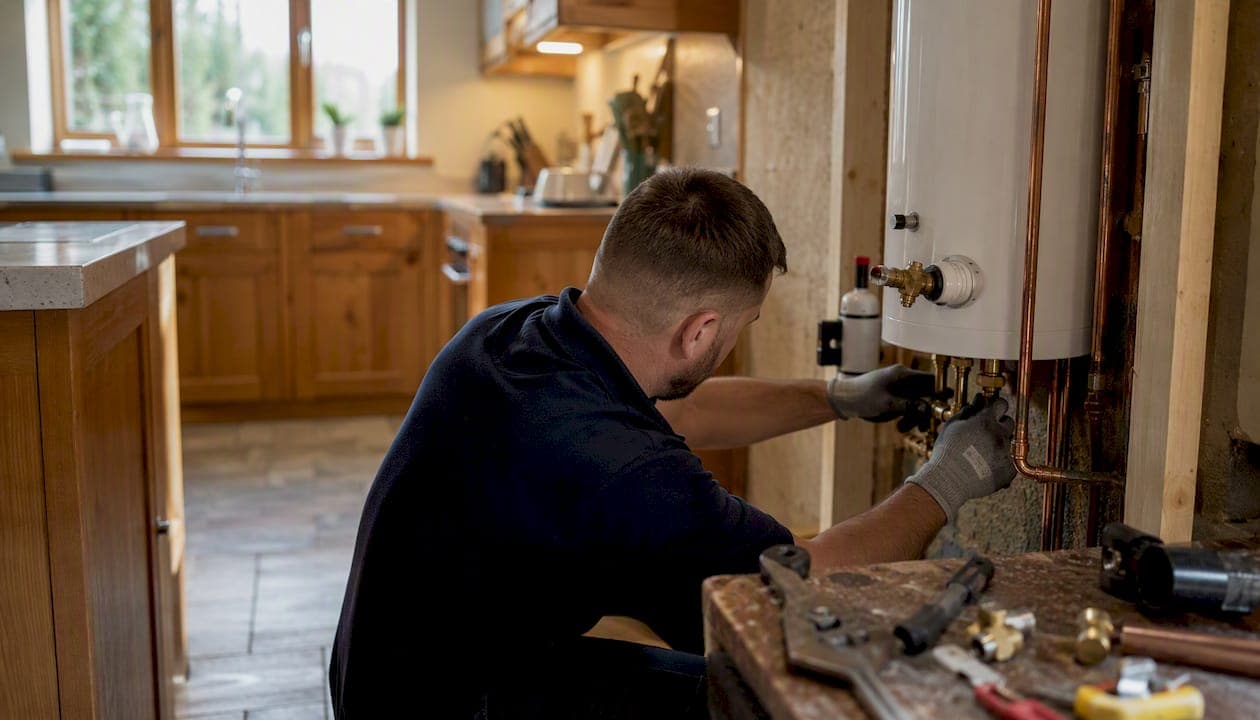
TL;DR:
- A pressurised hot water system delivers mains-pressure water to all outlets without a loft tank, supporting multiple bathrooms. Proper installation requires a G3-qualified engineer, annual safety checks, and correct discharge routing for safety. It is ideal for homes with adequate mains pressure and multiple bathrooms, ensuring efficient and reliable hot water supply.
A pressurised (unvented) hot water system delivers mains-pressure hot water to every outlet in your home, eliminates the need for a loft cold-water tank and supports multiple bathrooms running simultaneously. That is the short version. The longer version explains why those three things matter enormously for modern UK households and what it costs to get there.
The headline advantages at a glance:
- Mains-pressure flow at every tap and shower, regardless of how many outlets are open
- No loft tank required, freeing roof space and reducing pipework
- Flexible cylinder siting — airing cupboard, utility room, or plant room
- Compatible with gas boilers, heat pumps, and solar thermal systems
- Faster hot water recovery compared with gravity-fed vented cylinders
- Quieter operation with no tank-refill noise from the loft
- Sealed system that reduces contamination risk from open storage tanks
Under Building Regulations Approved Document G (G3), installation must be carried out by a G3-competent person, and the system must include a pressure-reducing valve (PRV), expansion vessel, temperature and pressure (T&P) relief valve, and a tundish with a safe, visible discharge route. Your-local-plumber's engineers are G3-qualified and carry out the full commissioning process, not just the cylinder swap.
Table of Contents
- How does a pressurised hot water system actually work?
- What types of unvented cylinder are available in the UK?
- How do unvented systems compare with vented cylinders?
- What are the drawbacks and safety requirements?
- What does installation cost and how long does it take?
- How do you maintain an unvented cylinder, and how long will it last?
- Is a pressurised hot water system right for your home?
- Key takeaways
- What installers see that homeowners often miss
- Ready to get a pressurised system installed properly?
How does a pressurised hot water system actually work?
The operating principle is straightforward. Cold water enters the cylinder directly from the mains, is stored in a fully sealed vessel, and is delivered to outlets at mains pressure. There is no header tank, no gravity feed, and no pressure drop when someone else turns on a tap.
The key components, in the order water passes through them:
- Mains inlet feeds into a combined inlet control group containing a PRV (typically set to around 3–3.5 bar), a non-return valve, an expansion valve, and an inlet strainer
Picture it as a straight line: mains inlet → inlet control group → sealed cylinder → hot outlets, with the tundish and discharge pipe branching off as a safety route.
Pro Tip: If you ever see water dripping or running from the tundish, that is not a minor drip to ignore. It means a safety valve has triggered. Call a heating engineer the same day — repeated discharge can cause water damage and indicates a system fault that needs diagnosis.
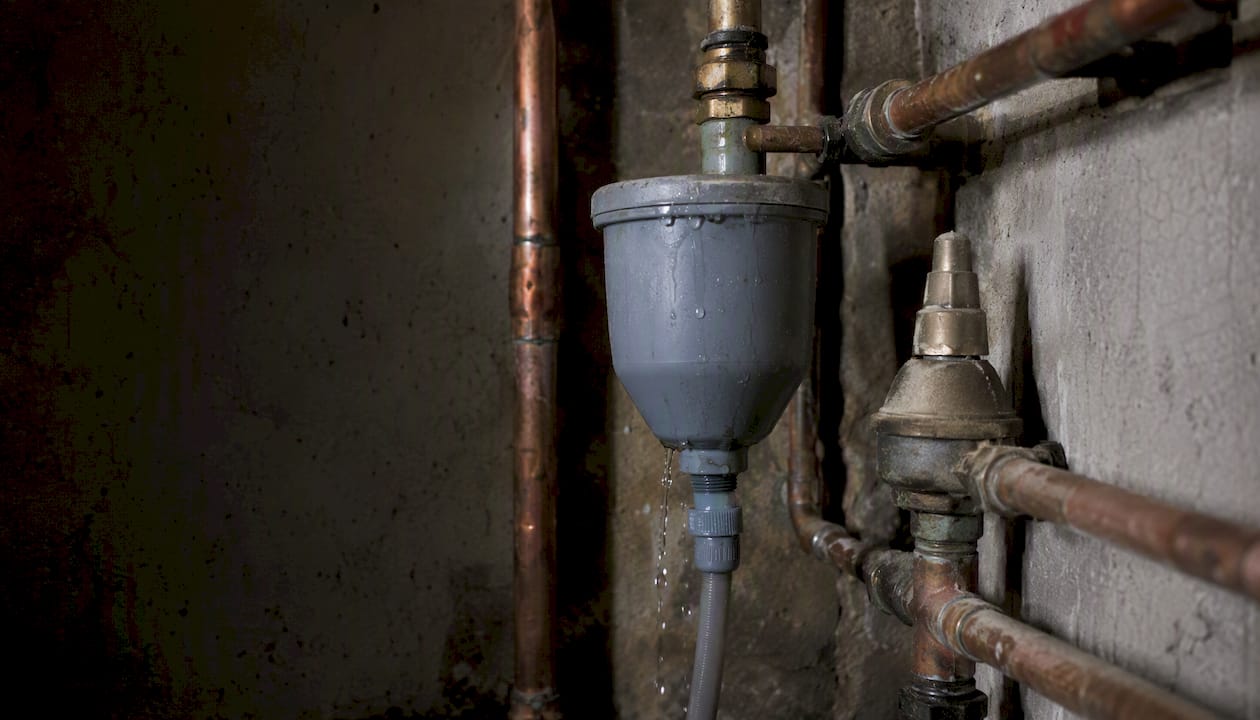
The tundish must sit within 500mm of the safety valves and in the same compartment as the cylinder. Its discharge pipe must terminate at a safe, visible point outside or above a drain, so any flow is immediately obvious.
What types of unvented cylinder are available in the UK?
Direct vs indirect
A direct unvented cylinder heats water using one or two immersion heaters inside the vessel. No boiler or heat pump is involved. These suit properties without a central heating system or as a backup heat source.
An indirect unvented cylinder uses a coil inside the vessel, heated by a primary circuit from a boiler, heat pump, or solar thermal panel. Indirect models are the standard choice when pairing with a heat pump, because the coil can be sized for lower flow temperatures and larger stored volumes that suit heat pump operation.
Internal air gap vs external expansion vessel
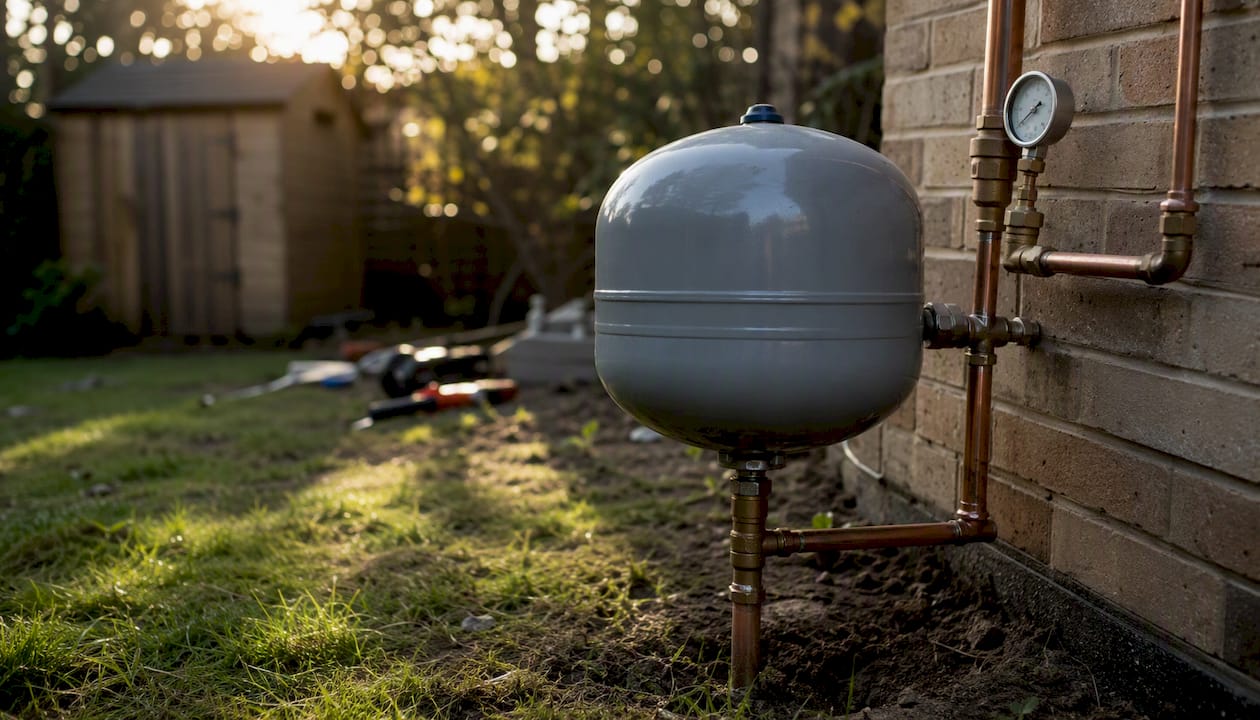
Some cylinders manage thermal expansion through an internal air gap built into the top of the vessel. Others use an external expansion vessel connected to the pipework. External vessels are more common in UK installations and are easier to inspect and replace during servicing. Internal air gap models are more compact but offer less flexibility if the air gap degrades over time.
Cylinder size guidance
| Household size | Recommended cylinder capacity |
|---|---|
| 1–2 persons | 150 litres |
| 2–3 persons | 150 litres |
These are indicative ranges. A G3 surveyor will size the cylinder against your actual peak demand, heat source output, and available space.
How do unvented systems compare with vented cylinders?
The direct answer: unvented means mains pressure and installation flexibility; vented means gravity feed, simpler installation, and lower upfront cost.
| Factor | Unvented (pressurised) | Vented (open-vent) |
|---|---|---|
| Flow and pressure | Mains pressure at all outlets | Gravity-fed; pressure depends on tank height |
| Space requirements | No loft tank needed | Requires cold-water storage tank in loft |
| Installation disruption | Higher; specialist components and commissioning | Lower; simpler pipework |
| Running efficiency | Depends on heat source | Depends on heat source |
| Maintenance complexity | Annual service by G3-competent person | Simpler; less specialist servicing |
| Best for | Multiple bathrooms, modern fittings, heat pumps | Older properties, low mains pressure, budget installs |
If mains pressure is low in your area, an unvented cylinder will not improve outlet pressure. The system delivers what the mains provides. In low-pressure areas, a vented system with a pump, or a pumped shower solution, may give better results.
Pro Tip: In older properties, particularly pre-1970s homes with 15mm lead or narrow copper pipework, mains pressure can stress joints and fittings not designed for it. Before specifying an unvented system, ask your installer to check pipework condition and size. Replacing undersized pipework adds cost but prevents leaks.
What are the drawbacks and safety requirements?
Safety devices and competent installation are non-negotiable for unvented systems. That is not a caveat — it is the legal position under Approved Document G/G3.
Known disadvantages:
- Higher upfront cost than a vented cylinder installation
- Must be installed by a G3-qualified competent person — not a general plumber without that certification
- Annual servicing is required to maintain safety device function
- Performance depends entirely on mains pressure; no mains, no hot water
- Safety valve discharge events can cause water damage if the tundish route is poorly routed
Safety checklist — questions to ask any installer quoting for the work:
- Are you G3-certified, and can you provide your registration number?
- What PRV setting will you use, and how will you confirm working pressure after commissioning?
- Where will the tundish be positioned, and where does the discharge pipe terminate?
- Is the expansion vessel internal or external, and how will it be accessed for servicing?
- What annual servicing package do you offer, and what does it cover?
The regulation requires that water in the system cannot exceed 100°C and that any discharge from safety devices is routed to a safe, visible point. A discharge pipe terminating inside a wall cavity or into a drain with no visible section fails that requirement.
What does installation cost and how long does it take?
Installation follows a clear sequence: site survey, cylinder and component selection, combined inlet control group fitting, pipework modifications, cylinder installation, commissioning, and discharge route verification. The commissioning stage is where a G3-competent engineer confirms pressure settings, thermostat function, and discharge routing — skipping it is a regulatory breach, not just a shortcut.
| Stage | Typical UK cost range (supply + fit) | Timeframe |
|---|---|---|
| Cylinder only (supply) | £600–£900 | N/A |
| Standard installation (supply + fit) | £1,500–£2,500 | 1–2 days |
| Installation with pipework modifications | — | 2–3 days |
| Annual service | — | 1–2 hours |
These are illustrative ranges based on typical UK market rates. Your actual quote will depend on cylinder size, heat source type, property layout, and whether existing pipework needs upgrading. Always obtain at least two or three quotes that include commissioning and discharge routing as line items, not afterthoughts.
For a broader picture of what a plumbing installation involves, the plumbing installation process guide covers what to expect on site.
Installer questions checklist:
- Does the quote include commissioning and a G3 completion certificate?
- Is the discharge route included, or priced separately?
- Will loft access or pipe re-routing be needed, and is that in the quote?
- What cylinder warranty is included, and who handles warranty claims?
Loft access is rarely needed for the cylinder itself, but if old pipework runs through the loft or the cold-water tank needs decommissioning, that adds a half-day. Factor it in at the quote stage rather than on the day.
How do you maintain an unvented cylinder, and how long will it last?
Annual servicing is the single most important maintenance commitment. A G3-competent engineer checks the T&P valve, PRV, expansion vessel pre-charge pressure, thermostats, and tundish discharge route. Miss a year and a failed expansion vessel can cause repeated T&P valve discharge, which is both a safety event and a source of water damage.
Annual maintenance checklist:
- Visual inspection of tundish for any signs of discharge or staining
- T&P relief valve test (lift and release to confirm it seats correctly)
- PRV pressure check and adjustment if needed
- Expansion vessel pre-charge pressure test
- Thermostat calibration check
- Tempering/mixing valve function test
- Inspection of cylinder body and connections for corrosion or weeping joints
Common faults and what they indicate:
- Leaking T&P valve — usually caused by excessive pressure or temperature, or a valve that has aged and no longer seats properly; replace the valve and investigate root cause
- Pressure loss at outlets — often a failed PRV or a collapsed expansion vessel; both require a competent engineer
- Thermostat failure — water too hot or too cold; immersion thermostat replacement is straightforward but must be done with the system isolated
- Corrosion on older cylinders — typically visible as staining around joints; a cylinder over 20 years old showing corrosion should be assessed for replacement
- Slow recovery — can indicate a failing immersion element or a heat source problem; the tepid hot water troubleshooting guide covers diagnostics
A modern unvented cylinder, properly installed and annually serviced, typically lasts 20–25 years. Poor water quality (hard water areas accelerate scale build-up) and irregular servicing are the two factors that shorten that lifespan most reliably. If you lose hot water entirely, the no hot water diagnostics guide covers the immediate steps before calling an engineer.
Is a pressurised hot water system right for your home?
Run through this checklist before requesting quotes.
Likely a good fit if:
- Your mains pressure is adequate (a plumber can measure this; a rough guide is 1.5 bar or above at the stopcock)
- You have two or more bathrooms, or plan to add one
- You want to remove the loft cold-water tank to free space or improve hygiene
- You are installing or upgrading to a heat pump or solar thermal system
- Your existing pipework is in good condition and sized for mains pressure
Probably not the right choice if:
- Mains pressure is consistently low in your area
- Your property has narrow or ageing pipework not suited to mains pressure
- Budget for annual servicing is a concern
- You are in a flat with a shared mains supply that limits individual pressure
If the answer is yes — next steps:
- Measure or ask your installer to measure incoming mains pressure at the stopcock
- Book a G3 survey to assess cylinder size, siting, and discharge routing
- Obtain at least two quotes that include commissioning and a G3 completion certificate
- Ask each installer about their annual servicing offer before committing
If an unvented system is not suitable, a vented cylinder with a shower pump, or a tankless water heater for point-of-use demand, are the main alternatives worth exploring.
Key takeaways
Pressurised (unvented) hot water systems deliver mains-pressure hot water without a loft tank, but they require a G3-qualified installer, annual servicing, and adequate incoming mains pressure to perform as intended.
| Point | Details |
|---|---|
| Mains pressure is the core benefit | Unvented cylinders deliver consistent pressure to multiple outlets simultaneously, unlike gravity-fed systems. |
| No loft tank needed | Removing the cold-water storage tank frees space and reduces contamination risk from open storage. |
| G3 installation is a legal requirement | Only a G3-competent person may install an unvented system under Building Regulations Approved Document G. |
| Annual servicing is non-negotiable | T&P valves, expansion vessels, and PRVs must be checked yearly; a missed service is a safety risk, not just an admin gap. |
| Your-local-plumber | Your-local-plumber's G3-qualified engineers carry out surveys, full installations, commissioning, and annual servicing across multiple UK locations. |
What installers see that homeowners often miss
Most homeowners focus on the cylinder itself when getting quotes. The questions they rarely ask are about the discharge route and the commissioning certificate — and those are the two things that matter most for long-term safety and compliance.
A tundish positioned correctly, with a properly sized discharge pipe terminating at a visible point, is your early-warning system. If water ever appears there, it is not a minor fault. It means a safety valve has opened, and the system needs inspection before it is used again. Repeated discharge usually points to an oversized PRV setting, a failed expansion vessel, or a thermostat running too hot. Any of those is fixable, but only if someone investigates rather than assumes the valve will reseat itself.
The other thing installers see regularly is undersized cylinders. A 150-litre cylinder in a four-bedroom house with three bathrooms will run out of hot water during a busy morning. Sizing the cylinder to peak demand, not average demand, is the difference between a system that works and one that disappoints from day one. Ask your installer to walk you through the sizing calculation, not just hand you a number.
Pro Tip: After installation, ask the engineer to show you the tundish location and explain what a discharge event looks like. Knowing where to look and what it means puts you in control of the system rather than dependent on guesswork when something changes.
Ready to get a pressurised system installed properly?
Getting an unvented cylinder installed correctly the first time saves money over the life of the system. A poorly commissioned installation, or one without a visible discharge route, is not just a compliance issue — it is a liability.

Your-local-plumber's G3-qualified heating engineers carry out the full process: site survey, cylinder sizing, combined inlet control group installation, commissioning, and discharge route verification. Every installation includes a G3 completion certificate. Annual servicing is available as a follow-on booking, so you are not left searching for a competent engineer twelve months later.
To prepare for a survey, have the following ready:
- Location of your current stopcock and any existing cylinder
- Number of bathrooms and peak hot water usage times
- Details of your current or planned heat source (boiler, heat pump, solar thermal)
- Any known pipework issues or recent plumbing work
Book a survey or installation online or call 07760 547 999. For urgent hot water failures, the emergency heating service operates with a 60-minute response target.