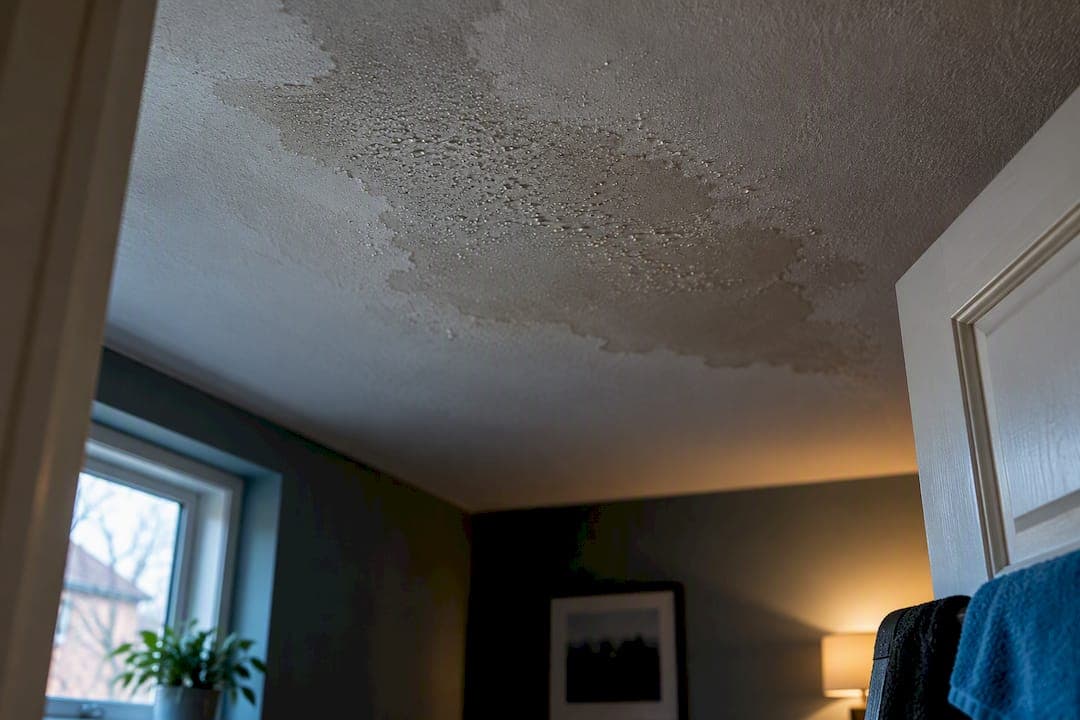
Stains that appear only in cold weather or after steamy showers are almost always condensation, while stains that spread or darken during and after rain point to a genuine leak. Start a photo diary today monitor the patch for 7 to 14 days, noting the weather and what was happening in the house. A single five-person household can generate roughly 10 kg of water vapour a day, so condensation is more common than most homeowners assume.
TL;DR:
- Wet patches that worsen during rain likely indicate roof leaks, especially if located near chimneys, valleys, or roof features, requiring a roofer’s assessment.
- Diffuse, fuzzy stains that expand in cold weather or after showers typically point to condensation caused by poor ventilation and insulation issues.
- Proper inspection involves monitoring the stain for 7 to 14 days, noting weather patterns, and photographing the area to identify active leaks or condensation.
- Fixing condensation involves improving ventilation by venting exhausts outside and sealing warm-air leaks before upgrading insulation to prevent trapping moisture.
- Plumbing leaks are often appliance-related or hidden behind walls, requiring a leak detection specialist rather than a roof repair.
Table of Contents
- Checklist: is it condensation or a leak on your ceiling?
- Why condensation forms on ceilings in the first place
- What a real roof leak actually looks like
- How to inspect your loft and roof safely
- What to do right now to limit the damage
- Fixing the problem for good
- Who to call: roofer, plumber, or damp specialist?
- How we diagnose ceiling damp and what we offer
- Michael's take: the mistake homeowners keep making
- Book a diagnosis with Your-Local-Plumber
- Sources
- FAQ
Checklist: is it condensation or a leak on your ceiling?
Before you call anyone, spend a week gathering your own evidence. Trades will always ask these same questions, so answering them yourself first saves time and money.
- When does it get worse? Note whether the mark grows during or straight after rain, or whether it appears on cold mornings and after long showers. Rain correlation strongly suggests a leak; cold-weather correlation points to condensation.
- What shape is the stain? A leak usually leaves a defined ring or a run with a clear edge, often following gravity towards one low point. Condensation tends to spread as a diffuse, fuzzy patch, sometimes with speckled mould at the margins.
- Where exactly is it? Stains beneath a chimney, roof valley, dormer junction, or skylight usually mean a leak at that structural feature. Patches above a bathroom, kitchen, or in a corner with poor airflow usually mean condensation.
- What does the loft look like? Fine water droplets across a wide area of the roof underside, or insulation that feels damp and compressed, both indicate condensation rather than a single leak point. A local wet patch with a visible drip line or a stained rafter usually means a leak.
- Has it changed over time? A leak often gets worse in a specific weather pattern (heavy or driving rain from one direction). Condensation tends to track the seasons, worsening through autumn and winter as heating goes on and windows stay shut.
Keep a simple log: date, weather, and what the stain looked like. Photograph it from the same angle each time, ideally with something for scale, like a tape measure or a coin.
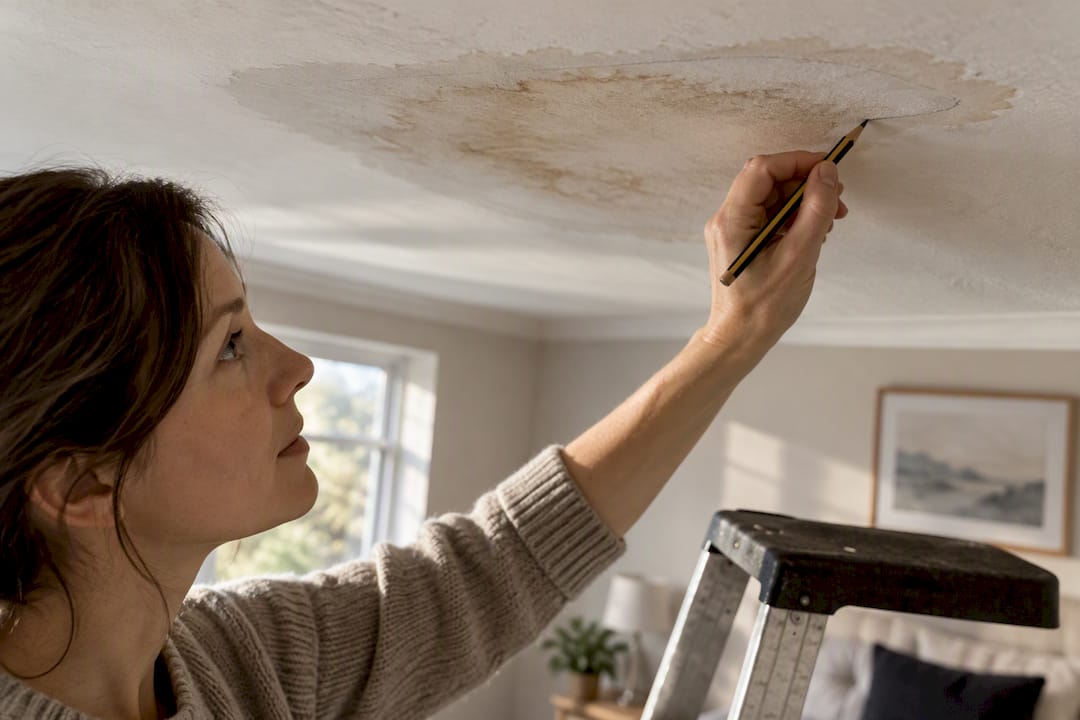
Pro Tip: Circle the outer edge of the stain in pencil each time you check it. If the pencil line is inside the new stain a week later, it's still active, which matters far more to a tradesperson than the size of the mark itself.
Why condensation forms on ceilings in the first place
Warm, moist air rises and meets a cold surface, typically a ceiling under a poorly insulated loft, and the moisture it's carrying condenses out as liquid water. Ordinary living produces more of that moisture than people expect. Cooking, showering, drying laundry indoors, and simply breathing overnight can push a household's daily output to around 10 kg of water vapour for a family of five, and if that moisture has nowhere to go, it settles on the coldest surface it can find.
Several common faults let this happen:
- Trickle vents painted shut or permanently closed, cutting off background ventilation.
- Extractor fans in kitchens and bathrooms that vent into the loft space instead of outside, dumping moisture exactly where you don't want it.
- Tumble dryers without an external hose, or with a damaged one, doing the same thing.
- Insulation pushed right up against the roofline at the eaves, blocking the airflow that's meant to keep the loft ventilated and dry.
- Thermal bridging around loft hatches, recessed light fittings, and pipe penetrations, creating cold spots where warm air condenses first.
Building-standards guidance under BS 5250 treats ventilation and vapour control as the primary defence against this, not insulation alone. Add insulation without fixing airflow and you can trap moisture, so the order you tackle these problems in genuinely matters.
What a real roof leak actually looks like
A leak is a physical fault letting rainwater or plumbing water into the structure, and it tends to leave more localised, weather-linked evidence than condensation does. The usual suspects sit at the roof's weak points:
- Slipped, cracked, or missing tiles and slates, especially after high winds or a hard frost.
- Failed flashing around chimneys, roof windows, and where a roof meets a wall or another roof plane.
- Valleys and abutments, where two roof slopes meet and water concentrates, are common failure points if the lead or membrane has degraded.
- Flat roof felt or membrane splits, blistering, or pooling water where falls are too shallow.
- Blocked or damaged guttering that overflows and forces water back up under the tiles or down the fascia into the eaves.
- Penetrations for soil vent pipes, extractor outlets, or aerials, where the seal around the pipe has perished.
Penetrating damp of this kind usually worsens noticeably with rain and can also stem from damaged felt, defective flashing, or ground levels sitting too high against an external wall. Internal plumbing leaks behave differently again: they're rarely tied to weather at all, and instead correlate with the boiler firing, a shower running, or a washing machine cycle. If your stain tracks with a specific appliance rather than the sky, you may be looking at a hidden pipe leak rather than anything roof-related.
How to inspect your loft and roof safely
A loft visit can answer most of your questions in fifteen minutes, provided you go about it sensibly.
- Check access first. Don't go up without solid lighting, and stick to the boarded areas or joists; stepping between joists through plasterboard is one of the most common DIY injuries in the home.
- Skip it if in doubt. Poor lighting, visible loose wiring, or boarding that flexes underfoot are all reasons to leave this to a professional instead.
- Look at the underside of the roof covering. Widespread fine droplets or a uniform sheen across several timbers usually means condensation; a single dark, wet timber or a visible drip trail points to a leak.
- Check the insulation. Damp, matted, or discoloured insulation spread over a wide area supports condensation. Also check whether insulation has been pushed into the eaves, blocking the ventilation gap that's meant to keep air moving there.
- From the ground, scan the roof exterior. Binoculars will show cracked tiles, rusted flashing, or sagging gutters without you needing a ladder.
- Photograph everything, noting the compass direction the affected area faces and the weather at the time. Rain from the southwest hitting a leak on the northeast elevation, for instance, tells you almost nothing.
Pro Tip: Take one loft photo with your phone's flash off and one with it on. Flash tends to wash out the fine misting of condensation, so the natural-light shot is usually the more useful one for spotting it.
What to do right now to limit the damage
While you're gathering evidence, protect the room and stay safe.
- Place a bucket or bowl under an active drip and move anything valuable or electrical out from underneath it.
- Switch off electrics near a wet patch at the consumer unit if there's any risk of water reaching a fitting or socket.
- Keep windows cracked and extractor fans running to reduce indoor humidity while you monitor, even if you suspect a leak rather than condensation.
- If the ceiling is bulging, sagging, or you can hear running water inside a void, that's not a monitoring situation, it's an emergency plumbing call or an urgent roofer visit.
- Contact your buildings insurer early if damage looks significant. Most insurers want timestamped photos and a description of when the problem started, which your diary already gives you.
- Keep every dated photo and note from your 7 to 14 day monitoring period; it's the single most persuasive piece of evidence you can hand a tradesperson or an insurer.
Fixing the problem for good
Once you know roughly what you're dealing with, the fixes split into two very different jobs, and doing them in the right order avoids wasted spend.
For condensation, ventilation comes first. Fit extractor fans that vent to the outside air rather than the loft, unblock or replace trickle vents, and check that soffit and ridge or tile vents form a continuous path for air to move through the roof space. Only after airflow is sorted should you address insulation: pull insulation back from the eaves if it's blocking ventilation, bring the depth up to current recommendations elsewhere in the loft, and seal the loft hatch and any pipe or cable penetrations through the ceiling. Adding insulation before sealing warm-air leaks can actually make condensation worse, because it lowers loft temperatures further while trapped moisture still has nowhere to go.
For a genuine leak, the repair depends on what you found:
- Slipped or cracked tiles need replacing, and the surrounding underlay checked for damage.
- Flashing around chimneys and roof windows usually needs renewing rather than resealing once it's failed.
- Gutters need clearing or repairing if overflow is forcing water under the roof covering.
- Flat roofs with membrane failure often need a proper re-cover rather than a patch, since one leak point usually signals wider wear.
- Plumbing-sourced leaks may need trace-and-access work, opening a small section of ceiling or wall to find a hidden pipe joint before it can be repaired properly.
Pro Tip: If you've had condensation for years and only just noticed a stain, check the loft insulation depth before booking a roofer. Thin or disturbed insulation is a far more common culprit than most homeowners assume, and it's a fraction of the cost of a roof repair.
Who to call: roofer, plumber, or damp specialist?
Match the trade to the pattern you've recorded, not to the first name that comes to mind.
- Stains that worsen with rain, or that sit near a roof feature (chimney, valley, skylight): call a roofer first.
- Diffuse patches that worsen in cold weather, after showers, or with condensation on windows nearby: start with ventilation improvements, or call a plumber if it's linked to bathroom or kitchen extraction.
- Damage that follows a specific appliance cycle, or a smell of damp with no obvious roof link: this usually points to plumbing, so a plumber experienced in leak detection is the right first call.
- Recurring or mixed symptoms that don't fit either pattern cleanly: a damp specialist can run moisture readings and a fuller survey.
Hand over your diary, photographs, and loft access straight away. A competent tradesperson will start with a visual inspection, take moisture meter readings at the stain and surrounding area, and only open up plasterboard or roof covering if a visual and moisture check can't pin the source down.
How we diagnose ceiling damp and what we offer
Before booking anyone, most homeowners have already done the hard part: the photos and the diary. That's exactly what we check first when we visit, alongside the loft space and the plumbing runs feeding any bathroom or kitchen above the stain. Condensation patterns rule themselves out quickly once you see whether the moisture is confined to one pipe joint or spread across the loft.
Your-local-plumber covers leak detection, emergency call-outs, and trace-and-access work where a leak's source isn't visible without opening up ceiling or wall. Have your loft accessible, your dated photos ready, and a rough timeline of when the stain first appeared. That's usually enough for an engineer to narrow the cause down within the first part of a visit.

Michael's take: the mistake homeowners keep making
Most people pay for a roof repair when ventilation would have fixed it, and put off calling a plumber when a pipe is quietly failing behind plasterboard. Gather your evidence first. If the ceiling sags or water is actively running, skip the diary and call for help immediately.
— Michael
Book a diagnosis with Your-Local-Plumber
You've read the checklist, done the loft check, and you're still not certain whether it's condensation or a leak, that's exactly when a second pair of eyes earns its keep. Some plumbing services offer same-day emergency response with no call-out fee and payment only after the work is completed, making early diagnosis less financially risky for homeowners.

Bring your photo diary and loft access and an engineer can usually tell within minutes whether you're looking at a plumbing-related leak or a ventilation problem that needs a different kind of fix. If it turns out to be an active leak, leak detection and repair is booked through the same visit, and every job carries a 12-month warranty. For anything that can't wait, the emergency plumbing and heating line runs 24/7, including holidays. If your diary already shows a clear rain-linked pattern, book a visit now rather than watching the stain spread for another fortnight.
Sources
- CONDENSATION (The Property Inspection Association / TPI)
- Gov
- Brown stain on ceiling after rain: roof leak or condensation? | UK Roofing Leads Blog
- Leak or condensation (Excel Roofing)
- Condensation, damp and mould advice (Centre for Sustainable Energy)
FAQ
How can I tell if it's a leak or condensation?
Check the timing and shape of the stain: a mark that worsens during or right after rain and has a defined edge is usually a leak, while one that appears in cold weather or after showers with a diffuse, spreading edge is usually condensation. Monitoring the pattern for 7 to 14 days alongside weather and household activity gives a far more reliable answer than a single look.
How do I know if my ceiling is actually leaking?
Look for a localised wet patch or drip line, often near a chimney, valley, or skylight, that gets visibly worse during heavy rain. If you can see a defined stain edge, feel a soft or bulging area of plasterboard, or hear dripping inside the ceiling void, you're almost certainly dealing with an active leak rather than condensation.
How do I stop condensation dripping from my ceiling?
Improve ventilation first: vent extractor fans and tumble dryers outside rather than into the loft, unblock trickle vents, and check that insulation isn't blocking airflow at the eaves. Only add extra loft insulation once ventilation is sorted, since insulating before sealing warm-air leaks can make condensation worse.
What are the warning signs of a ceiling about to collapse?
Sagging, bulging, or a visibly bowed section of plasterboard, along with brown staining that's spreading quickly or the sound of running water inside the void, are all signs of a structural risk that needs immediate attention. Treat any of these as an emergency and get electrics isolated near the area straight away, then contact an emergency plumbing or heating engineer rather than waiting out a monitoring period.
Should I call a plumber or a roofer first?
If the stain worsens with rain or sits near a roof feature like a chimney or valley, call a roofer. If it's linked to condensation, a specific appliance cycle, or a bathroom or kitchen above the mark, a plumber with leak detection experience is the better first call.