TL;DR:
- Cross connections in plumbing create contamination risks by linking potable water supply to non-potable sources. Backflow mechanisms, including backsiphonage and backpressure, can cause sudden health hazards without warning. Proper installation, regular testing, and maintenance of backflow prevention devices are essential for safeguarding household water quality.
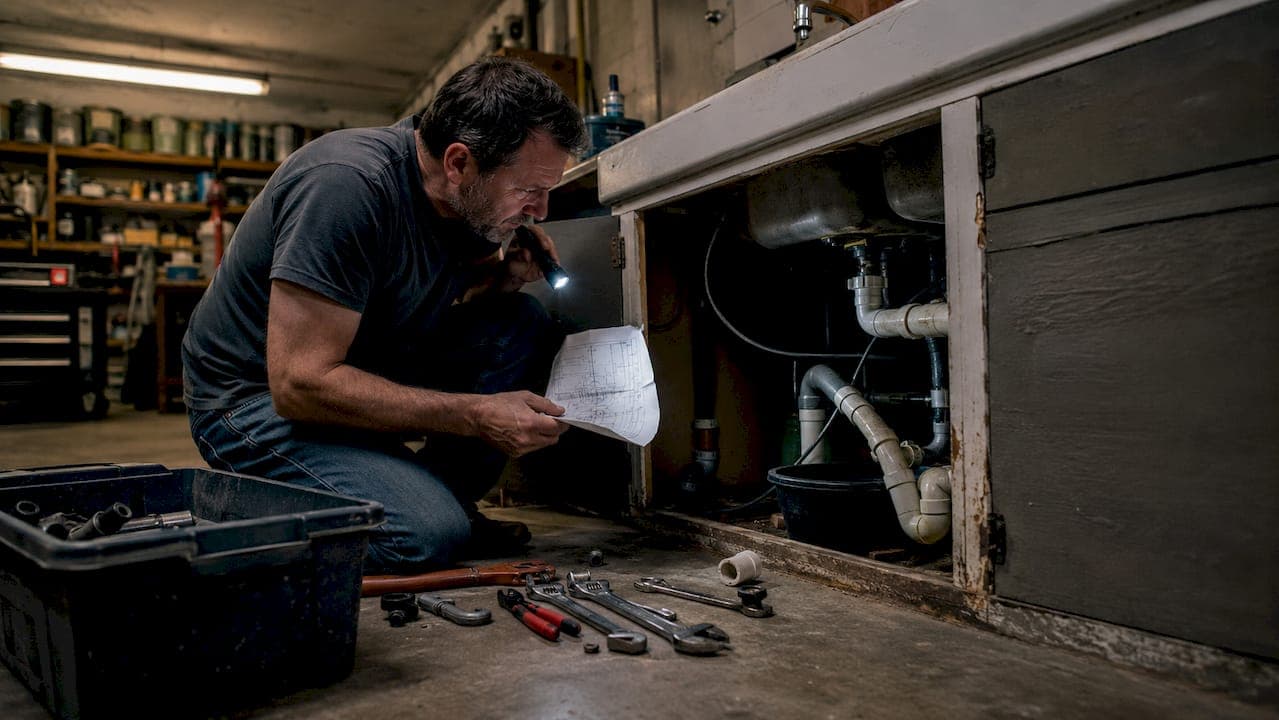
A cross connection in plumbing is defined as any physical link between your home's potable drinking water supply and a source of non-potable water, chemicals, or waste. That link creates a direct contamination risk through a process called backflow. Understanding this risk is not optional. Cross-connection control is a regulatory requirement under the Safe Drinking Water Act, and documented illness outbreaks have made it a public health priority. This guide explains what cross connections are, how backflow happens, which prevention devices work best, and what you can do right now to protect your water supply.
What does cross connection plumbing mean?
A cross connection is any physical connection, permanent or temporary, between safe drinking water and a non-potable source such as chemicals, waste, or untreated water. The term "cross connection" is the standard industry phrase used by water utilities, municipal plumbing codes, and the Safe Drinking Water Act. You may also hear it called a "backflow hazard" or "plumbing cross connection," but the underlying definition is the same. The risk is not theoretical. When pressure conditions change inside your pipes, contaminated water can flow backwards into your clean supply within seconds. That reverse flow is called backflow, and it is the mechanism that turns a cross connection into a health hazard.
How does backflow occur in a plumbing system?
Backflow happens through two distinct mechanisms: backsiphonage and backpressure. Understanding both helps you see why even a temporary connection can be dangerous.
Backsiphonage occurs when pressure in the supply line drops suddenly, creating a vacuum effect that pulls water backwards through the pipes. A burst water main, a firefighting crew drawing heavily from a nearby hydrant, or a sudden drop in municipal pressure can all trigger backsiphonage. Think of it like a straw: if you block the top and lift it from a glass, the liquid stays in the straw due to suction. The same physics applies to your pipes.
Backpressure works differently. It occurs when the pressure in a non-potable system exceeds the pressure in the drinking water supply. Hydronic boiler systems and pressurised irrigation systems are common culprits. If the boiler pressure rises above the incoming water pressure, treated boiler chemicals can be pushed backwards into your drinking water.
- Backsiphonage is triggered by a drop in supply pressure, such as during a water main break or high-demand event.
- Backpressure is triggered when a connected non-potable system operates at higher pressure than the supply line.
- Both mechanisms can cause contamination within seconds during a pressure event.
- Neither mechanism gives any visible warning before contamination occurs.
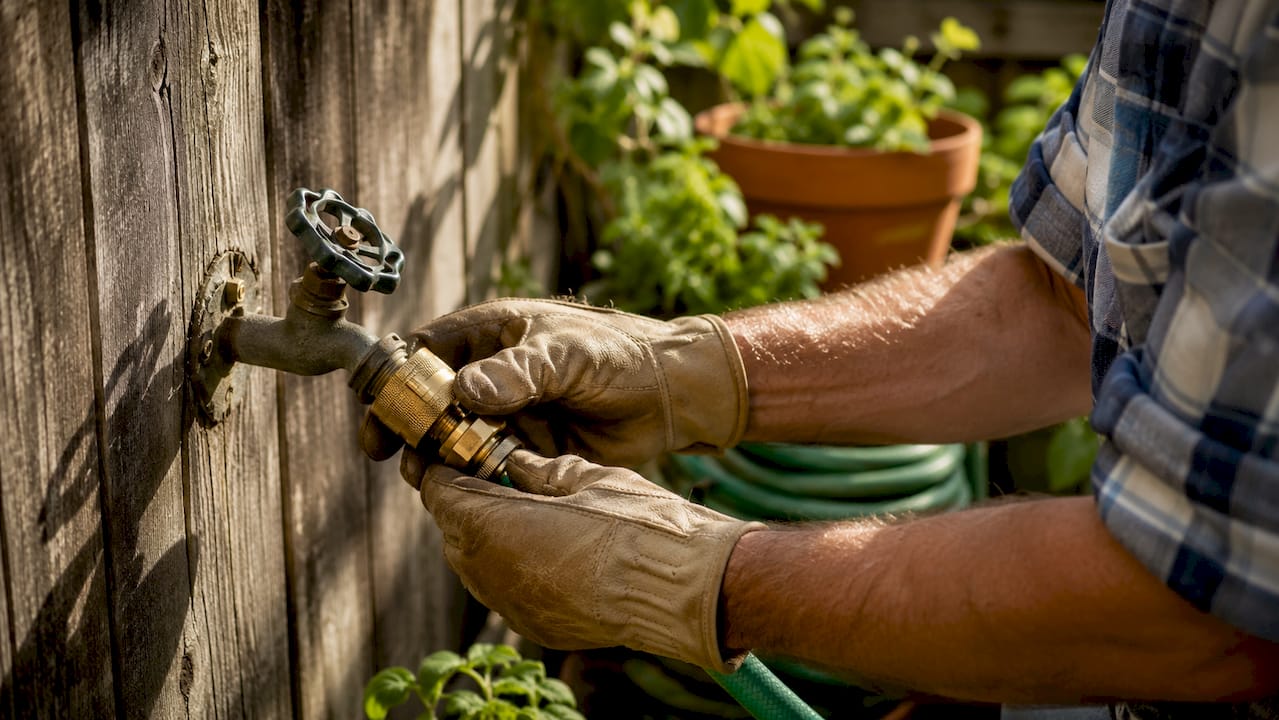
Pro Tip: If your water pressure drops suddenly and you have a garden hose submerged in a bucket of soapy water or weedkiller, disconnect it immediately. That submerged hose end is a live backsiphonage risk.
What are common residential cross connection examples?
Most homeowners are surprised to learn how many potential cross connections exist in a typical UK home. Common residential sources include garden hoses attached to chemical sprayers, lawn irrigation systems, private wells, swimming pools, hydronic boilers, and residential fire sprinklers. Each one represents a scenario where non-potable water can reach your drinking supply if a backflow event occurs.
Here are the most frequently encountered examples, ranked from most to least common in residential properties:
- Garden hose with a chemical sprayer attached. A hose connected to a fertiliser or pesticide applicator creates a direct path for chemicals to enter the supply if pressure drops. This is the single most common cross connection in UK gardens.
- Lawn irrigation systems. Underground irrigation pipes sit in soil and can be exposed to pesticides, fertilisers, and ground contaminants. Without a backflow preventer, a pressure drop pulls that contaminated water back into the house supply.
- Swimming pools and hot tubs. A hose used to top up a pool, left submerged in the water, creates an immediate backsiphonage risk. Pool water contains chlorine, algaecides, and biological matter.
- Hydronic boiler systems. These heating systems use treated water containing corrosion inhibitors and antifreeze compounds. A direct connection to the potable supply without a proper backflow assembly is a significant health hazard.
- Residential fire sprinkler systems. Older systems may contain stagnant water treated with chemical additives. A connection to the drinking water supply without isolation creates a contamination pathway.
Pro Tip: Check every outdoor tap on your property. If it does not have a hose bib vacuum breaker fitted, add one. They cost very little and take minutes to install, yet they block the most overlooked contamination route in residential plumbing.
Which backflow prevention devices are available?
Backflow prevention devices range from simple, inexpensive fittings to complex testable assemblies. The critical point is that device selection must match the level of health risk. Fitting a low-grade device to a high-hazard connection is a common and dangerous mistake. The types of backflow prevention devices available cover a wide spectrum of applications.
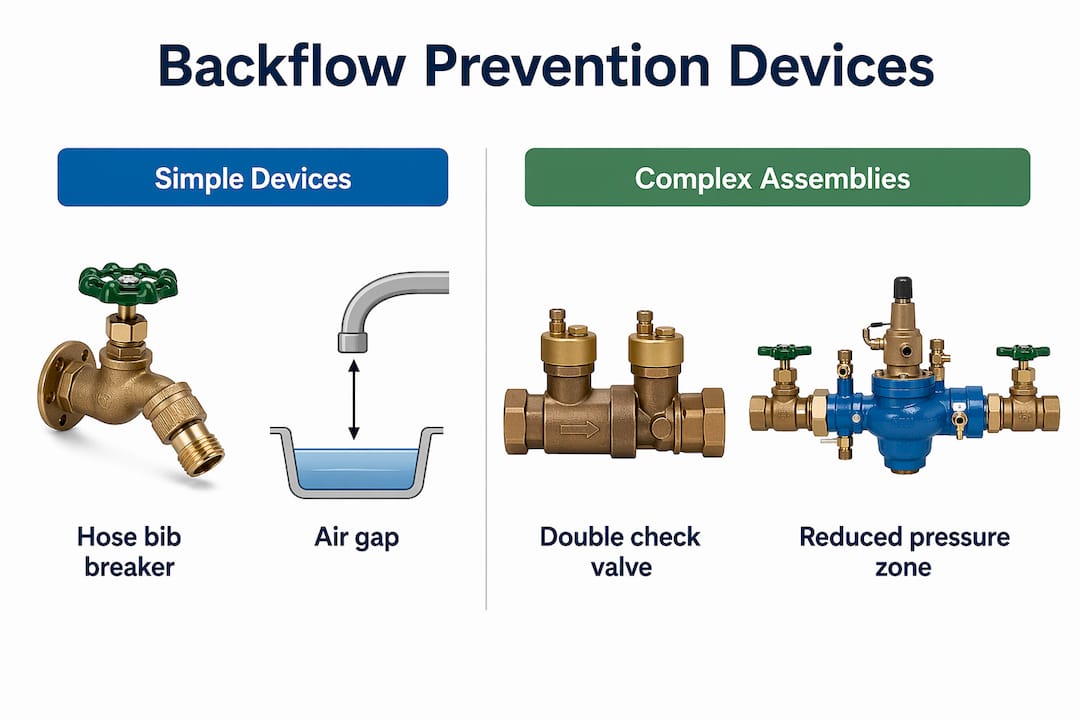
| Device | How It Works | Best Use Case | Testable? |
|---|---|---|---|
| Hose bib vacuum breaker | Vents the line if pressure drops, breaking any siphon | Garden hoses, outdoor taps | No |
| Atmospheric vacuum breaker | Opens to atmosphere when supply pressure drops | Irrigation, low-hazard indoor fixtures | No |
| Double check valve assembly | Two independent check valves block reverse flow | Irrigation systems, fire sprinklers | Yes |
| Reduced pressure zone (RPZ) assembly | Maintains a lower pressure zone between two check valves | Boilers, chemical dosing, high-hazard connections | Yes |
| ASSE #1013 assembly | Testable RPZ-type device meeting ASSE standard 1013 | High-hazard commercial and residential applications | Yes |
Non-testable devices such as hose bib vacuum breakers and atmospheric vacuum breakers are suitable for low-hazard connections. They require no annual inspection but should be checked visually each season. Testable assemblies such as the double check valve and RPZ are required for higher-hazard applications. Periodic inspection and testing by certified technicians is mandatory for these devices under most municipal plumbing codes.
Key points to understand about device selection:
- A hose bib vacuum breaker is the correct device for an outdoor garden tap. It is not sufficient for a boiler connection.
- An RPZ assembly provides the highest level of protection and is required where chemical contamination is possible.
- Misconceptions about device uniformity cause improper installations. Always match the device to the hazard classification.
How can homeowners identify and manage cross connections?
Identifying cross connections in your home does not require specialist equipment. A methodical walk-through of your property, guided by the right checklist, will reveal most risks. For anything beyond a visual inspection, a professional plumbing inspection is the most reliable next step.
Start with this checklist:
- Inspect every outdoor tap for a hose bib vacuum breaker. If one is missing, fit it before the next time you connect a hose.
- Check whether your lawn irrigation system has a backflow preventer installed at the point where it connects to the supply.
- Look at your boiler or hydronic heating system. Confirm a testable backflow assembly is fitted and that it has been tested within the past 12 months.
- Examine any sink or basin where a flexible hose or pipe sits below the overflow rim. This configuration can compromise the air gap.
- Maintaining a one-inch air gap above the fixture flood rim is a standard requirement. Check that no DIY modifications have reduced this gap.
Once you have identified potential risks, the next step is professional remediation. Licensed cross-connection control technicians test and repair backflow prevention devices in line with current codes. For UK properties, UK plumbing regulations set out the specific requirements for backflow protection under the Water Supply (Water Fittings) Regulations 1999. Compliance is not just good practice. It is a legal obligation.
Annual inspection is commonly mandated for hydronic heating and irrigation systems by municipal codes. Certified backflow testers are required to submit test documentation to the relevant authority. Missing a test schedule can result in enforcement action.
Pro Tip: Keep a simple log of every backflow prevention device in your home, its location, the date it was last inspected, and who carried out the work. This record protects you legally and makes future inspections faster.
Key takeaways
Protecting your home's water supply from cross connection contamination requires the right devices, correct installation, and regular professional testing.
| Point | Details |
|---|---|
| Cross connection definition | Any physical link between potable and non-potable water that creates a backflow contamination risk. |
| Two backflow mechanisms | Backsiphonage (pressure drop) and backpressure (elevated non-potable pressure) are both serious hazards. |
| Match device to hazard | Hose bib vacuum breakers suit low-risk taps; RPZ assemblies are required for boilers and chemical systems. |
| Annual testing is mandatory | Testable assemblies on boilers and irrigation systems must be inspected by a certified technician each year. |
| Homeowner responsibility | Water utilities protect supply up to the meter. Everything inside your property boundary is your responsibility. |
The risk hiding in plain sight
I have spoken with hundreds of homeowners over the years, and the pattern is consistent. People worry about burst pipes and leaking boilers, but almost nobody thinks about cross connections until something goes wrong. The garden hose is the best example. You fill a bucket with diluted weedkiller, drop the hose in to top it up, and walk away. That hose end, sitting in a bucket of herbicide, is a direct contamination pathway into your drinking water if the mains pressure drops while you are not watching. It takes seconds. There is no alarm.
What frustrates me most is the misconception that backflow prevention is something only commercial buildings need to worry about. It is not. The Water Supply (Water Fittings) Regulations 1999 apply to every property connected to the public supply in England and Wales. Your boiler, your irrigation system, your outdoor taps: all of them fall under those rules. Water utilities protect supply quality up to the meter, and not one inch further. The responsibility for everything inside your property sits entirely with you.
The good news is that the fixes are not complicated or expensive for most homes. A hose bib vacuum breaker costs a few pounds. An annual test on a boiler backflow assembly takes under an hour. The cost of ignoring it, on the other hand, can be significant, both to your health and to your legal standing as a property owner. Routine checks and a relationship with a qualified plumber are the two most practical things you can do.
— Michael
Book a backflow inspection with Your-local-plumber
If this article has prompted you to check your own plumbing, the next step is a professional inspection carried out by a qualified engineer.

Your-local-plumber provides backflow prevention services for homeowners across the UK, from fitting hose bib vacuum breakers on outdoor taps to installing and testing RPZ assemblies on boiler and irrigation systems. Booking is straightforward, pricing is transparent, and every job is carried out by an experienced engineer who understands the specific requirements of the Water Supply (Water Fittings) Regulations 1999. You can also explore the range of plumbing services available to find the right solution for your property.
FAQ
What is a cross connection in plumbing?
A cross connection is any physical link between a potable water supply and a non-potable source such as chemicals, waste water, or untreated water. It becomes a health hazard when backflow occurs and contaminated water enters the drinking supply.
What causes backflow in a home plumbing system?
Backflow is caused by either backsiphonage, where a pressure drop creates a vacuum that pulls water backwards, or backpressure, where a connected system operates at higher pressure than the supply line. Both can occur without warning during a pressure event.
Do i need a backflow preventer on my garden tap?
Yes. A hose bib vacuum breaker should be fitted to every outdoor tap where a hose is connected. It is an inexpensive device that prevents backsiphonage if mains pressure drops while the hose end is submerged.
How often should backflow prevention assemblies be tested?
Testable assemblies on systems such as boilers and irrigation must typically be inspected annually by a certified technician. Test records must be submitted to the relevant authority, and failure to comply can result in enforcement action.
Are backflow prevention devices covered by UK plumbing regulations?
Yes. The Water Supply (Water Fittings) Regulations 1999 require appropriate backflow protection for all plumbing installations in England and Wales. The level of protection required depends on the hazard classification of the connection. For more detail, see the backflow preventer FAQs covering common homeowner questions.