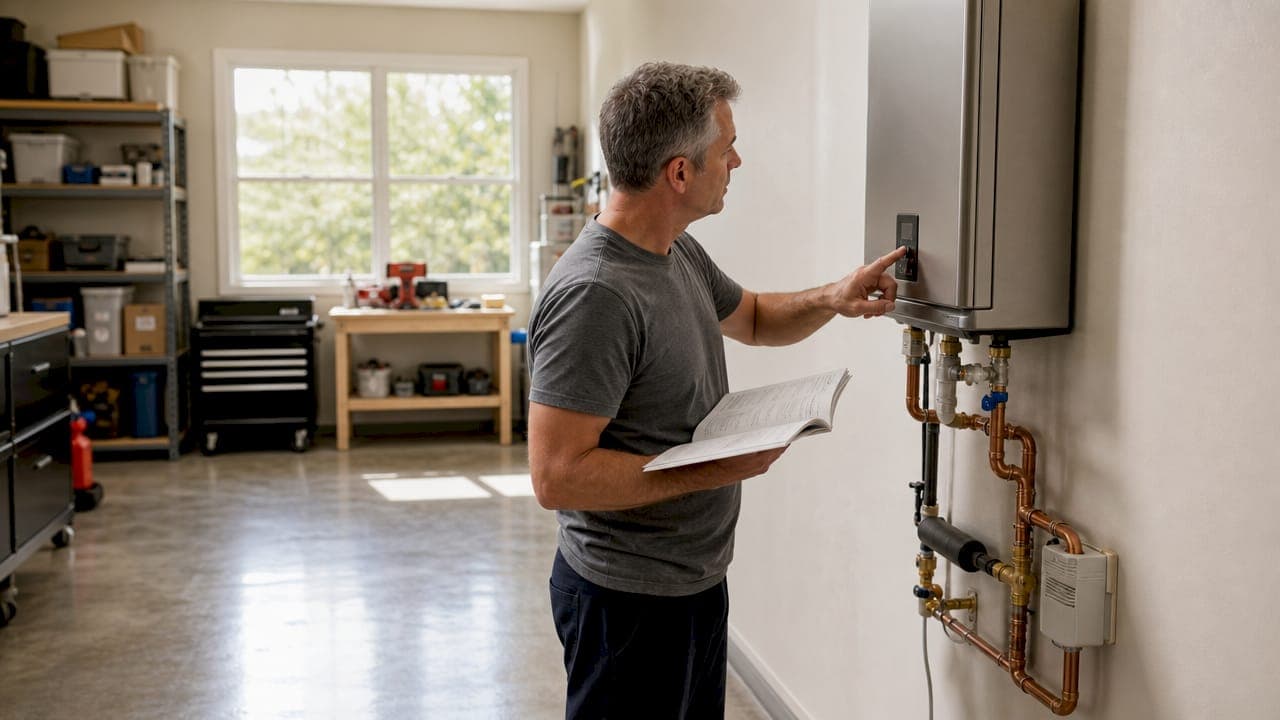
TL;DR:
- A tankless water heater heats water on demand without using a storage tank, providing instant hot water. Proper sizing, professional installation, and annual descaling extend its lifespan and maximize energy savings. It is a suitable long-term investment for households staying in their homes for over a decade.
A tankless water heater is defined as a unit that heats water directly on demand, with no storage tank required. Cold water travels through the unit, passes over a heat exchanger, and arrives at your tap hot within seconds. Traditional storage tanks keep 40–50 gallons of water heated continuously, wasting energy around the clock even when nobody is home. Explaining tankless water heaters to homeowners matters because the switch affects your energy bills, your available space, and how you plan your plumbing for the next two decades. Your-local-plumber works with these systems daily and sees the same questions come up time and again.
How do tankless water heaters work to deliver hot water instantly?
A tankless unit activates the moment water begins to flow. A flow sensor detects movement in the pipe and triggers either a gas burner or an electric heating element. Water passes through a heat exchanger, typically made from copper or stainless steel, and exits at the set temperature. The whole process happens in the pipe, not in a stored reservoir.
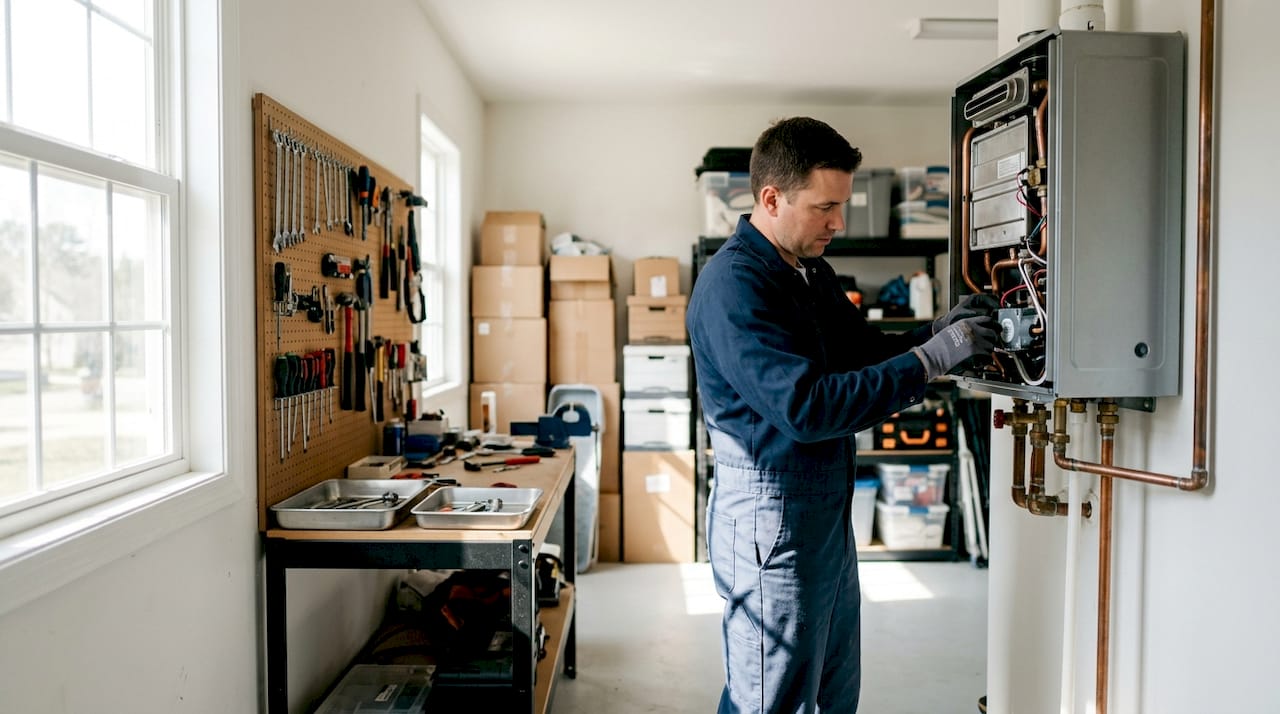
There is a short inherent delay of 10–15 seconds between turning on the tap and receiving hot water. That delay covers flow detection, ignition, and the time needed to bring the heat exchanger up to temperature. This is not a fault. It is a physical characteristic of the technology, and most homeowners adjust to it quickly.
Flow rate is the key performance limit. A single unit has a maximum output measured in gallons per minute (GPM). Running a shower and a dishwasher at the same time draws more GPM than a smaller unit can handle, which results in lukewarm water rather than a cold blast. Sizing the unit correctly for your household's peak demand solves this entirely.
Pro Tip: Install a small recirculation pump if the 10–15 second delay bothers you. It keeps a trickle of warm water in the pipe so hot water arrives faster at the tap.
Gas units generally deliver higher flow rates than electric models, making them the preferred choice for larger homes. Electric units suit smaller properties or point-of-use applications, such as a utility sink or a remote bathroom far from the main unit.
What are the main benefits of tankless water heaters?
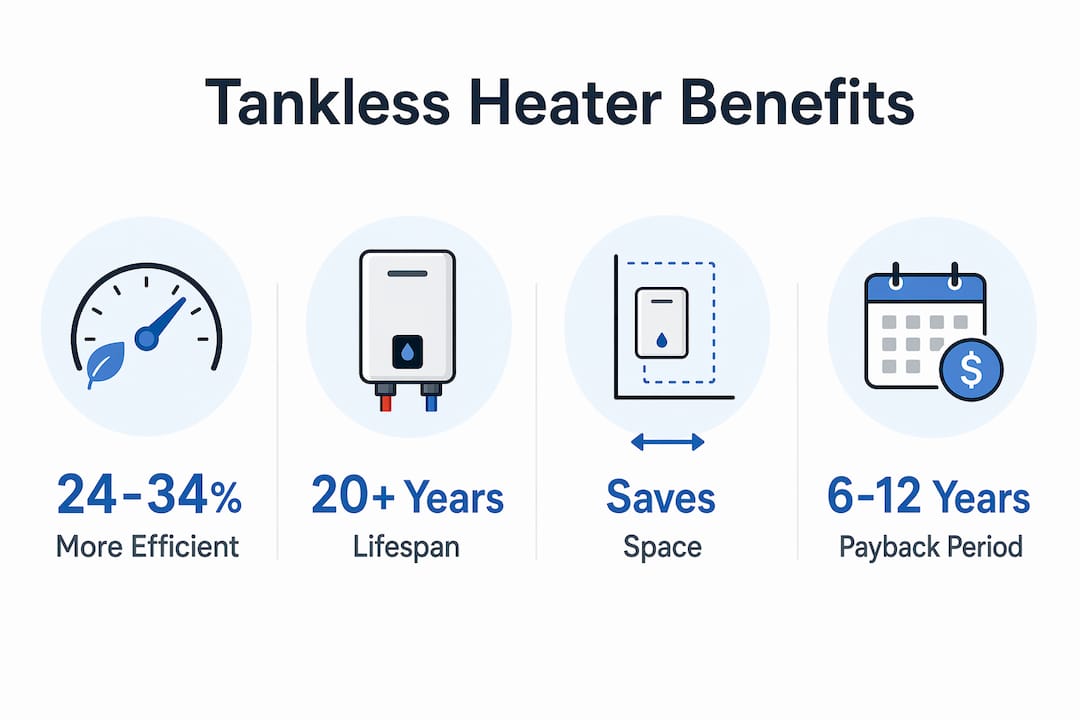
Energy efficiency is the headline benefit. Tankless water heaters are 24–34% more efficient than traditional storage tanks for households using 41 gallons or less of hot water daily. That figure drops to 8–14% for higher-usage homes, but the saving remains meaningful over a full year's bills.
The reason for the saving is standby heat loss. A traditional tank reheats the same stored water repeatedly, every hour of every day, whether you use it or not. A tankless unit draws energy only when you open a tap. Switching to a boiler efficiency mindset applies here too: eliminating waste at source beats trying to recover it later.
The main benefits at a glance:
- Lifespan. Tankless systems are designed to last 20 years or more, roughly double the average lifespan of a traditional storage tank. Modular component design means you replace a part, not the whole unit.
- Safety. Removing the pressurised storage vessel reduces the risk of catastrophic water damage and explosion-related accidents by up to 90%. That is a significant reduction in household risk.
- Space. A wall-mounted tankless unit takes up a fraction of the floor space a cylinder or tank occupies. In a UK home where airing cupboards are small and utility rooms are smaller, this matters.
- Continuous supply. A correctly sized unit can deliver up to 150 gallons per hour, meaning you never run out of hot water mid-shower.
The payback period for the higher upfront cost typically runs from 6 to 12 years, depending on local energy rates and how much hot water your household uses. Viewing the purchase as a long-term investment, rather than a like-for-like appliance swap, is the right frame.
What should homeowners consider when installing a tankless water heater?
Installation is where many homeowners underestimate the project. The unit itself is only part of the cost. The infrastructure around it often needs upgrading too.
- Size the unit correctly. Matching GPM output and temperature rise to your household's peak demand is the single most important decision. An undersized unit cannot maintain temperature when multiple taps run simultaneously. A qualified engineer calculates this from your flow rates and your incoming cold water temperature.
- Check your gas supply. Gas tankless units often require a larger diameter gas pipe than the one feeding your old tank. Upgrading the gas line adds cost but is non-negotiable for safe operation.
- Assess your electrical panel. Electric units can draw 100 or more amps, which exceeds the capacity of many older UK homes. A panel upgrade may be required before installation can proceed.
- Plan the venting. Gas units need proper flue venting to the outside. The route and length of the flue affects both performance and where the unit can be positioned.
- Fit service valves. Installing isolation valves on the inlet and outlet during the initial fit makes future descaling and maintenance far simpler. Skipping this step creates unnecessary work later.
Pro Tip: Get a professional assessment before buying the unit. The wrong size or an incompatible gas supply discovered after purchase is an expensive mistake.
Professional installation is not just about safety, though that is reason enough. It also protects your warranty and confirms compliance with UK Building Regulations. Your-local-plumber carries out full assessments before any installation begins, which removes the guesswork from sizing and infrastructure planning.
How do you maintain a tankless water heater for a long lifespan?
Annual descaling is the single most important maintenance task. Tankless units have narrow passageways inside the heat exchanger. Limescale builds up in these passages over time, reducing efficiency and eventually causing the unit to fail. Flushing with white vinegar or a specialist descaling solution once a year clears the build-up before it becomes a problem.
UK water hardness varies significantly by region. Hard water areas, which cover much of southern England, accelerate scale build-up. A water softener or a scale inhibitor fitted on the cold water inlet extends the time between descaling sessions and protects the heat exchanger. Some manufacturers list water treatment as a warranty condition, so check your documentation.
Watch for these warning signs that your unit needs professional attention:
- Water temperature fluctuating unexpectedly during use
- Reduced flow rate from hot taps
- Error codes appearing on the unit's display panel
- Unusual noises, such as clicking or banging, during operation
- Visible limescale deposits around fittings
Fitting service valves at installation makes the annual flush straightforward. You connect a descaling pump to the valves, circulate the solution for 45 minutes, and flush with clean water. Without service valves, the same job requires disconnecting pipework. Building good pipe maintenance habits around your tankless unit keeps the whole system running efficiently for years.
Integrating the descaling session into a broader annual plumbing check makes sense. Your-local-plumber offers maintenance visits that cover the tankless unit alongside other plumbing checks, which saves time and catches problems early.
Tankless vs traditional tank water heater: which suits your home?
The right choice depends on your household's usage pattern, your available space, and how long you plan to stay in the property.
A tankless unit wins on energy efficiency, lifespan, and space. A traditional storage tank wins on lower upfront cost and simpler installation, particularly in homes where the existing infrastructure suits it. The honest comparison looks like this:
| Factor | Tankless unit | Traditional storage tank |
|---|---|---|
| Upfront cost | Higher, including potential infrastructure upgrades | Lower, straightforward swap |
| Running cost | Lower, no standby heat loss | Higher, continuous reheating |
| Lifespan | 20 or more years | 8–12 years typically |
| Space required | Wall-mounted, compact | Floor-standing cylinder or tank |
| Hot water supply | Continuous, flow-rate limited | Limited by tank capacity |
| Maintenance | Annual descaling required | Periodic anode rod replacement |
Households with high simultaneous demand, such as a family running two showers and a washing machine at the same time, need a correctly sized unit or a multi-unit setup. A single entry-level tankless unit may not cover peak demand in a large family home without careful sizing. Smaller households, or those with a single bathroom, are the ideal fit for a standard residential unit.
If you are planning to stay in your home for ten or more years, the long-term savings on energy bills and the reduced replacement frequency make the higher upfront investment worthwhile. For shorter stays, the payback period of 6–12 years may not fully materialise.
Key takeaways
Tankless water heaters deliver genuine long-term savings on energy and space, but only when correctly sized, professionally installed, and maintained with annual descaling.
| Point | Details |
|---|---|
| Energy efficiency | Tankless units are 24–34% more efficient than storage tanks for lower-usage households. |
| Lifespan advantage | Properly maintained tankless systems last 20 or more years, roughly double a traditional tank. |
| Installation planning | Sizing, gas supply, and electrical capacity must all be assessed before purchasing a unit. |
| Annual maintenance | Descale the heat exchanger every year to prevent failure and protect your warranty. |
| Long-term investment | Payback periods run 6–12 years, making the switch most worthwhile for homeowners staying put. |
What I have learned from fitting tankless heaters across UK homes
The efficiency figures are real. I have seen homeowners cut their hot water energy costs noticeably after switching, particularly in smaller households where standby loss from a large tank was genuinely wasteful. The 20-year lifespan claim is also achievable, but only with consistent maintenance. Units that are never descaled rarely make it past ten years.
The mistake I see most often is homeowners buying a unit based on price alone, without checking whether their gas supply or electrical panel can support it. That leads to expensive remedial work after the fact, and sometimes a unit that cannot perform as advertised because it was undersized for the property.
The other underestimated factor is water hardness. A homeowner in Kent or Surrey with no scale inhibitor will descale far more often than someone in a soft water area. Ignoring this does not just mean more maintenance. It means a shorter lifespan and a voided warranty.
My honest view is that tankless water heaters are worth the investment for most UK homeowners who plan to stay in their property for a decade or more. The key is treating the installation as a proper project, not a quick swap. Get the sizing right, upgrade the infrastructure where needed, and build the annual maintenance into your routine. Do those three things and the system will repay you many times over.
— Michael
Tankless water heater installation with Your-local-plumber
Choosing the right tankless unit for your home takes more than reading a spec sheet. Your-local-plumber provides full assessments covering flow rate requirements, gas and electrical infrastructure, and unit placement before any work begins.

Our engineers handle tankless water heater installation from start to finish, including any gas line or electrical upgrades needed to meet UK Building Regulations. We also offer ongoing maintenance visits to keep your unit descaled and running at full efficiency. If you are currently getting no hot water from taps or suspect your existing system is failing, we can diagnose the problem and advise on the best replacement path for your home.
FAQ
What is a tankless water heater?
A tankless water heater heats water on demand as it flows through the unit, with no storage tank. It activates when a tap opens and stops when the tap closes.
How long does a tankless water heater last?
A well-maintained tankless unit is designed to last 20 years or more, roughly double the lifespan of a traditional storage tank. Annual descaling is the key maintenance requirement.
Are tankless water heaters worth it for UK homes?
For households staying in a property for ten or more years, the energy savings and longer lifespan make the higher upfront cost worthwhile. Payback periods typically run 6–12 years depending on usage and energy rates.
What maintenance does a tankless water heater need?
Annual descaling with vinegar or a specialist solution is the primary task. Homes in hard water areas may need more frequent treatment or a scale inhibitor fitted on the cold water inlet.
Can I install a tankless water heater myself?
Professional installation is strongly recommended. Electric units can draw 100 or more amps, and gas units require correct flue venting and gas supply sizing. Incorrect installation risks safety hazards and voids the warranty.