TL;DR:
- Regular plumbing checks help prevent damp, mould, and costly damage in Oxford homes.
- DIY maintenance tasks include inspecting joints, clearing gutters, and testing boiler pressure.
- Professional help is essential for complex repairs like leaks inside walls or persistent damp issues.
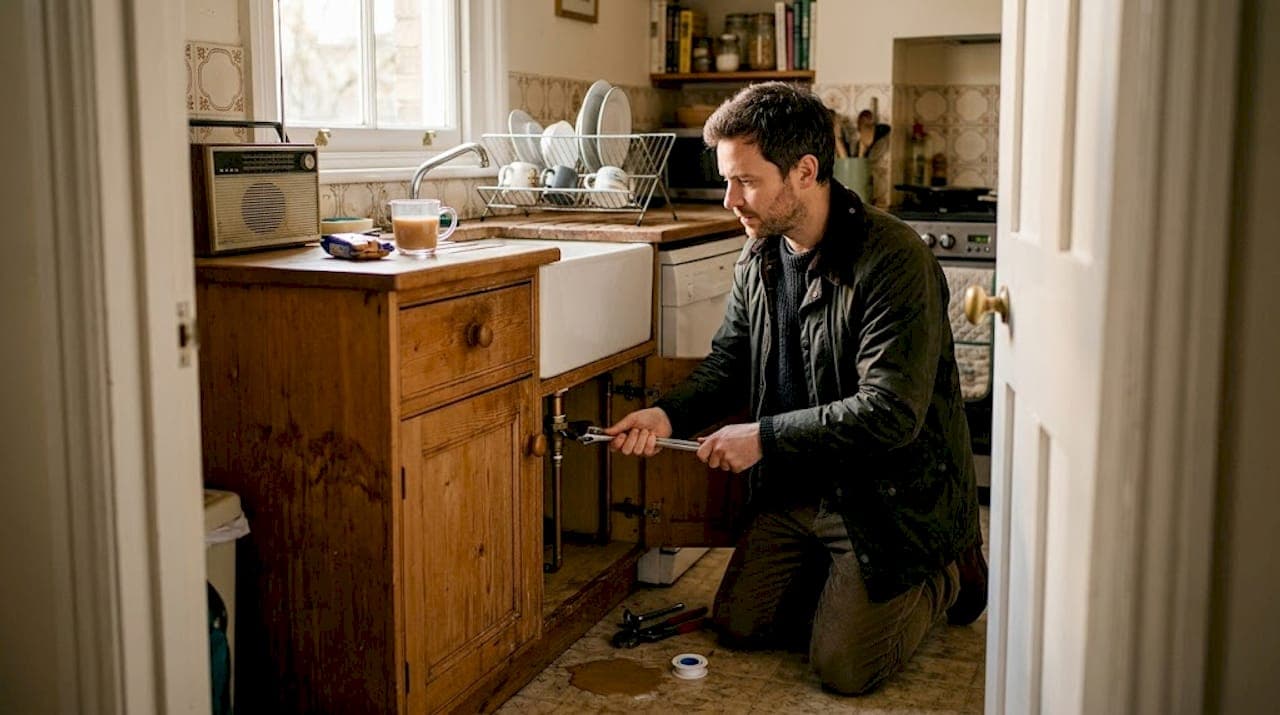
Picture this: you notice a faint musty smell in your hallway, assume it's nothing, and carry on. Six months later, you're facing rotten skirting boards, mould creeping up the wall, and a repair bill that makes your eyes water. It doesn't have to go that way. Up to 50% of UK homes are affected by damp and mould, much of it linked to plumbing that hasn't had proper attention. For Oxford homeowners especially, staying ahead of these issues is far cheaper than dealing with the fallout. This guide gives you practical, step-by-step strategies to keep your plumbing in good shape all year round.
Table of Contents
- Why plumbing maintenance matters in Oxford homes
- What you need to get started: tools and materials
- Step-by-step maintenance: keeping your plumbing in top condition
- Troubleshooting and preventing the most common Oxford plumbing problems
- A local perspective: what most guides miss about Oxford's plumbing
- Need professional help? Trusted Oxford plumbers are here
- Frequently asked questions
Key Takeaways
| Point | Details |
|---|---|
| Routine checks prevent damage | Checking pipes and drains regularly helps avoid expensive repairs and mould. |
| Right tools boost safety | Having basic plumbing tools means small issues are sorted quickly and safely. |
| Spot problems early | Recognising leaks and blockages early keeps your Oxford home healthy and dry. |
| Professional help is vital for big issues | Tackling complex plumbing jobs yourself risks damage—call a pro when in doubt. |
Why plumbing maintenance matters in Oxford homes
Oxford isn't your average British city when it comes to housing. The mix of Victorian terraces, Edwardian semis, and post-war estates means many properties carry decades of pipework that's never been modernised. Shared walls, old lead pipes, and cramped service runs are common. Add in the Thames Valley's reliably damp climate and you have a recipe for leaks, condensation, and mould if maintenance slips.
"Prevention is almost always cheaper than cure. A small drip today is a saturated wall tomorrow."
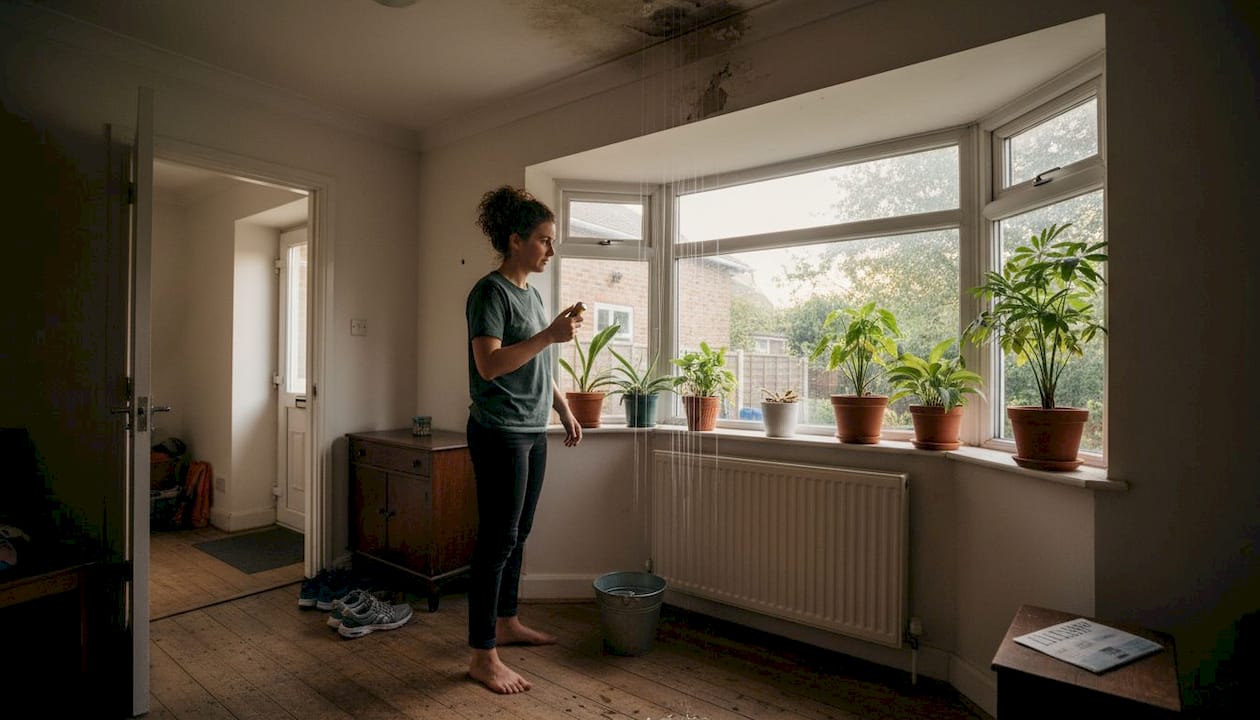
The damp and mould risks facing Oxford residents are real and documented. Condensation mould and leaks can affect up to 50% of UK homes, and the consequences go beyond cosmetic damage. Prolonged damp leads to structural deterioration, poor air quality, and respiratory health problems, particularly for children and elderly residents.
The good news is that catching issues early cuts the risk dramatically. Your Oxford plumbing checklist is the first place to start, giving you a structured way to inspect your home before small faults become expensive emergencies.
Common warning signs to look out for:
- Slow-draining sinks or bath tubs
- Persistent musty or damp odours in rooms
- Yellow or brown water stains on ceilings and walls
- Visible mould patches near windows, in bathrooms, or behind furniture
- Bubbling or peeling paintwork on walls
- Unexplained increases in your water bill
When any of these appear, the time for action is immediately. Understanding leak detection basics can help you identify whether the source is a pipe joint, appliance connection, or something more serious. In older Oxford homes, don't underestimate the role of blocked gutters either. Water overflowing from blocked gutters regularly works its way into cavity walls and causes penetrative damp that's easily mistaken for a plumbing leak.
What you need to get started: tools and materials
Before you begin any maintenance, having the right tools ready makes the difference between a quick check and a frustrating afternoon. You don't need a tradesperson's van worth of equipment. A modest toolkit covers most routine jobs.
| Tool or material | Purpose | Essential? |
|---|---|---|
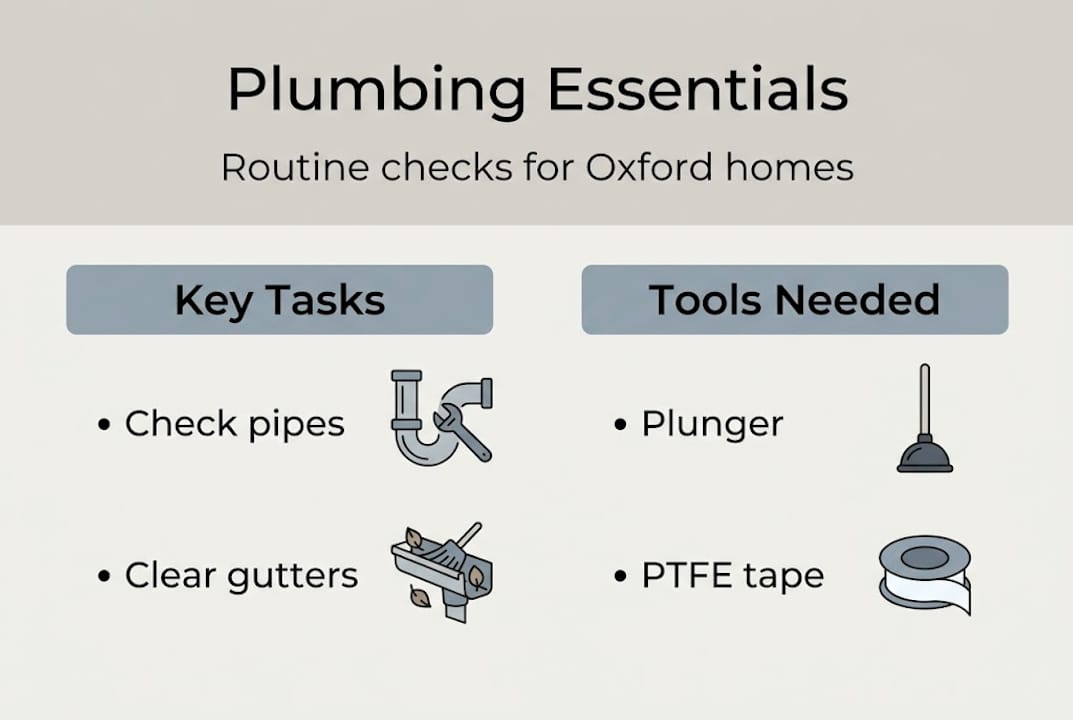
| Plunger | Clearing blocked sinks and toilets | Yes |
| Pipe wrench | Tightening and loosening fittings | Yes |
| PTFE tape | Sealing threaded pipe joints | Yes |
| Inspection torch | Checking under sinks and in dark spaces | Yes |
| Rubber gloves and goggles | Personal protection | Yes |
| Adjustable spanner | General fittings and valve work | Recommended |
| Drain auger (snake) | Clearing deeper blockages | Recommended |
| Silicone sealant | Resealing baths and sink edges | Recommended |
| Low-cost leak detector | Early warning of hidden moisture | Highly recommended |
| Bucket and towels | Containing water during work | Yes |
For materials, PTFE tape and silicone sealant are cheap and genuinely useful. If a seal is weeping slightly, a fresh bead of silicone can stop water ingress before it becomes structural. It's also worth checking that your plumbing inspection essentials are up to date, especially if you've recently moved into an older Oxford property.
Local builders' merchants in Oxford, including those near the Cowley Road and Botley Road areas, stock everything listed above. Online suppliers are fine too, but buying locally means you can get advice on the right spec for your pipe size or fitting type.
Using correct equipment helps prevent avoidable water leaks and property damage, so don't skip the basics to save a few pounds.
Pro Tip: A battery-powered moisture meter or a simple leak detector alarm placed near your boiler, washing machine, and under kitchen sinks can alert you to hidden drips well before they cause visible damage. They cost under £20 and are worth every penny.
Optional extras worth considering:
- A mini drain camera for inspecting waste pipes
- A water pressure gauge (most UK homes should read 1 to 3 bar)
- Freeze-resistant pipe lagging for exposed outdoor pipes
Step-by-step maintenance: keeping your plumbing in top condition
Routine maintenance doesn't need to take a whole weekend. Done systematically, a thorough check takes around two hours. Here's how to approach it:
- Check all visible pipe joints. Look under sinks in the kitchen and bathroom. Feel around joints for moisture, staining, or corrosion. Even a slightly damp joint warrants attention.
- Test taps and stop valves. Run every tap fully and check for inconsistent pressure or discolouration. Turn your main stop valve off and back on to ensure it moves freely.
- Inspect the toilet cistern. Lift the lid and check the fill valve and flush mechanism. A running toilet can waste up to 400 litres of water a day without making much noise.
- Clear leaves and debris from gutters. Clearing gutters regularly can prevent penetrative damp and condensation from entering your walls. Do this every autumn and after any heavy storms.
- Test extractor fans in bathrooms and kitchens. Hold a piece of tissue near the grille. If it doesn't move, the fan may be blocked or failing, which leads to condensation build-up.
- Check the boiler pressure gauge. Most combi boilers should read between 1 and 1.5 bar when cold. Top it up via the filling loop if it's dropped below 1 bar.
- Flush seldom-used taps. Run taps in spare rooms or guest bathrooms for a minute to flush stagnant water and reduce legionella risk.
Following a step-by-step checklist keeps these tasks from being overlooked. It also helps you stay on the right side of plumbing regulations, particularly if you rent your property out or plan to sell.
| Task | DIY suitable? | Frequency |
|---|---|---|
| Checking pipe joints | Yes | Every 3 months |
| Clearing gutters | Yes | Every 6 months |
| Boiler pressure check | Yes | Monthly |
| Extractor fan test | Yes | Every 3 months |
| Full drain inspection | Professional | Annually |
| Boiler service | Professional | Annually |
Pro Tip: Keep a simple maintenance log in a notepad or a notes app on your phone. Record the date, what you checked, and anything you noticed. If the same issue keeps appearing, you'll spot the pattern quickly and know when to call a professional.
Troubleshooting and preventing the most common Oxford plumbing problems
Even with good maintenance habits, things go wrong. Knowing what to look for and how to respond can stop a minor issue becoming a major one.
Early warning signs not to ignore:
- Water pressure that drops suddenly or fluctuates between rooms
- Brown or rust-coloured water from taps, especially after a dry spell
- Gurgling sounds from drains or behind walls
- Damp patches appearing on walls or ceilings after rainfall
- Toilets that fill slowly or keep running after flushing
One of the most common mistakes Oxford homeowners make is reaching for chemical drain unblockers at the first sign of a slow drain. These products can damage older pipework, particularly the lead or clay waste pipes still found in many Victorian properties. A plunger or drain auger is nearly always safer and more effective.
"Water near an electrical socket is always an emergency. Do not wait to see if it dries out."
Damp caused by leaks or poor gutter maintenance affects many Oxford homes but can be controlled with regular checks. The key is responding quickly. A dripping tap is DIY territory. A leak inside a wall, a boiler fault, or water tracking along a joist is not.
For guidance on when to stop DIYing and pick up the phone, the emergency plumber guide explains exactly which situations warrant an urgent call-out. Knowing that boundary protects both your property and your safety.
Quick-fix vs. call-a-professional breakdown:
- Dripping tap: Usually DIY. Replace the washer or cartridge.
- Slow sink drain: Try a plunger or manual auger first.
- Running toilet: Often DIY. Replace the flapper valve or fill valve.
- Leak inside a wall or ceiling: Always professional.
- No hot water: Check boiler pressure first. If unresolved, call a professional.
- Sewage smell from drains: Professional inspection recommended.
A local perspective: what most guides miss about Oxford's plumbing
Most national plumbing guides are written for generic modern housing. They don't account for what we see regularly in Oxford: Georgian townhouses with gravity-fed systems, Edwardian terraces where one property's waste pipe feeds through the next, or purpose-built student lets where years of deferred maintenance have compounded small issues into significant ones.
Oxford's housing density also means that leaks in shared spaces, such as communal roofs or party walls, often go unreported until someone's ceiling gives way. That's a fundamentally different risk to a detached house in the suburbs.
Timing also matters more than most guides admit. Running a quick check before Oxford's university term begins in October, when student lets are fully occupied and water usage surges, is genuinely smart planning. The same applies before the wet winter season. Understanding local plumber roles and what they can and can't do on short notice is worth knowing before you actually need that knowledge urgently.
DIY can absolutely save money. But some tasks, particularly anything involving gas, mains water connections, or structural penetrations, always need a qualified professional.
Need professional help? Trusted Oxford plumbers are here
Sometimes a maintenance task reveals something beyond a quick fix. Corroded pipework, persistent damp, or a failing boiler all need expert attention, and trying to push through without professional support can make things considerably worse.

Your Local Plumber Oxford connects you with vetted, experienced local engineers who understand the specific challenges of Oxford's housing stock. Whether you need a routine annual service, an urgent leak repair, or a full plumbing inspection before buying or selling a property, you can get a rapid response with transparent pricing and no hidden costs. Keeping your home safe and dry doesn't have to be stressful when you have the right support close by.
Frequently asked questions
How often should I check my plumbing in Oxford?
Regular inspections every three to six months can prevent most leaks and damp issues before they escalate, making it the single most effective maintenance habit you can build.
What are the signs of early plumbing problems?
Watch for dripping taps, slow drains, and any unexplained musty smells or water stains. Common problem signs like slow drainage often point to a blockage or joint failure well before visible damage appears.
Should I attempt all plumbing fixes myself?
Simple tasks like clearing a blocked drain or replacing a tap washer are fine for DIY, but complex issues like leaks needing professional repair, including anything inside walls or on the mains supply, always need a qualified plumber.
How does plumbing maintenance help prevent mould in Oxford homes?
Good plumbing keeps areas dry, reducing condensation and the risk of mould. Damp and mould risks are closely tied to water leaks and poor ventilation, and consistent maintenance is the most reliable way to keep both under control.