TL;DR:
- UK regulations require specific drainage, venting, traps, and inspection chambers for compliant bathroom plumbing.
- Proper pipe sizing, gradients, and accessible inspection points are essential for efficient and maintainable drainage systems.
- Choosing durable materials and planning for accessible and correctly installed features prevent costly future repairs.
Planning a new bathroom or upgrading an existing one is exciting, but it comes with a layer of responsibility that many homeowners don't anticipate. UK Building Regulations set strict requirements for drainage, venting, and pipework, and getting them wrong can mean failed inspections, costly remedial work, or worse, persistent leaks and unpleasant odours. This article walks you through a practical checklist of the plumbing features every UK bathroom must have, explains why each one matters, and compares your material and fitting options so you can make confident, informed decisions before a single tile goes up.
Table of Contents
- Key criteria for compliant bathroom plumbing
- Essential plumbing features for every bathroom
- Comparison of popular plumbing materials and fittings
- Situational recommendations: Matching features to your home
- A plumber's perspective: What really matters in bathroom plumbing
- Get expert help with your bathroom plumbing
- Frequently asked questions
Key Takeaways
| Point | Details |
|---|---|
| Check for compliance | Always ensure that your bathroom plumbing meets the latest UK Building Regulations for safe and lawful installation. |
| Prioritise inspection points | Strategically placed inspection chambers and isolation valves make maintenance and repairs far easier. |
| Choose suitable materials | Select durable, regulation-approved materials and fittings to extend your plumbing's lifespan and reliability. |
| Tailor to your home | Essential features may vary based on your property age and type, so adjust your choices to your unique situation. |
| Seek expert guidance | A qualified local plumber can ensure your bathroom is fitted correctly and stays problem-free for years. |
Key criteria for compliant bathroom plumbing
Every UK bathroom project starts with the same question: what does the law actually require? Understanding this before you pick fixtures or fittings saves you from expensive mistakes later. UK plumbing regulations cover far more than most homeowners realise, reaching into pipe sizing, drainage gradients, and even how high your vent pipes must sit above roof openings.
Here is what every compliant UK bathroom drainage system must include:
- Foul drainage pipes with a minimum bore of 100 to 110mm, installed at a 1:40 gradient (meaning the pipe drops 1mm for every 40mm of horizontal run) to keep waste flowing freely without blockage
- Water traps on every sanitary fitting, including toilets, basins, baths, and showers, to maintain a water seal that blocks foul gases from entering the room
- Venting pipes that terminate at least 900mm above any opening into the building, such as windows or air bricks, to safely disperse gases
- Separate drainage systems for foul water (from toilets, basins, and baths) and surface water (from roofs and driveways), preventing contamination
- Inspection chambers positioned at every change of direction and junction in the drainage run, allowing access for rodding and future maintenance
According to Building Regs Part H, foul drainage must follow a minimum 100 to 110mm bore for single dwellings at a 1:40 gradient, with inspection chambers at changes and junctions, separate foul and surface water systems, traps with water seals on all sanitary fittings, and venting pipes terminating 900mm above openings.
"A compliant bathroom is not just about aesthetics. It is about protecting your home from structural damage, health hazards, and the financial burden of emergency repairs caused by non-compliant drainage."
Getting familiar with plumbing terminology explained in plain English helps you hold an informed conversation with your installer. Never sign off a job you do not fully understand.
Pro Tip: Before your plumber starts, ask them to walk you through the drainage plan on paper. Any reputable engineer will be happy to explain the gradient, the venting route, and where inspection chambers will sit. If they cannot explain it clearly, that is a warning sign.
Essential plumbing features for every bathroom
With the compliance criteria clear, it is time to look at each plumbing feature in detail. Understanding what each component does, and what happens when it is missing or poorly fitted, gives you real power as a homeowner overseeing a bathroom project.
-
Waste pipes. These carry water away from your basin, bath, and shower. They must be correctly sized (typically 32mm to 40mm for basins and baths) and fall at the right gradient. Too steep and the water outruns the solids, leaving deposits behind. Too shallow and everything backs up. Your installer must balance both extremes.
-
Soil stack. This is the large vertical pipe, usually 110mm in diameter, that carries waste from toilets down to the underground drainage system. It also acts as the primary vent for the entire drainage system. In older UK homes, the soil stack may be external and cast iron. In newer builds, it is typically internal and made from plastic. Both are acceptable, but each requires different maintenance considerations.
-
Water traps. Every waste outlet needs a trap. This is a U-shaped section of pipe that retains a small amount of water after each use. That water seal physically blocks sewer gases, including hydrogen sulphide, from travelling back up the pipe and into your bathroom. Traps with water seals on all sanitary fittings are a legal requirement, not an optional extra. A trap that dries out (common in rarely used en-suites) will let smells through immediately.
-
Isolation valves. These small quarter-turn valves sit on the supply pipes feeding your toilet, basin, and bath or shower. They let you shut off the water to a single fitting without turning off the supply to the entire house. This is vital for fast, low-cost repairs. Without isolation valves, a leaking toilet cistern becomes a whole-house water shut-off event.
-
Venting. Air must be able to enter and exit your drainage system freely. Without it, the act of flushing a toilet creates negative pressure that can suck the water seal out of nearby traps, letting odours in. For bathrooms where full soil stack venting is not possible (such as a basement WC), an air admittance valve (AAV) can be fitted instead, provided the rest of the drainage system has at least one open vent.
A good plumbing maintenance checklist will cover all of these features and help you keep them working long after installation. It is also worth understanding the professional plumber's role in carrying out this work to the required standard.
Pro Tip: Ask your plumber to label every isolation valve during installation. A small sticky label indicating which fitting each valve serves takes minutes to apply and saves enormous frustration the moment something goes wrong at midnight.
Common installation pitfall: Many homeowners underestimate the depth and fall required for underground drainage runs. A run that is too shallow may freeze in winter or become damaged by traffic loading above.
Comparison of popular plumbing materials and fittings
Selecting compliant features is only half the challenge. You also need to choose the right materials and fittings for your home's specific situation. Each material comes with its own trade-offs in terms of cost, longevity, and ease of repair.
| Material | Typical use | Lifespan | Cost | Repairability |
|---|---|---|---|---|
| Copper | Supply pipes, hot and cold runs | 50+ years | Higher | Moderate (requires soldering) |
| Plastic (PVC/ABS) | Waste and drainage pipes | 25 to 50 years | Lower | Easy (solvent weld or push-fit) |
| Flexible push-fit | Connections in tight spaces | 20 to 30 years | Moderate | Very easy (tool-free removal) |
| Cast iron | Older soil stacks, heritage homes | 80+ years | High | Difficult (specialist skills) |
| Stainless steel | Shower waste, commercial settings | 30+ years | High | Easy |
Each material has its place. Here is a quick guide to when each suits best:
- Copper remains the preferred choice for hot and cold water supply because it handles pressure and temperature fluctuations exceptionally well. It also has natural antimicrobial properties, which matter for drinking water lines.
- Plastic is the standard for modern drainage because it is lightweight, resistant to corrosion, and easy for plumbers to cut and join on site. Most new UK bathrooms use plastic for all waste and soil pipework.
- Flexible push-fit fittings are invaluable in awkward spaces, such as behind cisterns or under baths, where a rigid pipe would be impossible to connect. They are not suited to high-temperature or high-pressure applications, though.
- Cast iron should be retained in older or listed properties where character matters, but always have it inspected for corrosion and leaks before connecting new fittings to it.
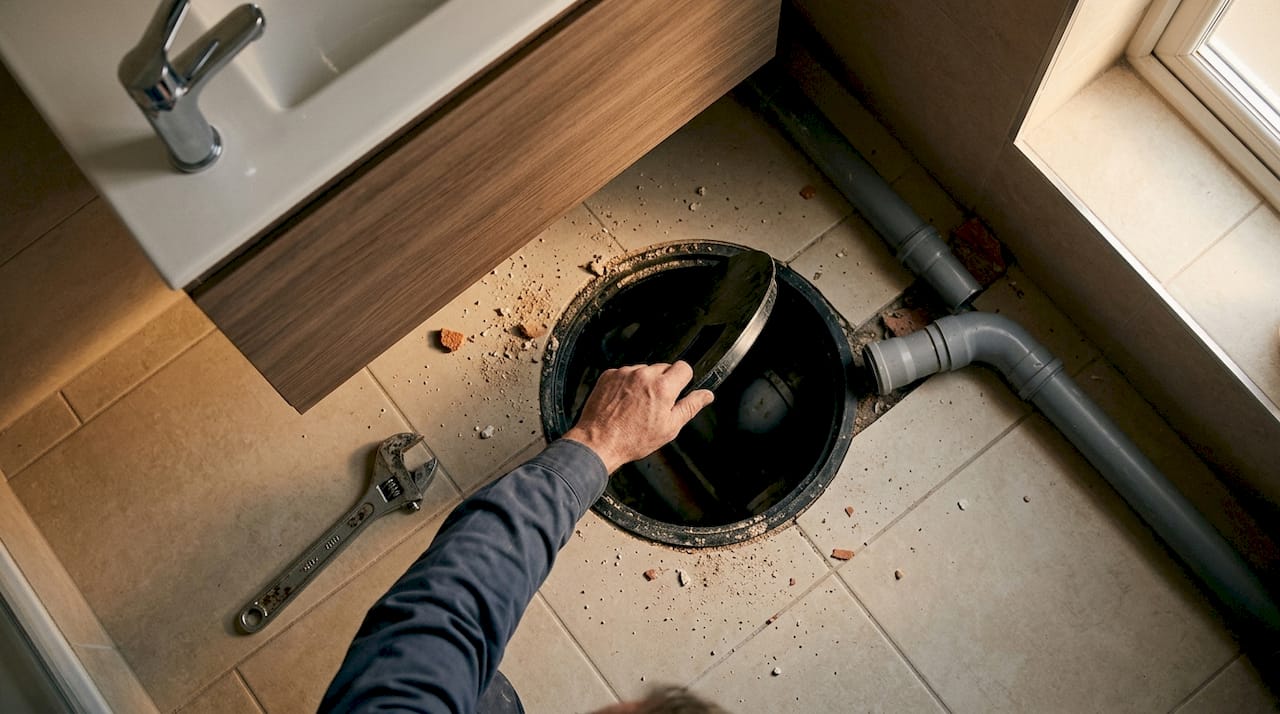
Inspection chambers should be installed at all pipe changes and junctions, with proper accessibility for future maintenance, regardless of which pipe material you choose. Polypropylene chamber units are now the standard in UK residential drainage and are far easier to install than traditional brick inspection chambers.
Your plumbing inspection guidance will help you understand what surveyors and building control officers check during sign-off. If you are choosing decorative finishes alongside your plumbing, it is worth noting that some materials, like travertine for bathrooms, require specific drainage and waterproofing considerations around wet areas.
Key question to ask your installer: "Where will the inspection chamber be positioned, and how do I access it once the landscaping is finished?" Access covers that sit flush with garden paving are easy to overlook during landscaping and then impossible to find when needed.
Situational recommendations: Matching features to your home
Not every UK bathroom is starting from the same position. A Victorian terrace, a 1970s semi-detached, and a modern new build each present different challenges and opportunities. Getting your plumbing specification right means accounting for what you already have.
| Home type | Key considerations | Priority features |
|---|---|---|
| New build | Often pre-plumbed to Part H standard | Verify gradient, add isolation valves |
| Victorian terrace | Likely combined drainage, ageing pipes | Separate drainage, replace lead supply |
| En-suite conversion | Limited space for full venting | AAV, compact traps, 32mm waste |
| Family bathroom | High usage, multiple fittings | Robust isolation valves, large soil stack |
| Disabled access (wet room) | Level access, large drain capacity | Wide waste, linear drain, anti-scald |
For older homes, the most important first step is to establish whether you have a combined or separate drainage system. Many UK properties built before the 1960s were connected to a single combined sewer that handles both foul water and rainwater together. If this is the case, your local water authority will have records, and your plumber can use CCTV drain inspection to confirm.
Here are the warning signs that you need emergency plumbing help rather than a planned installation:
- Gurgling sounds from drains after flushing, suggesting a venting problem or partial blockage
- Persistent bad odours in the bathroom, pointing to failed or dried-out traps
- Slow drainage across multiple fittings, indicating a blocked or undersized soil stack
- Damp patches on ceilings or walls below or beside the bathroom
Pro Tip: Venting pipes must terminate at least 900mm above any building opening. If your loft conversion has added new windows near the old vent pipe termination point, have a plumber check that the vent still meets this clearance. Many homeowners discover this issue only when neighbours complain about odours from the roof.
For en-suite bathrooms being added to a bedroom, the most common mistake is underestimating the drainage fall available. If your bedroom floor level does not allow for a proper gradient back to the soil stack, a macerator toilet may be the only viable option, though these require their own specific compliance and maintenance regime.
A plumber's perspective: What really matters in bathroom plumbing
Here is something most plumbing guides will not tell you: the features that matter most are almost always the ones you never see. Homeowners spend weeks choosing tiles, taps, and shower heads, but give almost no thought to isolation valves, inspection chambers, and trap accessibility. Then, three years later, a valve seizes, a trap blocks, and suddenly that hidden pipework becomes the most important thing in the house.
In our experience, the single biggest oversight is inaccessible plumbing. Pipes boxed in with no service hatch, isolation valves buried behind permanently sealed panels, and inspection chambers concreted over during landscaping. These mistakes do not cause problems immediately, but they guarantee that any future repair will cost two or three times what it should because the plumber has to demolish something before they can even start the actual job.
The second thing experienced engineers notice is that cheap traps fail quickly. Deep-seal traps (75mm water seal) are more reliable than shallow traps in bathrooms that are used every day because they are far less likely to lose their seal through evaporation or siphonage. The difference in cost is less than a few pounds per fitting, yet most people default to whatever is cheapest at the builders' merchant.
Understanding the plumber's role in reliability is about more than technical competence. It is about forethought. A good plumber designs your bathroom drainage so that any future problem can be isolated, accessed, and repaired with minimal disruption. That is the mark of quality workmanship that genuinely adds value to your home.
The third overlooked feature is the gradient. It sounds simple, but getting a consistent 1:40 fall across a long waste run in an old house with uneven floors is genuinely skilled work. Too many installations rely on visual judgement rather than spirit level measurement, and the result is a pipe that holds standing water, breeds bacteria, and blocks repeatedly.
Get expert help with your bathroom plumbing
Planning a bathroom upgrade is much more straightforward when you have the right team behind you. Whether you are fitting a brand-new en-suite, upgrading an ageing family bathroom, or simply need a professional to check your current installation against Part H requirements, a certified local engineer can handle it quickly and correctly.

At Your Local Plumber, our experienced engineers carry out full bathroom plumbing installations, compliance checks, and upgrades across a wide range of property types. You can book a trusted plumber online in minutes, with fast response times and clear, upfront pricing. Our local plumbing service covers everything from initial drainage design through to final sign-off, giving you lasting confidence that your bathroom meets every regulatory requirement. Do not leave compliance to chance when expert help is this accessible.
Frequently asked questions
What is the minimum pipe size for bathroom drainage in the UK?
Bathroom foul drainage pipes must meet a minimum 100 to 110mm bore for single dwellings, installed at a 1:40 gradient, as required by UK Building Regulations Part H.
How often do bathroom plumbing systems need inspection chambers?
Inspection chambers at changes and junctions are required by UK Building Regulations, meaning you need one wherever the drainage pipe changes direction or connects to another run.
Why are water traps important in bathroom plumbing?
Water traps maintain a physical seal of water in the pipe that blocks sewer gases from entering your bathroom. Traps on all sanitary fittings are a legal requirement under UK Building Regulations Part H.
What should I ask a plumber before a new bathroom installation?
Ask about compliance with UK Building Regulations Part H, the pipe materials being used, the location of all isolation valves, and how inspection chambers will be made accessible after the project is complete.
What does venting mean in bathroom plumbing?
Venting allows air to circulate through the drainage system, preventing pressure imbalances that would destroy water trap seals. Venting pipes terminate 900mm above any building opening, as required by UK regulations to safely disperse drainage gases away from habitable spaces.