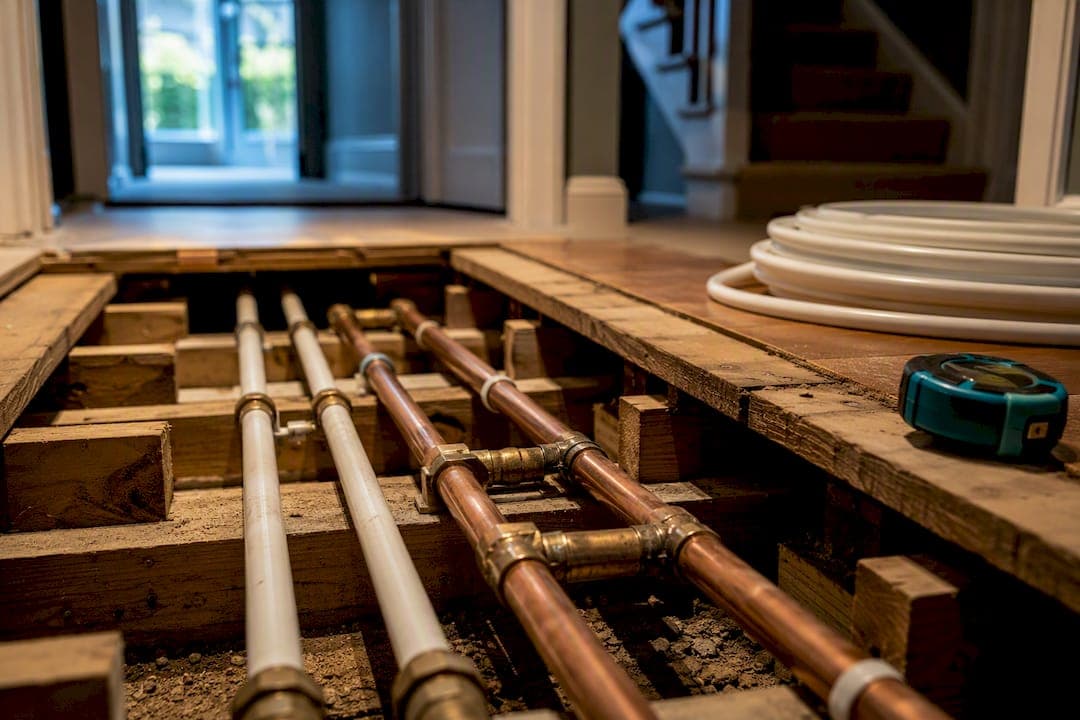
Repiping a house in the UK typically costs between £6,000 for a one-bed flat and over £28,000 for a large period property, with most three-bed semis landing around £19,000. Those figures cover labour and standard materials but exclude making-good and VAT. The final number swings on access, bathroom count, pipe material and your region, so treat this as a starting point, not a quote.
TL;DR:
- Repipe costs vary significantly by property size, with a three-bed house typically costing around £19,000, excluding VAT and making-good.
- Access difficulty, bathroom and outlet count, and the number of storeys are the main variables that can increase the final price by several thousand pounds.
- Regional labor rates, especially in London and the South East, can add substantial costs, with day rates often between £250 and £400.
- Copper and PEX pipes offer different long-term advantages, but material choice usually depends on the property's specifics and local regulations.
- A thorough on-site survey, clear itemized quote, and pressure test records are essential to avoid unexpected costs and ensure proper job completion.
Table of Contents
- How much does it cost to repipe a house in the UK by size?
- What changes the price: the main cost drivers
- Copper vs PEX: which pipe material costs less?
- How long does a whole-house repipe take?
- Budgeting for a repipe: the 80/20 rule and real savings
- What a proper quote and completion certificate should include
- Expert tips from a practising UK plumbing engineer
- Making good and finishing costs after the pipework's in
- Hidden costs that catch homeowners out
- Do material choices affect long-term costs?
- How to find a plumber you can trust with a full repipe
- Why the standard cost guide misses half the story
- Get a survey and a fixed quote from Your-Local-Plumber
- Sources
- FAQ
How much does it cost to repipe a house in the UK by size?
The clearest way to budget a full repipe is by property size, and the market data is fairly consistent across independent cost guides. Checkatrade's cost data puts a two-bed replumb at around £14,500, a three-bed at roughly £19,000, and a four-bed at about £21,500. Separate figures from HaMuch sit close behind, at approximately £15,000, £20,000 and £22,000 for the same three sizes. This suggests these bands are a reasonable market consensus rather than an outlier from one source.

Here's how the numbers break down once you factor in smaller flats and larger period homes, which most generic cost guides skip over.
None of these figures include VAT, which most tradespeople add separately unless they quote inclusive, and none include making-good, meaning the plastering, flooring and decorating needed once the pipework is hidden again. Budget for that separately; it's covered in detail further down.
Regional labour rates cause some of the biggest swings within these bands. Day rates in London and the South East commonly run at around £250 to £400, against roughly £150 to £250 in other parts of the UK, according to industry cost breakdowns for full house replumbs. On a job spanning eight to ten working days, that difference alone can add a few thousand pounds to the final invoice.
Period properties are the wildcard in this table. A Victorian terrace with lead supply pipes, uneven floor joists and a single bathroom retrofitted decades ago will often cost more to repipe than a modern four-bed detached house, purely because of what's hiding behind the plaster.
What changes the price: the main cost drivers
Two houses of identical size can land £5,000 apart in quoted price, and the reason almost always comes down to a handful of variables that a phone estimate can never capture.
- Access is the single biggest swing factor: lifting floorboards on a suspended timber floor is quick work, but chasing pipework into solid concrete floors means cutting, digging and reinstating, which adds both time and cost.
- Bathroom and outlet count matters more than square footage alone, since every basin, bath, shower and outside tap is another branch of pipe, another joint, and another point that needs testing.
- Number of storeys affects pipe runs and the number of trips a plumber makes up and down ladders or through loft hatches, which adds hours you don't see reflected in the materials list.
- Regional labour rates, as noted above, shift the day-rate component of any quote by a meaningful margin, particularly in London and the South East.
- Hidden risks in older housing stock — lead pipework, corroded joints, poor drainage falls, or a shared supply with a neighbouring property — routinely turn a straightforward job into a longer one once the walls come open.
- Making-good and waste removal are frequently underestimated or left off cheaper quotes entirely, only to appear as an add-on once the pipework is in.
Some water companies will replace lead communication pipes free of charge or at a subsidised rate if the timing lines up with your own works, according to guidance on replacing plumbing in older houses. It's worth a call to your supplier before you commit to a full quote, since sequencing that replacement alongside your own repipe can save a genuinely significant sum.
Copper vs PEX: which pipe material costs less?
PEX (cross-linked polyethylene, sometimes called plastic pipe) usually costs less to buy and install than copper, and it's now the default choice for many UK installers working on full repipes. According to BestBuilders' 2026 cost guide, PEX can reduce labour time compared with copper, because it flexes around corners without soldered joints and needs fewer fittings per run.
- Copper: higher material cost (illustrative guides put it at roughly £6 to £9 per metre against PEX's £1.20 to £2.50), slower to install because every joint needs soldering, but a long, well-proven track record and the material most plumbers still specify near boilers and exposed pipework.
- PEX/plastic: cheaper per metre, quicker to fit, flexible enough to run through joists and stud walls without extra fittings, and increasingly the standard choice for concealed pipe runs where nobody will ever see the pipe again.
- Fitting availability: standard PEX fittings are widely stocked, but bespoke sanitaryware or older imperial-sized copper fittings can add lead time to a project, particularly on period properties where original fittings are non-standard.
Most experienced plumbers don't pick one material exclusively. They mix the two: copper tails near flues, boilers and any exposed section where heat or knocks are a risk, and PEX for the concealed runs behind walls and under floors where flexibility and speed matter more than tradition. Building regulations don't mandate one material over the other for most domestic work, but check with your installer if you're in a listed or conservation-area property, where some local authorities take a stricter view on visible pipework.
Pro Tip: Ask your quote to specify which sections will be copper and which PEX, and why. A plumber who can explain that split in plain terms is usually the one who's thought the job through properly, not just priced by the metre.
For more detail on how each material performs long term, our guide to plumbing materials for UK homeowners breaks down maintenance and lifespan side by side.
How long does a whole-house repipe take?
A standard three-bed house typically takes five to ten working days to repipe, according to industry programme estimates, with larger or more complex properties running to two weeks or beyond. Two-bed properties often finish at the shorter end of that range; four-bed and period homes with awkward access regularly overrun it.
The work generally follows a fixed sequence, and knowing it helps you plan around the disruption rather than be surprised by it:
- Survey: the plumber inspects access points, existing pipe routes, bathroom locations and any obvious problem areas like lead pipe or poor floor access.
- Strip out: old pipework is removed, floorboards lifted, and in some cases small sections of plaster or flooring opened up.
- Pipe installation: new pipework is run to every outlet, following the agreed routes from the survey.
- Pressure testing: the entire system is tested under pressure before anything is covered up, to catch leaks while they're still cheap to fix.
- Making-good: floorboards go back down, plaster is patched, and the property is handed back in a liveable state.
Expect your water to be off for periods each day, particularly during the strip-out and connection stages, and expect at least one full day without any running water at all while the system is switched over. If you've only got one bathroom, ask your plumber about a temporary standpipe or staggered works so you're not left without a toilet overnight. Staying with family or in a rental for the noisiest two or three days is common practice on bigger jobs, and worth pricing into your overall budget rather than treating as an afterthought.
Budgeting for a repipe: the 80/20 rule and real savings
Budget 80% of your total for the planned works and hold back at least 20% as contingency, a rule recommended in guidance on planning UK plumbing refurbishments. On a £19,000 three-bed job, that means setting aside roughly £3,800 you hope not to spend, rather than discovering halfway through that there's no slack left when a corroded joint or a lead pipe turns up behind the plaster.
A properly itemised quote should show labour and materials separately, plus any scaffold or access equipment, waste removal, making-good, and VAT clearly stated as included or excluded. If a quote is missing any of these lines, ask for clarification before you sign.
- Keep the existing layout wherever possible. Moving a bathroom or kitchen to a new wall multiplies pipe runs and labour, whereas replumbing fittings in situ is far cheaper.
- Batch bathroom and kitchen work together rather than doing them as separate projects months apart, since one team, one skip and one round of making-good costs less than two of each.
- Buy your own sanitaryware and fittings if you're comfortable choosing them, since some plumbers mark up materials, though check this won't affect any warranty on the finished work.
- Schedule off-peak, typically outside the busiest spring and early-summer renovation season, when tradespeople have more availability and sometimes more room to negotiate on price.
Pro Tip: A quote that comes in dramatically below every other one you've received is usually missing something, most often making-good, waste disposal or a full pressure test. Ask what's excluded before you celebrate the saving.
What a proper quote and completion certificate should include
A phone quote for a whole-house repipe is close to useless. Every reputable plumber needs an on-site survey to see the access, count the outlets and check for the hidden problems that change the price, according to guidance on what to expect from a repipe project. If someone offers you a firm price without visiting, treat it as a rough guide at best.
A quote worth signing should include:
- A clear, itemised breakdown of labour, materials, access equipment and waste removal.
- Stated assumptions about access (lifted floorboards vs solid floor work) so you know what happens if reality differs on the day.
- Explicit confirmation of whether making-good is included or excluded.
- A realistic timescale in working days, not a vague "a week or so."
On completion, insist on the paperwork that proves the job was done properly. Pressure testing every new pipe run before the walls close up is the single most reliable way to catch a leak while it's still cheap to fix, according to industry pressure-testing standards. Ask for a written record of that test, not just a verbal assurance it happened.
You should also receive a building regulations completion certificate where the works require one, a Gas Safe certificate if any gas pipework was disturbed, and any manufacturer warranties on fittings or the hot water cylinder. Our guide to UK plumbing regulations sets out exactly when notification and certification are required.
Expert tips from a practising UK plumbing engineer
Before quoting an older property, a good engineer runs a mental checklist: is there lead pipe anywhere in the system, are the joints showing green corrosion staining, and do the floors actually fall the right way for drainage. Miss any of those on the survey and they'll cost you double once the walls are open.
Sequencing saves money more than any single material choice does. If your water company will replace the lead supply pipe as part of a scheme, get that booked before your own repipe starts, not after. Pressure test each section as it's completed rather than waiting until the very end, and photograph every pipe run before it disappears behind plaster or flooring. That photo record is worth its weight in gold the next time you need to drill a wall for a shelf.
The most common mistake homeowners make is accepting a quote without asking what happens if hidden problems are found. Ask directly: what's your day rate if this changes once you open the walls, and how will I be told before extra cost is incurred?
Making good and finishing costs after the pipework's in
Making good is where budgets quietly blow out, and it's easy to see why: once the new pipes are in, someone still has to patch every wall, refit every floorboard, and redecorate every room that was disturbed. Industry cost analysis notes that in many repipe projects, plastering, flooring and decoration add more to the final bill than the pipe materials themselves, which catches a lot of homeowners off guard.
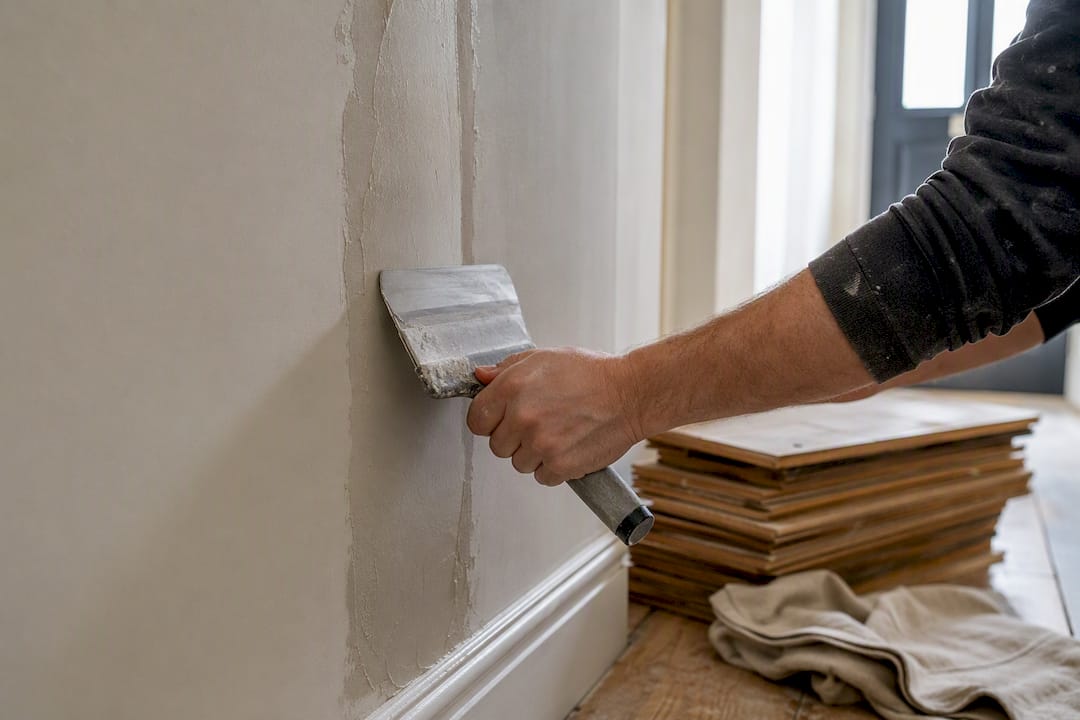
For a typical three-bed house, expect making-good costs somewhere in the region of £1,500 to £4,000 on top of the core repipe price, depending on how much flooring was lifted and how many rooms need redecorating afterwards. A house with fitted carpets throughout will generally cost more to make good than one with exposed floorboards, since carpet has to be lifted, stored and relaid.
Build this into your contingency rather than your core budget. If your quote already assumes a certain amount of making-good, check exactly what's covered, because "reinstating floorboards" and "full replastering and redecoration" are very different jobs with very different price tags. Getting this distinction clarified before work starts avoids an awkward conversation once the plumber's finished and the decorator hasn't been booked.
Hidden costs that catch homeowners out
Beyond the obvious labour and materials, a handful of costs tend to surface only once work is underway, and they're worth budgeting for upfront rather than discovering mid-project.
Asbestos is the big one in properties built or renovated before the early 1990s. If it's found in floor tiles, pipe lagging or boarding that needs disturbing, removal by a licensed specialist adds cost and time that a standard repipe quote won't have included, since testing and safe disposal follow strict rules.
Specialist access equipment is another frequent surprise. Solid concrete floors, unusually high ceilings, or awkward loft spaces sometimes need equipment beyond a standard plumber's toolkit, and that hire cost rarely appears on an initial estimate that was based on a quick visual survey rather than a full inspection.
Permit or notification fees can also apply, particularly where work affects a shared drain, a listed building, or falls under building regulations that require formal sign-off. These fees are usually modest compared with the overall job cost, but they're easy to miss if your quote doesn't specify who's responsible for arranging them.
The common thread across all of these is that a thorough survey, not a rushed one, is what catches them before they become an unpleasant surprise on the final invoice.
Do material choices affect long-term costs?
Copper pipework has a track record stretching back decades and, properly installed, tends to outlast the building around it with minimal maintenance beyond the odd joint replacement. PEX is younger by comparison, but manufacturer guidance and industry experience to date suggest a comparable practical lifespan for domestic use, with the advantage of no soldered joints to fail over time.
The real long-term cost difference isn't the pipe itself, it's what happens if something goes wrong. Copper failures are usually localised to a joint, and a competent plumber can isolate and repair one section without disturbing much else. PEX failures are rarer but, because runs are often longer and hidden further into structure, can occasionally mean opening a larger section of wall or floor to reach a fault.
Insurance rarely distinguishes between the two materials directly, but a documented, professionally certified repipe with pressure test records on file makes any future claim far easier to process, since you can show exactly what was installed, when, and to what standard. That paperwork trail matters more for insurance purposes than the material choice itself. Keep it somewhere safe alongside your home's other documentation, not filed away with the invoice and forgotten.
How to find a plumber you can trust with a full repipe
Credentials come first. Look for engineers registered with a recognised trade body, and if any gas pipework is involved, confirm they're Gas Safe registered, since that's a legal requirement, not a nice-to-have. For larger or more technical projects, some homeowners also look for firms whose senior staff hold RICS or CIOB-recognised qualifications, particularly where structural or building-regulations issues overlap with the plumbing work.
Reviews matter, but read them for detail, not just star ratings. A five-star review that says "great service" tells you nothing; one that describes a specific job, the timescale, and how the plumber handled an unexpected problem tells you a lot more about what to expect.
Ask about guarantees in writing before you commit; a proper repipe should come with a workmanship warranty covering at least a year, and ideally longer on the pipework itself. Cross-reference this against how they communicate at quote stage. If a plumber can't clearly explain their own quote or gets defensive when you ask about exclusions, that's worth noting before, not after, they've opened your walls. Our guide to plumbing terminology can help you ask sharper questions at that stage.
Why the standard cost guide misses half the story
Most cost guides treat a repipe as a single number tied to bedroom count, and that's a reasonable starting point but a poor way to actually budget. The property's age and access matter more than its size. A cramped two-bed Victorian terrace with lead pipes and solid floors can easily cost more than a spacious modern four-bed with a suspended timber floor throughout, because the number that drives the final invoice isn't square footage, it's how hard the pipes are to reach and what's hiding behind the plaster.
The conventional advice to "get three quotes and pick the middle one" also falls short. A cheap quote missing making-good and a thorough one that includes it aren't comparable, and picking the middle price without understanding what each actually covers is how homeowners end up with a nasty surprise invoice at the end.
What actually matters, based on everything in this guide, is insisting on a proper survey, a fully itemised quote, and pressure test records before anyone closes up a wall. Get those three things right and the property size, in the end, is just a starting figure, not the final word on what you'll pay.
— Michael
Get a survey and a fixed quote from Your-Local-Plumber
If you're weighing up a full repipe, the honest answer is that no online cost guide can replace a proper survey of your own house. You can arrange a local, on-site visit followed by a clear, itemised quote, typically carried out by experienced engineers who pressure test every job before it's closed up.

You'll get a written breakdown of labour, materials and any making-good before work starts, not a vague estimate that changes once the floorboards come up. That transparency is the difference between a repipe that stays on budget and one that doesn't. If you've read through the cost ranges above and want a number specific to your own property, book a free on-site survey and quote with Your-Local-Plumber and find out exactly where your house sits before you commit to anything.
Sources
The cost figures and standards referenced throughout this guide draw on the following sources, each chosen for a specific reason:
- Plumbing installation costs in the UK in 2026
- How Much Does It Cost to Re-Plumb a House in 2026? (UK)
- Replumb a house costs in your area
- How to plan plumbing refurbishment for UK homes
FAQ
How much does it cost to replumb a house in the UK?
Costs typically range from £6,000 for a one-bed flat to over £28,000 for a large or period property, with a standard three-bed house averaging around £19,000 before VAT and making-good.
Is it worth replumbing a house?
For a property with persistent leaks, corroded pipework, or lead supply pipes, a full repipe is usually worth it, since it removes recurring repair costs and can improve water pressure and safety throughout the house.
What is the average cost to replumb a 3-bedroom house in the UK?
The average cost sits around £19,000, based on figures from Checkatrade, though this excludes making-good and can vary with regional labour rates and access difficulty.
How often should you replumb a house?
There's no fixed schedule, but copper pipework installed to modern standards can last several decades with minimal issues, so most homeowners only replumb when facing repeated leaks, lead pipe, or a major renovation that opens up the walls anyway.