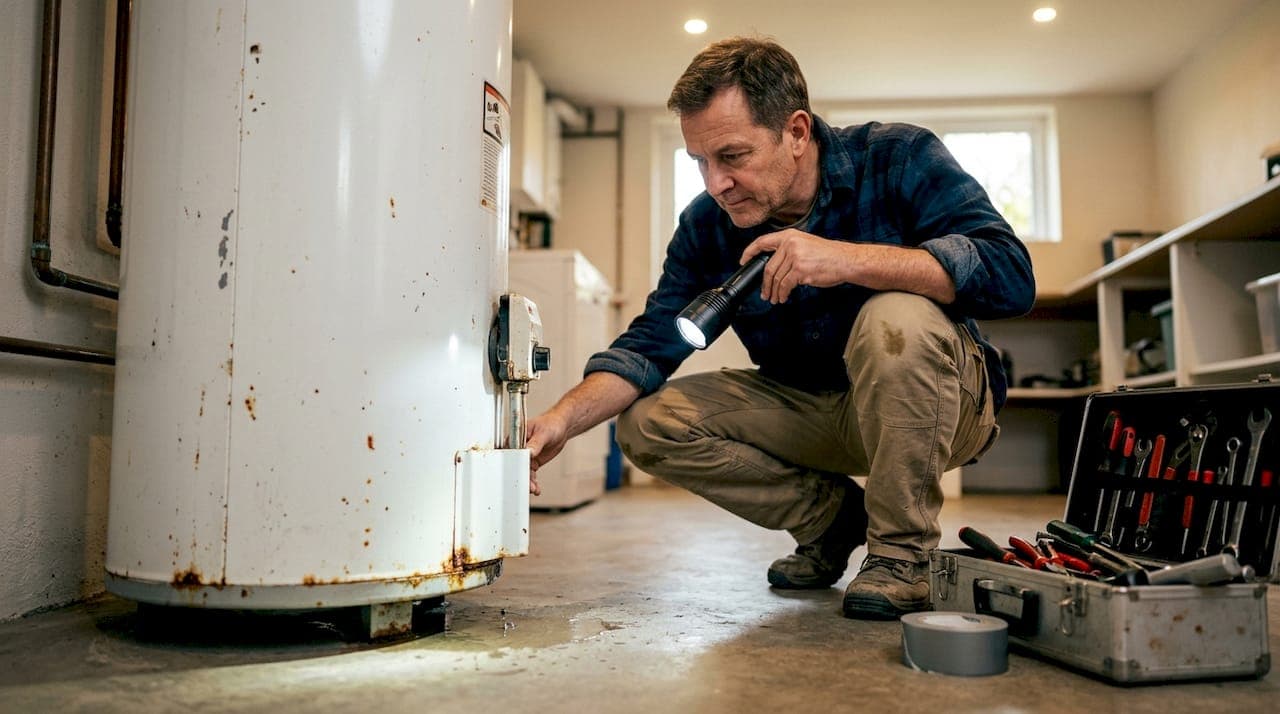
TL;DR:
- A failing water heater shows symptoms like rusty water, noises, leaks, and inconsistent hot water. Replacing the unit is advised if repair costs exceed 50% of a new one or if the heater is over 10 years old. Early detection through these signs can prevent costly damage and prolong water heater lifespan.
A failing water heater is defined by a cluster of symptoms that most homeowners notice, but rarely act on quickly enough. The clearest signs your water heater is failing include rusty water from hot taps, unusual banging or popping noises, visible leaks, inconsistent temperatures, and a reduced supply of hot water. Catching these early can mean the difference between a £150 repair and a £2,000 replacement. This guide walks you through each warning sign, explains what causes it, and tells you exactly what to do next.
1. Signs your water heater is failing: rusty or discoloured water
Rust-coloured water from hot taps indicates internal tank corrosion, a critical sign that the cylinder lining has broken down. This is one of the most urgent failed water heater indicators you can encounter.

The key diagnostic test is simple. Run your cold tap and check the colour. If the cold water runs clear but the hot water is brown or orange, the rust is coming from inside the tank itself, not from ageing pipes. That distinction matters because rusty pipes are a separate repair, while a corroded tank almost always requires full replacement.
Inside every hot water cylinder sits a sacrificial anode rod, typically made from magnesium or aluminium. Its job is to corrode in place of the tank lining. When the anode rod depletes, corrosion attacks the steel tank directly, and you may also notice a sulphur or rotten egg smell in your hot water. Replacing the anode rod early can prevent tank damage, but once rust appears in the water, the tank lining has already failed.
- Brown or orange hot water from taps
- Clear cold water but discoloured hot water
- Sulphur smell alongside discolouration
- Visible rust stains in sinks or baths after running hot water
Pro Tip: Run your hot tap for 30 seconds into a white bowl. If the water clears quickly, the issue may be pipe rust. If it stays brown, the tank is the source.
At this stage, repairs rarely make financial sense. Replacement is the correct course of action, and a qualified engineer can confirm this with a quick inspection.
2. Unusual noises: what popping and banging mean
Loud popping, rumbling, or banging from your water heater is not a minor quirk. Sediment buildup causes trapped steam bubbles that pop and rattle as the tank heats water, and this process actively damages the cylinder over time.
Sediment accumulates at the base of the tank from minerals in hard water, particularly calcium and magnesium. As the layer thickens, the heating element or burner has to work harder to heat the water above it. This extra strain reduces heating efficiency and causes the tank walls to overheat and weaken.
Sediment buildup can reduce heating efficiency by up to 25% and accelerate tank corrosion. Descaling heat exchangers every 3–5 years is critical for maintaining lifespan and preventing premature failure.
Flushing the tank can remove loose sediment and restore some efficiency. However, there is a significant risk that most homeowners are unaware of: flushing a heavily sedimented tank can dislodge deposits that were sealing small cracks, sometimes accelerating failure unexpectedly. If the noises are accompanied by visible moisture or leaks, do not attempt a flush. Call a professional immediately.
Common noise types and what they signal:
- Popping or crackling: Sediment on the heating element, common in electric cylinders
- Rumbling: Heavy sediment layer at the tank base, often in older gas units
- Banging: Thermal expansion in pipes or severe sediment, needs urgent attention
- Hissing: Possible pressure relief valve issue or a small internal leak
Many homeowners mistake these noises for minor issues. They are major water heater signs of trouble that signal impending failure and need decisive action.
3. Leaks and moisture around your water heater
A leak near your water heater does not automatically mean the tank has failed. Not all leaks signal tank failure; repairable leaks mostly come from external components rather than the cylinder itself. Knowing the difference saves you money.
Start by identifying where the moisture originates. Condensation on the outside of the tank casing is common in cold utility rooms and is not a leak. Check fittings and valves first before assuming the worst.
Here is a practical sequence for checking your water heater for leaks:
- Dry the tank exterior with a cloth and wait 30 minutes to see where moisture reappears.
- Check the pressure relief valve (PRV): A dripping PRV may just need a replacement valve, which is a straightforward repair. Learn more about plumbing valves and how they work.
- Inspect the drain valve at the base of the tank for drips or mineral crust around the fitting.
- Look for rust spots or pinholes on the tank body itself. These indicate irreversible internal corrosion.
- Check pipe connections at the top of the cylinder for moisture around the fittings.
Leaks from the tank body always require replacement. Leaks from the immersion heater boss, pipes, or valves can often be repaired for £80–£350. Delaying action on a tank body leak risks flooding, structural water damage, and mould growth. For further reading on spotting moisture problems early, the guide on hidden leaks covers detection methods in detail.
Pro Tip: Place dry paper towels around the base of the tank overnight. In the morning, check which sections are damp. This pinpoints the leak source far more accurately than a visual check alone.
4. Inconsistent or insufficient hot water
Running out of hot water faster than usual, or getting water that swings between scalding and lukewarm, are both common water heater issues that point to specific internal faults. The symptom tells you where to look.
Temperature swings are most often caused by a faulty thermostat or a failing heating element. In electric cylinders, a burnt-out immersion element will heat only part of the tank, leaving you with a fraction of your usual hot water capacity. In gas units, a malfunctioning thermostat can cause the burner to cycle erratically. Both faults are repairable if caught early. The guide on no hot water from taps covers these fault types in detail.
Sediment also plays a role here. A thick layer at the tank base physically displaces water volume, meaning the tank holds less usable hot water than its rated capacity. You get shorter showers not because the element is weak, but because the tank is partly full of mineral deposits.
Signs that point to thermostat or element faults:
- Hot water that runs out within minutes despite a full tank
- Water temperature that fluctuates during a single shower
- No hot water at all from one tap but normal supply from another
- The hot water cylinder feels warm at the top but cold at the base
Tankless systems show different symptoms. They tend to produce lukewarm water at high flow rates rather than running out entirely, which usually points to a scaling issue in the heat exchanger rather than a thermostat fault.
5. Your water heater's age and the 50% rule
Age is the single most reliable predictor of water heater failure. Traditional vented and unvented hot water cylinders typically last 8–12 years in UK conditions, while modern heat pump water heaters can reach 15–20 years with proper maintenance. An older unit showing any of the symptoms above is far more likely to fail catastrophically than a newer one with the same fault.
The financial logic of repair versus replacement becomes clear with the 50% rule. If repair costs approach 50% of a new unit price, replacement is the financially sound choice. A new cylinder costs £1,200–£2,000 installed, so any repair quote above £600–£1,000 on an ageing unit warrants serious consideration of full replacement. The 50% rule also accounts for peace of mind: an older tank that floods a kitchen or airing cupboard will cost far more in water damage than the savings from a cheaper repair.
Annual servicing by MCS-certified technicians extends water heater lifespan and keeps manufacturer warranties valid. Skipping annual checks shortens unit life and can void warranty schemes entirely. The plumbing maintenance checklist for UK homeowners is a useful reference for scheduling these checks.
Pro Tip: Write the installation date on a sticker and attach it to the tank. Most homeowners have no idea how old their cylinder is, and that date is the first thing a qualified engineer will ask for.
| Factor | Repair makes sense | Replacement makes sense |
|---|---|---|
| Unit age | Under 7 years | Over 10 years |
| Repair cost | Below 50% of new unit price | Above 50% of new unit price |
| Leak source | Valves, pipes, or fittings | Tank body or lining |
| Water quality | Clear, no odour | Rusty, smelly, or discoloured |
| Noise level | Occasional, mild | Persistent banging or rumbling |
Key takeaways
A water heater showing rusty water, persistent noises, leaks from the tank body, or failing performance past 10 years of age requires professional assessment without delay.
| Point | Details |
|---|---|
| Rusty hot water means tank failure | Brown water from hot taps signals internal corrosion; replacement is almost always necessary. |
| Noises indicate sediment damage | Popping and banging reduce efficiency by up to 25% and accelerate tank wear. |
| Not every leak needs a new tank | Leaks from valves or pipes cost £80–£350 to repair; tank body leaks require full replacement. |
| Use the 50% rule for decisions | If repair costs exceed half the price of a new unit, replacement is the smarter investment. |
| Annual servicing extends lifespan | MCS-certified servicing keeps warranties valid and catches faults before they become failures. |
What I've learned from years of water heater callouts
The homeowners who call us in a genuine emergency almost always say the same thing: "I noticed something a few months ago but thought it would sort itself out." A faint banging noise, a slight discolouration in the morning shower, a small damp patch near the airing cupboard. These are not minor quirks. They are the early chapters of a much more expensive story.
What I find most telling is how often the 50% rule surprises people. They expect to hear that a £300 repair is always worth doing on a 12-year-old cylinder. It rarely is. An older tank that needs one repair today will need another in six months. The cumulative cost, plus the risk of a sudden failure and the water damage that follows, makes replacement the rational choice far sooner than most homeowners expect.
My honest advice is this: book an annual inspection with a Gas Safe or MCS-certified engineer, keep a note of your cylinder's installation date, and treat any new symptom as a signal worth investigating within a week, not a season. The cost of a diagnostic visit is a fraction of an emergency callout after a flood. Proactive maintenance is not caution. It is the cheaper option.
— Michael
Water heater problems? Your-local-plumber can help
If you have spotted any of these warning signs, getting a professional assessment quickly is the right move.

Your-local-plumber provides expert water heater diagnostics and repairs across the UK, with upfront pricing and no hidden costs. Whether you need a valve replacement, a full cylinder swap, or simply a second opinion on whether repair or replacement makes more sense for your situation, the team of experienced engineers is ready to help. All work is carried out by certified technicians, keeping your warranty valid and your home protected. Book a visit today and get a clear answer fast.
FAQ
What are the first signs of a failing water heater?
The earliest signs include rusty or discoloured hot water, unusual popping or banging noises, and a reduction in the amount of hot water available. Catching these symptoms early typically means lower repair costs.
How do I know if my water heater needs replacing or just repairing?
If the leak or fault comes from the tank body itself, replacement is necessary. If repair costs exceed 50% of a new unit's price, or the unit is over 10 years old, replacement is usually the better financial decision.
Can sediment in a water heater be fixed?
Flushing the tank removes loose sediment and can restore some efficiency, but heavily sedimented tanks carry a risk: dislodged deposits can expose small cracks and accelerate failure. A professional should assess the tank before any flushing is attempted.
How long does a hot water cylinder last in the UK?
Traditional cylinders typically last 8–12 years. Heat pump water heaters can reach 15–20 years with annual servicing by a certified technician. Age combined with any warning sign is a strong indicator that replacement is approaching.
Is rusty water from my hot tap dangerous?
Rusty water from hot taps signals internal tank corrosion and should not be ignored. While a brief discolouration is not immediately harmful, a corroding tank risks leaks, rupture, and contamination of your hot water supply.