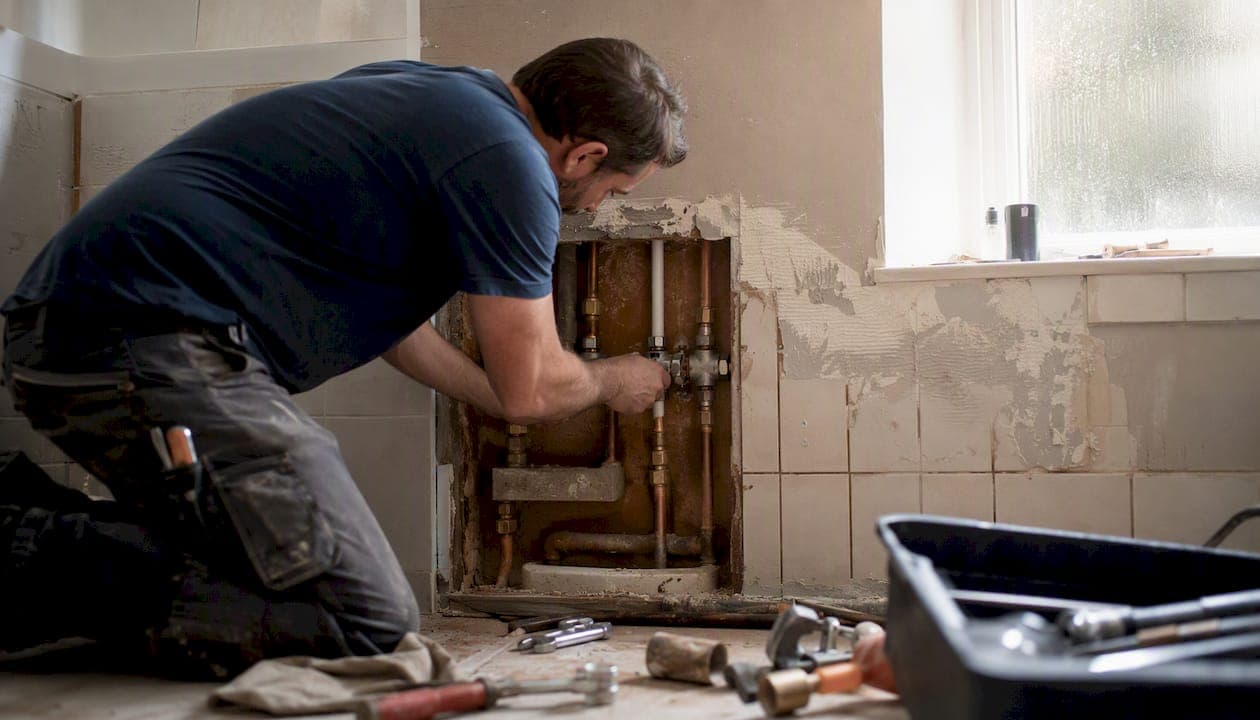
A thermostatic shower holds your chosen temperature precisely and shuts off automatically if the cold supply fails, protecting every member of your household from scalding. That single feature makes it the most practical safety upgrade you can add to a bathroom refit.
The core benefits at a glance:
- Anti-scald protection: the valve closes if cold water pressure drops, preventing a sudden blast of scalding water
- Stable temperature: Triton Showers confirms that thermostatic showers keep fluctuations within a few degrees, even when someone runs a tap elsewhere in the house
- Set-and-forget convenience: dial your preferred temperature once; every user in the household gets the same result
- Potential water and energy savings: no more running the shower cold while you wait for it to settle at the right heat
- Suitability for vulnerable users: children, older adults, and anyone with reduced sensitivity to heat benefit most from the automatic temperature limit
Families with young children or elderly relatives should treat this as a priority upgrade rather than a luxury addition.
Pro Tip: If your bathroom renovation will disturb tiles or pipework anyway, the marginal cost of fitting a thermostatic valve at the same time is far lower than returning to do it later.
Key takeaways
A thermostatic shower valve with TMV2 certification, correctly commissioned to deliver at 40–43°C, is the most practical safety and comfort upgrade available for a UK family bathroom.
| Point | Details |
|---|---|
| Anti-scald protection | TMV2-certified valves shut off automatically if cold supply fails, protecting children and older adults. |
| Temperature stability | Thermostatic showers hold fluctuations within a few degrees, even when other outlets run simultaneously. |
| System compatibility | Combi and mains-pressure systems suit thermostatic mixers best; gravity-fed homes may need a pump or electric shower. |
| Commissioning is critical | A written temperature test sheet at handover is the only proof the valve was set correctly. |
| Your-local-plumber | Provides supply, fit, commissioning, and written temperature records for thermostatic shower installations across the UK. |
Table of Contents
- How a thermostatic shower and thermostatic mixing valve actually work
- The real benefits of thermostatic shower systems explained
- Will a thermostatic shower work with your UK heating and water system?
- Typical costs and what installation involves in the UK
- Common drawbacks and installation pitfalls to know about
- UK safety standards: TMV2, TMV3, and what to look for on the label
- How to choose a thermostatic shower system and what to ask your installer
- When to consider alternatives: electric showers and manual mixers
- Installer insight: commissioning checks that prevent most complaints
- When Your-local-plumber recommends a thermostatic shower
- Get your thermostatic shower installed and commissioned correctly
- Sources
How a thermostatic shower and thermostatic mixing valve actually work
A thermostatic shower is built around a thermostatic mixing valve (TMV): a device that blends your hot and cold supplies to produce water at a pre-set output temperature. Homebuilding explains that the valve holds this temperature automatically and prevents sudden scalding or cold blasts when other outlets are used elsewhere in the property.
Inside the valve body, a thermostatic element (typically a wax capsule or bimetallic strip) expands and contracts in response to temperature changes. That physical movement shifts a piston or shuttle to adjust the ratio of hot to cold water in milliseconds. The response is mechanical, not electronic, so it works without a power supply and reacts faster than any manual adjustment could.
The flow path in simple terms:
- Hot supply enters one port, cold supply enters another
- The thermostatic element continuously senses the blended outlet temperature
- If the outlet runs too hot, the element expands and reduces the hot-water proportion
- If the outlet cools, the element contracts and increases hot flow to compensate
- If cold supply fails entirely, the valve closes or severely restricts flow to prevent scalding
That last point is the fail-safe. TMV guidance from Flexiheat UK confirms that thermostatic mixing valves are designed to shut off or limit hot flow if the cold supply fails, and recommends safe delivery temperatures of around 40–43°C for domestic shower outlets.
Most valves also include a maximum-temperature stop: a physical limiter, often a coloured cap or screw, that prevents the user from accidentally setting the dial above a safe threshold. This is separate from the fail-safe and provides an additional layer of protection for households with children.
Pro Tip: Ask your installer to show you where the maximum-temperature stop is set before they leave. It should be at or below 43°C for a family bathroom, and you should know how to check it.
The real benefits of thermostatic shower systems explained
Safety: the anti-scald case
Scalding from hot water is a genuine household hazard, particularly for children under five and older adults whose skin is more sensitive and who may react more slowly. UK Approved Document G directs attention to thermostatic and other anti-scald devices as recognised safety measures in modern UK building practice.
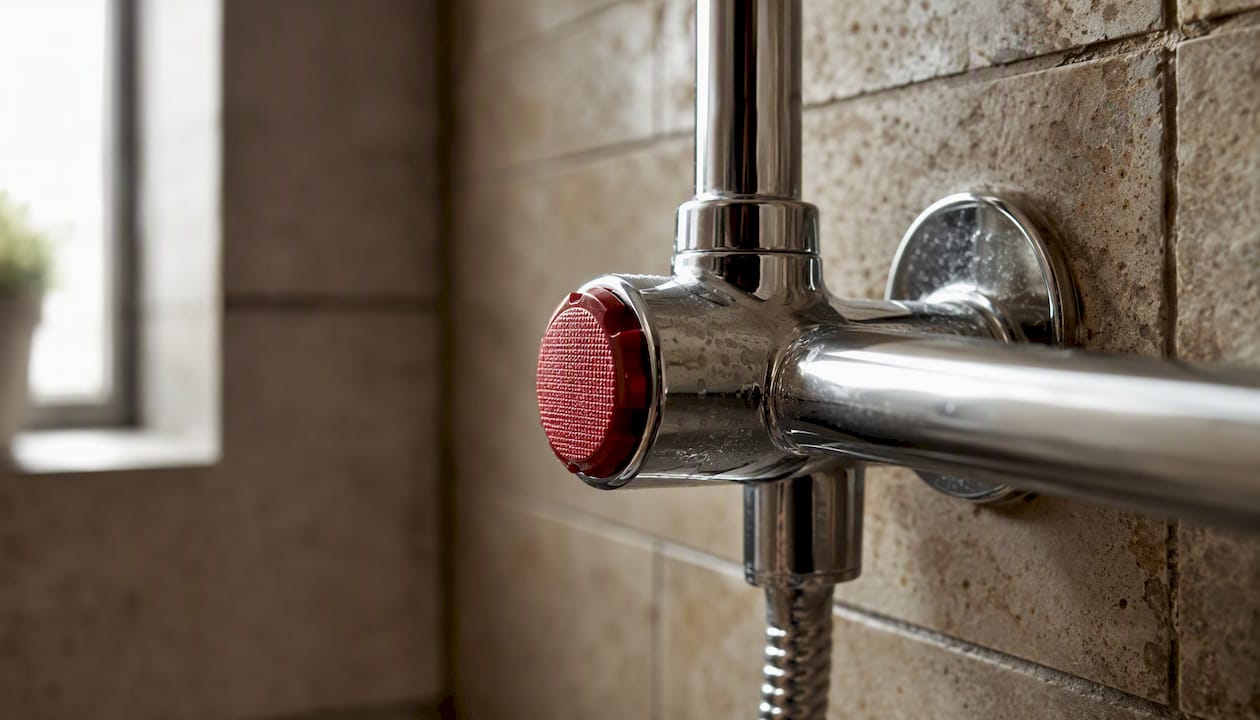
A thermostatic valve addresses this at source. The maximum-temperature stop means a child cannot accidentally turn the dial to a dangerous setting. The fail-safe shut-off means a sudden drop in cold pressure (caused by a flushing toilet or a running tap) cannot produce a scalding surge. These are not theoretical protections; they are the primary reason thermostatic control has become effectively standard in new family bathrooms.
Comfort: no more temperature shock
Temperature shock is the sharp jolt of cold or scalding water that hits when someone uses another outlet in the house. With a manual mixer, that shock can be significant. With a thermostatic valve, the element compensates within milliseconds, keeping the delivered temperature within a few degrees of your set point. Triton Showers' guidance on thermostatic shower upgrades puts the stability benefit clearly: fluctuations are minimised to a few degrees rather than the wide swings a manual valve allows.
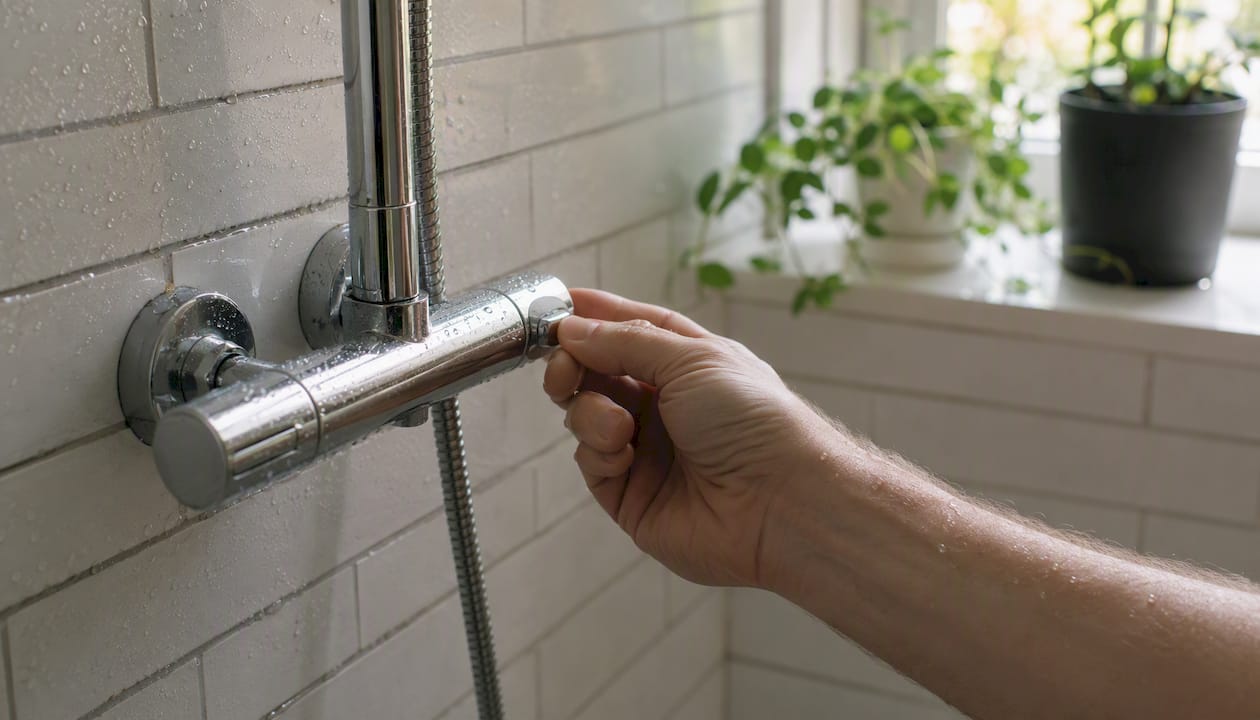
For households where multiple bathrooms run simultaneously, or where a combi boiler serves both the shower and the kitchen tap, this stability is the difference between a pleasant shower and a frustrating one.
Convenience: set it once
Every user in the household can return to the same dial position and get the same temperature. There is no warm-up guessing, no slow adjustment from cold to hot while water runs down the drain. For households with children who shower independently, or with older relatives who find fine-tuning controls difficult, this consistency is a practical daily benefit.
Efficiency: less wasted water
Because the shower reaches the set temperature faster and holds it without manual fiddling, less water runs cold before you step in. Over the course of a year, that reduction in run-off time adds up. The saving is modest compared with, say, switching to a low-flow head, but it is real and costs nothing once the valve is fitted.
Pro Tip: Thermostatic control is most impactful in family bathrooms, accessible wet rooms, and en-suites used by older adults. In a single-person household with a combi boiler and good pressure, a quality manual mixer may be sufficient.
A thermostatic mixing valve set to deliver at 40–43°C, with a fail-safe shut-off if cold supply drops, is the practical standard for a safe domestic shower outlet. (Flexiheat UK TMV guide)
Will a thermostatic shower work with your UK heating and water system?
Thermostatic mixer showers work best where both hot and cold supplies arrive at adequate and roughly balanced pressure. That describes most homes with a combi boiler or an unvented (mains-pressure) cylinder. Pressurised hot water systems are particularly well-suited to thermostatic mixers because the mains-fed supply provides the consistent pressure the valve needs to regulate accurately.
Gravity-fed systems (a cold tank in the loft, a vented hot cylinder) present more of a challenge. If the pressure differential between hot and cold is low, the thermostatic element struggles to balance the two supplies reliably. In these cases, a shower pump can restore adequate pressure and make a thermostatic mixer viable, but the pump adds cost and complexity. Alternatively, an electric shower draws directly from the cold mains and heats water independently, which sidesteps the pressure problem entirely.
Quick compatibility checklist:
- Combi boiler: generally compatible; check that the boiler can sustain adequate flow rate when the shower runs alongside other outlets
- Unvented cylinder (mains pressure): well-suited; typically the best pairing for a thermostatic mixer
- Gravity-fed (vented cylinder): check static head pressure; a pump may be needed
- Cold mains only / no boiler: an electric shower is the practical answer here; thermostatic electric showers combine independent heating with thermostatic regulation for stable temperature even when mains temperature varies seasonally
- Low-pressure systems: Hansgrohe's guidance confirms that thermostatic mixers need adequate supply pressure; manual mixers or pumped solutions may be more appropriate where pressure is insufficient
Pro Tip: Before buying a valve, ask your installer to measure the static and dynamic pressure at the proposed shower position. Most thermostatic valves specify a minimum inlet pressure of around 0.1–1.0 bar depending on the model; fitting one below its minimum is the single most common cause of poor performance.
Typical costs and what installation involves in the UK
Thermostatic shower valves vary considerably in price. A mid-range exposed thermostatic bar valve from a brand such as Mira Showers or Triton Showers typically costs £150–£400 for the valve and fittings alone. Concealed valves, where the body sits behind the wall with only the trim plate visible, run higher: £300–£800 or more for quality units from brands including JTP. Labour for a straightforward swap-out (existing pipework in the right position, no tiling work) generally adds £150–£300 depending on your region and the complexity of the job.
Where pipework needs rerouting, tiles need cutting, or the system requires a pump, costs rise accordingly. A full wet-room installation with a concealed valve and new pipework can reach £1,500–£3,000 or beyond.
What the installation actually involves:
- Pre-install system check: the installer verifies inlet temperatures, pressure, and pipe sizing before selecting the valve
- Valve selection: TMV2 for domestic use; TMV3 where healthcare or higher-demand settings apply (see the regulations section below)
- Pipework and wall work: exposed valves require minimal wall disturbance; concealed valves need a chase or cavity
- Commissioning: the installer sets the maximum-temperature stop, runs the shower, and measures the outlet temperature with a calibrated thermometer
- Written temperature test: a commissioning sheet recording the outlet temperature and the date should be handed to you at the end of the job
Pro Tip: Poor commissioning is the root cause of most thermostatic shower complaints. If an installer quotes for supply and fit but makes no mention of a temperature test or commissioning sheet, treat that as a red flag.
Common drawbacks and installation pitfalls to know about
No product is without limits, and thermostatic showers are no exception.
Minimum pressure requirements are the most common compatibility barrier. A valve fitted below its specified minimum inlet pressure will not regulate accurately and may deliver inconsistent temperatures, which defeats the purpose. This is a system issue, not a product defect, but it is frequently misdiagnosed as a faulty valve.
Maintenance is often overlooked at the point of purchase. The thermostatic element and the cartridge inside the valve will wear over time. Most manufacturers recommend a service check every few years. Limescale in hard-water areas (much of southern England) accelerates wear and can cause the valve to stick or lose accuracy. Fitting an isolation valve on each inlet makes future servicing far easier and avoids draining the whole system for a cartridge swap.
Failure modes worth knowing:
- Valve stuck open or closed due to limescale build-up on the cartridge
- Temperature drift over time as the thermostatic element ages
- Incorrect maximum-temperature stop setting (set too high at commissioning, or reset by a user)
- Valve selected for the wrong pressure range (a common installer error on gravity systems)
Red flags when getting quotes:
- No mention of a commissioning test or written temperature record
- Installer cannot confirm the inlet pressure at the proposed position
- Vague product specification ("a thermostatic bar valve" with no brand, model, or TMV rating)
- No discussion of access for future servicing
Pro Tip: If you are in a hard-water area, ask specifically about a scale-resistant cartridge or a valve with a replaceable cartridge that does not require the whole unit to be changed.
UK safety standards: TMV2, TMV3, and what to look for on the label
The UK uses two certification tiers for thermostatic mixing valves, and understanding the difference matters when you specify a product.
TMV2 is the standard for domestic installations: homes, flats, and residential properties. A TMV2-certified valve has been independently tested to confirm it holds temperature within a defined tolerance and shuts off safely if cold supply fails. For the vast majority of UK homeowners, TMV2 is the correct specification.
TMV3 is required in healthcare settings, care homes, schools, and other environments where the occupant population is considered more vulnerable or where the installation scale is larger. NSF's TMV2/TMV3 certification overview sets out the practical distinction clearly: TMV2 for domestic, TMV3 for healthcare and higher-demand commercial settings. TMV3 valves are tested to tighter tolerances and are typically more expensive.
Relevant standards and trust signals to look for:
- TMV2 or TMV3 certification mark on the product data sheet or packaging
- BS EN 1111 (thermostatic mixing valves for sanitary purposes) or BS EN 15092 (thermostatic mixing valves for healthcare) referenced in the product specification
- WRAS approval (Water Regulations Advisory Scheme): confirms the product meets UK water regulations and will not contaminate the supply
- A commissioning record signed by the installer, kept with your house paperwork
UK Approved Document G recognises thermostatic devices as the appropriate anti-scald measure for new and refurbished domestic hot-water systems, which means a certified TMV2 valve fitted and commissioned correctly satisfies the regulatory expectation for a UK family bathroom.
For domestic shower outlets, a TMV2-certified valve delivering at 40–43°C with a fail-safe shut-off is the recognised standard under UK building regulations guidance.
How to choose a thermostatic shower system and what to ask your installer
Selection criteria
- TMV rating: TMV2 for a home; TMV3 only if the property has a healthcare or care-home use
- Inlet pressure range: confirm the valve's minimum and maximum operating pressure against your measured supply
- Exposed vs concealed: exposed bar valves are easier to service and cheaper to fit; concealed valves give a cleaner look but require wall access and a higher budget
- Serviceability: look for a valve with a replaceable cartridge and accessible isolation points
- Warranty: reputable brands such as Mira Showers, Triton Showers, and JTP typically offer 2–5 year guarantees; check what the warranty covers (parts only, or parts and labour)
Installer question checklist
- Can you measure the static and dynamic pressure at the shower position before selecting the valve?
- Which TMV2-certified model are you proposing, and why does it suit my system?
- Will you commission the valve and provide a written temperature test sheet?
- Where will the isolation valves be fitted, and how do I access the cartridge for future servicing?
- What is included in the warranty, and who do I contact if the valve needs attention in year two?
- If my system is gravity-fed, have you accounted for the pressure differential in your valve selection?
Red flags in quotations
- No specific product model named (just "a thermostatic valve")
- No commissioning or temperature test mentioned in the scope of work
- No reference to TMV2 certification where the installation is domestic
- Installer cannot explain how they will verify inlet conditions
Pro Tip: A short sample specification to hand to any installer: "TMV2-certified thermostatic shower valve, maximum-temperature stop set at 43°C, outlet temperature verified by calibrated thermometer at commissioning, written test record provided at handover."
When to consider alternatives: electric showers and manual mixers
Not every home or budget suits a thermostatic mixer. Here is a straightforward comparison across the three main categories.
| Feature | Thermostatic mixer | Electric shower | Manual mixer |
|---|---|---|---|
| Temperature stability | Excellent: holds set point within a few degrees | Good: thermostatic electric models hold temperature well; standard models vary with mains temperature | Variable: depends on user adjustment and system pressure |
| Flow rate | High (limited by boiler/cylinder output) | Lower (limited by element kW rating) | High (similar to thermostatic mixer) |
| Boiler independence | No: requires hot supply from boiler or cylinder | Yes: heats cold mains directly | No: requires hot supply |
| Anti-scald behaviour | Automatic fail-safe shut-off (TMV2/TMV3) | Thermostatic models have temperature limiting; standard models do not | None: user-controlled only |
| Typical cost shape | Higher upfront; lower running cost where hot water is already heated | Lower upfront; higher running cost (electric heating) | Lower upfront; no automatic safety feature |
Rules of thumb for common UK scenarios:
- Combi boiler, good mains pressure: a thermostatic mixer is the natural choice; combi boilers pair well with thermostatic mixers when the boiler can sustain flow rate
- Gravity-fed system, low pressure: an electric shower avoids the pressure problem entirely; a pumped thermostatic mixer is viable but adds cost
- Family bathroom with children or elderly users: thermostatic mixer or thermostatic electric shower; the automatic anti-scald protection justifies the higher cost
- Second shower in a property with limited boiler capacity: an electric shower keeps the second outlet independent of the main hot-water system
Expert Reviews notes that thermostatic mixer showers typically cost more initially than basic electric showers but deliver better flow and more consistent temperature where mains hot water and adequate pressure are available. That trade-off is the central decision for most UK homeowners.
Installer insight: commissioning checks that prevent most complaints
Most thermostatic shower problems that homeowners report after installation are not product faults. They are commissioning failures or incorrect valve selection. Plumbing professionals consistently find that the same handful of errors account for the majority of call-backs.
A correct commissioning sequence covers:
- Measuring inlet hot and cold temperatures before fitting (hot should arrive at least 10°C above the desired outlet temperature; cold should be genuinely cold, not lukewarm from a sun-heated pipe)
- Checking dynamic pressure at the proposed valve position with the shower running and another outlet open simultaneously
- Setting the maximum-temperature stop to the agreed safe temperature (typically 43°C for a family bathroom)
- Running the shower for several minutes and measuring the outlet temperature with a calibrated thermometer
- Recording the outlet temperature, the date, and the installer's name on a commissioning sheet
Common contractor errors and how they show up:
- Fitting a valve rated for mains pressure on a gravity system: the valve never settles and the temperature wanders
- Skipping the outlet temperature measurement: the maximum stop is set by feel rather than measurement, and may be 5–8°C higher than intended
- Poor pipe layout that traps air or creates pressure imbalance between the hot and cold inlets: the valve hunts between hot and cold rather than holding steady
- No isolation valves on the inlets: a cartridge replacement later requires draining the system
If you encounter a tepid hot water problem after installation, the first check is always whether the maximum-temperature stop was set correctly and whether the inlet hot temperature is adequate.
Pro Tip: Insist on a commissioning sheet at handover and keep it with your boiler manual and other house paperwork. If you ever sell the property, it is evidence that the installation was done correctly.
When Your-local-plumber recommends a thermostatic shower
The situations where a thermostatic shower makes the clearest sense are consistent: a family bathroom used by children or older adults, a renovation where tiles are coming off anyway, or a property where the existing manual mixer has been causing temperature complaints for years. In accessible bathrooms and wet rooms, the anti-scald protection moves from a convenience to a near-necessity.
From experience fitting and commissioning thermostatic valves across UK homes, the upgrade pays for itself quickly in daily comfort and peace of mind. The key is pairing the right valve to the system and commissioning it properly, which is where many DIY or budget installations fall short.
Get your thermostatic shower installed and commissioned correctly
Fitting a thermostatic shower valve is straightforward when the system conditions are right and the commissioning is done properly. Your-local-plumber provides shower installation and commissioning across the UK, including a full onsite system check before any valve is selected, written temperature test records at handover, and transparent fixed pricing so you know the cost before work begins.
Every job includes isolation valve fitting for future serviceability, maximum-temperature stop setting to the agreed safe temperature, and a commissioning sheet you keep with your house paperwork. Weekend and emergency bookings are available. To get a quote or check availability, visit Your-local-plumber or call to speak with an engineer directly.
Sources
- Why a thermostatic shower could be the smartest upgrade for your bathroom | Triton Showers
- What is a thermostatic shower and how do they work? | Homebuilding
- Flexiheat UK TMV guide (domestic) | Flexiheat-UK
- TMV2 / TMV3 certification overview | NSF