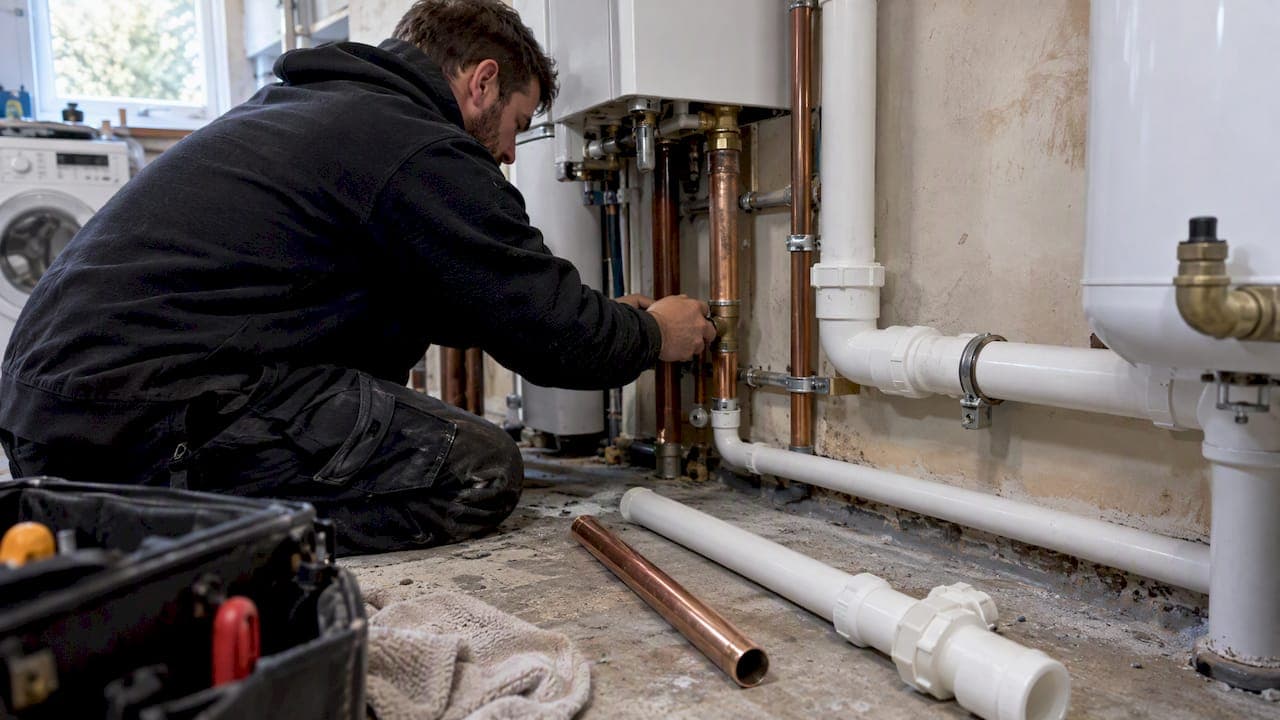
For most central heating runs and underfloor heating, choose oxygen-barrier plastic pipe; for short mains connections and spots where heat conduction or proven durability matters, copper is the better pick. Confident DIYers can fit push-fit plastic safely, but soldered joints, pressure testing and anything touching your mains supply are worth leaving to a plumber. The sections below walk through each job in detail.
TL;DR:
- For drinking water, verify that pipes and fittings meet BS 6920 requirements; certification, rather than material preference, determines whether they are suitable.
- For radiator and boiler loops, choose PEX with an aluminum oxygen barrier; ordinary PEX can let oxygen through and corrode steel heating components.
- When joining materials, use a transition fitting designed for both, prepare square, deburred plastic ends, support both pipes, and pressure test before concealing the joint.
- In soft water areas, flush new copper pipework after installation to help its protective layer form and reduce the risk of blue discoloration.
Table of Contents
- At-a-glance comparison: copper vs plastic pipes
- Copper: pros, cons and typical uses
- Plastic pipes (PEX, PEX-AL-PEX, PB): pros, cons and typical uses
- Where to use each material: a practical application map
- Mixing copper and plastic: fittings and best practice
- Installation and DIY considerations
- Cost, lifespan and durability: what to expect
- Safety, regulation and water quality notes
- Our verdict and your next step
- What plumbers actually see on site
- How we can help with your pipework
- FAQ
- Sources
At-a-glance comparison: copper vs plastic pipes
Before you commit to a material, weigh these factors against the job in front of you.
- Cost: plastic pipe and fittings are cheaper to buy; copper costs more in material and labour.
- Flexibility: plastic bends around obstacles with minimal fittings; copper needs elbows and careful measuring.
- Temperature tolerance: copper handles higher temperatures without special grades; some plastics need an oxygen-barrier or heat-rated version for hot water and heating loops.
- Longevity: copper has a long track record in UK plumbing; modern multilayer plastics are catching up but have less history behind them.
- Corrosion resistance: plastic does not corrode; copper can suffer pitting or pinholing in aggressive water conditions.
- DIY difficulty: push-fit and compression plastic fittings suit confident DIYers; copper needs soldering skill.
Typical jobs: mains connections and exposed runs often favour copper, while central heating, underfloor heating and boxed-in retrofit runs usually favour plastic.
Copper: pros, cons and typical uses
Copper has been the default UK plumbing material for decades, and for good reason. It conducts heat efficiently, which makes it a strong choice for radiator connections where you want quick warm-up, and it has a long service history that gives installers and insurers confidence.
- Handles high temperatures and pressure without special ratings.
- Resists UV and physical knocks better than most plastics.
- Can suffer pitting or pinhole leaks in acidic or soft-water areas over time.
- New copper installations can develop discoloured "blue water" if left unflushed in soft-water areas, so draining or flushing new copper runs helps a protective layer form properly.
Joining copper means cutting, deburring and soldering capillary fittings, or using compression joints where a flame is impractical. That skill requirement is the main reason copper remains a job for a confident DIYer at best, and a plumber for anything load-bearing or hidden behind plasterboard.
Pro Tip: If you're repairing a single section of copper pipe, use a push-fit repair coupling rather than attempting to solder into an existing, partly-drained system.

Copper still earns its place on short mains connections, exposed external runs and situations where heat transfer genuinely matters, such as towel rail feeds.
Plastic pipes (PEX, PEX-AL-PEX, PB): pros, cons and typical uses
Plastic plumbing covers several distinct materials, and the differences matter more than most homeowners expect. PEX (cross-linked polyethylene) is flexible and widely used for heating and water supply. PEX-AL-PEX adds an aluminium layer that blocks oxygen ingress and adds rigidity, which is why it has become the standard for closed heating loops. PB (polybutylene) is older and less common in new installations.
- Cheaper to buy than copper, with fewer fittings needed thanks to flexibility.
- Push-fit and compression fittings make installation realistic for a DIYer who follows manufacturer guidance.
- Some PEX variants allow oxygen to permeate the pipe wall, which can corrode steel heating components unless you choose an oxygen-barrier version.
- Oxygen-barrier PEX-AL-PEX is specifically recommended for radiator and boiler loops to prevent this corrosion.
Any non-metallic pipe used for drinking water needs to demonstrate it will not affect water quality or taste, which is why BS 6920 testing underpins most reputable plastic pipe products sold in the UK. Plastic suits central heating, underfloor heating and retrofit runs where fishing flexible pipe through existing walls beats cutting and soldering copper in a confined space.
Where to use each material: a practical application map
Matching material to job avoids both wasted money and future call-outs.
- Mains water and drinking water contact: check the pipe or fitting carries BS 6920 conformity evidence, whichever material you choose.
- Central heating: oxygen-barrier plastic is now the common choice for ease of routing and cost, though copper remains valid for short radiator tails.
- Underfloor heating: multilayer PEX-AL-PEX dominates because it is flexible enough to loop continuously under a floor without joints, reducing leak risk.
- Outdoor or exposed runs: copper copes better with UV exposure and accidental damage; some installers also note copper is less attractive to opportunistic pipe theft than you'd assume from scrap-metal headlines, though this varies by area.
When a job touches drinking water, the deciding factor is certification, not preference. Our guide to UK plumbing materials covers the main product types in more depth.
Mixing copper and plastic: fittings and best practice
You can combine copper and plastic in the same system, and most UK homes already do, but the join needs the right fitting rather than improvisation.
- Use a proper transition fitting (push-fit, compression, or a manufacturer-approved copper-to-plastic adaptor) rather than forcing a plastic pipe into a copper-rated compression joint.
- Cut pipe ends square, deburr and chamfer plastic pipe before inserting it into a push-fit fitting, since a ragged edge is the single most common cause of slow leaks.
- Support both pipe types adequately either side of the joint; movement at a transition fitting is a frequent failure point.
- Pressure-test the completed section before closing up walls or floors.
Pro Tip: Mark the insertion depth on plastic pipe with a pen before pushing it into a fitting, so you can confirm full engagement at a glance.
Call a plumber when a join sits behind a sealed floor, when the system needs a full pressure test under the Water Fittings Regulations, or when you're not confident the joint will hold. Our guide to plumbing joint fittings breaks down which fitting suits which pipe combination.
Installation and DIY considerations
Soldering copper and fitting push-fit plastic call for genuinely different skill sets, and that's usually what decides whether a job is DIY-friendly.
- Copper demands a blowtorch, flux, lead-free solder and a steady hand; a poor joint often shows no sign of a problem until it's under full pressure.
- Plastic push-fit needs a pipe cutter, a deburring tool and patience to check insertion depth, which makes it far more forgiving for a first attempt.
- Whichever material you use, flush and pressure-test the finished run before tiling over it or boxing it in.
Common pitfalls include dry-soldered copper joints, pipework left unsupported and sagging over time, plastic pipe routed too close to a heat source without a sleeve, and using the wrong pressure rating of pipe for a heating system. Our radiator pipe leak guide walks through diagnosing a leak before you reach for tools.
Cost, lifespan and durability: what to expect
Plastic pipe and fittings cost less to buy than copper, and the labour time is usually shorter because there's no soldering or cooling-down period between joints, which narrows the overall price gap further on a typical job.
- Copper has decades of proven service life when installed correctly and the water chemistry isn't aggressive.
- Plastic pipe life depends heavily on the specific product and installation quality, with oxygen-barrier versions built specifically to protect metal heating components long-term.
- Hard or soft water chemistry, UV exposure and physical damage all shorten the effective life of either material faster than age alone.
- A single corroded or leaking section rarely justifies replacing an entire system; a localised repair with the correct transition fitting is usually the sensible first step.
Safety, regulation and water quality notes
Every pipe and fitting used in a UK home plumbing system has to meet the Water Supply (Water Fittings) Regulations 1999, which exist to stop fittings contaminating drinking water or wasting it through poor workmanship.
Lead-based solder has been banned for domestic hot and cold water systems since 1987, so every capillary joint on copper pipework must use lead-free solder and a suitable flux.
Non-metallic pipes demonstrate suitability through BS 6920 testing, assessed at the pipe's intended operating temperature, which matters most for anything carrying hot water. After fitting new copper, draining or flushing the system helps the protective layer form and avoids discoloured water later. Our guide to UK plumbing compliance covers the paperwork side of these obligations.
Our verdict and your next step
Pick oxygen-barrier plastic for heating and underfloor runs, copper for short mains or exposed sections, and don't guess on anything touching drinking water or hidden behind a wall. If a pressure test fails or you're unsure a joint will hold, book a plumber rather than risk a hidden leak.
What plumbers actually see on site
Most leaks we get called to trace back to a rushed joint, not the wrong choice of material. Homeowners genuinely save money doing simple push-fit repairs themselves, but they cost more when a dry-soldered joint or unsupported pipe fails behind a wall months later. If you're unsure, a quick site check beats a guess.
— Michael
How we can help with your pipework

Whether you're replacing a corroded copper section, connecting a new radiator loop, or fitting underfloor heating pipework, skilled plumbers can handle the job with fixed pricing agreed before work starts.
- Pipe replacement and leak repair for both copper and plastic systems.
- Radiator and central heating pipework, including transition joints between materials.
- Underfloor heating connections and new boiler pipework, quoted on site.
- Same-day response for burst or leaking pipes through our emergency plumbing and heating service.
Book a visit through our plumbing services page and we'll confirm the price before any work begins.
FAQ
Why do we not use copper pipes as much anymore?
Plastic pipe, particularly oxygen-barrier PEX-AL-PEX, has largely replaced copper in central heating and underfloor systems because it costs less, installs faster with push-fit fittings, and avoids corrosion in closed heating loops. Copper hasn't disappeared though: it remains common for mains connections and exposed runs where its heat conduction and durability matter most.
Is push-fit plastic pipe as reliable as copper?
Modern push-fit and multilayer plastic systems are reliable when installed correctly, with proper pipe preparation and full insertion into fittings. Copper has a longer proven track record overall, but for heating and underfloor applications, oxygen-barrier plastic is now the standard choice rather than a compromise.
Why might a plumber choose plastic pipe over copper?
Plastic pipe installs faster, needs fewer fittings thanks to its flexibility, and avoids the risk of a poorly soldered joint failing later. For many heating and retrofit jobs this makes it the more practical and cost-effective option, though copper is still specified where heat transfer or exposure to physical damage is a priority.
What are the main drawbacks of copper pipe?
Copper costs more in materials and labour than plastic, requires skilled soldering to join safely, and can suffer pitting or pinhole corrosion in some water conditions over time. It's also rigid, so routing it around obstacles needs more fittings and careful planning compared with flexible plastic.
Can I mix copper and plastic pipe in the same system?
Yes, with the correct transition fitting such as a push-fit or compression adaptor designed for the join, copper and plastic can be combined safely. The joint needs square, deburred pipe ends and adequate support either side, and a full pressure test before the work is closed up behind walls or floors.
Sources
- Gov
- Capillary jointing using solders and fluxes (WaterRegsUK)
- Copper vs plastic pipes: Pros, cons, costs and more | Homebuilding