TL;DR:
- UK plumbing must comply with enforceable regulations to protect safety and property value.
- Proper certification and approved materials are essential for legal, safe, and insurable plumbing systems.
- Regular checks and professional inspections help maintain ongoing compliance and prevent costly issues.
Most UK homeowners think of plumbing as pipes, taps, and the occasional leak. But there's a legal dimension that often gets overlooked, and ignoring it can cost far more than any repair bill. Plumbing compliance means your system meets the specific regulations that protect your health, safeguard your home's value, and keep your insurance valid. Get it wrong and you could face a blocked house sale, a voided policy, or a serious injury. This guide breaks down exactly which rules apply, what they require, and how to make sure your home is fully covered.
Table of Contents
- The foundations: What plumbing compliance means
- Essentials of Part G: Water safety and efficiency
- Part H, Water Fittings and legal products: Connecting your system correctly
- How to check and maintain plumbing compliance at home
- Why plumbing compliance isn't just red tape: The costs and consequences of skipping steps
- Stay compliant effortlessly with local experts
- Frequently asked questions
Key Takeaways
| Point | Details |
|---|---|
| Core legal rules | UK plumbing compliance means following Parts G and H plus the Water Supply (Water Fittings) Regulations 1999. |
| Safety and efficiency | Regulations limit daily water use and bath temperatures to protect your health and home. |
| Certified products only | All pipes and fittings must be WRAS-approved to be legally installed. |
| Ongoing maintenance | Regular checks and proper paperwork keep your plumbing compliant and problem-free. |
| Pro help available | Getting expert support ensures all legal requirements and paperwork are handled without stress. |
The foundations: What plumbing compliance means
To understand what's at stake, let's break down what plumbing compliance really means for your home.
Plumbing compliance in the UK refers to a specific set of legal obligations that every homeowner must satisfy when installing, modifying, or maintaining plumbing systems. These aren't optional guidelines. They're enforceable rules. At its core, compliance with Building Regulations Parts G and H, as well as the Water Supply (Water Fittings) Regulations 1999, is what defines whether your plumbing system is legal.
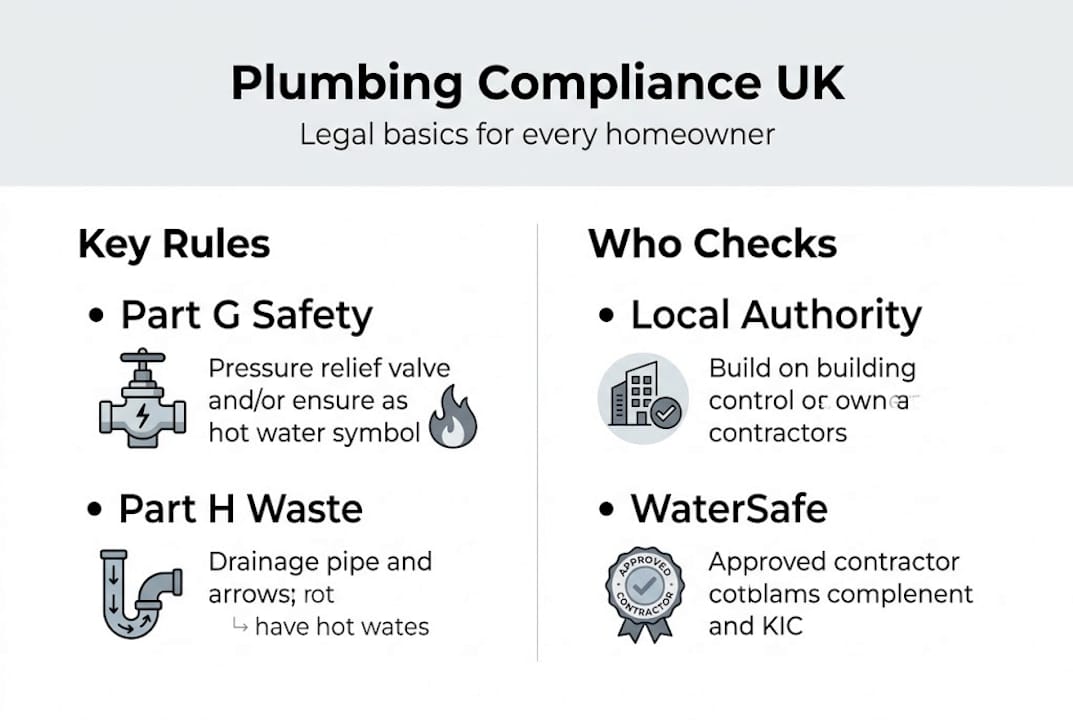
Part G covers sanitation, hot water safety, and water efficiency. Part H covers drainage and waste water systems. The Water Fittings Regulations set the standard for the materials and products used inside your home. Together, they form the backbone of legal plumbing in the UK.
Why does this matter to you as a homeowner? Consider these key consequences:
- Resale value: A missing water regulations certificate can stall or kill a property sale during conveyancing.
- Insurance: Many home insurance policies become invalid if unauthorised or non-compliant plumbing work has been carried out.
- Safety: Non-compliant hot water systems are a leading cause of scalding injuries, particularly in households with young children or elderly residents.
- Legal liability: If a non-compliant system causes damage to a neighbouring property, you may be personally liable.
The governing bodies that oversee compliance include your local authority building control, WaterSafe (the national register of approved plumbers), and WRAS (the Water Regulations Advisory Scheme). Understanding who they are matters because they're the organisations that inspect, approve, and enforce compliance on your behalf.
| Regulation | What it covers | Who enforces it |
|---|---|---|
| Building Regulations Part G | Water efficiency, hot water safety, sanitation | Local authority building control |
| Building Regulations Part H | Drainage and waste water | Local authority building control |
| Water Fittings Regulations 1999 | Approved materials and products | Water companies, local authorities |
Pro Tip: Always request written documentation for any major plumbing work carried out in your home. A competent plumbing engineer will provide this automatically, but don't assume it will arrive without asking.
Essentials of Part G: Water safety and efficiency
Now that we know which regulations apply, let's look closer at Part G's key rules for safety and sustainability.
Part G is the regulation most directly felt in everyday home life. It deals with how much water your home uses and how safe your hot water supply actually is. Both areas carry real legal weight, and both affect your wallet in ways that aren't always obvious at the outset.
On water usage, Part G sets a maximum of 125 litres per person per day for new builds and major extensions, dropping to 110 litres in areas like London where water scarcity is a greater concern. This isn't just an environmental gesture. It's a legal design requirement. If you're extending your home or fitting a new bathroom, your plumber must demonstrate at the design stage that the planned fixtures and fittings won't exceed this limit. The efficiency calculator approved for use under Part G helps verify this before a single pipe is laid.
Hot water safety under Part G is just as important. Bath water must be delivered at no more than 48°C. This is achieved using a Thermostatic Mixing Valve, or TMV. A TMV blends hot and cold water automatically to prevent scalding. Understanding basic plumbing terminology like this helps you have more informed conversations with your installer and verify that the right components are being fitted.
Here's a practical breakdown of how Part G compliance is typically achieved:
- Design-stage calculation: Your plumber calculates projected water use per person using approved methods before work begins.
- Fixture selection: Only products that meet efficiency standards are selected (low-flow taps, dual-flush toilets).
- TMV installation: All baths must have a TMV fitted and set to 48°C maximum.
- Verification: Building control signs off once testing and documentation are complete.
| Part G requirement | Standard | Why it matters |
|---|---|---|
| Water usage (standard) | Max 125L/person/day | Legal design standard for new builds |
| Water usage (London/high-pressure zones) | Max 110L/person/day | Stricter in water-scarce areas |
| Bath water temperature | Max 48°C via TMV | Prevents scalding injuries |
If you're dealing with inconsistent water temperatures or suspect your TMV isn't set correctly, treat it as a potential plumbing emergency rather than a minor inconvenience. Scalding can cause serious harm very quickly, especially for young children.
Part H, Water Fittings and legal products: Connecting your system correctly
With water efficiency and safety under control, we must also connect every pipe and drain lawfully.
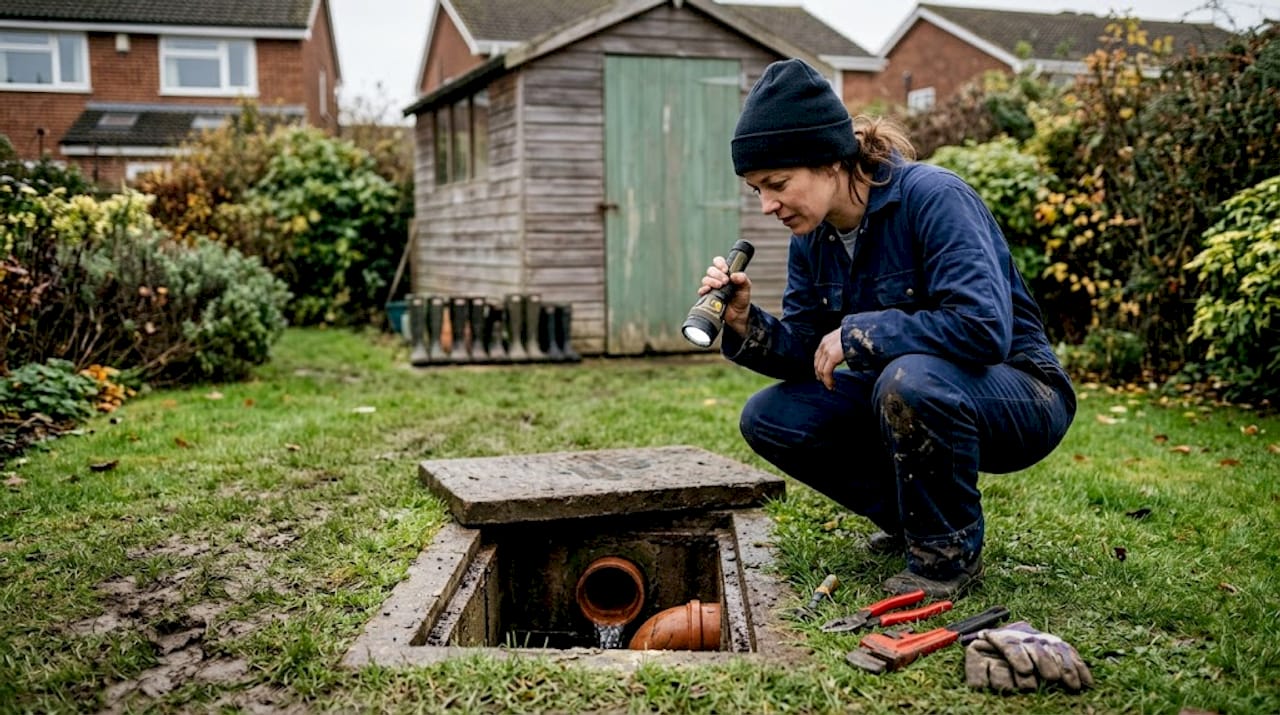
Part H governs how waste water and sewage leave your home. It covers drainage design, underground pipes, inspection chambers, and the connection to public sewers. Get it wrong and you risk sewage backflow, persistent blockages, structural damage to your property, and enforcement notices from your local authority.
The Water Fittings Regulations 1999 work alongside Part H by specifying which materials and products are actually legal to install. Only WRAS-listed products may be used. WRAS (Water Regulations Advisory Scheme) approval confirms that a fitting or material won't contaminate the water supply, degrade prematurely, or cause backflow. Using unlisted products is a compliance breach, even if the plumber assures you the product is "just as good."
Here's what must happen under Part H and the Water Fittings Regulations for any major installation:
- Drainage design: Pipe gradients, diameters, and routes must meet minimum standards to ensure free flow.
- Pressure testing: New pipework must be pressure tested before use to confirm there are no leaks.
- Air and water testing for drains: Compliance via pressure testing ensures drainage systems are sealed and functional before sign-off.
- WRAS-approved materials only: Every fitting, pipe, and valve must carry WRAS listing.
- Paperwork: All testing results and certificates must be documented and retained.
"Cheap fittings are one of the most common reasons we're called in to fix work done by unregulated trades. A £3 connector that isn't WRAS-approved can invalidate an entire installation, trigger an insurance rejection, and leave a homeowner thousands of pounds worse off. Always insist on approved parts and written certification." — Your Local Plumber engineer
Pro Tip: Ask your plumber for a WRAS approval document for any products being fitted. Reputable engineers have this readily available. Cross-check your maintenance checklist periodically to confirm nothing has been swapped out without your knowledge.
For more detail on what the rules require at every stage, the detailed regulations guide covers each section thoroughly.
Don't overlook the certificate guide when buying or selling a property, as lenders and solicitors increasingly request this documentation as standard.
How to check and maintain plumbing compliance at home
Once your system is updated and legal, keeping it compliant is just as critical.
Compliance is confirmed through documentation and regular checks, and homeowners bear more responsibility here than many realise. You don't need to be an expert, but you do need to know what to look for and when to call someone in.
Start with a simple self-check routine:
- Locate your documents: Gather all certificates, completion notices, and testing records from any plumbing work done in the past ten years.
- Check your water pressure: Low or fluctuating pressure can indicate a leak, a faulty valve, or a compliance issue with your pipework.
- Test your hot water temperature: Run a bath and use a thermometer to confirm it doesn't exceed 48°C. If it does, your TMV needs adjustment or replacement.
- Inspect visible pipework: Look for corrosion, damp patches, or signs of previous amateur repairs. These are red flags.
- Check your drains: Slow drainage or recurring blockages can indicate Part H issues that need professional assessment.
Use your plumbing checklist at least once a year. Book a professional plumbing inspection every two to three years, or before any significant renovation or property sale.
Signs that you need a professional immediately:
- Persistent pressure drops that don't resolve within a day
- Sewage smells inside the property
- Visible damp or staining near pipe joints
- Inconsistent hot water temperature despite a functioning boiler
- Any work that appears unfinished or lacks certification
If your property has a gas boiler, confirm that gas safe requirements are also up to date, as these interact directly with your hot water compliance obligations under Part G.
Why plumbing compliance isn't just red tape: The costs and consequences of skipping steps
Here's the reality that most guides skirt around: the homeowners who end up in the most serious trouble are rarely the ones who deliberately cut corners. They're the ones who trusted an unverified tradesperson, assumed their solicitor would flag any issues, or simply didn't know that compliance extended beyond the boiler.
In our experience, the costliest plumbing problems almost always trace back to non-compliant fittings or a single skipped pressure test. A missing certificate doesn't just cause paperwork headaches. It can void a house sale months into the conveyancing process, leaving both buyer and seller in a painful position.
What frustrates us about the way compliance is discussed is that it's framed as bureaucracy. It isn't. It's a system designed to prevent catastrophic leaks, serious scalding injuries, sewage contamination, and disputes that take years to resolve. Meticulous compliance is genuinely faster and cheaper in the long run. It's the skipped steps that cost you. And as we outline in our piece on transparent plumbing pricing, knowing what legitimate compliant work costs upfront protects you from both rogue traders and expensive remediation.
Stay compliant effortlessly with local experts
If you've read this far and realised there are gaps in your documentation, your certificates, or your system, you're not alone. Most homeowners only discover compliance issues when they're about to sell or after something goes wrong.

At Your Local Plumber, our engineers handle every aspect of legal compliance for you, from design-stage calculations and pressure testing to full certification and sign-off. Browse our plumber project gallery to see the range of compliant installations we've completed for homeowners across the UK. Whether you need a quick inspection or a full system upgrade, we make the process straightforward, documented, and stress-free.
Frequently asked questions
Do I need a certificate for all plumbing work at home?
You only need official certification for major work, such as new bathrooms, boilers, or extensions, as these must meet Building Regulations Parts G and H and the 1999 Water Fittings Regulations. Minor like-for-like repairs typically don't require formal sign-off.
What happens if my plumbing isn't compliant?
Risks of non-compliance include fines, invalid insurance, and resale complications that can delay or derail a property sale entirely.
How can I tell if a product is legal for my plumbing system?
Check that parts are WRAS-listed under the Water Fittings Regulations 1999, and request written documentation from your plumber confirming approval before installation.
Do I need to arrange inspections myself?
For any major installation, confirm with your plumber whether building control inspection is handled by them or the local authority, and always retain the paperwork once signed off.