TL;DR:
- Adding outdoor plumbing offers UK homeowners benefits like easier garden watering and quicker outdoor cleaning. Proper installation by a WaterSafe-approved plumber ensures compliance with regulations and prevents contamination risks. Location planning and choosing frost-resistant fixtures help maintain functionality through cold winters.
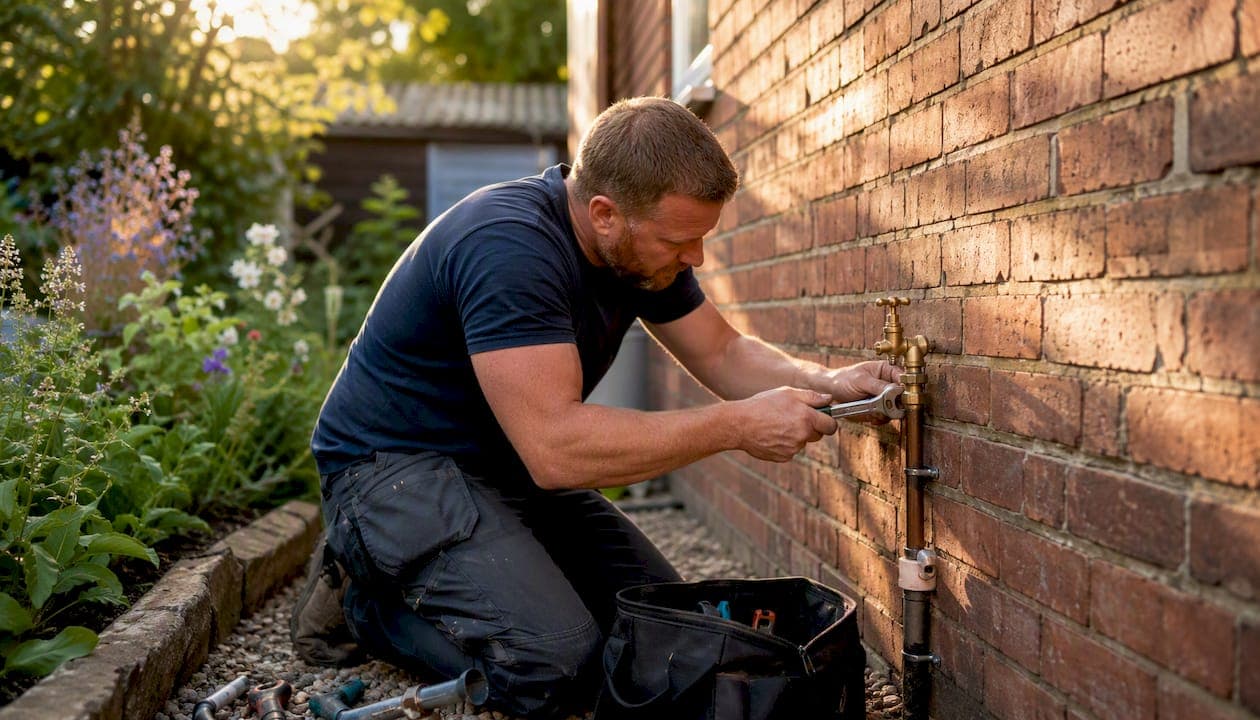
Adding outdoor plumbing is worth it for most UK homeowners. The three benefits that come up again and again are easier garden watering, faster car and patio cleaning, and a dedicated spot to rinse muddy dogs or fill paddling pools without trailing water through the house. An outdoor tap alone removes the need to carry watering cans from the kitchen and opens the door to hose, sprinkler, and drip-irrigation connections that save real time every week.
One important caveat: installing an outside tap is notifiable work under the Water Supply (Water Fittings) Regulations 1999, so hiring a WaterSafe-registered plumber is the safest route for anything beyond the most basic hose-connector attachment.
Quick stat: According to WaterSafe, back-siphonage from garden hoses is one of the most common causes of mains contamination in domestic properties — a risk that a correctly installed outdoor tap with backflow protection eliminates entirely.
Table of Contents
- What are the real benefits of adding outdoor plumbing?
- Which type of outdoor plumbing suits your garden?
- Do you need a plumber, and what will it cost in the UK?
- What are the UK legal and safety requirements?
- How should you plan an outdoor plumbing installation?
- Should you tell your home insurer about outdoor plumbing?
- What about rainwater harvesting and sustainable water use?
- Key takeaways
- Why most homeowners underestimate what outdoor plumbing actually involves
- Your-local-plumber fits outdoor taps, showers, and irrigation connections
- Useful links and sources
What are the real benefits of adding outdoor plumbing?
The advantages of outdoor plumbing spread across almost every outdoor chore a homeowner faces, and the time savings add up faster than most people expect.
Watering and irrigation
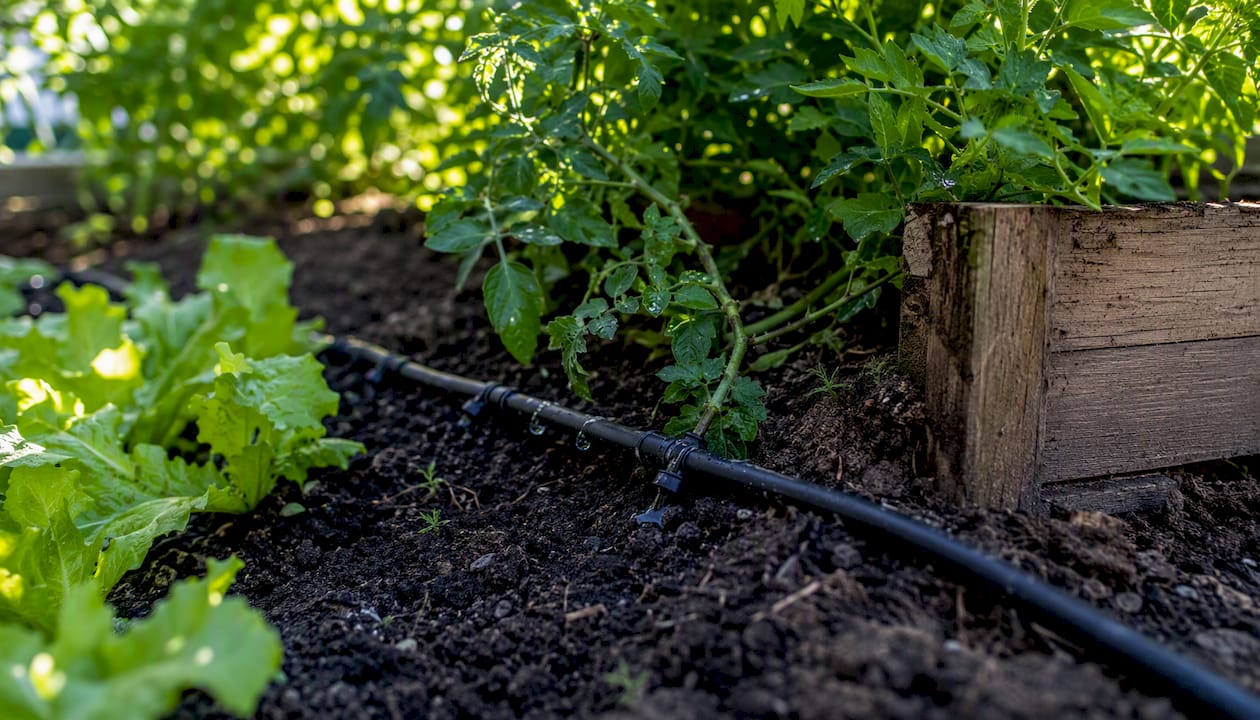
A dedicated outside tap lets you connect a hose, a drip line, or a pop-up sprinkler without any adapters or indoor trips. For anyone with a vegetable patch, raised beds, or a lawn that needs regular attention, this alone justifies the installation. Drip systems connected directly to an outdoor supply can be automated with a simple timer, so the garden waters itself while you are at work.
Cleaning patios, cars, and garden furniture
Pressure washers and hose-pipe jets need a proper flow rate that a kitchen tap fed through a window simply cannot deliver. A dedicated outdoor supply gives you the pressure and the convenience to clean a driveway, rinse garden furniture, or wash the car without improvised plumbing.
Rinsing pets and filling pools
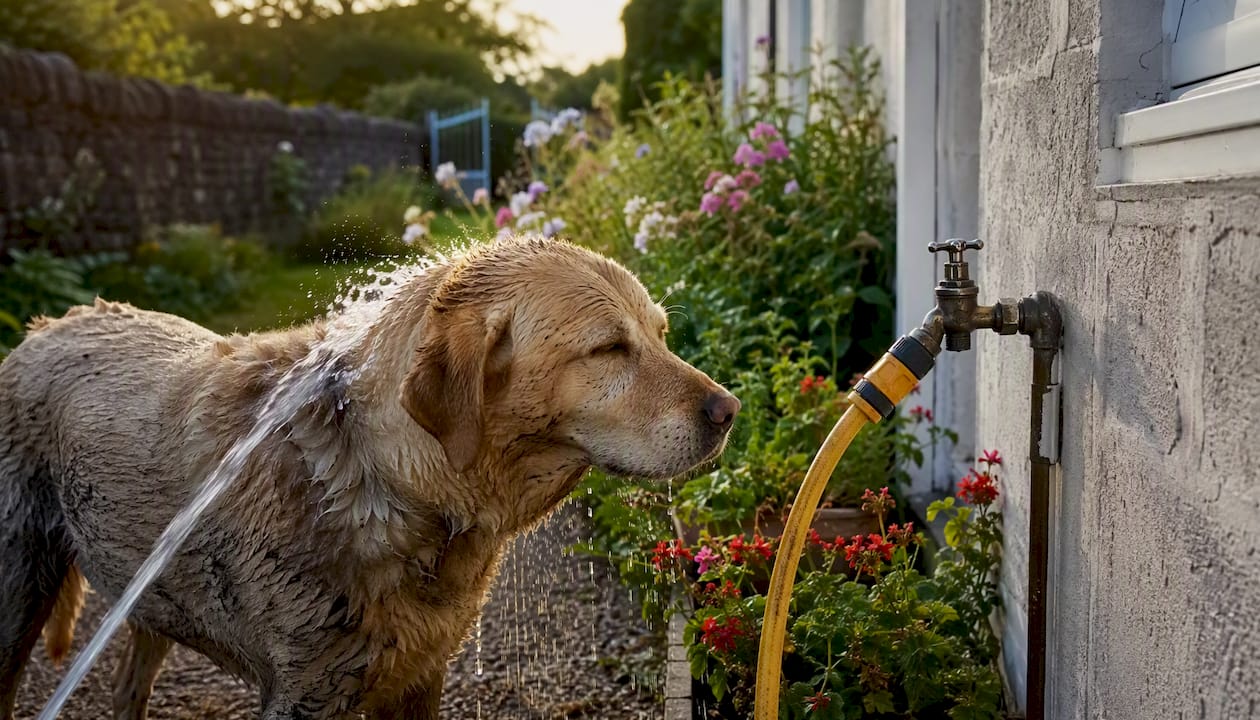
A muddy Labrador after a country walk is a familiar problem. An outdoor tap means the dog gets rinsed before it reaches the kitchen floor. The same logic applies to filling paddling pools and garden ponds: a hose connected to an outdoor supply is far quicker than buckets, and it avoids the mess of running a hose through a window or door.
Outdoor bathing and showering
Outdoor showers are growing in popularity for wellness and practical rinsing, and connecting one to the household boiler allows hot and cold water for year-round use. After a swim, a muddy run, or a long gardening session, a garden shower keeps the mess outside where it belongs.
- Watering and irrigation: connects to hoses, drip lines, and sprinkler timers.
- Patio and car cleaning: delivers the flow rate a pressure washer needs.
- Pet rinsing: keeps mud outside the house.
- Paddling pools and ponds: fills them in minutes rather than hours.
- Outdoor showers: wellness and practical use, hot and cold if boiler-connected.
Pro Tip: Fit a trigger nozzle to your hose rather than a simple open end. You use noticeably less water, and you can switch between a jet for cleaning and a gentle spray for seedlings without changing attachments.
Which type of outdoor plumbing suits your garden?
The right installation depends on how you use your garden, how far it sits from your internal supply, and how cold your winters get.
Outside tap (hose bib)
The most common starting point. A standard outside tap is drilled through an external wall and connected to the cold-water supply inside. It suits most gardens and is the lowest-cost option. The limitation is frost: a standard brass tap can crack if water is left in the pipework during a hard freeze.
Frost-resistant (frost-free) taps
These have a longer body that positions the internal valve inside the warm wall rather than at the exposed face. Water drains back automatically when the tap is closed, so there is nothing to freeze. For UK gardens where temperatures regularly dip below zero in January and February, a frost-free tap is worth the modest extra cost.
Outdoor shower
Treating an outdoor shower as a proper plumbing project means planning drainage carefully: if soap or shampoo will be used, the waste should connect to the foul drain rather than a soakaway. Connecting to the boiler adds hot water and extends the usable season considerably.
Garden sink
A freestanding or wall-mounted garden sink suits potting areas and vegetable gardens where you need to wash produce, clean tools, and fill watering cans without going indoors. It requires both a supply and a waste connection, which adds complexity and cost compared with a simple tap.
Irrigation hookup
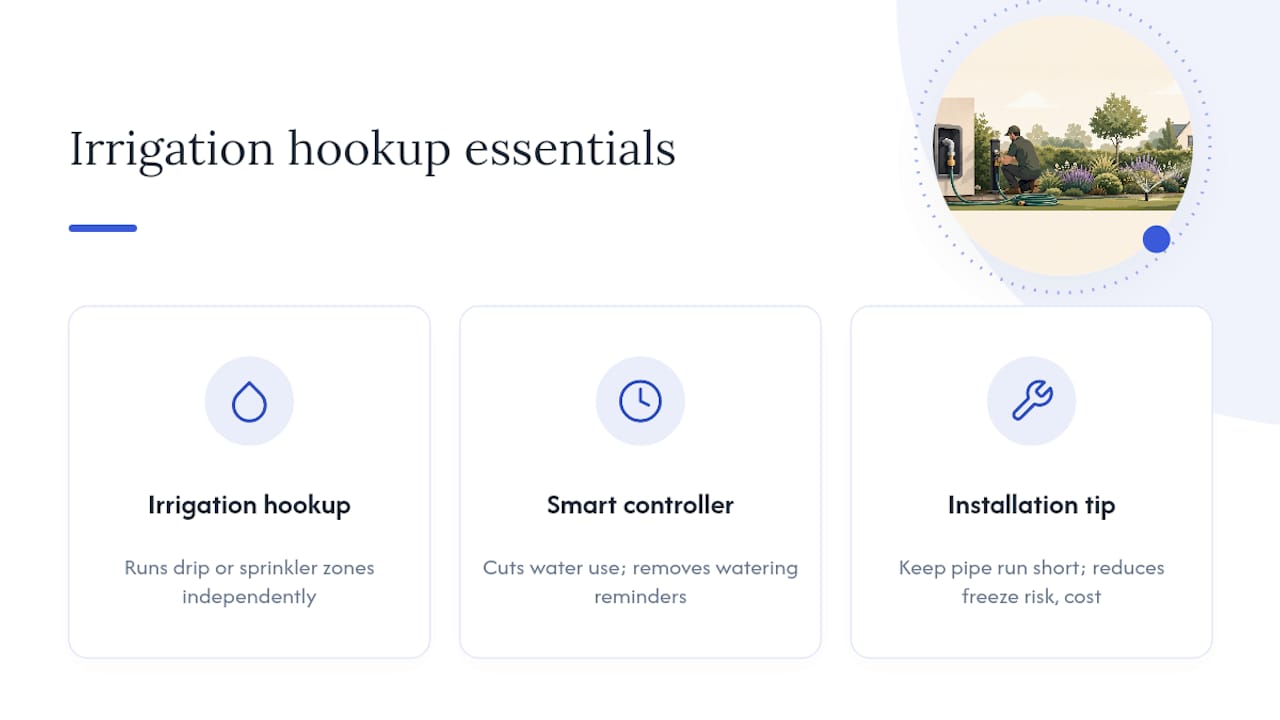
A dedicated irrigation connection, sometimes with a separate stopcock, lets you run drip lines or sprinkler zones independently of the main tap. Pairing it with smart irrigation technology and a timer controller cuts water use and removes the need to remember to water at all.
Pro Tip: In a small garden, keep the pipe run as short as possible by positioning the tap on the wall closest to the internal supply. Every extra metre of exposed pipe is another potential freeze point and another few pounds on the installation cost.
Do you need a plumber, and what will it cost in the UK?
When DIY is reasonable
Attaching a hose-connector shower head to an existing outside tap, or fitting a tap cover for winter, are tasks most homeowners can manage safely. Some frost-resistant tap kits are marketed as DIY products, but read the small print: if the job involves breaking into the cold-water supply inside the house, it is notifiable work.
When to hire a professional
Installing an outside tap is often notifiable under the Water Supply (Water Fittings) Regulations, and hiring a WaterSafe-approved, self-certifying plumber means the notification is handled for you. Any job that involves connecting to the mains, adding a new branch, or installing an outdoor shower with drainage falls into this category. Attempting it without the right knowledge risks both a regulatory breach and a failed installation that lets water into the wall cavity.
Typical UK costs and timeline
A straightforward outside tap installation typically costs £100–£200 in labour, plus parts, depending on location and access. An outdoor shower with hot and cold supply and drainage runs considerably higher, often £500–£1,500 or more depending on the complexity of the drainage route and whether the boiler connection is straightforward. These are general market ranges; always get a written quote before work begins.
A typical installation follows this sequence:
- Sign-off: — The plumber self-certifies the work (if WaterSafe-approved), removing the need for you to notify the water supplier.
Most single outside-tap installations are completed in half a day. An outdoor shower with drainage can take one to two days.
What are the UK legal and safety requirements?
The Water Supply (Water Fittings) Regulations 1999
The Water Supply (Water Fittings) Regulations 1999 set the legal baseline for any work on the water supply in England and Wales. They require fittings to prevent backflow, avoid undue water consumption, and meet defined material and installation standards. Ignoring them is not a technicality: a non-compliant installation can result in a notice from the water supplier requiring you to put it right at your own cost.
Notification requirements
Regulation 5 of the Water Supply (Water Fittings) Regulations 1999 lists which works must be notified to the water supplier before they begin. Outside tap installations fall within the notifiable category in most cases. A WaterSafe-approved contractor can self-certify, which removes the notification burden from you.
Backflow and air gaps
WaterSafe warns that homeowners should never submerge the end of a hose into a bucket, pond, or paddling pool. Keep a physical air gap between the hose end and any water surface at all times. Back-siphonage — where water is drawn back into the mains — is a genuine contamination risk, and it can happen when mains pressure drops unexpectedly.
The WRAS (Water Regulations Advisory Scheme) publishes approved product lists and installation guidance that plumbers use to select compliant fittings. Asking your plumber whether the tap and check valve they plan to fit are WRAS-approved is a reasonable question.
Pro Tip: Choose a plumber listed on the WaterSafe register. They are trained to self-certify notifiable work, which means you avoid the paperwork of notifying your water supplier and you get a compliant installation backed by a workmanship guarantee. You can search the register at watersafe.org.uk.
For a full overview of your obligations as a homeowner, the UK plumbing compliance guide covers notification, approved contractors, and backflow requirements in plain language.
How should you plan an outdoor plumbing installation?
Good planning before the plumber arrives saves time, money, and awkward conversations about scope.
Location checklist
Proximity to the internal cold-water supply is the single biggest cost driver. Siting an outdoor bath or shower near the house shortens pipe runs, reduces freezing risk, and can allow drainage to channel water towards planting areas. For a tap, the ideal position is on the wall directly behind or adjacent to the kitchen or utility room supply pipe. Every extra metre of pipe adds cost and complexity.
Ground surface matters too. For outdoor showers, professionals recommend finishes with an R11 slip rating and frost-resistant materials to reduce both slip risk and frost damage. Drainage strategy is equally important: if soap or shampoo will be used, the waste needs to connect to the foul drain rather than a soakaway.
Questions to ask your plumber
- Is this installation notifiable, and will you self-certify it?
- What backflow protection will you fit, and is it WRAS-approved?
- Does the installation come with a workmanship guarantee, and for how long?
- Will you insulate the external pipework, or is that a separate cost?
- Do I need to notify my water supplier, or does your self-certification cover that?
- What winterising steps should I take, and is an isolating valve included?
Pro Tip: The closer the tap is to the existing supply, the lower the labour cost. If you have a choice between two wall positions, ask the plumber which one minimises the pipe run inside the house before you commit to a location.
Should you tell your home insurer about outdoor plumbing?
Adding outdoor plumbing counts as a modification to your property's water supply, and most home insurance policies require you to notify your insurer of significant changes. Failing to do so can complicate a claim if a burst outdoor pipe causes water damage to the house or garden structures.
The practical steps are straightforward. Contact your insurer before or shortly after installation, describe the work, and ask whether it affects your premium or policy terms. In most cases, a professionally installed and compliant outdoor tap or shower will not increase your premium materially, but an undisclosed modification that contributes to a claim could give the insurer grounds to reduce or refuse a payout.
If the installation includes an outdoor shower with a drainage connection to the foul system, mention that specifically, as it represents a more substantial change to the property's drainage than a simple tap.
What about rainwater harvesting and sustainable water use?
Outdoor plumbing does not have to draw exclusively from the mains. Integrating a rainwater harvesting system with your outdoor supply is one of the most practical ways to reduce mains water consumption for garden use. A water butt connected to a downpipe is the entry-level option; a larger underground tank with a pump and filter can supply a drip-irrigation system or outdoor tap independently of the mains for much of the spring and summer.
The practical plumbing sustainability guide covers rainwater harvesting options in detail, including the regulations that apply when harvested water is used for anything beyond garden watering. The key rule is that harvested rainwater must never be connected to the mains supply without an approved air gap and backflow prevention device, in line with the Water Supply (Water Fittings) Regulations 1999.
Grey water reuse (channelling bath or shower water to the garden) is another option, though it requires careful management to avoid contaminating soil with cleaning products. For most homeowners, a simple water butt paired with a drip-irrigation connection is the most cost-effective and lowest-risk starting point.
Key takeaways
Adding outdoor plumbing is a practical, cost-effective upgrade for most UK homeowners, provided the installation is compliant with the Water Supply (Water Fittings) Regulations 1999 and carried out by a WaterSafe-registered plumber.
| Point | Details |
|---|---|
| Top benefits | Easier garden watering, car and patio cleaning, pet rinsing, and pool filling are the most common reasons homeowners install outdoor taps. |
| Legal compliance | Outside tap installation is notifiable under the Water Supply (Water Fittings) Regulations 1999; a WaterSafe-approved plumber can self-certify the work. |
| Backflow protection | Always maintain a physical air gap between a hose end and any water surface to prevent back-siphonage into the mains. |
| Winterising | Drain the tap, insulate exposed pipework, and disconnect hoses before the first hard frost each year. |
| Your-local-plumber | Your-local-plumber installs outdoor taps, showers, and irrigation hookups with WaterSafe-aware practice, transparent pricing, and a workmanship guarantee. |
Why most homeowners underestimate what outdoor plumbing actually involves
The conventional wisdom is that an outside tap is a simple weekend job. Drill a hole, connect a pipe, done. That framing leads to a surprising number of calls from homeowners dealing with the consequences: a tap that freezes and splits the pipework inside the wall, a hose left submerged in a paddling pool that back-siphons contaminated water into the mains, or a non-notified installation flagged during a property sale.
What actually matters is not the physical complexity of the job — a straightforward tap installation genuinely is not complicated for a competent plumber. What matters is the compliance layer that most DIY guides quietly skip over. The Water Supply (Water Fittings) Regulations 1999 exist because garden hoses are one of the most common routes for contamination to enter the public supply. The backflow risk is real and the notification requirement is not bureaucratic box-ticking.
The other thing homeowners consistently underestimate is location planning. Placing a tap on the most convenient wall rather than the wall closest to the supply can add a significant length of exposed pipe, which means more insulation, more freeze risk, and a higher installation cost. Spending five minutes with a plumber discussing pipe routes before committing to a position is time well spent.
The good news is that a well-planned, properly installed outdoor tap or shower genuinely does make daily life easier. The gardening becomes less of a chore, the car gets washed more often, and the dog stops tracking mud through the hallway. The benefits are real. So is the need to do it properly.
Your-local-plumber fits outdoor taps, showers, and irrigation connections
Getting outdoor plumbing right the first time means choosing an engineer who understands both the practical installation and the compliance requirements that come with it.

Your-local-plumber installs outside taps, frost-free taps, outdoor shower connections, garden sinks, and irrigation hookups across multiple UK towns and cities. Every installation is carried out with WaterSafe-aware practice, which means notifiable work is self-certified and you avoid the paperwork of notifying your water supplier yourself. Pricing is transparent before work begins, and every job comes with a workmanship guarantee. For guidance on what a plumbing warranty should cover, the site has a plain-language breakdown.
To book a site survey or get a fixed quote, visit your-local-plumber.co.uk or call the team directly. A survey takes under an hour and gives you a clear scope and price before any work starts.
Useful links and sources
- Outdoor shower pros and cons: what to bear in mind if you want to install one
- The Benefits of Installing an Outdoor Tap for Your Garden - London Post
- Installing an outdoor shower: What you need to know | Homebuilding
- Water fittings regulations and specifications approved by the regulators - GOV.UK
- The Water Supply (Water Fittings) Regulations 1999 — regulation 5 (snippet)
- Weather hacks and water advice - WaterSafe
- Outdoor bathing: How to create a serene garden spa at home | The English Home
- Outside tap installation — Squote knowledge