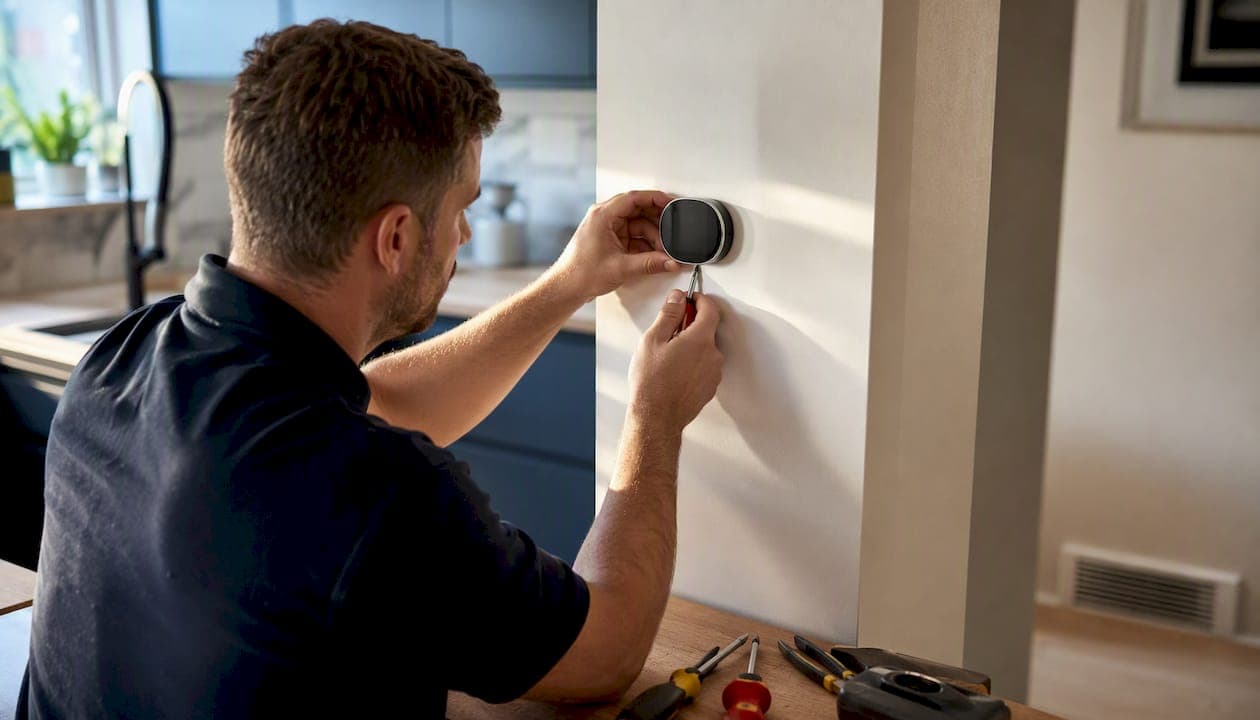
App-controlled heating is worth installing if your current setup relies on a basic timer or a thermostat you rarely touch: Energy Saving Trust estimates typical savings of £100 to £110 a year, with better-run zoned systems doing noticeably more. Field trials back up the behaviour-change effect, though results vary between households. The best next step is a five-minute honesty check on your own heating habits, then a chat with a heating engineer about your boiler and controls. Your-local-plumber fits and commissions these systems across the areas we cover, so that conversation costs nothing to start.
- Verdict: install if your schedule is inflexible or you often heat an empty house
- Typical saving: a noticeable reduction off annual heating bills
- Evidence base: government-backed field trials plus Energy Saving Trust modelling
Key Takeaways
App-controlled heating cuts typical UK heating bills by 10 to 15% when it replaces wasteful manual scheduling, but only if it's installed, commissioned, and actually used.
| Point | Details |
|---|---|
| Realistic savings range | Expect roughly £100 to £110 a year on average, more with proper zoning, per Energy Saving Trust. |
| Fix schedules before zoning | Install a smart thermostat first, then add TRVs only to rooms you confirm are wasting heat. |
| Evidence has caveats | Trial data shows real behaviour change but also rebound effects and small-sample variability. |
| Controls can't fix everything | Poor insulation or an inefficient boiler will limit savings regardless of the app. |
| Get it commissioned properly | Your-local-plumber surveys, installs, and commissions smart heating with fixed pricing and a live app demo. |
Table of Contents
- How does app-controlled heating actually work?
- What are the real reasons to install app-controlled heating?
- Do smart thermostats really save money?
- Which households benefit most from smart heating?
- What does installation cost and what should you check first?
- What are the downsides of app-controlled heating?
- What is the best order to upgrade your heating controls?
- What should you ask a heating installer before you buy?
- An engineer's view on smart heating installs
- Get app-controlled heating fitted properly, first time
- Frequently asked questions
- Sources
How does app-controlled heating actually work?
An app-controlled system, sometimes called a smart heating system, links four things: a smart thermostat, a hub or cloud connection, sensors or thermostatic radiator valves (TRVs), and often a hot water control. The thermostat replaces your old dial or timer, and the app talks to it over Wi-Fi, letting you adjust temperatures from anywhere.
The features that actually drive savings are scheduling, learning algorithms that predict when you're home, geofencing that uses your phone's location to turn heating down when you leave, and weather compensation that adjusts output based on outdoor temperature. Usage insights, shown as graphs in the app, flag when you're heating rooms nobody uses.
Compatibility matters before anything else:
- Some thermostats need a "C-wire" for continuous power, which older boiler wiring may lack
- Combi boilers, system boilers, and heat-only setups aren't all supported by every device
- A smart meter (SMETS1 or SMETS2) can feed richer usage data into some apps, though it isn't essential for basic control
If you're unsure what you're working with, our guide to what smart heating actually is breaks down the terminology further.
What are the real reasons to install app-controlled heating?
Every feature on a smart heating system maps to a concrete homeowner benefit. It's worth thinking in pairs: the feature, and what it actually fixes.
- Flexible scheduling stops heat running through empty daytime hours when everyone's at work or asleep
- Remote control means you can turn heating on from the train instead of leaving it running all day "just in case"
- Zoning with smart TRVs lets you stop heating a spare room or unused dining room while the rest of the house stays warm
- Usage insights show you exactly when and where heat is being wasted, often revealing habits you didn't know you had
- Hot water scheduling avoids reheating a cylinder that nobody's going to use before bedtime
Beyond the numbers, comfort improves because rooms reach temperature before you walk in rather than after. Many systems include frost protection that kicks in automatically during cold snaps, which matters if you travel often. Some integrate with wider smart home setups, and a few send maintenance alerts if the system detects a fault, which can catch a failing boiler component before it becomes a breakdown.
Pro Tip: Fit the smart thermostat first and live with it for a month before buying TRVs. You'll quickly see which rooms are the real offenders, and that data stops you overspending on valves for rooms that were never the problem.
Do smart thermostats really save money?
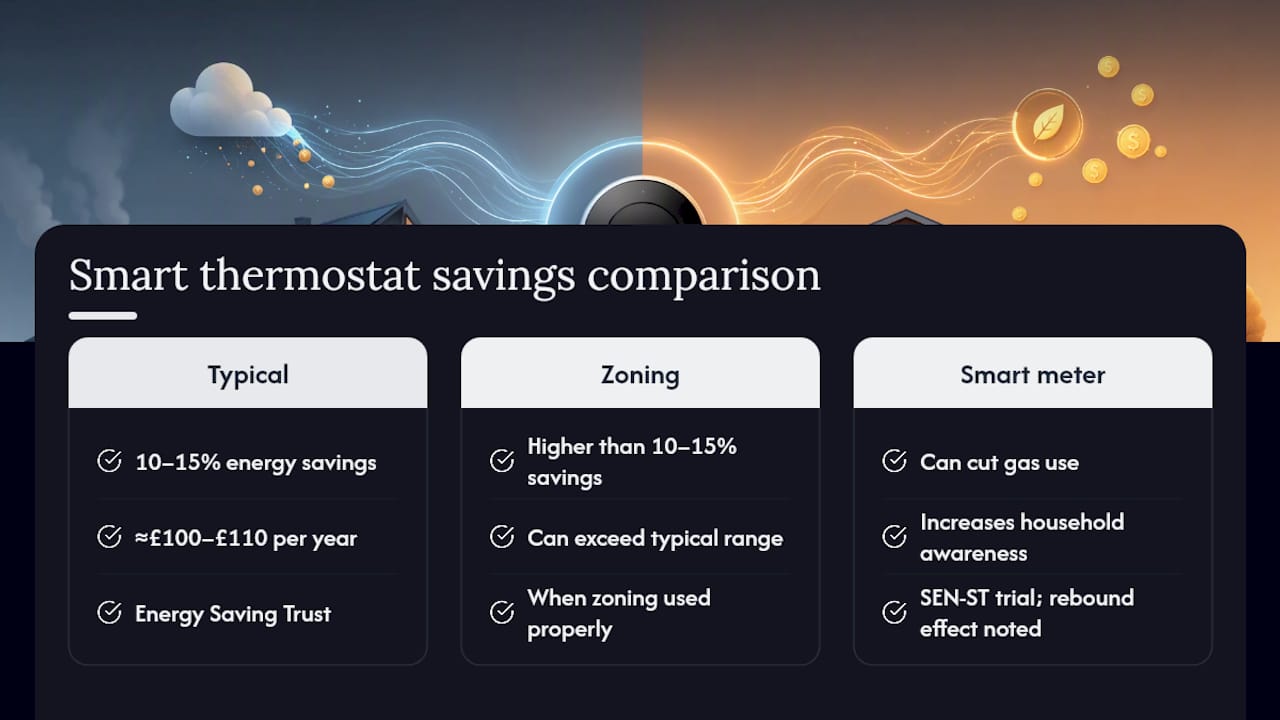
The most-cited UK figure, from Energy Saving Trust, puts typical savings at 10 to 15% of annual heating spend, roughly £100 to £110 a year for an average household, rising higher where zoning is used properly. That range moves depending on house size, how wasteful your current habits are, and how much you actually engage with the app.
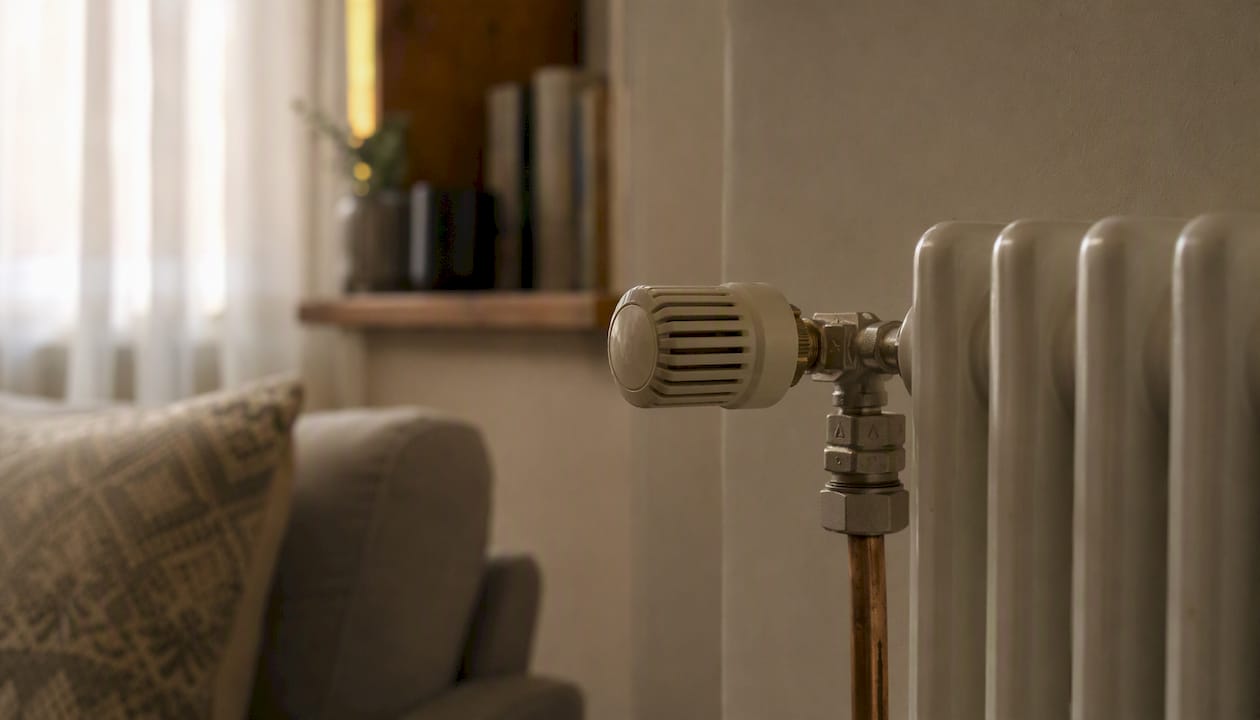
The SEN-ST government trial found that pairing smart controls with smart meter feedback increased household awareness and, in many cases, changed behaviour enough to cut gas use. But the trial also flagged a rebound effect: some households used the extra comfort to heat their homes warmer rather than cheaper, and sample sizes were small enough that results varied a lot between homes.
The caveat worth remembering: a thermostat won't rescue a poorly insulated house or an ageing, inefficient boiler. It manages what you already have more intelligently.
Which households benefit most from smart heating?
You're in the strongest position to benefit if any of these sound familiar:
- Your current controls are a basic mechanical timer or a dial thermostat you never adjust
- Your routine is irregular, shift work, frequent travel, or unpredictable hours
- You work from home some days and not others
- You know you're heating rooms nobody uses
If you're already running a tightly programmed system, or your main issue is poor insulation or an inefficient boiler, an app won't move the needle much. Start with a quick self-check: how often do you actually adjust your heating manually, and how many rooms sit heated but empty?
What does installation cost and what should you check first?
Device prices for a smart thermostat typically sit in the low hundreds of pounds before installation, with smart TRVs priced per valve on top of that. Installer time varies depending on whether your boiler already has the wiring a smart thermostat needs, since older systems sometimes lack the C-wire connection and require extra work.
Before booking anyone, check:
- Your boiler type (combi, system, or heat-only) against the device's compatibility list
- Whether you have a smart meter, since some apps use it for richer reporting
- Whether you want multiple heating zones, which pushes you toward TRVs rather than a single thermostat
- Whether your existing central heating system needs a wider health check before adding smart controls
A proper installer checklist should include commissioning (setting the system up correctly on day one, not just fitting it), a live demo of the app working on your phone, written warranty terms, and confirmation of where sensors get placed, since a thermostat stuck in a draughty hallway reads the wrong temperature all day.
Pro Tip: Get two or three quotes and ask each one to show you the app actually running on a real installation before you commit. If they can't demonstrate it, that's a red flag on their commissioning process, not just their sales pitch.
What are the downsides of app-controlled heating?
No system is friction-free. The most common complaints fall into a few categories:
- Privacy concerns, since usage data goes to a manufacturer's cloud; check the privacy policy before buying
- Wi-Fi dependency, where a router outage can strip away remote control (look for devices with local fallback control)
- Poor sensor placement, often the installer's fault rather than the device's, which throws off readings
- Rebound effects, where extra convenience leads to warmer, not cheaper, homes
- Over-reliance on the gadget, expecting a thermostat to fix what's really a boiler efficiency or insulation problem
Manage expectations from day one: the savings figures are averages, and your result depends heavily on your starting habits and how much you actually use the scheduling features rather than leaving factory defaults running.
What is the best order to upgrade your heating controls?
- Audit your current setup. Note which rooms overheat, which sit cold and unused, and how often you touch the thermostat.
- Install a smart thermostat for whole-home scheduling. This is usually where the bulk of the saving comes from, often paying for itself within a year or two.
- Add smart TRVs to rooms that are consistently over-heated or rarely used, targeting the biggest remaining waste.
- Layer in remote sensors or hot water control once the basics are bedded in and you understand your usage patterns.
Engage with the app rather than leaving it on default settings. Our piece on thermostatic radiator valves covers how TRVs fit into this staged approach in more detail.
What should you ask a heating installer before you buy?
Ask directly about boiler compatibility, whether a C-wire is present or needs adding, and whether the system supports SMETS smart meters if that matters to you. Confirm TRV compatibility if you're planning to zone rooms later, even if you're only fitting a thermostat now.
Watch for red flags: an installer who skips commissioning, gives vague answers on compatibility, or won't show you the app working live on-site. A decent installer offers an on-site quote, demonstrates the system before leaving, and backs the work with a clear local warranty rather than a manufacturer-only guarantee that leaves you chasing support yourself.
An engineer's view on smart heating installs
Fitting heating controls day to day across UK homes, the most common issue is not the technology. It's rushed commissioning, where an engineer fits the thermostat but never sets the schedule properly, leaving homeowners with an expensive timer.
Get app-controlled heating fitted properly, first time
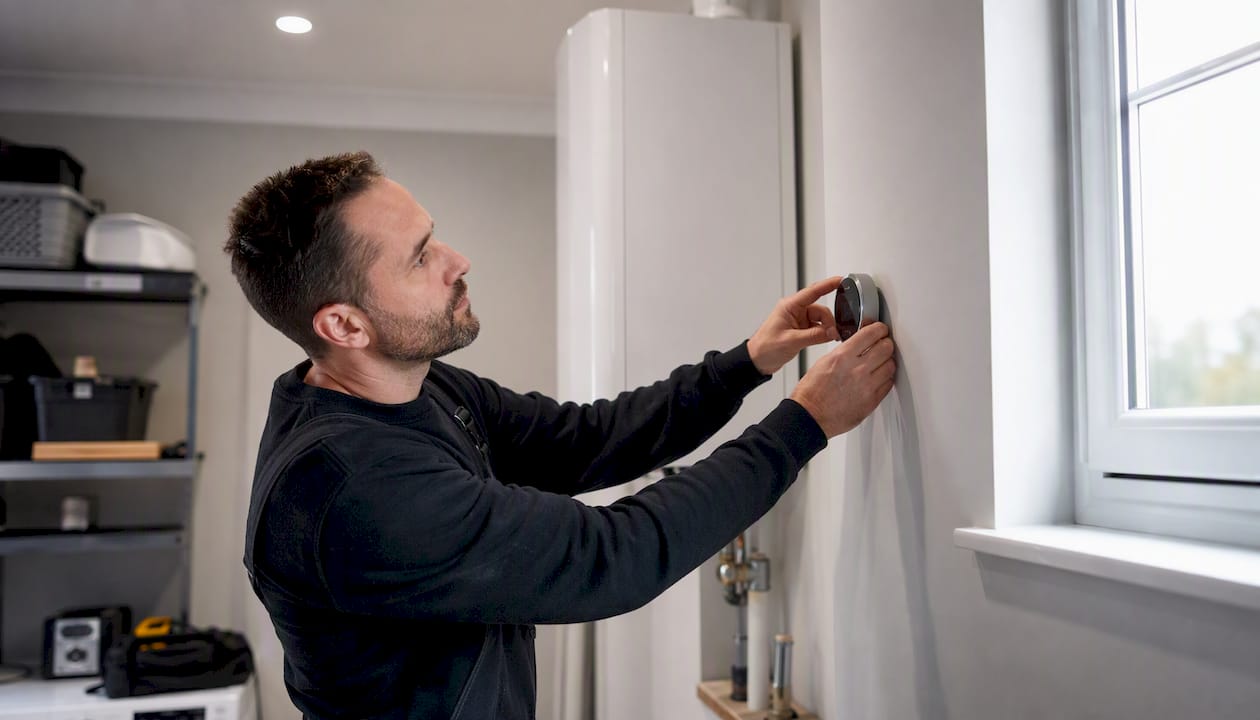
A smart thermostat only delivers the savings figures we've covered if it's installed and commissioned correctly, which is where a DIY box-fit or a rushed installer often falls short. Your-local-plumber surveys your boiler and current controls first, fits the thermostat or TRVs with proper commissioning and a live app demo before we leave, and backs the work with fixed, transparent pricing rather than a vague estimate.

We cover emergency repairs, boiler diagnostics, and full central heating work alongside smart control installs, so if your boiler needs attention at the same time, it's one visit rather than two separate call-outs. If you're ready to stop guessing what your current setup is costing you, book a free quote for smart heating installation and we'll tell you honestly whether a thermostat, TRVs, or both make sense for your home.
Frequently asked questions
Do I need a smart meter to install app-controlled heating? No. A smart meter can enrich the usage data some apps show you, but it isn't a requirement for basic thermostat scheduling or remote control.
Will app-controlled heating work with my old boiler? Most modern smart thermostats work with combi, system, and heat-only boilers, though older wiring sometimes lacks the C-wire some devices need. A quick compatibility check before buying avoids surprises.
How long does it take to notice savings? Most households see a shift within the first billing cycle if they actively use scheduling and geofencing rather than leaving default settings running.
Are smart TRVs worth it if I only have a few rooms? Not always. TRVs earn their cost fastest in larger homes with rooms that are regularly over-heated or empty. In a small, well-used home, a single smart thermostat may cover most of the saving already.
Sources
For deeper reading beyond this guide, Energy Saving Trust's controls advice sets out realistic UK savings figures, while the SEN-ST trial report gives the government's own field evidence on behaviour change. For device-specific compatibility questions, our guide on thermostatic valves is a useful next stop.