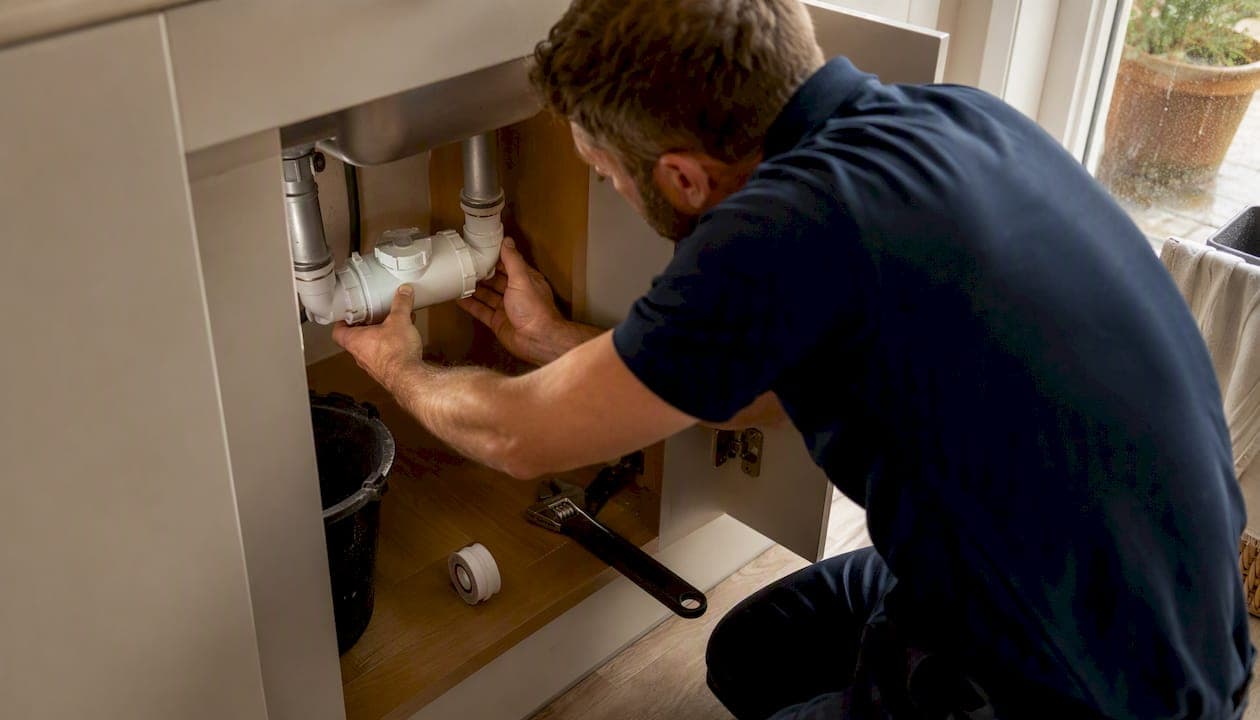
For stopping sewage backflow into your home, a correctly specified non-return valve (NRV) is the single most effective permanent fitting you can install. That said, no one fitting covers every flood risk, and most UK properties benefit from a layered approach. The main types of flood-resistant plumbing fittings to consider are:
- Non-return valves (NRVs) / backwater valves — the permanent first line of defence against sewage backflow
- Toilet pan seals and inflatable toilet bungs — temporary emergency plugs for acute surcharging events
- Sump pumps with check valves and battery backup — for removing water that enters basements or low-level rooms
- Airbrick and air-vent covers — to seal common low-level entry points
- Automatic supply-line shut-off adapters — for cutting mains supply when a burst or appliance failure is detected
- Flexible connectors and appliance elevation — physical resilience measures that reduce damage and speed recovery
For anything beyond a simple toilet bung, call a qualified plumber. NRV placement in particular depends on your drainage layout, and a wrong location can make the valve useless.
Pro Tip: Use the GOV.UK check-for-flooding service before choosing fittings. Your local flood risk profile determines whether you need external barriers, internal fittings, or both.
Key takeaways
A correctly specified and maintained NRV is the single most effective permanent fitting for preventing sewage backflow in UK properties.
| Point | Details |
|---|---|
| NRVs are the priority fitting | A passive non-return valve on the branch or main drain stops sewage backflow at source. |
| Keep a toilet bung for emergencies | An inflatable toilet bung provides temporary protection during acute surcharging while a permanent fitting is arranged. |
| Test your sump pump regularly | Run a float-switch test monthly and schedule a full service annually to confirm the pump activates when needed. |
| Document every installation | Photograph fittings, note model numbers, and file certificates with your insurance documents for future claims. |
| Your-local-plumber covers the full scope | From site surveys and NRV installation to sump pump fitting and appliance elevation, with free on-site quotes. |
Table of Contents
- 1. Non-return valves and backwater valves: how they work and where to fit them
- 2. Toilet pan seals and inflatable toilet bungs
- 3. Sump pumps and the fittings that make them work
- 4. Airbricks, air vents, and flood-resistant vent covers
- 5. Automatic supply-line adapters and flow-sensing shut-off devices
- 6. Flexible connectors, appliance elevation, and small-works resilience
- 7. What plumbing fittings cannot protect against
- 8. How to choose the right flood-resistant fittings for your property
- 9. Practical installation and maintenance tips
- A plumber's honest view on flood protection
- Your-local-plumber can handle the survey and installation
- Sources
1. Non-return valves and backwater valves: how they work and where to fit them
A non-return valve is a passive mechanical device fitted into a drain or waste pipe. It contains a hinged or floating flap that sits open during normal flow, allowing waste to leave the building freely. When downstream water levels rise during a surcharged sewer event, the flap closes automatically, blocking backflow before it reaches your toilet, sink, or floor drain.
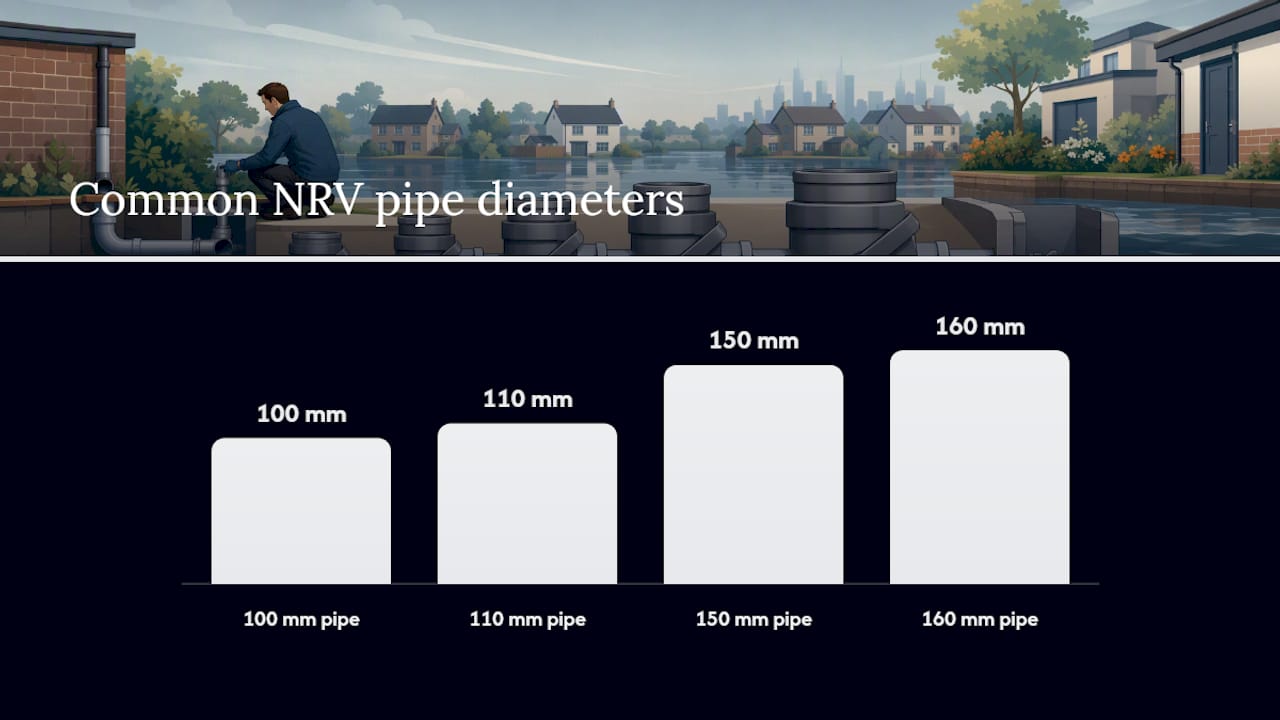
Surcharged sewers are a leading cause of internal sewage flooding in UK properties, which is why NRVs sit at the top of any flood-safe plumbing specification. The most common compatible pipe diameters are 100mm, 110mm, 150mm, and 160mm, covering the branch and main drains found in most UK homes.
Fernco's retrofit NRV range includes push-fit options for DN100 and DN150 pipework. These are rod-able and jet-able, meaning a drain engineer can clear debris without excavating the valve, and they include a rodent-block feature that prevents rats using the drain as an entry point. The NRV100 carries WRc approval, a meaningful independent quality signal. For larger or adaptable connections, M3 Floodtec's 160/110mm NRV uses flexible collars to fit both pipe sizes, remains normally open for free flow, and closes automatically under backflow pressure.
Installation locations vary by property:
- Branch drain — fitted close to a low-level fixture such as a ground-floor toilet
- Main drain — fitted at the outfall from the building, protecting all fixtures at once
- Manhole inlet — used where the drainage layout makes in-pipe access impractical
- Push-fit retrofit in the toilet outlet — a quick-fit option for properties where excavation is not feasible
Maintenance checklist:
- Check the flap for rags, wipes, or debris after any heavy rainfall
- Confirm the access cover or rodding eye is clear and unobstructed
- Jet or rod the valve at least annually, or more frequently in areas with older combined sewers
- Look for signs of corrosion or cracking on the body, especially on plastic units exposed to ground movement
Pro Tip: Where you fit the NRV matters as much as which product you choose. A valve installed too close to a fixture can be bypassed by backflow entering through a different outlet. A professional assessment of your drainage layout is the only reliable way to confirm the right location.
NRVs can also become blocked by debris, a failure mode sometimes called "ragging," where sanitary products or wet wipes prevent the flap from sealing fully. Some higher-specification systems add powered or alarmed closure mechanisms to compensate, though these add cost and require a power supply.
2. Toilet pan seals and inflatable toilet bungs
When a sewer surcharges suddenly, the toilet pan is often the first place foul water appears. An inflatable toilet bung addresses this directly: you push the deflated device into the toilet pan outlet, inflate it with a hand pump, and it creates a watertight seal that holds back backflow for the duration of the event.
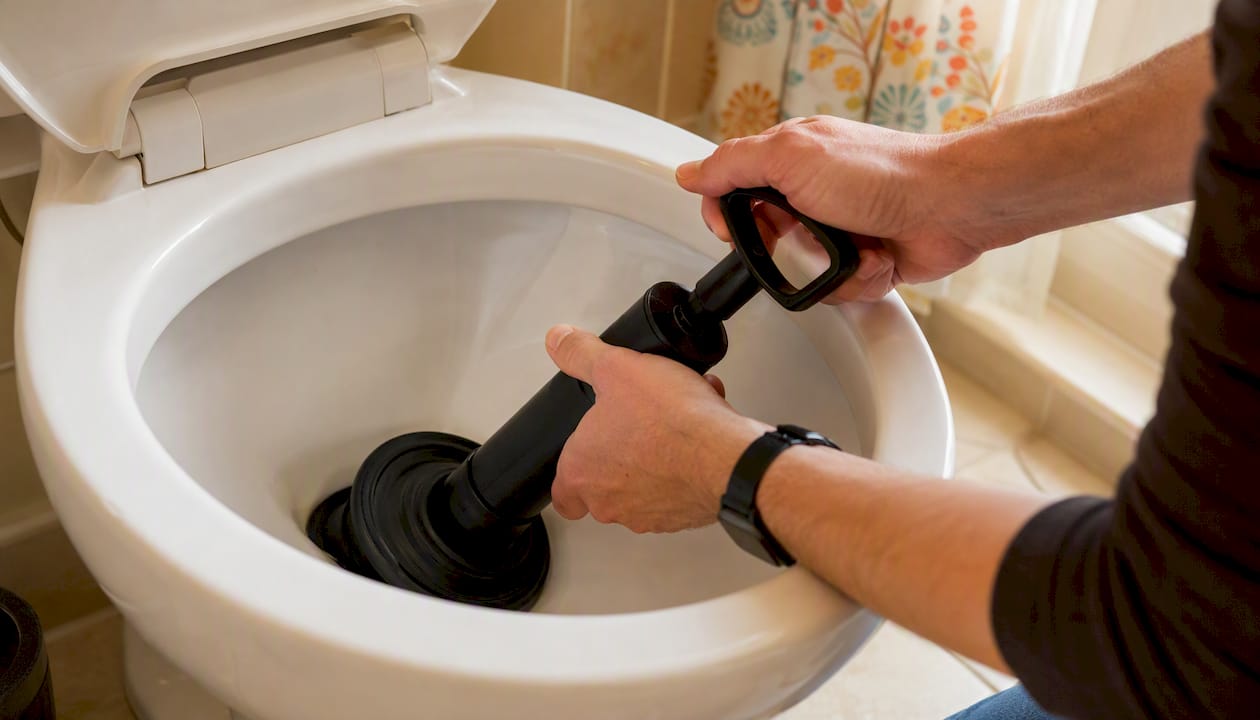
FloodKit's toilet bung is one of the best-known products in this category. The manufacturer claims independent testing to heights in excess of the PAS 1188 standard, which is the UK benchmark for flood protection products. This is a useful signal, though it is worth understanding that PAS 1188 testing is product-specific and does not guarantee performance in every installation scenario.
How to deploy a toilet bung correctly:
- Confirm the toilet is not in use and the pan is dry or lightly damp
- Insert the deflated bung fully into the pan outlet
- Inflate using the hand pump until firm resistance is felt
- Leave in place until the surcharging event has fully passed and sewer levels have normalised
- Deflate slowly, check for contamination, and clean the device before storage
Limitations to keep in mind:
- Toilet bungs are a temporary measure, not a substitute for a permanent NRV
- They require someone to be present and physically deploy them before backflow begins
- They are not suitable for properties with continuous or repeated surcharging
- Insurers and building control expect permanent measures where flood risk is ongoing; a bung alone will not satisfy a surveyor
Temporary devices like these are genuinely valuable as emergency tools, particularly during one-off sewer maintenance events or when a permanent fitting is awaiting installation. Keep one accessible in any property at risk.
3. Sump pumps and the fittings that make them work
A sump pump removes water that has already entered a low-level space, such as a basement, cellar, or undercroft. The pump sits in a pit below floor level, and a float switch activates it automatically when water reaches a set depth. The water is then discharged to a drain or soakaway outside the building.
The pump itself is only part of the system. Three complementary fittings are equally important:
- Check valve on the discharge pipe — prevents pumped water from flowing back into the sump when the pump stops
- Float switch and alarm — triggers the pump automatically and alerts you if water levels rise unexpectedly
- Battery or generator backup — critical, because power cuts often coincide with flood events; a pump with no power is useless precisely when you need it most
Maintenance checklist:
- Test the float switch monthly by pouring water into the pit manually
- Clear the inlet screen of silt and debris every three months
- Run the pump through a full cycle at least twice a year, even in dry periods
- Check the discharge pipe and check valve for blockages or frost damage each autumn
- Schedule a professional service annually, or after any activation event
Cost bands vary considerably. A basic submersible pump with a float switch and check valve sits in the low-to-medium range for a typical UK cellar installation. Adding battery backup and a high-water alarm moves the cost into the medium-to-high band. Properties with deep basements or complex drainage layouts will sit at the higher end, particularly if a dedicated sump pit needs to be formed.
Pro Tip: Never rely on a sump pump as your only flood-resistant fitting. If the pump fails or the power goes out, you need an NRV or other passive device to hold back backflow while the pump is offline.
4. Airbricks, air vents, and flood-resistant vent covers
Airbricks are built into the external walls of most UK homes at or near ground level to ventilate the sub-floor void. In a flood, they become open channels for water to enter directly into the building fabric. A standard airbrick with a 215mm x 65mm face can admit a significant volume of water in a short time.
Flood-resistant vent options include:
- Removable airbrick covers — fitted over the existing brick before a flood event; low cost but require manual deployment
- Self-closing airbricks — contain a float mechanism that seals the vent automatically when water contacts it, then reopens as water recedes
- One-way vent systems — allow air to pass outward but prevent water ingress; useful where continuous ventilation is needed
Balancing flood resistance with adequate sub-floor ventilation is not optional. Building Regulations Part C requires sufficient ventilation to prevent moisture build-up and timber decay. Blocking airbricks permanently without providing an alternative ventilation route can cause condensation, rot, and structural damage. If you are replacing standard airbricks with flood-resistant versions, check with your local building control officer that the replacement maintains the required free-air area.
Airbricks at foundation level are particularly vulnerable in properties near watercourses or in areas with a history of surface water flooding. Raising internal equipment such as electrical consumer units above the level of the airbrick opening is a complementary step recommended in property flood resilience guidance.
5. Automatic supply-line adapters and flow-sensing shut-off devices
These devices address a different problem from backflow prevention. A flow-sensing shut-off adapter monitors the rate of water passing through a supply pipe and cuts the flow automatically when it detects an abnormal surge, the kind caused by a burst pipe, a failed washing machine hose, or a leaking appliance.
Anti-flood adapters are typically fitted between the isolation valve and the appliance or at the property's incoming supply. These devices cover commonly sized standard supply lines often used for household appliances, which match the standard connections for most UK washing machines, dishwashers, and under-sink appliances.
Key limitations:
- These devices do not prevent sewage backflow; they address supply-side failures only
- They are not a certified backflow prevention device for potable water supplies; for that, you need a WRAS-approved check valve or RPZ valve specified to Water Regulations requirements
- Electronic models require a power supply and periodic battery replacement
- Response time varies; a very fast burst may admit some water before the device closes
Where they earn their keep:
- Unoccupied holiday homes or rental properties where a burst could go undetected for days
- Properties with elderly or vulnerable occupants who may not notice a slow leak quickly
- Homes with a history of appliance hose failures or older flexible supply connections
For a broader look at smart shut-off technologies now available for UK homes, the options have expanded considerably in recent years.
6. Flexible connectors, appliance elevation, and small-works resilience
These are not valves or seals, but they belong in any serious flood-resilience plan. The principle is straightforward: if water does get in, you want to minimise damage and speed up recovery.
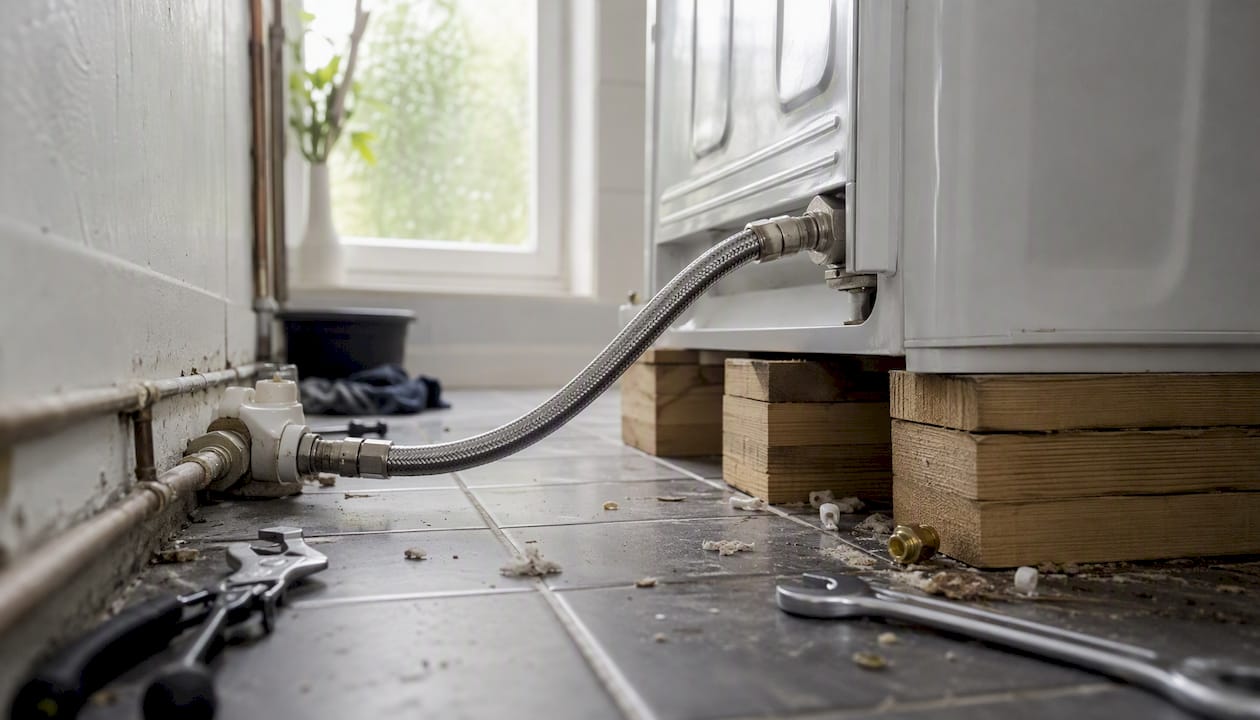
Flexible connectors use braided or corrugated sections of pipe between rigid supply lines and appliances. During minor ground movement or when an appliance needs to be lifted quickly after a flood, flexible connections prevent the rigid pipework from fracturing. They also make it far easier to disconnect and reinstate appliances during a recovery.
Property flood resilience guidance specifically recommends raising boilers, water heaters, and electrical distribution boards above known historical flood levels. For most UK properties at risk, that means positioning critical equipment at least 600mm above the highest recorded flood level, though the exact height should be confirmed against your local flood risk data from the GOV.UK check-for-flooding service.
Practical steps:
- Replace rigid push-fit connections to washing machines and dishwashers with braided flexible hoses rated for continuous use
- Fit removable pipe unions at key isolation points so appliances can be disconnected without cutting pipework
- Raise boilers onto wall-mounted brackets or purpose-built plinths above the flood risk level
- Relocate electrical consumer units to first-floor level where structurally feasible
Pro Tip: Combine flexible connections with removable unions at every appliance. In a fast-moving flood event, being able to disconnect a boiler in under five minutes rather than calling an engineer can save thousands of pounds in reinstatement costs.
For more on durable plumbing materials suited to flood-prone environments, stainless steel braided hoses and solvent-weld ABS fittings generally outperform standard push-fit plastic in repeated wet-dry cycles.
7. What plumbing fittings cannot protect against
Flood-resistant fittings are powerful tools within their scope, but that scope has clear limits. Understanding where they stop working is as important as knowing what they do.
Fittings will not protect against:
- External inundation where floodwater surrounds the building and enters through walls, floors, or doorways
- Rising groundwater that saturates the ground beneath a slab and forces water up through floor joints
- Fast-flowing river or surface water that overwhelms drainage capacity entirely
- Structural failure of the building envelope under hydrostatic pressure
When the flood risk is primarily external, the priority shifts to physical barriers: flood doors, door guards, raised thresholds, and landscaping that directs surface water away from the building. These are categorised as "resistance" measures, distinct from the "resilience" measures covered in this article. The Somerset Rivers Authority's property-level flood protection guidance draws this distinction clearly: resistance stops water entering; resilience reduces damage when it does.
Decision point: if your property has flooded from external surface water or a nearby watercourse, start with a flood risk assessment and consider external barriers first. Internal fittings such as NRVs and sump pumps are then a second layer, not the primary defence.
8. How to choose the right flood-resistant fittings for your property
Start with your risk profile, not the product catalogue. The GOV.UK check-for-flooding service gives you a baseline for local flood risk from rivers, surface water, and groundwater. That shapes every decision that follows.
Property assessment checklist:
- Does the property have a basement, cellar, or rooms below ground level?
- Is there a history of internal sewage backflow or foul smells after heavy rain?
- Are any airbricks or vent openings at or near ground level?
- What is the age and condition of the drainage system (combined vs separate sewer)?
- Has the property ever been included in a local flood risk zone?
Questions to ask your plumber before any installation:
- Where exactly will the NRV be fitted, and why that location rather than another?
- What pipe diameter is the valve specified for, and does it match the existing drain?
- Is the valve WRc-approved or independently tested?
- How will the valve be accessed for jetting and inspection?
- What is the service interval, and what does a service call involve?
Red flags on quotes:
- No mention of access provision or rodding eye
- Pipe sizes not specified in writing
- No reference to testing or certification
- A price that seems unusually low for excavation work
Rough cost banding for common installations:
- Low: toilet bung kit, airbrick covers, flexible hose replacements
- Medium: push-fit retrofit NRV on an accessible branch drain, flow-sensing adapter
- High: NRV requiring excavation, sump pump pit formation with battery backup, full appliance elevation programme
A professional assessment is often the only way to confirm which fittings are appropriate for a specific drainage layout. DIY NRV installation is sometimes feasible for accessible push-fit locations, but main-drain or manhole-fitted valves almost always require a competent drainage engineer. For background on plumbing valve types and how they differ, that context helps when reviewing quotes.
9. Practical installation and maintenance tips
The most common mistake homeowners make is installing a flood-resistant fitting and then forgetting it exists. Passive devices in particular, NRVs and self-closing airbricks, can fail silently. A flap that is held open by a single wet wipe offers no protection at all.
Checks you can do yourself:
- After heavy rain, lift the NRV access cover and confirm the flap moves freely and seats cleanly
- Test your sump pump float switch monthly by pouring a bucket of water into the pit
- Inspect airbrick covers visually each autumn before the wet season
- Check flexible hose connections for bulging, cracking, or corrosion at the fittings
When to call a professional:
- Any NRV that requires excavation to access or inspect
- Sump pump installations where a pit needs to be formed in a concrete floor
- Any work on the main drain or manhole
- Raising a boiler or consumer unit, which involves both plumbing and electrical trades
Your-local-plumber's engineers carry out site surveys, NRV installations, sump pump fitting, and appliance elevation work across multiple UK locations, with transparent fixed pricing and 24/7 emergency availability. For essential plumbing services relevant to flood resilience, the scope covers everything from a single push-fit NRV to a full basement drainage upgrade.
Pro Tip: Photograph every fitting at installation, note the product name, model, and serial number, and store the paperwork with your home insurance documents. Insurers increasingly ask for evidence of flood-resilience measures when processing claims or setting premiums.
A plumber's honest view on flood protection
Most homeowners who contact a plumber after a sewage backflow event say the same thing: they had no idea the risk existed until the toilet overflowed. The fitting that would have prevented it, a correctly placed NRV, costs a fraction of the reinstatement bill.
The advice I give consistently is this: if your property has ground-floor rooms, a basement, or any history of drain smells after heavy rain, book a drainage survey before the next wet season. Do not wait for a flood to confirm the risk is real. A survey takes an hour, costs far less than a single insurance excess, and tells you exactly which fittings are worth installing and where.
Your-local-plumber can handle the survey and installation
Knowing which fittings you need is one thing. Getting them specified correctly, fitted in the right location, and left accessible for future maintenance is where a qualified local engineer makes the difference between a fitting that works and one that fails silently.

Your-local-plumber provides site surveys, NRV installations, sump pump fitting, airbrick cover upgrades, appliance elevation, and 24/7 emergency call-outs across multiple UK towns and cities. Every job comes with transparent fixed pricing, and on-site quotes for new installations are free. If your property has a history of internal flooding or you are simply not sure what protection is already in place, book a survey or get a free quote today. An engineer can assess your drainage layout, confirm the right valve type and location, and give you a written specification you can also share with your insurer.
Sources
These are the authoritative references worth bookmarking before you speak to a plumber or review a quote:
- Check for flooding — GOV.UK
- Do I Need a Non‑Return Valve? Understanding the Process First — Flood Protection Solutions