
TL;DR:
- Homeowners are responsible for their supply pipes within their property boundary, while water companies own the mains.
- Proper maintenance, approved materials, and compliance with regulations prevent costly faults and ensure safe water.
Water supply lines are the pipes that connect your home to the public mains, carrying potable water to every tap, appliance, and fixture in the building. Homeowners own and maintain the supply pipes within their property boundary, while water companies own the mains up to that point. That split in ownership means you carry legal responsibility for everything on your side of the boundary box. Understanding water supply lines is the first step to managing that responsibility well.
What are water supply lines and how do they work?
Water supply lines are the pressurised pipes that run from the public water main, through your boundary box, and into your home. The boundary box sits at the edge of your property and contains a stop tap that lets you shut off the supply in an emergency. From there, a single supply pipe feeds the internal plumbing infrastructure, branching out to serve cold taps, your boiler, and any appliances connected to the mains.
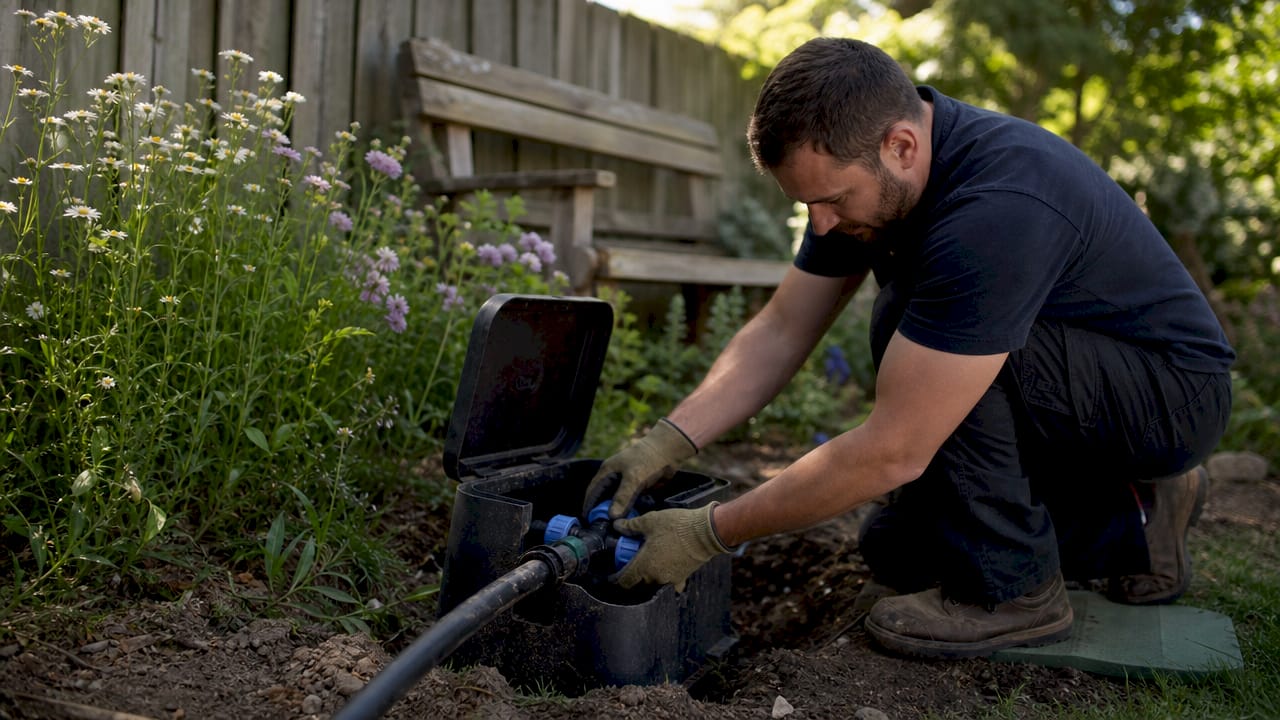
The internal stop tap, usually found under the kitchen sink or in a utility cupboard, gives you a second point of control. Knowing where both stop taps are is one of the most practical things any homeowner can do. A burst pipe with no known stop tap location can cause thousands of pounds of damage in minutes.
All plumbing work connecting to the mains must comply with the Water Supply (Water Fittings) Regulations 1999. These regulations exist to prevent waste, misuse, and contamination of the public water supply. Failure to comply in England and Wales is a criminal offence under the Water Industry Act 1991.
Direct vs indirect systems: which does your home have?
UK homes typically operate one of two water supply systems: direct or indirect. Knowing which system you have shapes every decision about maintenance, upgrades, and fault diagnosis.
Direct systems
A direct system feeds mains pressure water straight to all outlets throughout the house. Every cold tap, toilet cistern, and appliance draws directly from the mains. Pressure is consistent and generally strong. Direct systems are now the standard in most new builds across England and Wales.
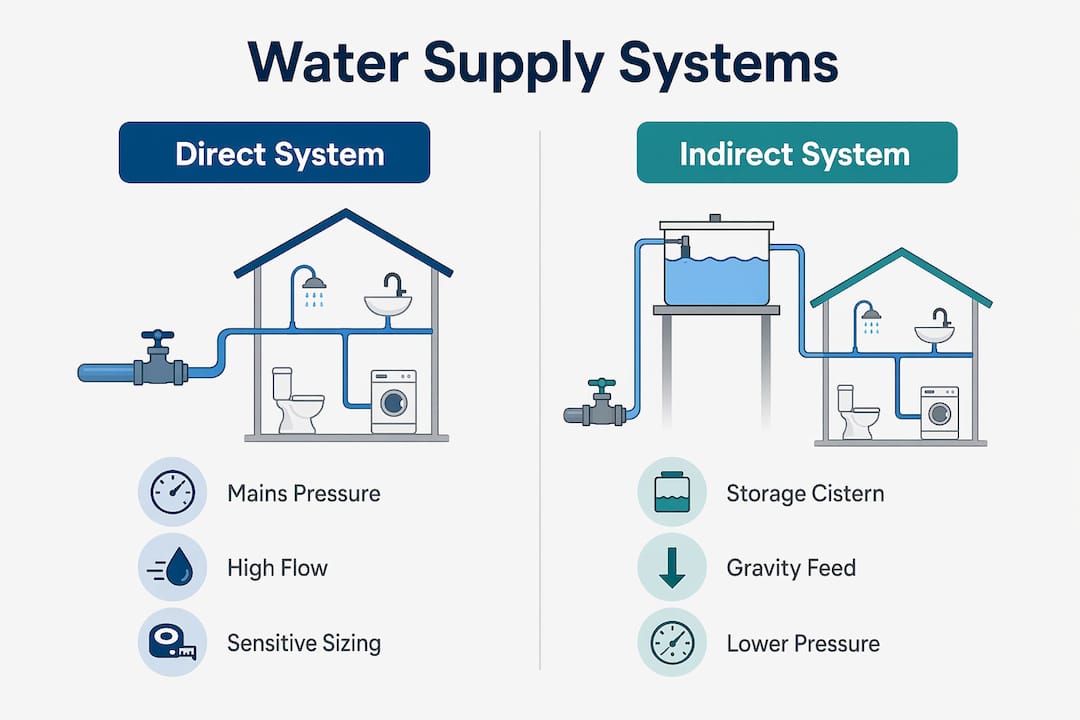
Modern high-pressure direct systems are more sensitive to pipe sizing and flow calculations than traditional gravity-fed systems. Get the pipe diameter wrong and you will notice poor flow at the shower while the kitchen tap runs simultaneously.
Indirect systems
An indirect system uses a cold water storage cistern, typically located in the loft, to supply most outlets by gravity. Only the kitchen cold tap and sometimes one other outlet draw directly from the mains. Older UK properties, particularly those built before the 1990s, commonly use this layout.
The gravity feed produces lower pressure than a direct system. That is why older homes often need a pump added to the shower circuit. The cistern also introduces a contamination risk if it is not covered, insulated, and inspected regularly.
| Feature | Direct system | Indirect system |
|---|---|---|
| Pressure source | Mains pressure | Gravity from loft cistern |
| Drinking water outlets | All cold taps | Kitchen tap only (typically) |
| Common in | New builds | Pre-1990s properties |
| Contamination risk | Lower | Higher if cistern is poorly maintained |
| Pump requirement | Rarely needed | Often needed for showers |
What materials and methods are used to install supply lines?
Mains water supply pipes are most commonly constructed from MDPE (medium-density polyethylene). MDPE is blue for cold water supply, flexible, corrosion resistant, and approved for use under the Water Fittings Regulations. Older properties may still have lead or iron pipes, which carry health and performance risks and should be replaced.
Installation involves two main methods:
- Trenching: The ground is excavated to lay the pipe at a minimum depth of 750mm, with sand bedding beneath and warning tape above to protect the pipe from future digging. Surface reinstatement follows HSE and local authority guidelines.
- Trenchless moling: A pneumatic mole bores a horizontal tunnel underground without excavating the full length of the route. This method causes far less surface disruption, making it preferable under driveways, gardens, and paved areas.
Trenchless moling requires prior notification to the water undertaker to comply with the Water Fittings Regulations. Skipping that notification step is a common mistake that can result in enforcement action.
Pipe sizing matters more than most homeowners realise. A supply pipe that is too narrow restricts flow to the whole property. A qualified plumber calculates the required diameter based on the number of outlets, the distance from the main, and the available mains pressure.
Pro Tip: Ask your installer to confirm the pipe material and depth in writing before work begins. MDPE laid at the correct depth with sand bedding and warning tape is the current standard. Anything less may fail a future compliance inspection.
What maintenance does a water supply line need?
Routine maintenance of your supply lines prevents the majority of serious faults. Most homeowners ignore their plumbing until something goes wrong. That approach is expensive.
Checks you should carry out at least once a year:
- Locate and test both stop taps (boundary box and internal). Turn them off and back on to confirm they move freely and seal correctly.
- Inspect visible pipework under sinks and in airing cupboards for signs of corrosion, drips, or staining.
- Check your water meter reading at night when no water is in use. A rising reading indicates a leak somewhere in the supply pipe.
- Inspect any cold water storage cistern for debris, cracks, or an unsealed lid.
- Confirm that backflow prevention devices on appliances such as washing machines and dishwashers are in place and undamaged.
Common homeowner mistakes include installing non-approved fittings, neglecting backflow prevention devices, and creating dead legs in pipework. Dead legs are sections of pipe where water sits stagnant, creating conditions for bacterial growth including Legionella. They violate Schedule 2 of the Water Fittings Regulations and are a genuine health risk.
Pro Tip: Never cap off a redundant pipe and leave it in place. Remove it entirely or have a plumber reconfigure the pipework. A dead leg is invisible until it causes a contamination problem.
Call a professional plumber when you notice a sudden drop in pressure, discoloured water, unexplained damp patches on walls or floors, or a water meter that moves with all taps closed. These signs point to faults that go beyond routine homeowner maintenance. Your-local-plumber provides plumbing maintenance checks that cover supply line integrity as part of a full property inspection.
Why do UK water supply regulations matter for homeowners?
The Water Supply (Water Fittings) Regulations 1999 set the legal standard for every fitting, pipe, and connection in your home's water system. They are not advisory. Non-compliance is a criminal offence.
The regulations classify fluids into five categories based on contamination risk. Category 1 is clean potable water. Category 5 is the most hazardous, covering fluids that pose a serious health risk. Each category requires a specific level of backflow protection. Backflow prevention and use of WRAS-approved or NSF REG4-approved fittings are mandatory to prevent contamination of the potable supply.
Regulation 5 of the Water Fittings Regulations requires homeowners and contractors to notify the local water undertaker before beginning certain works. These include installing a new supply pipe, extending a system, or installing a bidet with an ascending spray. Failure to notify before starting work is itself a breach, regardless of whether the finished work is compliant.
Key compliance points every homeowner should know:
- Only fittings carrying WRAS approval or NSF REG4 certification are legally compliant. Unapproved fittings are the most common source of contamination risk in domestic plumbing.
- Backflow protection devices must match the fluid category of the connected appliance. An RPZ (reduced pressure zone) valve installed without proper drainage negates its own function and risks flooding.
- Building Regulations also apply. Hot water delivery is capped at 48°C for safety, and water usage limits are set at 125 litres per person per day under current Building Regulations.
For a full breakdown of what these rules mean in practice, the UK plumbing regulations guide from Your-local-plumber covers the key obligations for 2026. The plumbing compliance legal guide explains the notification and approval process in plain language.
Key takeaways
Water supply lines connect your home to the public mains, and every fitting, pipe, and connection on your side of the boundary box is your legal responsibility under the Water Supply (Water Fittings) Regulations 1999.
| Point | Details |
|---|---|
| Know your system type | Identify whether your home uses a direct or indirect supply to diagnose faults and plan upgrades correctly. |
| Use approved materials | Only MDPE pipe and WRAS-approved fittings meet current UK regulatory standards for supply line work. |
| Notify before you dig | Trenchless moling and new supply pipe installations require prior notification to your water undertaker. |
| Check for dead legs | Remove redundant pipework entirely to prevent stagnant water and bacterial contamination. |
| Test stop taps annually | Confirm both the boundary box and internal stop taps operate freely to protect against emergency flooding. |
What I have learned from years of watching homeowners get this wrong
Most homeowners treat their water supply lines as invisible infrastructure. They know the pipes exist somewhere under the floor, but they give them no more thought than the foundations. That attitude is understandable. It is also the reason so many supply-side problems escalate into expensive repairs.
The single most common oversight I see is a homeowner who has no idea where their internal stop tap is. When a fitting fails at 11pm on a Sunday, that gap in knowledge turns a £40 repair into a flooded kitchen. Knowing your stop tap location costs nothing and takes thirty seconds.
The second issue is fittings. Homeowners doing small DIY jobs often buy whatever looks right at the hardware shop. If it does not carry WRAS approval, it is not compliant, full stop. The risk is not just a fine. It is contaminated drinking water in your own home.
Compliance and maintenance are not bureaucratic obstacles. They are the practical framework that keeps your water safe and your home protected. Working with a qualified local plumber for any supply line work is the most reliable way to stay on the right side of both.
— Michael
Your-local-plumber: supply line services you can rely on
Water supply line work requires both technical skill and regulatory knowledge. Getting either wrong creates problems that are costly to fix and potentially dangerous to live with.

Your-local-plumber provides professional plumbing services covering supply line installation, leak detection, compliance checks, and full system inspections. Every job is carried out by experienced engineers working to the current Water Supply (Water Fittings) Regulations 1999 standards. Transparent pricing and fast local response mean you get the right fix without delays or surprises. Book online to arrange an inspection or speak to a qualified engineer about your supply line concerns today.
FAQ
What is a water supply line in a UK home?
A water supply line is the pipe that runs from the public water main to your property, delivering potable water to your taps and appliances. Homeowners are responsible for maintaining the section of pipe within their property boundary.
How do I know if my home has a direct or indirect system?
Check whether your loft contains a large cold water storage cistern. If it does, you have an indirect system. If there is no cistern and all cold taps run at mains pressure, your home uses a direct system.
What pipe material should be used for a supply line?
MDPE (medium-density polyethylene) is the current standard material for mains water supply pipes in the UK. It is flexible, corrosion resistant, and compliant with the Water Fittings Regulations when installed correctly.
Do I need to notify anyone before replacing a supply pipe?
Yes. Regulation 5 of the Water Supply (Water Fittings) Regulations 1999 requires you to notify your local water undertaker before installing or replacing a supply pipe. Starting work without notification is a breach of the regulations.
What is a dead leg in plumbing?
A dead leg is a section of pipe where water sits without circulating, creating conditions for bacterial growth including Legionella. Dead legs violate Schedule 2 of the Water Fittings Regulations and must be removed, not simply capped off.