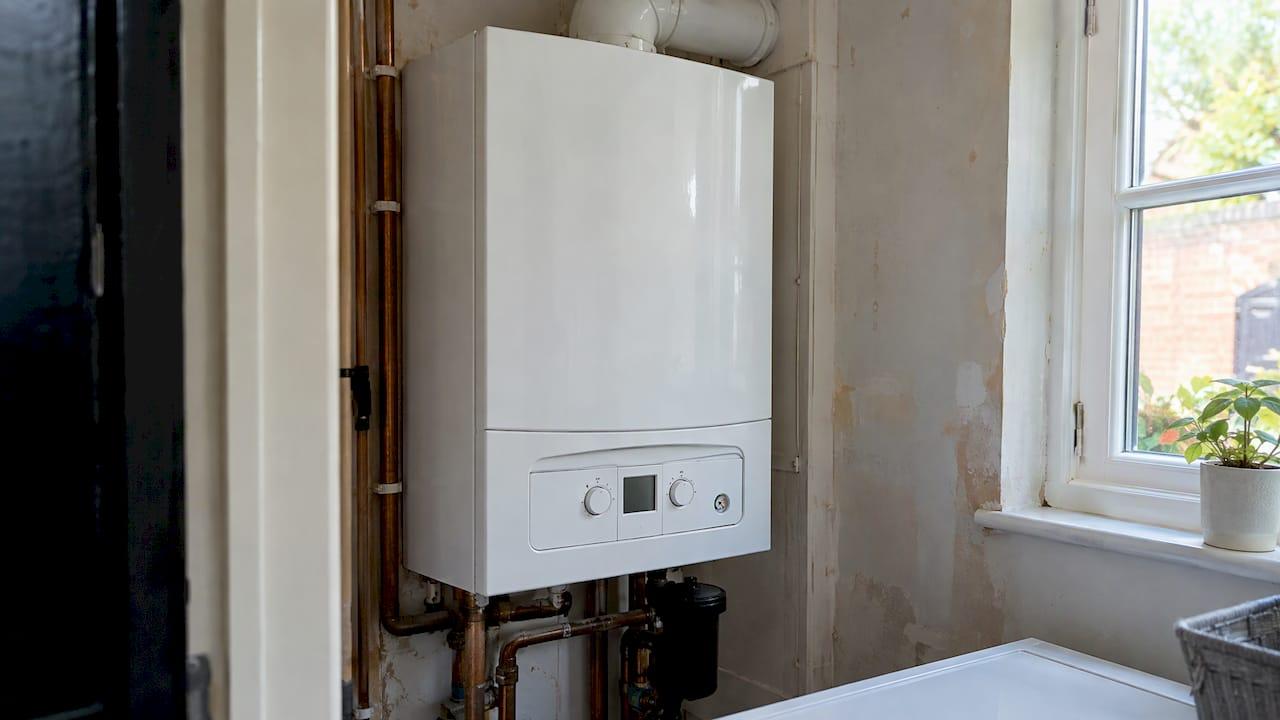
A Baxi E133 fault means the boiler tried to light, did not detect a flame and has locked out. The usual culprits are an interrupted gas supply, an ignition problem or a frozen or blocked condensate pipe. You can safely check the gas supply and the pressure, thaw an external condensate pipe gently, and reset the boiler once. If E133 comes back, stop resetting and call a Gas Safe registered engineer.
TL;DR
- E133 is a lockout: the boiler attempted ignition, saw no flame and shut the gas off. It is not a single faulty part.
- Check that the gas is on, other gas appliances work and, if you use a prepayment meter, that it has credit.
- In cold weather, a frozen condensate pipe is a common trigger. Thaw it with warm water, never boiling water.
- Reset once: turn the selector to R, hold for at least 5 seconds, then release. Do not keep repeating it.
- If the fault returns, or you would have to open the boiler, book a Gas Safe registered engineer.
Table of Contents
- What the E133 code means on a Baxi boiler
- What commonly causes E133
- Safe checks before you reset
- How to thaw a frozen condensate pipe
- How to reset a Baxi boiler showing E133
- When E133 keeps coming back
- What to tell the engineer
- Our perspective
- Book an engineer for a Baxi E133 fault
- Preventing E133 next winter
- FAQ
- Sources
What the E133 code means on a Baxi boiler
Baxi's official error code table lists E133 as a gas supply fault. It points the engineer towards the power supply, the sensing electrode, the spark electrode and the cable. The code is therefore a symptom, not a diagnosis.
Baxi's own reset guide says E133 indicates a problem with the gas supply, with ignition or flame, or with a blocked condensate. The same guide says the reset process is the same whatever type of display your boiler has.
What happens inside the boiler is fairly simple. According to one fault-code reference, the boiler sparks for up to five seconds on each of three attempts. If it sees no flame, it closes the gas valve and locks out. That is a safety feature. The boiler is refusing to keep releasing gas that is not burning.
The code appears across many Baxi models, including the Duo-tec combi range and others you may see sold under the Main and Potterton names. The display may flash the code or show it alongside other characters. Photograph the screen before you touch anything, so you can describe it accurately later.

What commonly causes E133
Because E133 covers three families of problem, it helps to think of them from the easiest to the hardest to check.
1. No gas reaching the boiler
This is the simplest cause and the one you can check yourself. A closed gas isolation valve, an empty prepayment meter or a supply interruption in your area will all stop the boiler from lighting. Baxi's user manuals for several models describe E133 as an interrupted gas supply, a failed ignition or a flame that was not detected.
2. A frozen or blocked condensate pipe
Modern condensing boilers produce acidic condensate water, which drains away through a plastic pipe. Baxi's help page on E133 says that if the boiler has shut down and shows E133 or E28, the condensate pipe may be frozen. This is why E133 calls spike during the first hard frosts of the winter. Pipes that run outside, or that have long horizontal sections and little fall, are the most exposed.

3. Ignition or flame detection faults
The spark electrode creates the spark and the sensing electrode confirms the flame. Baxi's table names both, plus the cable, as things to check. If either is dirty, worn, misaligned or poorly connected, the boiler can fire without proving the flame and lock out. Sorting that out means opening the appliance, which is gas work for a registered professional.
Other causes an engineer may investigate include the gas valve itself, the condition of the burner and flue or air supply problems. You cannot judge any of these from the outside, which is the reason a repeated E133 should not be treated as a DIY job. If you want a wider look at why a boiler will not light, our guide to the causes of a boiler not igniting walks through the usual suspects.
Safe checks before you reset
Do these in order. None of them involves removing a cover or touching a gas component.
- Note the display. Photograph the whole screen, including any alternating characters, and write down the exact model name from the front or the data plate. Appliancefaults.co.uk gives the same advice: record the full model and match any guidance to that model's manual.
- Check other gas appliances. If your hob will not light either, the problem is upstream of the boiler. If you smell gas, do not carry on with this guide: leave the property, open doors and windows if you can, and call the National Gas Emergency Service on 0800 111 999.
- Check the meter. If you have a prepayment meter, make sure there is credit on it and that it is not in emergency mode or switched off.
- Check the boiler's gas isolation valve. It is normally a small lever or tap on the pipe beneath the boiler. The lever should sit in line with the pipe when open.
- Look at the weather. If it has been below freezing and the boiler locked out overnight or in the morning, suspect the condensate pipe.
- Check the pressure gauge. Low pressure is a separate problem with its own code, but a boiler struggling in several ways at once is worth mentioning to an engineer.
How to thaw a frozen condensate pipe
If the weather points to ice, Baxi's condensate pipe guide sets out the safe method:
- Switch the boiler off at the control panel and turn off the electricity at the wall.
- Find where the pipe is frozen. It is usually the external run, or any section that is exposed to the wind.
- Warm the frozen section with a hot water bottle, a microwaveable heat pack or warm water from a watering can. Do not use boiling water.
- Turn the power back on and restart the boiler.
Two cautions from us. First, stay at ground level. If the blockage is above head height, do not climb a ladder with a kettle: that is how people get scalded or fall. Our article on the frozen condensate pipe above head height explains why. Second, do not pour boiling water, because it can crack or split the plastic and leave you with a leak as well as a lockout.
For more detail, see our step-by-step pieces on how to thaw condensate pipes safely and on avoiding a call out for a frozen condensate pipe.
Baxi also recommends that any remedial work is done by a Gas Safe registered engineer. It lists longer-term prevention options too: moving the pipe inside, fitting a wider pipe, lagging it or installing a trace heater. If your pipe freezes every winter, that is the conversation to have with an engineer.
How to reset a Baxi boiler showing E133
Once you have checked the gas and dealt with any ice, a single reset is reasonable. On Baxi boilers with a selector switch, Baxi's guide says to turn the selector to R (Reset), hold it for at least 5 seconds and release it. The fault code is then replaced on the display by the boiler's current temperature.
In practice:
- Make sure the gas is on and the boiler has electricity.
- Turn the selector to R and hold it for at least 5 seconds.
- Release it and wait. The boiler should go through its start-up sequence and light.
- Check that you have hot water or that the radiators begin to warm up.
The procedure is the same whichever display your Baxi has. If your boiler has a button marked reset rather than a selector, press and hold it in the same way, following the guide for your model.
Why you should not reset repeatedly
Every reset is another three ignition attempts with the gas valve open. A one-off lockout caused by a frozen pipe or a brief supply interruption may well clear. A boiler that locks out again and again has something wrong with it that a reset cannot fix. Baxi says frequent lockout indicates a fault and that you should contact your installer or service engineer. A Baxi Potterton manual gives similar instructions: if the boiler does not relight, or the code is displayed regularly, call your installer or service engineer.
A sensible rule: one reset after you have checked the gas and the condensate pipe. If E133 returns within the same day, or reappears every few days, stop.
When E133 keeps coming back
A returning E133 usually means one of the following:
- A condensate pipe that freezes each time the temperature drops.
- Worn or poorly positioned electrodes, which stop the boiler proving the flame.
- A gas valve or supply fault.
- A combustion or flue problem.
Only the first can be partly tackled at home. The rest all need testing with proper instruments by someone qualified.
The law is clear on this. Regulation 3(1) of the Gas Safety (Installation and Use) Regulations 1998 says that no person shall carry out work on a gas fitting unless they are competent to do so. In practice that means a Gas Safe registered engineer for anything inside the boiler. Always ask to see their Gas Safe ID card, and check that it lists the type of appliance they are working on.
Signs that mean you should stop and get help straight away, rather than reset again:
- A smell of gas, or any sign of soot or scorch marks around the boiler.
- Your carbon monoxide alarm sounding. Leave the property and call the National Gas Emergency Service on 0800 111 999.
- Water leaking from the boiler casing. Our guide to a boiler leaking water covers the safe first steps.
- Strange noises during ignition, such as repeated loud bangs.
What to tell the engineer
A good description saves time and, if the engineer charges by the hour, can save money. Have this to hand:
- The exact model name and, if you can, the age of the boiler.
- A photo of the display when the fault appeared.
- Whether the lockout happened after a cold night.
- How many times you have reset it, and what happened each time.
- Whether the gas hob and any other gas appliances work.
- Whether the pipe outside is visibly iced or has been lagged.
If the boiler needs a part, ask for the cost before the work starts. With us, you get that conversation up front, as we explain below.
Our perspective
Most E133 call-outs we hear about start with a homeowner who has pressed reset five or six times. We understand why. You want heat and hot water, and the button is right there.
Our view is simple. A single reset after checking the gas and thawing a frozen external condensate pipe is sensible. Beyond that, the boiler is telling you something. A flame that will not light is a job for an experienced engineer with the right tools, not for another round of button pressing.
That is why we work the way we do. We have no call-out fee and a no fix, no fee guarantee, and you pay only after the work has been done successfully. You speak directly to the engineer. Boiler and heating work is charged at £110 per hour, so you know how the bill is built before anyone arrives. Our work carries a 12-month warranty.
If your boiler is old and E133 keeps returning, we will say so honestly, and a free on-site quote for a new boiler is available whenever you want to compare.
Michael
Book an engineer for a Baxi E133 fault
If you have checked the gas, thawed the pipe and reset once, and your Baxi is still showing E133, we can help. We offer 24/7 availability including holidays, and our emergency heating engineer service has a 60 minute response time. We do not charge a call-out fee, and you pay only after the work is done successfully.

Boiler and heating repairs are charged at £110 per hour. If the boiler has reached the end of its life, new boilers supplied and fitted start from £1,300, and the quote on site is free. You can book an emergency heating engineer, request a new boiler quote or see everything we cover on our main site. We work in Reading, Newbury, Oxford, Bristol, Swindon, Milton Keynes and many other towns and cities across the south of England.
Preventing E133 next winter
Most prevention comes down to the condensate pipe and routine care:
- Lag the external run with weatherproof insulation designed for the purpose.
- Ask about re-routing. Baxi lists moving the pipe inside, fitting a wider pipe and installing a trace heater as longer-term options, all of which should be done by a registered engineer.
- Keep the gas isolation valve accessible and know where it is.
- Top up prepayment credit before a cold snap, especially over weekends and holidays.
- Book a service before winter so that electrodes, burner and condensate trap are inspected while the boiler is working, not after it has failed.
It is also worth reading our overview of common boiler fault codes, so that you know which codes you can safely check and which mean a call to an engineer.
FAQ
How do I reset a Baxi boiler showing E133?
Turn the selector switch to R (Reset), hold it for at least 5 seconds, then release. Baxi says the process is the same whatever the display type. If the boiler lights, the code will be replaced by the temperature. If it locks out again, do not keep trying: contact an engineer.
Is a Baxi E133 fault dangerous?
The lockout is the boiler protecting you by shutting off gas that is not burning. The risk comes from ignoring it or repeatedly forcing restarts. If you smell gas or your carbon monoxide alarm sounds, leave the property and call 0800 111 999. Otherwise, switch the boiler off and arrange a Gas Safe registered engineer.
Can I fix E133 myself?
You can check the gas supply, prepayment credit and, in freezing weather, gently thaw a frozen condensate pipe at ground level using warm water, as Baxi's guidance describes. Anything that needs the casing opened, such as electrodes, cables or the gas valve, is gas work. The regulations require competence for that, so use a registered engineer.
Why does E133 appear in cold weather?
Because the condensate pipe can freeze and block, and Baxi says this can bring on E133 or E28. External and long horizontal runs are most at risk. Lagging the pipe or having it re-routed inside reduces the chance of it happening again.
How much does it cost to have an E133 fault fixed?
With us, boiler and heating work is charged at £110 per hour, with no call-out fee. The final cost depends on the cause and on whether a part is needed, and you pay only after the work has been completed successfully.
Sources
- Boiler Error Codes | Baxi
- How to reset a Baxi boiler | Baxi Guides
- What do Baxi error codes E23, E53, E133, E119 or E128 mean | Baxi
- How to prevent a boiler condensate pipe from freezing | Baxi
- Baxi E133 boiler fault code: meaning and fixes | Faultcodecheck
- Baxi Boiler 133, Code Meaning | Appliancefaults
- The Gas Safety (Installation and Use) Regulations 1998, Regulation 3 | legislation.gov.uk