TL;DR:
- Pipe relining offers a non-invasive, cost-effective solution for repairing broken or cracked pipes from inside, often lasting up to 50 years. It involves CCTV inspection, thorough cleaning, and inserting a resin-coated liner that cures in place, restoring pipe integrity without significant excavation. However, it is unsuitable for heavily deformed or collapsed pipes, requiring full replacement instead.
Discovering damaged pipes beneath your garden or driveway can feel like a financial disaster waiting to happen. Most homeowners in Reading immediately picture torn-up flower beds, cracked paving, and weeks of mess before anything gets fixed. But that picture is often out of date. Pipe relining is a modern repair method that fixes broken, cracked, or leaking pipes entirely from the inside, without any significant excavation. In this guide, we explain exactly what it is, how it works, and when it genuinely is the right call for your home.
Table of Contents
- What is pipe relining?
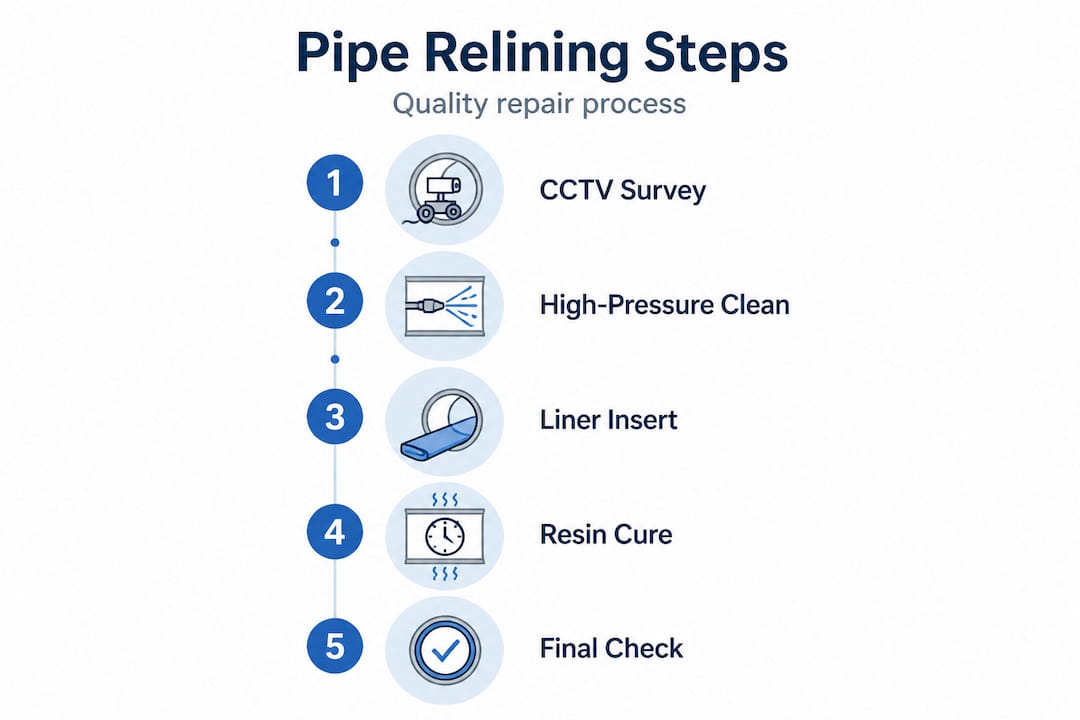
- The pipe relining process, step by step
- Pipe relining versus pipe replacement
- When is relining not the answer?
- Why pipe relining is a game changer, but not a silver bullet
- Get expert help with your pipes in Reading
- Frequently asked questions
Key Takeaways
| Point | Details |
|---|---|
| Non-disruptive solution | Pipe relining repairs damage without digging up your garden or drive. |
| Lasts for decades | A professionally relined pipe can protect your home’s plumbing for up to 50 years. |
| Faster and often cheaper | Most relining jobs are completed quicker and usually cost less than full pipe replacements. |
| Suitability matters | Relining is ideal for many scenarios but not all pipes are suitable—expert inspection is vital. |
What is pipe relining?
Traditional pipe repair meant one thing: dig down to the problem, pull out the damaged section, and replace it. It was disruptive, expensive, and often unnecessary. Pipe relining changed all that by treating the problem from inside the pipe itself, rather than from the outside.
At its simplest, relining involves inserting a flexible liner coated in resin into the damaged pipe. That liner is then expanded and cured in place, creating a brand-new pipe wall inside the old one. The damaged host pipe essentially becomes a mould, and the cured resin forms a tight, smooth, structurally sound tube within it.
Relining works particularly well for:
- Cracked or fractured pipes caused by ground movement or frost
- Root-ingress damage where tree roots have started to push through joints
- Corroded or deteriorating pipes in older Reading properties
- Leaking joints on sewer and drainage lines
- Pipes beneath concrete, patios, or driveways where excavation would be extremely costly
It is not limited to one pipe type. Sewer lines, surface water drains, and domestic waste pipes can all be candidates for relining, as long as the pipe damage level falls within what the method can address.
According to the Pipeline Rehabilitation Matrix 2025, the full process involves a CCTV inspection, thorough cleaning, liner insertion using inversion, pull-in-place or UV methods, curing with heat or UV light, robotic reinstatement of laterals, and a final inspection. It is a structured, professional sequence, not a quick patch job.
Pro Tip: The earlier you spot signs of pipe trouble, such as slow drains, damp patches, or persistent odours, the more likely relining will be viable. A pipe that has completely collapsed may be beyond relining, so early inspection is everything.
If you are still weighing up your options, our pipe replacement guide covers what full replacement involves when relining is not suitable.
The pipe relining process, step by step
Now that you understand what relining is, let's see exactly how it unfolds in a typical Reading home. The process is systematic, and each step directly influences whether the finished job lasts for decades or fails within a few years.
-
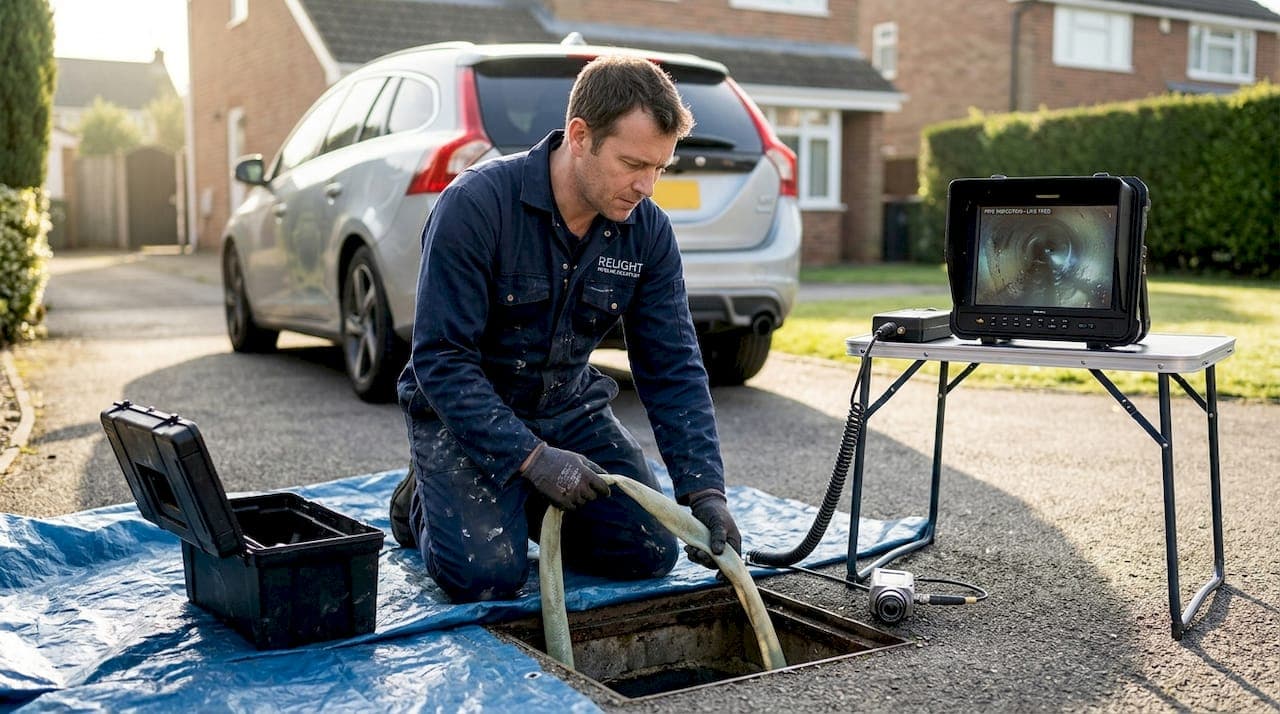
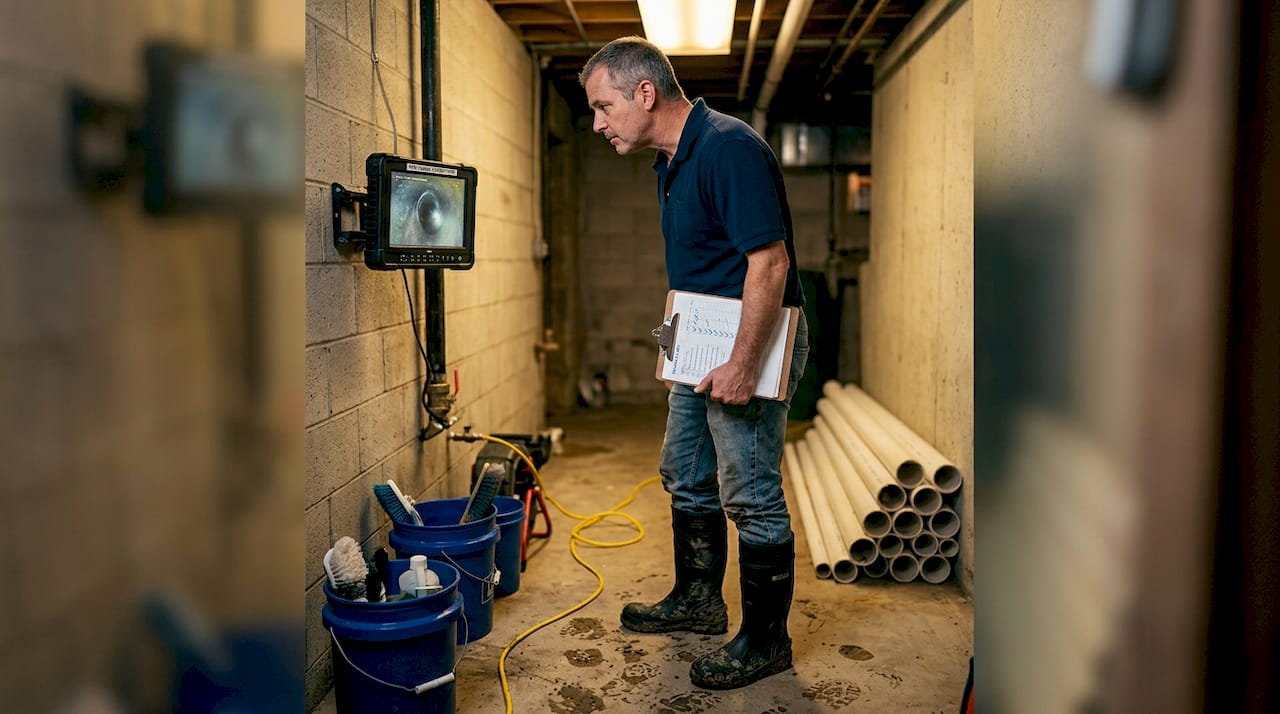
CCTV pipe inspection. A small camera is fed into the pipe to give engineers a live view of the damage. This confirms whether relining is appropriate and identifies any secondary issues such as root ingress or misaligned sections. A proper plumbing inspection at this stage is what separates a well-planned job from a rushed one.
-
High-pressure cleaning. Before any liner goes in, the pipe must be thoroughly cleaned. Engineers use high-pressure water jetting and, where needed, mechanical cutters to remove scale, grease, roots, and debris. The drainage cleaning process is critical because any contamination left inside will prevent the resin from bonding correctly.
-
Liner preparation and insertion. A felt or fibreglass liner is saturated with epoxy or polyester resin, then inserted into the pipe using one of three main techniques: inversion (using water or air pressure to turn the liner inside out as it goes in), pull-in-place (physically pulling a pre-measured liner through the pipe), or UV-cured relining (a glass-fibre liner pulled through and cured with ultraviolet light).
-
Curing. The liner is held in position and cured using hot water, steam, ambient conditions, or UV light depending on the method used. Curing times vary, but UV-cured systems are often the fastest.
-
Lateral reinstatement. Where branch connections or laterals exist, robotic cutters are used to reopen those connections after the liner has cured, restoring full flow from connected pipes.
-
Final CCTV inspection. A second camera survey confirms the liner is correctly bonded, fully cured, and free of defects before the engineers leave site.
As confirmed by the Pipeline Rehabilitation Matrix 2025, each of these six stages is essential to a quality outcome, and skipping any one of them can compromise the longevity of the repair.
| Stage | Method used | Time required |
|---|---|---|
| CCTV inspection | Drain camera | 30 to 60 minutes |
| High-pressure cleaning | Water jetting and cutters | 1 to 3 hours |
| Liner insertion | Inversion, pull-in-place, or UV | 1 to 2 hours |
| Curing | Heat, steam, UV, or ambient | 1 to 4 hours |
| Lateral reinstatement | Robotic cutting | 30 to 90 minutes |
| Final inspection | Drain camera | 30 to 60 minutes |
Pro Tip: Always ask your engineer for both the pre-lining and post-lining CCTV footage. This gives you documented proof of the original damage and the finished repair, which is invaluable if any warranty queries arise later.
Pipe relining versus pipe replacement
Having detailed how relining works, it is vital to see how it stacks against the old methods. For homeowners in Reading, the choice between relining and traditional replacement is often more straightforward than people expect.
The core differences come down to three things: disruption, cost, and longevity.
Disruption. Pipe replacement requires excavation. That means breaking through driveways, lifting garden paving, cutting trenches across lawns, and then reinstating everything afterwards. Relining requires, at most, a small access point, usually an existing inspection chamber or a modest opening. Your garden stays intact. Your driveway stays in one piece.
Cost. The cost advantage of relining over replacement is well established. A project in Auckland involved $45 million in relining works to extend the life of wastewater pipes by 50 years, with minimal disruption to the surrounding area. In Baltimore, a 42-inch gas main was relined in just three weeks, compared to the months that conventional digging would have required. These are large-scale examples, but the same cost and time logic applies directly to domestic jobs in Berkshire.
Longevity. When properly installed by qualified engineers, relined pipes last up to 50 years. This is comparable to new pipework in many cases, which removes the historic concern that relining was only ever a temporary fix. The CIPP (cured-in-place pipe) market is forecast to reach $1.6 billion by 2035, reflecting the growing confidence professionals and homeowners alike now place in the method.
| Factor | Pipe relining | Pipe replacement |
|---|---|---|
| Excavation required | Minimal or none | Significant |
| Typical domestic job time | 1 day | 2 to 5 days |
| Disruption to garden or drive | Very low | High |
| Expected lifespan | Up to 50 years | Up to 50 years |
| Cost (relative) | Generally lower | Generally higher |
| Suitable for collapsed pipes | No | Yes |
Key advantages of relining at a glance:
- No reinstatement costs for driveways, patios, or landscaping
- Faster completion, meaning less time without full drainage function
- Smoother internal surface, which actually improves flow compared to old corroded pipes
- Structural reinforcement, as the cured liner adds rigidity to the host pipe
- Less labour intensive, which directly affects the overall cost of the job
For a full breakdown of what pipe replacement pros and cons look like in practice, it is worth reading up before you commit to any course of action. And if you want to understand what fair pricing for either approach looks like, our guidance on transparent plumbing pricing will help you avoid overpaying.
When is relining not the answer?
While relining is ideal for many situations, there are times when it is simply not advised. Being realistic about this matters, because attempting to reline a pipe that genuinely needs replacement will only delay an expensive problem.
Here are the situations where relining will not work:
- Collapsed or heavily deformed pipes. If the pipe has lost its circular cross-section, there is no channel for the liner to travel through. Excavation and full replacement is the only realistic option.
- Severe root damage that has destroyed the pipe wall. Minor root ingress can be cleaned and then relined. But where roots have structurally destroyed a pipe section, relining cannot restore it.
- Incorrect slope or misalignment. Relining fixes the internal surface, but it cannot correct the gradient or direction of a pipe. If standing water or poor drainage is caused by a laid pipe that sags or runs uphill, relining will not solve it.
- Pipes with multiple previous patch repairs. Some older properties in Reading have pipes that have been partially repaired several times over the decades. This patchwork history can make it difficult to achieve a consistent liner bond across all sections.
- Very small bore pipes or unusual cross-sections. Not all liner sizes are available for every pipe diameter, and non-circular pipes such as egg-shaped Victorian drains may require specialist assessment.
The Pipeline Rehabilitation Matrix 2025 makes clear that a proper CCTV inspection is a prerequisite for any relining decision. Without that first stage, it is impossible to know whether the pipe is even a candidate for the method.
If your situation falls into any of the categories above, you will need to look at emergency pipe repairs or a more substantial replacement programme. The right diagnosis at the start is what saves you money in the long run.
Why pipe relining is a game changer, but not a silver bullet
We have been involved in pipe repairs across Reading and the surrounding area long enough to know that relining genuinely has transformed what is possible for homeowners. Before this technology became accessible, a cracked sewer pipe beneath a freshly laid driveway was a nightmare scenario. Today, in many cases, it is a single-day fix.
But here is what we have learned from experience that most articles do not tell you: relining is not a "fit and forget" solution. The new liner is robust and long-lasting, but the conditions that caused the original damage, such as tree roots, ground movement, or poorly graded pipework, do not disappear just because the pipe has been repaired. Without regular maintenance and inspection, you can end up with the same issues returning years later, this time possibly in a different section.
We also see homeowners who misunderstand what relining covers. It repairs structural damage and restores the pipe's integrity, but it does not redesign your drainage layout. If your property has a drainage design that is simply inadequate for the load it carries, relining one section of pipe will not make the whole system perform better.
The smartest homeowners we work with treat relining as one part of a broader plumbing service approach. They get the job done correctly, they ask for the inspection reports and the guarantee paperwork, and they schedule follow-up checks rather than waiting for the next emergency. That approach genuinely does extend the life of the whole system and keeps unexpected costs low over time.
Our honest recommendation: if relining is appropriate for your pipes, it almost certainly is the better choice compared to excavation. But insist on the CCTV inspection first, ask what guarantee covers the work, and do not let anyone talk you into relining a pipe that has already been assessed as needing full replacement.
Get expert help with your pipes in Reading
After working through everything above, the next practical step is getting a qualified professional to look at your specific situation. Reading properties vary enormously, from Victorian terraces with century-old clay drains to newer builds with UPVC waste systems, and what works in one home may not be appropriate in another.

The engineers at Your Local Plumber carry out full CCTV drain surveys, high-pressure cleaning, and pipe relining assessments for homes across Reading and the surrounding area. We give you a clear picture of what the problem is, what the options are, and what everything will cost before any work begins. No surprises, no unnecessary upselling. If relining is right for your pipes, we will tell you honestly. If it is not, we will explain why and give you the most cost-effective alternative. Getting in touch sooner rather than later is almost always the decision that saves the most money.
Frequently asked questions
How long does pipe relining last?
Pipe relining can extend a pipe's working life by up to 50 years when installed correctly by qualified engineers, making it a genuinely long-term repair rather than a temporary fix.
Is pipe relining messy or disruptive?
Pipe relining is minimally disruptive, typically requiring no excavation at all, which means your garden, driveway, and home remain largely untouched throughout the process.
Can all damaged pipes be relined?
Not every pipe is suitable; collapsed or deformed pipes cannot be relined and will require traditional excavation and replacement instead.
How quickly can a pipe be relined?
Most domestic relining jobs in Reading can be completed within a single day, which is significantly faster than the weeks digging that traditional pipe replacement can involve.
Will relining fix pipe blockages?
Relining repairs the pipe's structure rather than clearing a blockage; the high-pressure jetting carried out as part of the preparation stage clears the pipe fully before the liner is inserted.