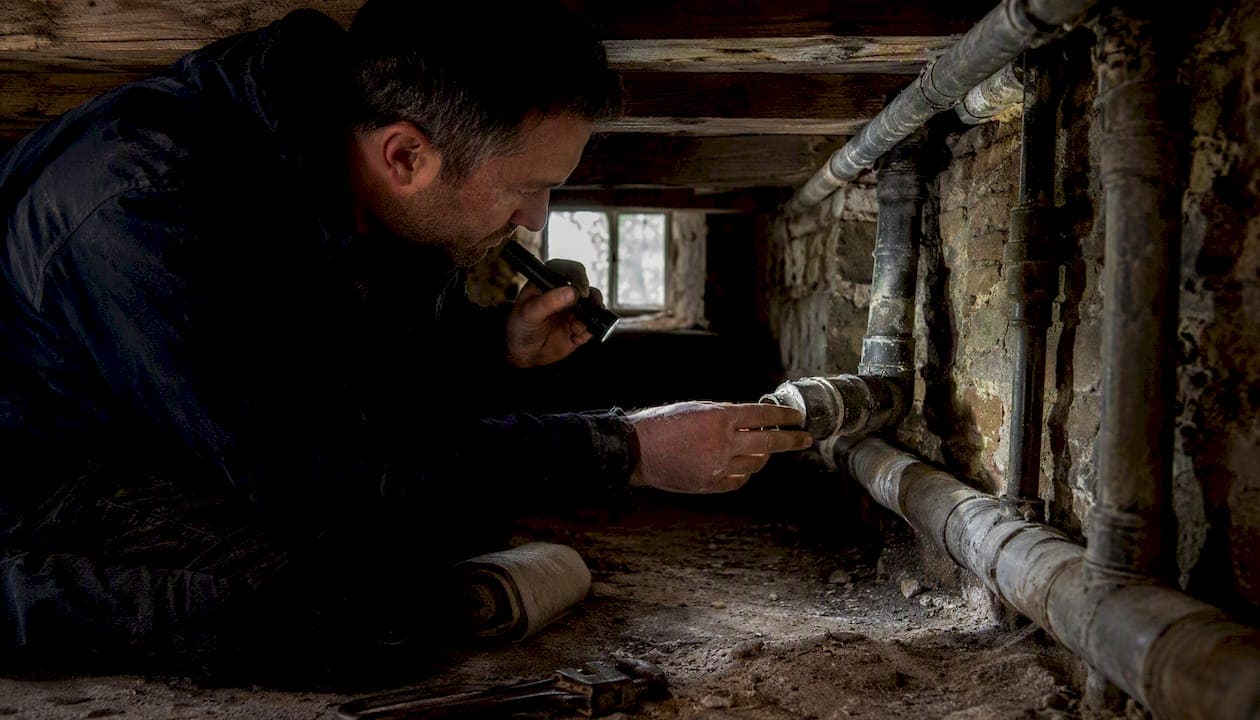
Georgian properties typically contain lead, cast iron and early copper supply systems, but today's safest upgrades use copper or modern plastics routed carefully to avoid original fabric. Before any work begins, run three quick checks: locate visible lead pipework (usually grey, soft and slightly bulging at joints), inspect the condition of external soil stacks, and confirm whether a gravity cold-water tank sits in the roof space. Note any lagged pipes that might contain asbestos wrapping, and establish whether the property is listed.
Immediate next steps:
- Test the water supply for lead if pipework predates the 1970s
- Contact your local authority conservation officer before any disruptive work
- Commission a CCTV drain survey for underground runs
- Hire a plumber with demonstrable experience in historic properties
Pro Tip: Take photographs of every visible pipe run, tank and fitting before any work starts. That record protects you if a conservation officer later queries what was disturbed.
Key takeaways
Georgian properties contain a mix of historic and modern plumbing materials; a conservation-first approach, specialist trades and proper permissions protect both the building and its long-term value.
| Point | Details |
|---|---|
| Test for lead first | Any pipework predating the 1970s should be water-tested before assuming it is safe. |
| Consult before you cut | Contact the local authority conservation officer before any work that disturbs original fabric. |
| Route through existing voids | Chimney stacks, floor voids and skirting boxing protect original plaster and joinery. |
| Gas Safe is a legal requirement | All gas appliance installation and replacement must be done by a Gas Safe registered engineer. |
| Your-local-plumber | Provides surveys, re-piping and boiler work by Gas Safe engineers experienced in Georgian properties. |
Table of Contents
- 1. Supply pipe materials found in Georgian properties
- 2. Soil, waste and drainage: how Georgian systems evolved
- 3. Heating and hot-water systems in Georgian houses
- 4. Listed Building Consent and conservation officer advice
- 5. Routing pipework to protect Georgian features
- 6. Common problems in Georgian plumbing and how to spot them
- 7. Recommended materials and jointing methods for sympathetic upgrades
- 8. Maintenance, warranties and future-proofing your Georgian plumbing
- A contractor's honest view on Georgian plumbing projects
- Your-local-plumber: conservation-aware plumbing for Georgian homes
- Sources
1. Supply pipe materials found in Georgian properties
Lead, early copper and cast fittings are the three supply materials you are most likely to encounter when working on Georgian plumbing systems. Each carries different risks and demands a different response.
Lead pipework was standard from the Georgian period through to the mid-twentieth century. It appears most often on the rising main from the street, on branch feeds to sinks and baths, and occasionally on overflow pipes from roof cisterns. Lead is soft, visually distinct (dull grey, slightly corrugated at wiped joints) and corrodes slowly from the inside. Where water is soft or slightly acidic, lead can leach into the supply at concentrations that exceed the World Health Organization's guideline value of 10 micrograms per litre. Test the water before assuming the risk is low, and replace lead supply pipes as a priority.
Early copper and cast fittings typically date from the 1930s onwards in Georgian conversions and extensions. Compression joints from this period can harden and weep; capillary joints may be poorly made. The main failure mode is pinhole corrosion, particularly where the water is hard and the pipe has been in service for decades.
Modern options for replacement include:
- Copper with press-fit or soldered joints: durable, widely understood, sympathetic in appearance
- MDPE/PEX flexible pipe: ideal for runs beneath floors where access is limited; fully reversible
- HDPE for underground supply: corrosion-resistant and long-lasting
For a full breakdown of material properties, see this guide to plumbing materials for UK homeowners.
Pro Tip: Avoid hot works (soldering, brazing) near original plaster, timber or decorative joinery. Press-fit copper systems eliminate the naked flame entirely and are the safer choice in most Georgian interiors.
Safety note: If you suspect asbestos lagging on older pipes, do not disturb it. Commission a licensed asbestos survey before any removal work.
2. Soil, waste and drainage: how Georgian systems evolved
Georgian drainage began with simple brick-lined cesspits and surface channels. By the mid-Victorian period, salt-glazed clay pipes had become the standard for underground runs, and cast iron dominated above-ground soil stacks well into the twentieth century. PVC-u arrived from the 1970s onwards, often grafted onto earlier systems in ways that create problems today.
Common failure modes to expect:
- Collapsed or root-invaded clay runs beneath garden paths and extensions
- Corroded cast-iron soil stacks with failed lead-caulked joints at branch connections
- PVC-u sections poorly jointed to cast iron, allowing ground movement to open gaps
- Displaced gullies where later extensions have altered drainage gradients
Diagnostic checklist before calling a plumber:
- Check for persistent drain smells inside the property, particularly at ground-floor level
- Run all fixtures simultaneously and note any slow drainage or gurgling
- Inspect the external ground around the soil stack for soft patches or sinkholes
- Look for staining or efflorescence on basement or ground-floor walls near drain routes
- Lift accessible inspection chamber covers and check for standing water or root ingress
Pro Tip: Commission a CCTV drain survey of all underground runs before you start any renovation. A collapsed clay drain discovered mid-project can add weeks and significant cost. Historic England's guidance on installing services recommends understanding the existing fabric thoroughly before any intervention.
3. Heating and hot-water systems in Georgian houses
English Heritage records show that early country houses relied on pumps and roof cisterns to supply water, which is why gravity-fed cold-water storage tanks remain common in Georgian roof spaces today. That gravity system fed both the hot-water cylinder and the heating circuit in the classic indirect vented arrangement.
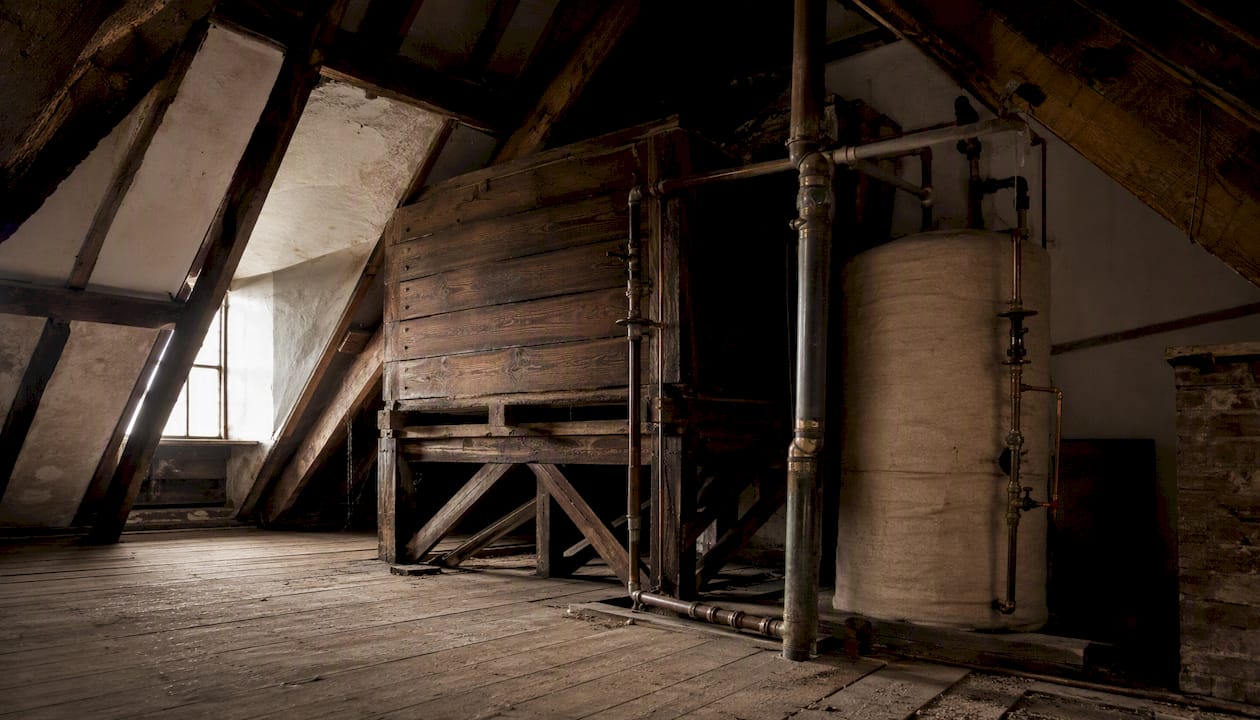
Gravity-fed tanks and header cisterns persist because they work reliably and require no pressurisation equipment. Check the ball valve, the overflow pipe outlet and the tank's structural support annually. Tanks in uninsulated roof spaces are a freeze risk.
Modern replacements shift the system to a sealed, pressurised circuit:
- Combi boilers eliminate the cold-water tank entirely, freeing roof-space volume but requiring adequate mains pressure (typically above 1 bar dynamic)
- Sealed system boilers retain a hot-water cylinder but remove the header cistern, reducing pipework complexity
- Heat pumps can integrate with underfloor heating at lower flow temperatures, which suits the thermal mass of Georgian stone or brick construction
Underfloor heating can be sympathetic when installed as a reversible, zoned system using flexible PEX or HDPE routed through non-significant floor areas. Avoid cutting into original flagstone or encaustic tile floors; suspended timber floors allow pipes to run between joists with minimal disturbance.
Regulatory callout: Any gas appliance installation or replacement must be carried out by a Gas Safe registered engineer. This is a legal requirement, not a recommendation.
4. Listed Building Consent and conservation officer advice
Historic England advises homeowners to consult the local authority conservation officer before any work that disturbs historic fabric, with the guiding principle being to minimise loss of that fabric when installing services.
Plumbing activities that commonly require Listed Building Consent or pre-notification:
- Chasing new pipe runs into original lime-plastered walls
- Lifting original flagstone, encaustic tile or wide-board timber floors
- Removing or altering original cast-iron soil stacks or lead rainwater goods
- Installing a new boiler flue through an original external wall or roof
Practical steps for a pre-application enquiry:
- Prepare annotated floor plans showing existing and proposed pipe routes
- Photograph all affected areas before any exploratory opening-up
- Specify materials and fixing methods in writing, emphasising reversibility
- Submit a heritage impact statement if the conservation officer requests one
- Allow four to eight weeks for a pre-application response before committing to a start date
The principle is straightforward: work with the building, not against it. Routing pipework through existing voids, using reversible fixings and choosing materials that can be removed without damage to original fabric will satisfy most conservation officers and protect the property's long-term value.
This section provides general guidance only. Consult your local authority conservation officer and, where appropriate, a heritage consultant for advice specific to your property.
For a practical overview of plumbing compliance requirements, the linked guide covers when building control notification is also needed.
5. Routing pipework to protect Georgian features
Trade guidance for period properties identifies chimney voids, floor voids and service corridors as the preferred routes for new pipework because they avoid damage to original plaster and joinery.
Preferred routing options:
- Chimney stacks: redundant flues offer a clear vertical route from basement to roof; line with a sleeve to allow future removal
- Floor voids: run pipes parallel to joists, never notch a joist without structural advice
- Skirting-level boxing: surface-mounted, removable and reversible; use timber that matches the period profile
- Service corridors and cupboards: back-of-house routes that keep wet services away from principal rooms
On-site decision checklist:
- Mark all high-value fabric (cornices, dados, original joinery) on the floor plan before trades arrive
- Agree pipe routes with the plumber and conservation officer before any opening-up
- Confirm that all boxing is removable without damage to the wall behind
- Specify isolation valves at every branch so future repairs avoid disturbing the whole system
- Avoid chasing into lime-mortared masonry; it can cause structural distress
Pro Tip: Coordinate plumbing and electrical trades on the same day for exploratory surveys. Lifting floorboards twice costs more and risks more damage. Hire a conservation-aware carpenter to lift and relay original boards.
6. Common problems in Georgian plumbing and how to spot them
Symptoms and likely causes:
- Damp patches on ceilings or walls near pipe runs: slow weeping joint or pinhole corrosion in copper
- Discoloured or brown water at first draw: corroded iron pipework or disturbed sediment in an ageing cylinder
- Creaking or springy floors near bathrooms: rotten joists caused by a long-term slow leak
- Low pressure at upper-floor taps: failing ball valve in the roof tank, or a partially closed gate valve
- Sulphurous or sewage smell: dried trap, cracked drain or failed soil-stack joint
Simple checks before calling a plumber:
- Turn the main stopcock off and on to confirm it operates freely
- Check the cold-water tank for debris, discolouration or a failed ball valve
- Run the cold tap for 30 seconds and compare colour at start and end of draw
- Pour water into any floor-level gullies that may have dried out
- Inspect accessible pipework under sinks for green or white mineral deposits at joints
When to escalate immediately: structural timber rot near a wet zone, any suspected asbestos lagging, visible lead pipework on the supply main, or a soil stack that is visibly cracked or pulling away from the wall. These are not DIY jobs.
7. Recommended materials and jointing methods for sympathetic upgrades
Modern copper with press-fit joints is the most practical choice for the majority of Georgian supply upgrades: it is durable, widely available, and its appearance inside boxing is unobtrusive. MDPE and PEX with push-fit or compression fittings suit sub-floor runs where access is restricted, and both can be removed without damage to surrounding fabric.
Where traditional leadwork survives and is visible or original, retain it where safe to do so and commission a specialist leadworker for repairs. SPAB's technical advice on plumbing leadwork describes the wiped-solder and forming techniques required; these skills are not commonly taught in standard plumbing apprenticeships, so verify the contractor's experience before appointing them.
Correct metalwork repair on historic buildings demands specialist conservation techniques. As the IHBC materials guidance makes clear, inappropriate modern interventions on historic lead and iron can cause irreversible damage that is far costlier to address later than the original repair would have been.
Pro Tip: Press-fit systems are not just safer near historic fabric — they are also faster to install and easier to modify later. For a Georgian house where access is always limited, that reversibility has real long-term value.
8. Maintenance, warranties and future-proofing your Georgian plumbing
Annual and seasonal checks:
- Test the main stopcock in October before the first frost
- Inspect the roof-space tank and ball valve each autumn
- Bleed radiators at the start of the heating season
- Check pipe insulation in unheated floor voids; minimum 19mm thickness on flow pipes is a practical target for reducing heat loss on long runs
- Inspect external gullies and hoppers for leaf debris before winter
What to ask for in a written quote:
- Confirmation that the engineer is Gas Safe registered (for any gas work)
- A materials schedule specifying pipe type, fittings and jointing method
- A commissioning certificate and pressure test result
- A clear description of what has been boxed in and where isolation valves are located
- Warranty terms: typically 12 months labour, manufacturer's warranty on parts
Future-proofing steps:
- Label every isolation valve with its circuit and location
- Leave a scaled drawing of new pipe routes with the property deeds
- Specify removable boxing throughout so future owners can access and maintain the system
Pro Tip: Insulate flow pipes in floor voids. Uninsulated 22mm flow pipe carrying hot water loses heat continuously over long runs, adding measurably to energy bills across a heating season. It takes minutes to fit and costs very little.
For broader plumbing sustainability guidance, the linked resource covers insulation, water efficiency and energy-saving controls.
A contractor's honest view on Georgian plumbing projects
Every Georgian property I survey throws up at least one surprise: a lead branch pipe hidden behind a later partition, a cast-iron soil stack with a failed joint that has been slowly saturating a joist for years, or a roof-space tank that nobody has opened since the 1980s. The homeowners who get the best outcomes are the ones who budget for the unexpected and treat the exploratory survey as a genuine investment, not a cost to minimise.
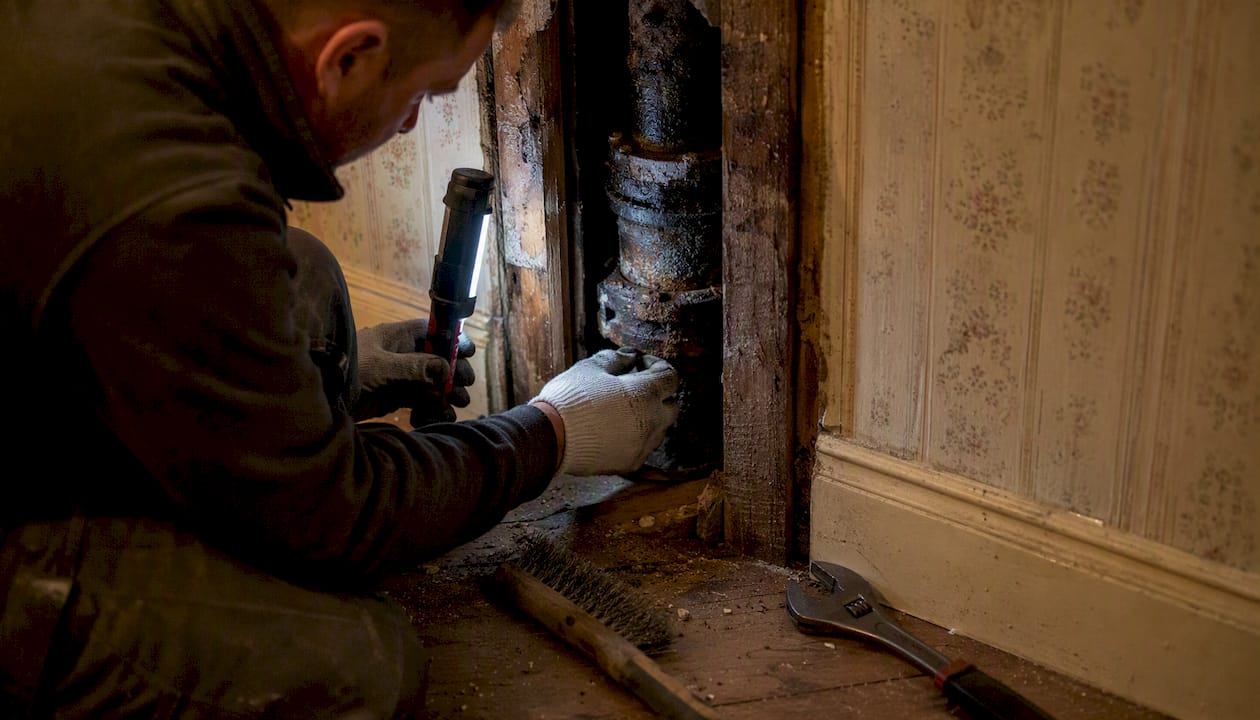
The single most useful thing you can do before briefing any trade is to walk the property with them and physically mark the high-value fabric: the cornices, the original joinery, the flagstone floors. Agree the pipe routes on site, in writing, before a single board is lifted. If the property is listed, schedule a joint site visit with the conservation officer at the same time. That one meeting typically saves weeks of back-and-forth later.
Your-local-plumber: conservation-aware plumbing for Georgian homes
Georgian plumbing projects need engineers who understand both the technical and the heritage side. Your-local-plumber provides surveys, repairs, full re-piping and boiler installations carried out by Gas Safe registered engineers with experience in period properties across the UK.

The difference from a general call-out service is straightforward: Your-local-plumber's engineers arrive knowing what to look for in a Georgian house, from lead supply pipes and gravity tanks to cast-iron soil stacks and lime-plastered walls. Fixed, transparent pricing means no surprises on the invoice, and 24/7 availability covers the emergency that always seems to happen on a Friday evening.
Ready to get a clear picture of what your Georgian property's plumbing actually needs? Book a survey or request a quote today and get a written assessment from an engineer who knows period properties.
Sources
- Installing new services
- Renovation guide: updating plumbing in an old house
- Traditional pipe runs in period properties
- Plumbing leadwork: joints and pipes (SPAB technical advice note)
- Plumbing leadwork: joints and pipes – IHBC materials guidance
- Country house technology (English Heritage)