TL;DR:
- Toilet siphoning occurs when negative pressure from poor drainage ventilation or faulty internal components causes the toilet trap to dry out. Diagnosing whether ventilation issues or internal leaks cause the problem is essential for effective repairs. Proper maintenance and fitting approved parts can prevent water waste and ensure lasting solutions.
Toilet siphoning is defined as the unintended loss of water from the toilet bowl caused by negative pressure pulling the trap seal dry. It is one of the most misunderstood plumbing faults in UK homes, and it has two distinct root causes: problems with the drainage ventilation system, and failures in the toilet's internal components. Approximately 400 million litres of potable water are lost daily in the UK due to leaking toilets. That figure shows just how much is at stake when toilet siphon problems go undiagnosed.
What causes toilet siphoning in your plumbing system?
Toilet siphoning occurs when negative pressure builds inside the drainage stack and pulls water out of the toilet trap. The trap is the U-shaped section of pipe beneath the bowl. Its job is to hold a small body of water that blocks sewer gases from entering your home. When that seal is broken by a pressure drop, foul air gets in and your water level drops.
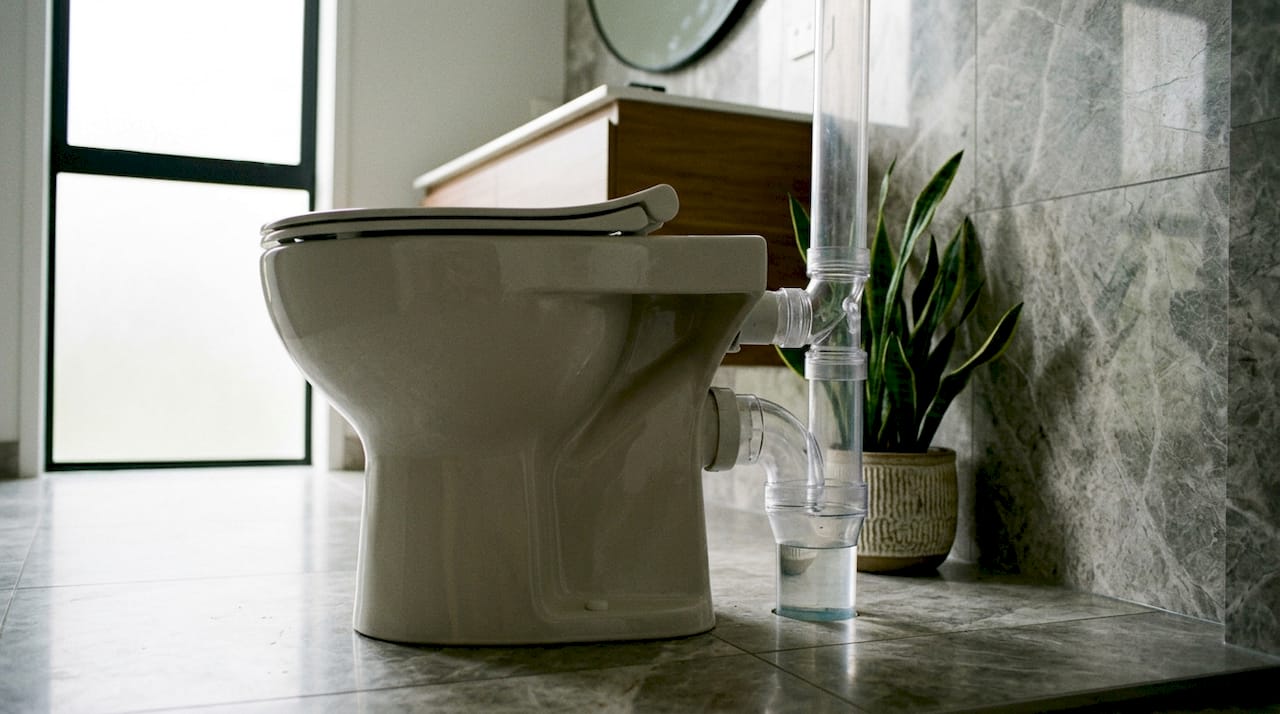
Proper ventilation stabilises pressure in the drainage system and prevents this negative pressure from forming. Without it, every flush from a nearby fixture can create a pressure wave that siphons the trap. The two main causes are ventilation failure and internal toilet faults, and they produce different symptoms. Knowing which one you have determines the right fix.
How plumbing ventilation problems cause toilet siphoning
The soil vent pipe (SVP) is the vertical pipe that runs from your drainage stack up through the roof. Its open top allows air into the system, which balances pressure as waste flows through. When the SVP is blocked, undersized, or poorly positioned, negative pressure builds every time water moves through the stack.
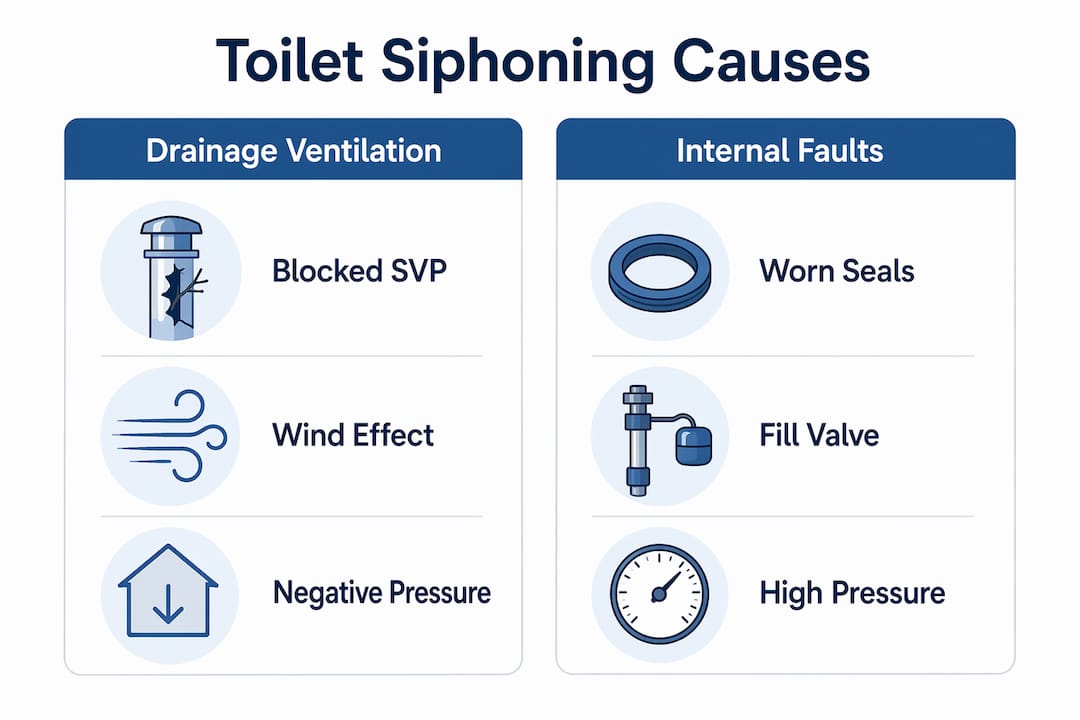
Wind passing over the open SVP can create a venturi effect, drawing air down through the pipe and pulling water from nearby traps. This is why your toilet water level may drop noticeably on windy days. It is not a fault with the toilet itself. It is the drainage system reacting to air pressure changes outside the building.
Poor sanitary pipework design and inadequate venting cause pressure surges that lead to siphoning and foul air ingress. Approved Document H, the UK building regulation governing drainage design, recommends swept entry bosses and correctly positioned vent offsets to reduce turbulence in the stack. Connections made too close to bends or branches create exactly the kind of turbulence that triggers siphoning.
Common signs of a ventilation problem include:
- Water level in the bowl drops after windy weather or after flushing another fixture
- Gurgling sounds from the toilet or other drains when water is used elsewhere
- A faint smell of drains that appears intermittently
- Multiple fixtures affected at the same time
Pro Tip: Fit an anti-downdraught cowl to the top of your SVP if you notice water level drops on windy days. This simple fitting stabilises airflow over the pipe opening and prevents the venturi effect from siphoning your trap.
Solutions for ventilation-related toilet siphon problems include fitting an anti-downdraught cowl, installing an air admittance valve (AAV) where extending the SVP is not practical, and having a plumber review the stack layout against Approved Document H requirements.
Internal toilet faults that cause water level instability
Not all toilet siphoning issues come from the drainage system. Faulty internal components produce symptoms that look identical but have a completely different cause. Around 5–8% of UK toilets have internal leaks, mainly from degraded flush valve seals. A worn flush valve allows water to trickle continuously from the cistern into the bowl, which can lower the bowl's water level or cause it to fluctuate unpredictably.
The fill valve is equally important. It controls how the cistern refills after a flush. When the fill valve fails, the cistern may overfill and discharge through the overflow pipe, or it may refill randomly between flushes. Limescale buildup and debris in fill valves prevent proper sealing and cause exactly this kind of erratic behaviour. In hard water areas across the UK, this is a particularly common fault.
UK mains water pressure normally ranges between 1.0 and 3.0 bar. Pressure above this range accelerates wear on fill valves and flush valve seals, shortening their lifespan and increasing the frequency of failures. If your home has high mains pressure, a pressure reducing valve (PRV) fitted to the supply can protect your toilet components significantly.
| Internal fault | Symptom | Recommended fix |
|---|---|---|
| Worn flush valve seal | Constant trickle into bowl | Replace with WRAS-approved flush valve |
| Failed fill valve | Random refills or cistern overflow | Replace fill valve; clean or descale first |
| Float set too high | Water above overflow level | Adjust or replace float arm |
| High mains pressure | Repeated valve failures | Fit a pressure reducing valve |
Pro Tip: Drop a few drops of food colouring into the cistern and wait ten minutes without flushing. If colour appears in the bowl, your flush valve seal is leaking and needs replacing.
Replacement fill valves cost between £10 and £25 and must be WRAS approved for compliance with UK Water Regulations. WRAS stands for Water Regulations Advisory Scheme, and approved parts meet the standards set to protect the public water supply. Using non-approved parts can void your home insurance and create legal liability.
How to diagnose the specific cause of your toilet siphoning
Accurate diagnosis saves you money. Replacing internal parts when the real problem is a blocked SVP will not stop the siphoning. Follow these steps to identify the root cause before spending anything.
-
Watch the water level on a windy day. Stand the toilet bowl and observe the water level over ten minutes during gusty weather. A drop that occurs without flushing points to a ventilation problem, not an internal fault.
-
Listen for gurgling from other fixtures. Run the bath or sink and listen for gurgling from the toilet. Multiple fixtures gurgling or trap water dropping confirms a drainage ventilation issue rather than a toilet defect.
-
Check for a constant trickle. Lift the cistern lid and listen carefully. A faint hissing or trickling sound when the toilet has not been flushed recently indicates a leaking flush valve seal.
-
Inspect the cistern water level. The water should sit roughly 25mm below the top of the overflow tube. If it sits at or above the overflow, the float needs adjusting or the fill valve has failed.
-
Test the flush and refill cycle. Flush the toilet and watch how the cistern refills. It should stop cleanly when full. If it continues to run or cuts out and restarts, the fill valve is faulty.
-
Call a qualified plumber for pipework checks. Long unvented branch runs or connections within 450mm of soil stack offsets cause pressure surges that no internal repair will fix. A plumber can inspect the stack geometry and vent status directly.
Practical solutions to stop toilet siphoning from recurring
Fixing the immediate fault is only half the job. Preventing it from coming back requires attention to both the drainage system and the toilet's internal parts.
For ventilation-related causes, the priority is restoring balanced air pressure in the stack. Fitting an anti-downdraught cowl to the SVP is the quickest fix for wind-driven siphoning. Where extending or modifying the SVP is not feasible, an AAV fitted at high level in the loft or airing cupboard provides a compliant alternative under Approved Document H. A plumber should also check that all branch connections meet the swept-entry requirements to reduce turbulence.
For internal faults, the approach is straightforward:
- Replace worn flush valve seals with WRAS-approved parts. These are widely available and inexpensive.
- Replace or clean the fill valve if it is not sealing correctly. In hard water areas, descale the valve seat before fitting a replacement.
- Adjust the float arm so the water level sits 25mm below the overflow tube. On modern fill valves, this is usually a simple screw adjustment.
- Fit a PRV if your mains pressure exceeds 3.0 bar. This protects all your bathroom plumbing components from accelerated wear.
- In hard water areas, fit an inline scale reducer to the cistern supply. This extends the life of both the fill valve and the flush valve seal considerably.
Pro Tip: Set a reminder to inspect your cistern internals once a year. Lift the lid, check the water level, listen for trickling, and look for limescale on the valve seat. Catching wear early costs far less than an emergency call-out.
Regular plumbing maintenance also reduces water waste. A slow flush valve leak may seem trivial, but left unchecked it contributes to the enormous daily losses the UK water sector records from domestic leaks.
Key takeaways
Toilet siphoning is caused by either negative pressure from a poorly vented drainage system or by worn internal components such as flush valve seals and fill valves, and diagnosing which cause applies determines the correct and lasting fix.
| Point | Details |
|---|---|
| Ventilation is the overlooked cause | A blocked or wind-affected SVP creates negative pressure that pulls the trap seal dry. |
| Internal leaks are common | Around 5–8% of UK toilets leak internally, mainly from degraded flush valve seals. |
| Diagnosis before repair | Observe whether drops occur on windy days or constantly to identify the correct cause. |
| Use WRAS-approved parts | Replacement fill valves and flush valves must meet WRAS standards for UK compliance. |
| Annual checks prevent recurrence | Inspecting cistern internals once a year catches wear before it becomes a costly fault. |
What I've learned from years of toilet siphoning call-outs
The single biggest mistake homeowners make is replacing internal toilet parts when the drainage ventilation is the actual problem. I have seen this play out repeatedly. A homeowner fits a new fill valve, the siphoning stops for a week, then starts again. They replace the flush valve. Same result. The toilet is not the problem. The soil stack is.
Ventilation is almost always the overlooked cause, and it is overlooked because it is invisible. You cannot see the SVP from inside the house, and the symptoms look identical to an internal fault. The tell is timing. If the water level drops on a windy afternoon and recovers when the wind drops, the drainage system is the culprit. No internal part replacement will change that.
I also see homeowners fit cheap, non-WRAS-approved valves to save a few pounds. That decision costs more in the long run. Non-approved parts wear faster under UK mains pressure, and they can create compliance issues if you ever sell the property. The UK plumbing regulations around water fittings exist for good reason. Approved parts protect the public water supply as well as your own system.
The other thing worth saying: do not ignore a gurgling drain. It is the drainage system telling you that pressure is not balanced. Left alone, it leads to siphoned traps, foul smells, and eventually more serious water leak damage inside the building fabric. Act on the early signs and the fix is almost always simple and inexpensive.
— Michael
Toilet siphoning repairs from Your-local-plumber
Recurring toilet siphon problems are rarely solved by guesswork. Your-local-plumber provides expert diagnosis for both drainage ventilation faults and internal component failures, covering everything from SVP inspections to flush valve and fill valve replacements using WRAS-approved parts.

Every repair carried out by Your-local-plumber meets UK Water Regulations and Approved Document H standards. Transparent pricing and fast response times mean you get a lasting fix without unnecessary delays or hidden costs. Whether your toilet is losing its water seal on windy days or leaking slowly from a worn valve, the team at Your-local-plumber is ready to diagnose and resolve it correctly the first time.
FAQ
Why does my toilet water level drop when it's windy?
Wind passing over the SVP creates negative pressure that siphons water from the toilet trap. Fitting an anti-downdraught cowl to the vent pipe resolves this without replacing any toilet parts.
How do I know if my toilet has an internal leak?
Add food colouring to the cistern and wait ten minutes without flushing. Colour appearing in the bowl confirms the flush valve seal is leaking and needs replacing.
What is a WRAS-approved toilet valve?
A WRAS-approved valve meets the Water Regulations Advisory Scheme standards required under UK Water Regulations. These parts are legally required for new installations and replacements to protect the public water supply.
Can high water pressure cause toilet siphoning issues?
High mains pressure above 3.0 bar accelerates wear on fill valves and flush valve seals, leading to leaks and erratic refilling. Fitting a pressure reducing valve to the supply protects the components and reduces failure rates.
When should I call a plumber for toilet siphoning?
Call a plumber when multiple fixtures gurgle simultaneously, when the water level drops only during windy weather, or when internal part replacements have not resolved the problem. These signs point to a drainage stack or pipework geometry issue that requires professional inspection.