TL;DR:
- Water pressure affects pipe longevity, appliance performance, and water bills in Reading homes. Monitoring pressure with a simple gauge helps prevent damage from unsafe extremes, especially after supply disruptions. Regular checks and timely adjustments can save homeowners from costly repairs and system failures.
Your taps run, your shower works, and nothing is dripping — so everything must be fine, right? Not quite. Water pressure that sits outside the safe range can silently erode pipe joints, shorten the life of your washing machine, and inflate your bills long before you spot a single visible leak. This article walks you through what water pressure actually means for a Reading home, the hidden risks of leaving it unchecked, how to measure it yourself in under ten minutes, and what to do if the reading surprises you.
Table of Contents
- What is water pressure and why does it matter?
- Hidden dangers of unchecked water pressure
- How to check your home's water pressure: A simple guide
- What to do if your water pressure isn't right
- The overlooked truth about water pressure in Reading homes
- Need expert help for your water pressure? We're here
- Frequently asked questions
Key Takeaways
| Point | Details |
|---|---|
| Check pressure proactively | Testing water pressure before problems arise helps avoid costly damage and inconvenience. |
| Know safe pressure ranges | Keeping your home’s pressure between 40-60 PSI protects both pipes and appliances. |
| Simple home checks | You only need a basic pressure gauge to quickly test your own water supply. |
| Act quickly on changes | Sudden low or high pressure means you should take action or call a professional. |
What is water pressure and why does it matter?
Water pressure is simply the force that pushes water through your pipes and out of your fixtures. Think of it like the air pressure in a tyre: too little and you get poor performance, too much and something eventually gives way. For homeowners in Reading, understanding this force is not about engineering knowledge — it is about protecting the investment you have made in your home and the appliances inside it.
The water pressure effects ripple through every part of your daily routine. A pressure that is too low means your shower barely warms before it trickles, your washing machine takes longer to fill (running up energy costs), and you may find appliances like dishwashers throwing fault codes. On the other end, pressure that is too high hammers your pipe joints with every surge, causes taps to drip even when fully closed, and can shorten a boiler's working life dramatically.
Here is what sits at stake on a typical day in a Reading household:
- Showers: Low pressure turns a morning shower into a trickle. High pressure wastes water and can blow shower heads.
- Washing machines and dishwashers: Most are engineered for a specific pressure range. Outside that range, valves wear out prematurely.
- Pipes and joints: Sustained high pressure is the leading cause of pinhole leaks, particularly in older copper systems common in Reading's Victorian and Edwardian terraced properties.
- Boilers and water heaters: High-pressure surges stress internal heat exchangers and pressure relief valves.
- Water bills: High pressure means more water flows per minute, even through a half-open tap, so bills creep up without any obvious explanation.
What the regulations say: Plumbing codes require a maximum static pressure of 80 PSI at fixtures, with a pressure reducing valve (PRV) mandatory if that level is exceeded. The minimum at fixtures sits at 15 to 20 PSI. These standards exist because both extremes cause genuine damage.
A common misconception is that a strong flow from a tap means pressure is perfectly healthy. In reality, "strong" is subjective. You could have pressure well above the safe ceiling and mistake that forceful feel for good plumbing, all while pipe joints are being stressed with every use. Equally, if you live near a busy road or a commercial area in Reading, pressure may dip significantly during peak demand hours in the morning and evening, even if midday feels acceptable.
Hidden dangers of unchecked water pressure
With the basics in mind, explore why unchecked water pressure can turn minor issues into major headaches.
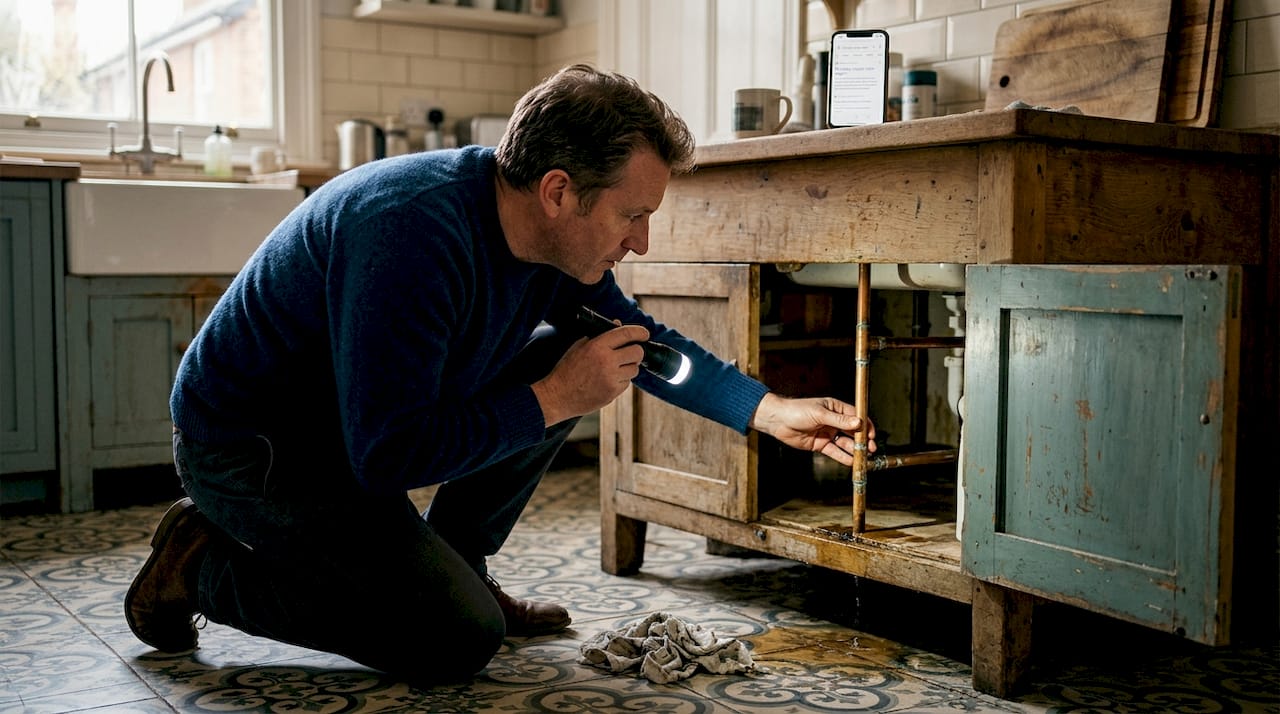
Reading homes are not immune to the consequences that come from ignoring pressure. The town has a mix of older pipe infrastructure and newer developments, and supply disruptions do occur. In 2025, a water main break affected around 3,200 customers, causing sudden low-pressure events that sent surges back through the system once restored. Those pressure spikes on restoration are particularly damaging to pipes that have already been weakened by years of marginal over-pressure.
Here is a side-by-side look at how optimal pressure compares to unchecked pressure over time:
| Factor | Optimal pressure (40 to 60 PSI) | Unchecked or irregular pressure |
|---|---|---|
| Pipe lifespan | Full expected lifespan | Accelerated wear, micro-cracks |
| Appliance performance | Consistent and efficient | Valves and seals degrade faster |
| Monthly water bills | Predictable | Creep upwards unnoticed |
| Risk of leaks | Low | Significantly elevated |
| Shower and tap experience | Steady and comfortable | Fluctuating, unpredictable |
| Emergency repair risk | Minimal | Much higher over 5 to 10 years |
The symptoms that homeowners often dismiss as minor annoyances are frequently early warnings:
- Taps that drip even when turned off tightly
- A banging noise in the pipes (known as water hammer) when you turn a tap off quickly
- Appliances taking noticeably longer to fill
- Unexplained spikes in your water bill
- Visible damp patches on walls near pipe runs
Knowing the signs you need a plumber matters because catching a problem at the symptom stage is far less costly than dealing with burst pipes or appliance replacement. The financial case for fixing a water leak early is straightforward: a slow pinhole leak left for six months can cause structural damp, mould, and floor damage that costs thousands to put right.
As for safety codes, the maximum of 80 PSI is not arbitrary. Above that threshold, the probability of joint failure rises steeply, especially in systems that were installed decades ago.
Pro Tip: Even a short-term pressure spike, lasting only a few seconds when a main is restored after a break, can stress pipe joints enough to start a slow leak. If you know your area has experienced a supply disruption, it is worth checking your pressure within a day or two of restoration.
How to check your home's water pressure: A simple guide
Knowing the risks, taking action is straightforward — here is exactly how you can check your own water pressure.
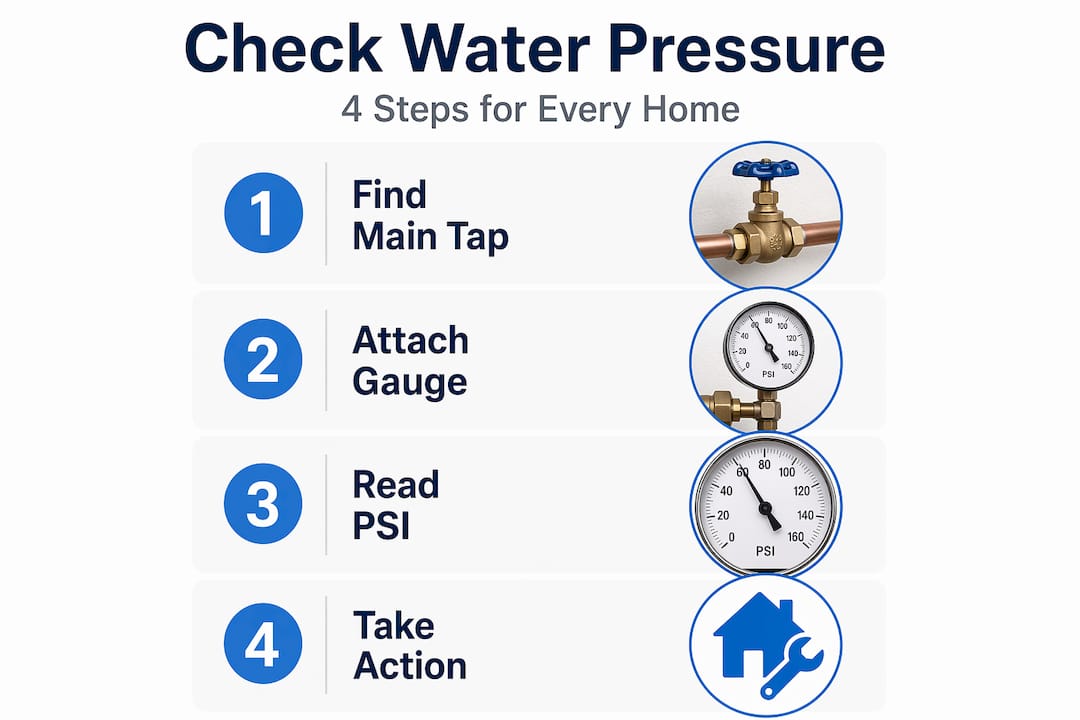
The good news is that measuring water pressure does not require a plumber. A basic pressure gauge, available from most DIY shops in Reading for around £10 to £15, is all you need. The recommended method is to attach the gauge to an outdoor hose bib (an outdoor tap) with all other water use in the house switched off. Testing during a period of low demand, early morning before heavy use or late evening, gives you the most accurate result.
Here is how to do it step by step:
- Switch off all water use in the house. Make sure no taps, showers, or appliances are running. Even a flushing toilet can affect the reading.
- Locate your outdoor tap. This is usually the most direct connection to the incoming supply and gives the most reliable measurement.
- Screw the pressure gauge onto the tap thread. Most gauges come with standard fittings that connect directly without tools.
- Turn the outdoor tap on fully. The needle on the gauge will move immediately to show the static pressure.
- Read the gauge. Note the PSI figure (or bar, if your gauge uses metric units — 1 bar is roughly 14.5 PSI).
- Record the result with the date and time. A single reading is useful; a series of readings across different times of day is genuinely revealing.
- Repeat during peak demand hours. Test again on a weekday morning around 7 to 8 am to capture the lowest pressure your home experiences.
Use this table to interpret what you find:
| Pressure reading | What it means | Action needed |
|---|---|---|
| Below 15 PSI | Dangerously low | Contact your water supplier and a plumber immediately |
| 15 to 30 PSI | Low | Investigate causes; may need a pressure booster |
| 30 to 60 PSI | Ideal range | No action needed; monitor annually |
| 60 to 80 PSI | Elevated but within limits | Consider a PRV; monitor closely |
| Above 80 PSI | Too high; regulation limit exceeded | Install a PRV without delay |
If your reading sits in the low range, fixing low water pressure can sometimes be a simple DIY task. Checking for a partially closed stopcock or a blocked aerator on taps is a sensible starting point. For more involved faults, our DIY plumbing guide covers common Reading home scenarios with practical instructions.
Pro Tip: Keep a small logbook or a note on your phone with each pressure reading. Pressure that gradually drops over several months often points to a developing blockage or a slow leak somewhere in the system. Trend data is far more useful than a single isolated result.
What to do if your water pressure isn't right
So, you have taken a reading and discovered your pressure is not ideal — what should you do next?
The action you take depends on which direction the pressure has gone. Here is a practical breakdown.
If your pressure is too low (below 30 PSI):
- Check your main stopcock (usually under the kitchen sink or where the supply enters the house). If it is not fully open, turn it counter-clockwise until it stops.
- Look for a PRV on your supply pipe. This valve can be adjusted, but doing so incorrectly can cause harm — consult a plumber before touching it.
- Check with your neighbours. If they are also experiencing low pressure, the issue is likely with the mains supply and your water company should be notified.
- Inspect tap aerators for scale or blockage, particularly in Reading areas with hard water.
If your pressure is too high (above 60 PSI):
- Do not ignore it. Sustained high pressure is the most damaging scenario for your plumbing system.
- Check whether a PRV is already fitted. If so, it may need recalibrating.
- If no PRV is present and your reading is approaching or exceeding the 80 PSI regulatory maximum, having one installed is not optional — it is a safety measure.
- In the meantime, avoid running multiple high-demand appliances simultaneously, as this can cause sudden surges.
Some situations call for professional input rather than DIY effort:
- Persistent low pressure that does not improve after checking stopcocks and aerators
- Any reading above 80 PSI
- Banging pipes or visible damp near pipe runs
- Pressure that fluctuates widely between tests
Following a solid plumbing maintenance checklist throughout the year keeps small issues from becoming expensive ones. Water pressure is just one item on that list, but it is arguably the one with the broadest impact on everything else in your system.
Pro Tip: Schedule a pressure check every time you bleed your radiators or service your boiler. These are natural points in the plumbing calendar, and adding a pressure gauge test takes less than five minutes.
The overlooked truth about water pressure in Reading homes
After learning the step-by-step approach, it is worth reflecting on why paying attention to water pressure matters more than most people think.
In our experience working with homeowners across Reading and the surrounding areas, the dominant attitude towards water pressure is "if nothing has broken, nothing is wrong." This logic feels sensible but it is actually backwards. By the time something breaks — a burst joint, a failed washing machine inlet valve, a persistent damp patch — the pressure problem has usually been building for months or years. The break is not the start of the problem; it is the end of a long silent process.
Reading has a higher-than-average proportion of older housing stock, particularly Victorian and Edwardian terraces with original or partially updated plumbing. These systems were not designed for the water usage demands of a modern household, nor for the appliances we now rely on. That tension between old infrastructure and modern demand makes pressure monitoring particularly important here.
There is also a financial argument that rarely gets made plainly enough. Cutting plumbing costs over the long run almost always comes down to catching problems early. A £12 pressure gauge used once a year is the cheapest insurance policy available for your plumbing. Compare that to the average cost of repairing water damage from a burst pipe, which routinely runs into several thousand pounds including drying, replastering, and redecorating.
The homeowners who avoid expensive plumbing emergencies are not just lucky. They check, they record, and they act on small signs before those signs become structural problems. That is the mindset shift we encourage for every property in Reading, whether your home was built in 1895 or 2005.
Need expert help for your water pressure? We're here
If you want your home's plumbing to run smoothly and safely, a professional check could be your best investment.
Measuring pressure yourself is a great first step, but a qualified engineer can go further — identifying where pressure is being lost, spotting early signs of corrosion or joint fatigue, and advising on whether a PRV installation or a booster pump is the right solution for your property. These are judgements that benefit from experience across many different Reading properties and pipe configurations.

Your local Reading plumber offers fast, transparent assessments with no hidden costs. Whether you have just taken your first pressure reading and found something unexpected, or you have been noticing symptoms for a while and want a professional opinion, our engineers are ready to help. Get in touch today and take the guesswork out of your home's plumbing.
Frequently asked questions
How often should I check my water pressure at home?
Most experts recommend checking annually, or whenever you notice changes in water flow, appliance performance, or unusual pipe noise. Checking after any local mains disruption is also a sensible habit.
What is a safe water pressure range for UK homes?
Aim for 40 to 60 PSI as your target range; the regulatory minimum is 15 PSI at fixtures and the maximum is 80 PSI, above which a pressure reducing valve is required by plumbing codes.
What are signs that my water pressure is too high or low?
Watch for dripping taps that will not fully close, slow-filling appliances, banging pipes when taps are turned off sharply, or noticeable changes in shower strength during peak hours.
Can changes to local water mains affect my home's pressure?
Yes. Events like the 2025 Reading main break, which left 3,200 customers without service, can cause both sudden low-pressure periods and damaging pressure surges when supply is restored.