TL;DR:
- A plumbing vent system regulates air pressure within drain pipes to prevent sewer gases from entering the home. Proper venting maintains trap seals and ensures smooth wastewater flow, complying with UK building regulations. Regular inspections and correct installation of components like AAVs prevent vent failures and preserve system performance.
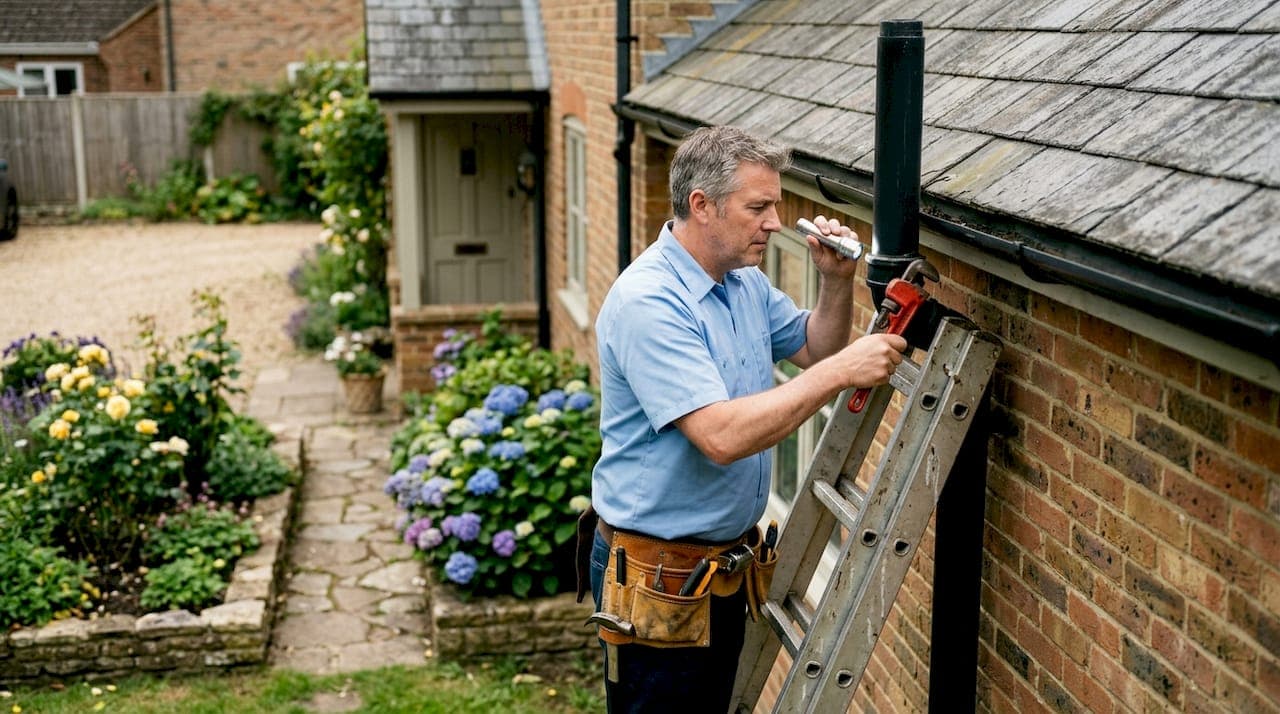
A plumbing vent system is defined as the network of pipes that regulates air pressure inside your drainage system, preventing foul sewer gases from entering your home. Without it, every time water drains from a sink or toilet, the resulting pressure change would suck the water out of your trap seals, the small pools of water that act as a barrier against sewage smells. UK Building Regulations, specifically Approved Document H, make ventilation of sanitary pipework a legal requirement on all new and altered drainage installations. Understanding why vent plumbing systems matter is the first step to diagnosing gurgling drains, persistent smells, and slow drainage in your home.
Why vent plumbing systems are essential to your drainage
Plumbing vents equalise atmospheric pressure inside your drain pipes, preventing the vacuum effect that pulls water out of trap seals during wastewater discharge. Think of it like a drinking straw: block the top with your thumb and the liquid stays put. Remove your thumb and it flows freely. Your vent pipe is the open-top of that straw, allowing air in so water can drain out without creating a destructive suction force.
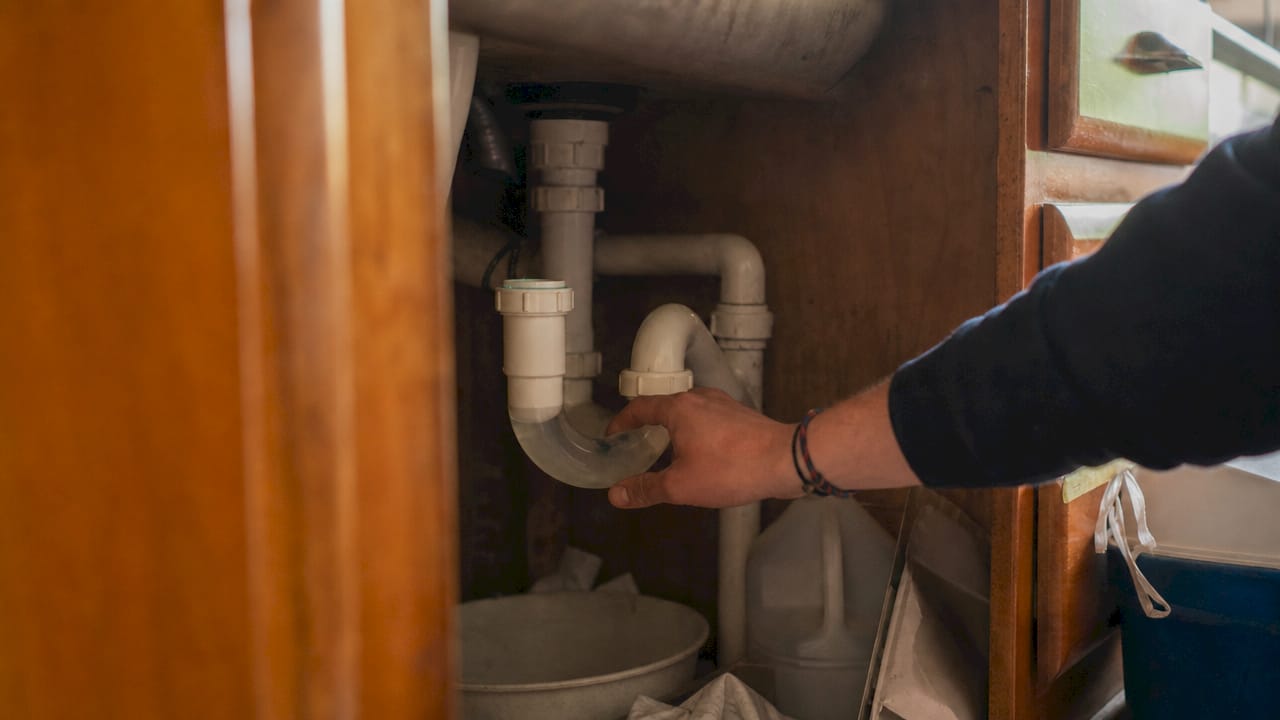
Trap seals are the curved sections of pipe beneath every sink, bath, and toilet. They hold a small volume of water at all times. That water physically blocks sewer gases, including hydrogen sulphide, from travelling back up through your fixtures and into your living space. The moment a trap loses its water seal through siphonage, that barrier disappears.
The importance of venting plumbing goes beyond comfort. A failed trap seal allows methane and other gases to accumulate indoors, which poses a genuine health risk. Proper venting keeps those seals intact by ensuring air pressure on both sides of the trap remains balanced at all times.
Wet vents versus dry vents
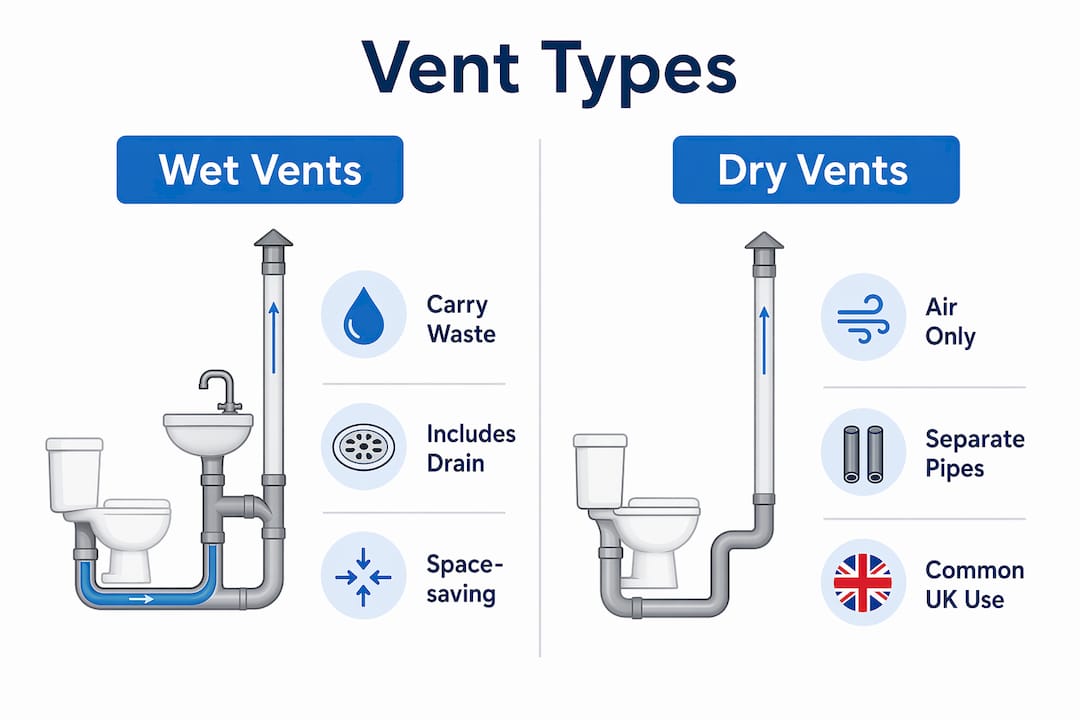
Two main configurations exist in UK domestic plumbing. A dry vent carries only air, running separately from the waste pipe to provide pressure relief. A wet vent combines drainage and ventilation in a single pipe, carrying both wastewater and air simultaneously. Wet vents require careful sizing and correct gradients to handle both functions without blockage. Air Admittance Valves, commonly called AAVs, offer a third option: a mechanical one-way valve that opens to admit air when negative pressure occurs, then closes to prevent gas escape.
Pro Tip: If you are adding a new bathroom or utility room, discuss wet vent sizing with your plumber before any pipework is fixed. Getting the diameter wrong at the design stage is far more expensive to correct later.
What UK regulations say about vent plumbing standards
UK Building Regulations set clear, enforceable requirements for vent plumbing systems. Approved Document H is the primary reference document, and compliance is not optional on new builds, extensions, or altered sanitary installations.
Trap seal depths and pipe sizing
Minimum trap seal depths are specified by fixture type. Basins and baths require a minimum 25mm water seal. WCs require a minimum 50mm seal. These depths must be maintained under normal operating conditions, which is precisely why adequate venting is required to prevent siphonage from draining them.
Pipe sizing for wet vents follows strict rules. A single WC wet vent requires a minimum 50mm pipe diameter, with 75–100mm diameters commonly specified for more complex multi-fixture systems. Horizontal pipework must also fall at a gradient of between 18mm and 90mm per metre to allow wastewater to flow freely without pooling or causing pressure surges.
Air Admittance Valve requirements
| Requirement | Detail |
|---|---|
| Compliance standard | Must meet BS EN 12380 |
| Installation location | Must be accessible for inspection and maintenance |
| Ambient air access | Cannot be installed in sealed, unventilated cupboards |
| System limitation | Cannot be the sole ventilation point for the entire soil stack |
| Open vent requirement | At least one pipe must terminate through the roof as an open vent |
AAVs must comply with BS EN 12380](https://squote.app/knowledge/plumbing/sanitary-pipework-design) and remain accessible at all times. They supplement the open vent stack, but cannot replace it entirely. At least one open vent pipe must terminate through the roof on every UK soil system. This is a non-negotiable requirement under Approved Document H, regardless of how many AAVs are installed elsewhere in the building.
Understanding UK plumbing regulations in full helps homeowners avoid costly enforcement notices or retrofit work after a building inspection.
Pro Tip: Always ask your plumber to confirm that any AAV installation meets BS EN 12380 and is positioned where air can freely circulate around it. A valve fitted inside a sealed airing cupboard will not function correctly and will fail inspection.
What happens when vent plumbing systems go wrong
Vent problems produce distinctive symptoms that differ from ordinary blockages. Recognising them early saves money and prevents more serious damage to your pipework.
The most common signs of a failing vent system include:
- Gurgling drains. A gurgling sound after flushing or draining signals that air is being pulled through the trap water rather than through the vent pipe. Gurgling indicates airflow path failure, not necessarily a blockage in the drain itself.
- Foul smells from fixtures. Sewer gas odours near sinks, baths, or toilets suggest a trap seal has been siphoned dry. The smell is the gas passing through an empty trap.
- Slow drainage across multiple fixtures. When several fixtures drain slowly at the same time, the cause is often a pressure imbalance in the stack rather than individual blockages.
- Recurring drain problems after cleaning. If a professional drain clean solves the problem temporarily but it returns within weeks, the root cause is likely a vent issue, not debris in the pipe.
Obstructed vent pipes cause pressure imbalances that lead to trap seal loss and persistent odours. Drain clearing alone cannot fix this because the obstruction is in the vent, not the waste pipe. A plumber must inspect the full vent system to identify and resolve the underlying cause.
Common causes of vent obstruction include bird nests or debris blocking roof terminations, ice forming in the vent pipe during cold weather, and AAVs installed in sealed cupboards where no ambient air can reach them. Long branch runs without adequate venting also create negative pressure surges that repeatedly siphon trap seals, even in otherwise clean pipework. If you notice early warning signs such as persistent odours or gurgling, act before the problem escalates to joint strain or pipe failure.
How to maintain your vent plumbing system
Maintaining a vent system is straightforward when you know what to check and how often. The benefits of venting systems only hold when the components remain clear and functional.
- Inspect roof vent terminations annually. Check that the open vent pipe exiting through the roof is clear of debris, bird nests, and ice. A visual check from ground level with binoculars is sufficient in most cases. Call a plumber if you suspect an obstruction you cannot safely reach.
- Check AAV accessibility every year. AAVs must remain in ventilated, accessible locations. If a cupboard has been sealed or insulated since the valve was installed, the valve may no longer function. Confirm the space around it allows air movement.
- Test trap seals after periods of low use. Traps in guest bathrooms or utility rooms can dry out through evaporation if unused for several weeks. Run water through every fixture for 30 seconds every two to three weeks to replenish the seal.
- Document any symptoms for your plumber. Note when gurgling or smells occur, which fixtures are affected, and whether the problem follows heavy rainfall or cold weather. This information helps a plumber diagnose vent issues far more quickly.
- Verify compliance before any renovation. Loft conversions, extensions, and bathroom additions all require new or altered sanitary pipework to comply with Approved Document H. Confirm vent design with a qualified plumber before work begins, not after. Annual plumbing checks catch developing vent problems before they become expensive repairs.
Pro Tip: If you are planning a loft conversion with a new bathroom, the vent stack design is one of the most commonly overlooked elements. Raise it with your plumber at the earliest planning stage, as retrofitting a compliant vent route through a finished loft is significantly more disruptive and costly.
Key takeaways
A plumbing vent system is the pressure-balancing mechanism that keeps trap seals intact, prevents sewer gas entry, and allows wastewater to drain freely throughout your home.
| Point | Details |
|---|---|
| Vents balance air pressure | Without venting, wastewater flow creates suction that siphons trap seals dry. |
| Trap seals block sewer gas | Basins need 25mm seals and WCs need 50mm seals under Approved Document H. |
| AAVs supplement open vents | AAVs must meet BS EN 12380 and cannot replace the mandatory roof-level open vent. |
| Gurgling signals vent failure | Gurgling drains indicate airflow path failure, not always a simple blockage. |
| Annual checks prevent failures | Inspecting roof terminations and AAVs each year keeps the system compliant and functional. |
What I have learned from years of vent plumbing calls
Most homeowners I speak to assume a gurgling drain means something is stuck in the pipe. That assumption leads to repeated drain-cleaning visits that cost money and solve nothing. The real culprit, in a significant number of cases, is a vent system that has been blocked, incorrectly installed, or simply forgotten about.
The misconception that vents exist only to release smells is widespread. The pressure-equalising function is the critical one. A vent that is partially blocked may still allow some air movement, so smells remain absent while the trap seals are slowly being siphoned with every flush. By the time the smell appears, the problem has often been developing for months.
What I find particularly frustrating is how often AAV failures trace back to installation in sealed spaces. A valve fitted inside a cupboard that was later draught-proofed will fail silently. There is no alarm, no obvious sign, just a gradual deterioration in drainage performance that homeowners attribute to ageing pipes.
The practical lesson is simple. Treat your vent system as a component that needs the same periodic attention as your boiler. A qualified plumber can inspect the full vent stack, confirm AAV function, and check roof terminations in under an hour. That hour of maintenance is far cheaper than the alternative. Understanding plumbing compliance requirements also protects you if you ever sell your home, as non-compliant drainage is a common issue flagged during property surveys.
— Michael
Professional vent plumbing support from Your-local-plumber
Vent plumbing problems are rarely obvious until they have already caused damage or discomfort. Getting a qualified engineer to inspect your system before symptoms worsen is the most cost-effective approach.

Your-local-plumber provides vent system inspections, AAV assessments, and full sanitary pipework installations that comply with Approved Document H and BS EN 12380. Whether you are dealing with persistent gurgling, unexplained smells, or planning a bathroom addition, the team can diagnose the issue and carry out the correct repair. Visit Your-local-plumber to book an inspection or speak to a local engineer about your drainage concerns.
FAQ
What does a plumbing vent system actually do?
A plumbing vent system equalises air pressure inside your drain pipes, preventing the suction that would otherwise siphon water out of trap seals. Without it, sewer gases can enter your home through empty traps.
Why do I hear gurgling from my drains?
Gurgling drains signal airflow path failure in the vent system rather than a simple blockage. Air is being pulled through the trap water instead of through the vent pipe, which points to an obstruction or a failing AAV.
Are Air Admittance Valves legal in UK homes?
AAVs are legal and widely used in UK homes, but they must comply with BS EN 12380, remain accessible, and supplement rather than replace the mandatory open vent pipe that terminates through the roof.
How deep must trap seals be under UK regulations?
Approved Document H requires a minimum 25mm water seal for basins and baths, and a minimum 50mm seal for WCs. These depths must be maintained under normal operating conditions to block sewer gases.
How often should I have my vent system inspected?
A qualified plumber should inspect roof vent terminations and any AAVs at least once a year. Properties with older pipework or recent renovations benefit from more frequent checks to confirm ongoing compliance.