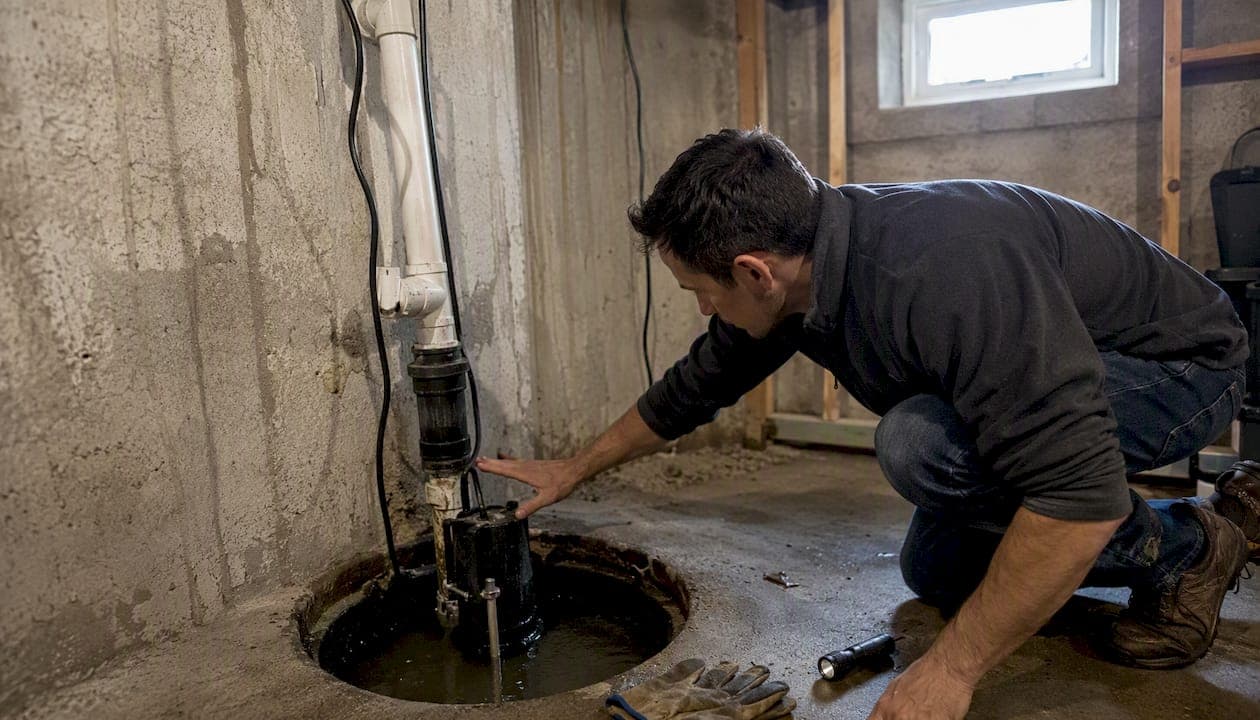
Monthly quick test, quarterly clean and inspection, annual professional service. That is the core maintenance regimen for any domestic sump pump, and following it consistently is the single most reliable way to keep your basement dry. Before touching the pump for any reason, isolate the mains power and disconnect any battery backup — water and electricity together are a serious hazard, so rubber gloves and waterproof boots are non-negotiable.
- Monthly: pour a bucket of water into the pit, confirm the pump starts automatically and shuts off cleanly, check the discharge outlet is clear.
- Quarterly: clean the inlet screen, check the float switch moves freely, inspect the discharge pipe and check valve, test the battery backup.
- Annually: book a professional service for motor, impeller, seals and electrical checks; get a written report.
- Emergency (pump fails during heavy rain): turn off the mains supply to the pump, use sandbags at doorways if available, and call a local plumber immediately.
Pro Tip: Set a recurring calendar reminder on the first weekend of each month for your five-minute test. Consistency matters far more than perfection.
Key takeaways
Consistent monthly testing, quarterly cleaning, and an annual professional service are the three habits that keep a domestic sump pump reliable and your basement dry.
| Point | Details |
|---|---|
| Monthly test | Pour a bucket of water into the pit monthly to confirm auto-start and shut-off. |
| Quarterly clean | Clean the inlet screen, check the float switch, inspect the discharge pipe and check valve every three months. |
| Annual professional service | Book a qualified engineer annually; pumps over 7–10 years old often cost less to replace (£400–£1,200 installed) than to repair repeatedly. |
| Maintenance log | Keep dated records and photographs after every check to support insurance claims and property sales. |
| Your-local-plumber | Provides fixed-price annual inspections, emergency call-outs, and written service reports across the UK. |
Table of Contents
- Why regular maintenance prevents flooding and protects your insurance
- What are the best practices for sump pump maintenance each month?
- Quarterly cleaning and mechanical checks you can do safely
- What should an annual professional service include?
- Seasonal checks every UK homeowner should carry out
- Common faults you can fix yourself — and when to stop
- Repair or replace? UK lifespan and cost guidance
- Safety rules and the tools you need for sump pump checks
- Your maintenance log and checklist template
- When should you call a UK plumber for sump pump work?
- How to maintain your sump pump alarms and sensors
- The case for keeping it simple
- Your-local-plumber can handle your annual sump pump service
- Sources
Why regular maintenance prevents flooding and protects your insurance
A well-maintained sump pump is simply a reliable one. When it starts every time water rises and shuts off cleanly when the pit empties, you avoid the basement flooding that causes thousands of pounds in structural damage and lost possessions.
The insurance angle is less obvious but equally important. Documented maintenance preserves asset value and supports insurance and warranty evidence. If a pump fails and you cannot show a service history, an insurer may dispute a flood claim on the grounds of neglect. For below-ground waterproofing, BS 8102 is the relevant British Standard, and compliance with it — or at least documented alignment with its principles — is increasingly what insurers and future buyers expect to see.
Pro Tip: Keep a dated maintenance log with photographs after each check. A simple folder of dated photos and notes is credible evidence for an insurer or a solicitor acting on a property sale.
What are the best practices for sump pump maintenance each month?
Five minutes, once a month. That is all this takes, and monthly functional tests such as pouring a bucket of water into the pit confirm automatic activation and shut-off, catching faults before they become floods.
- Check the power supply. Confirm the pump is plugged in and the socket or fused spur shows no signs of damage or tripping.
- Visual inspection. Look into the pit with a torch. Check for silt build-up, debris, or anything that could snag the float.
- Pour-a-bucket test. Pour a full bucket of water slowly into the pit. Watch the float rise, listen for the motor to start within a few seconds, then watch the water level drop and the pump shut off cleanly. If it hesitates, runs continuously, or makes a grinding noise, note it immediately.
- Listen for abnormal noise. A healthy pump hums steadily. Rattling, grinding, or intermittent cutting out all warrant investigation.
- Inspect the discharge outlet. Go outside and confirm the outlet pipe is clear of leaves, mud, or ice. Water should be able to exit freely.
The whole routine takes about five minutes. If you need to clear anything from the pit or adjust the float, unplug the pump first — always.
Quarterly cleaning and mechanical checks you can do safely
Every three months, go a step further. The PM Assist sump pump checklist groups these tasks by frequency and covers float-switch testing, intake-screen cleaning, alarm testing, and non-return valve checks — all of which a careful homeowner can handle without specialist tools.
Cleaning the inlet screen
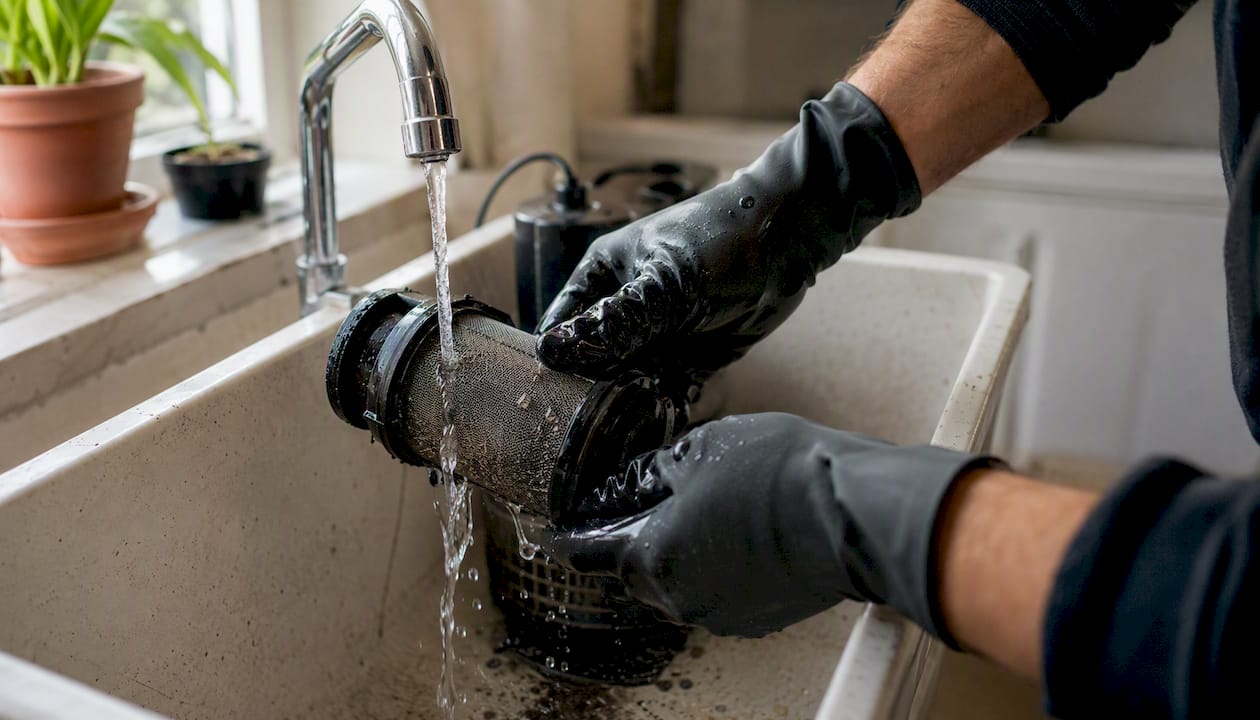
Unplug the pump. Lift it carefully from the pit (most domestic units are light enough to handle alone) and locate the inlet screen or strainer at the base. Rinse it under a tap or use a stiff brush to clear silt and debris. A blocked screen forces the motor to work harder and shortens its life considerably. While the pump is out, scoop any accumulated silt from the pit floor with a small trowel and dispose of it.
Freeing a stuck float switch
The float switch is the small buoyant arm or ball that triggers the pump when water rises. Debris and silt are the most common causes of jamming. With the pump unplugged, move the float through its full range of motion by hand. It should swing or slide freely with no resistance. If it catches, clean around the pivot point with a damp cloth. Never force it — if it remains stuck after cleaning, the switch may need replacing.
Discharge pipe and check valve
Run a garden hose briefly into the pit (pump unplugged) and watch whether water backs up into the pit after the hose stops. If it does, the check valve (non-return valve) on the discharge pipe is failing. A functioning check valve prevents discharged water from flowing back into the pit and making the pump cycle repeatedly.
Battery backup test
With the pump plugged in and running normally, unplug the mains lead and confirm the battery backup activates and the pump continues to run. Reconnect the mains afterwards. Battery-backup systems should be tested regularly, and batteries replaced if more than roughly three years old — they are most critical during power cuts, which often coincide with the storms that generate the most groundwater.
What should an annual professional service include?
A full annual service takes roughly one to two hours and should be carried out by a qualified plumber or drainage engineer. A sump pump should be tested and serviced at least once a year, ideally before the autumn wet season, and pumps that run frequently or are over five years old benefit most from professional attention.
A professional will inspect and document:
- Motor condition and current draw
- Impeller for wear, corrosion, or blockage
- Shaft seals for leaks
- Electrical connections and cable condition
- Check valve and the full discharge run to the external outlet
- Float switch calibration and travel
- High-water alarm function
- Battery backup condition and charge
While the engineer works, use the opportunity to do a deep clean of the pit and a vinegar flush of the pump body (with the pump isolated). Mix equal parts white vinegar and water, pour it into the pit, and run the pump briefly to flush mineral deposits from the impeller housing. Rinse with clean water afterwards.
The written service report the engineer provides is not a formality. It is your insurance evidence, your warranty record, and — if you ever sell the property — a document that reassures buyers the system has been properly maintained. Ask for one explicitly if it is not offered automatically.
Seasonal checks every UK homeowner should carry out
UK seasons create distinct risks for sump pumps, and a small adjustment to your routine each quarter prevents the most common seasonal failures.
| Season | Main risk | Action |
|---|---|---|
| Autumn | Leaf debris blocking external outlet | Clear leaves from the outlet grille; check pit for debris washed in by rain |
| Winter | Discharge pipe freezing; pump running dry | Insulate the external section of the discharge pipe; check for ice at the outlet after frost |
| Spring | Frost damage to pipes; increased groundwater | Inspect discharge pipe for cracks after the freeze-thaw cycle; run a pour-a-bucket test |
| Summer | Silt accumulation during dry spells | Clean the pit and inlet screen; confirm the pump still starts (it may not have run for weeks) |
Winter is the highest-risk season for most UK homes. A frozen discharge pipe means the pump has nowhere to send water, and it will either trip on thermal overload or flood the pit. Foam pipe lagging on the external section of the discharge pipe costs very little and prevents this reliably.
Pro Tip: Locate your external discharge outlet now, before winter arrives. Mark it so you can check it quickly after a hard frost, and clear a path to it through any garden planting.
For broader winter plumbing precautions, the essential winter plumbing tips guide covers freezing risks across the whole property.
Common faults you can fix yourself — and when to stop
Many of the faults that cause a sump pump to fail are straightforward to resolve. Blocked intakes, stuck floats, blocked discharge pipes, and failed check valves are all fixable by a careful homeowner. The key is knowing when to stop.
Clearing a blocked inlet screen
- Unplug the pump from the mains and disconnect any battery backup.
- Lift the pump from the pit.
- Rinse the inlet screen under running water and use a stiff brush to clear compacted silt.
- Lower the pump back into position and restore power.
- Run a pour-a-bucket test to confirm normal operation.
Freeing a stuck float
- Isolate power.
- Reach into the pit and move the float through its full arc by hand.
- If debris is causing resistance, clean around the pivot with a damp cloth.
- Restore power and test.
Replacing a non-return valve
A failed check valve is one of the most common faults alongside float jamming, silt accumulation, and discharge blockages. Replacement valves are available from plumbing merchants for £15–£40. Isolate power, cut out the old valve (note the flow-direction arrow), fit the new one with the arrow pointing away from the pump, and secure with jubilee clips or push-fit fittings as appropriate.
Stop and call a professional when:
- The RCD trips when the pump is plugged in
- The motor is hot to the touch after a short run
- The pump hums but does not move water (seized impeller)
- There is any burning smell or visible scorching on the cable or plug
- The pump runs continuously without emptying the pit despite a clear inlet and working float
Electrical faults and seized motors are not DIY territory. For a broader look at hidden plumbing risks that can develop silently, it is worth reviewing what to watch for across the whole system.
Repair or replace? UK lifespan and cost guidance
If the pump is older than about 7–10 years or has failed repeatedly, replacement is usually more economical than repair. Typical UK installed costs range from £400 to £1,200, depending on pump specification and site access.
A burnt-out motor, a corroded impeller, or a pump that has failed twice in one season are clear replacement triggers regardless of age. When getting quotes, ask whether the price includes removal of the old unit, commissioning of the new one, and a test run — not all engineers include all three.
Safety rules and the tools you need for sump pump checks
Always isolate the mains power and disconnect the battery backup before touching the pump. A sump pump sits in standing water, and the combination of a live electrical appliance and a wet environment is genuinely dangerous. Use an RCD-protected socket for the pump at all times, and wear rubber gloves and waterproof boots for any hands-in-pit work.
The basic tool kit for homeowner checks is minimal:
- Torch (head torch preferred, to keep hands free)
- Bucket (10-litre capacity)
- Garden hose
- Stiff brush and small trowel
- Adjustable spanner
- Replacement non-return valve (keep one as a spare)
- Multimeter (optional, for confident DIYers checking voltage at the socket)
Anything involving the consumer unit, the RCD, or the pump's internal wiring should be left to a qualified electrician or plumber. For guidance on water isolation valves and safe isolation procedures more broadly, that resource covers the principles clearly.
Your maintenance log and checklist template
Keeping both digital and physical logs is the approach recommended by drainage specialists, and for good reason: a physical log near the fuse box is immediately visible to an engineer, while a digital copy survives a flood.
Suggested log fields for each entry:
- Date of check
- Task(s) performed
- Observations (noise, debris, water level, any anomalies)
- Photo taken? (tick)
- Action taken or required
- Name and contact details if a professional carried out the work
Copy-ready checklist (print and keep near the fuse box):
Monthly:
- Power supply confirmed
- Visual pit inspection (torch)
- Pour-a-bucket functional test passed
- Discharge outlet clear
- No unusual noise during run
Quarterly:
- Inlet screen cleaned
- Float switch moves freely
- Discharge pipe inspected
- Check valve confirmed working
- Battery backup tested and activated
- Alarm tested
Annually:
- Professional service booked and completed
- Written service report received and filed
- Pit deep-cleaned
- Vinegar flush completed
- Battery backup battery age checked (replace if over 3 years)
For a broader household plumbing checklist, the essential plumbing maintenance checklist covers the full property.
When should you call a UK plumber for sump pump work?
Call a professional for electrical faults, a seized motor, persistent RCD trips, failed duty/standby systems, or any pump that has exceeded its expected lifespan. These are not situations where further DIY investigation is safe or productive.
When booking, ask:
- Are you qualified and insured for drainage and pump work?
- What does the service include — motor check, impeller, seals, electrical connections?
- Will you provide a written service report?
- Is pricing fixed or hourly?
- Do you carry common replacement parts?
A professional visit should include a test run before and after any work, a physical inspection of the motor and impeller, a check of all electrical connections, and a written record of findings. Look for engineers registered with TrustMark or a similar government-endorsed quality scheme, which provides a baseline assurance of competence and insurance. For an overview of the types of plumbing services available and what each involves, that guide helps set expectations before you book.
How to maintain your sump pump alarms and sensors
A sump pump alarm is the last line of defence when the pump itself fails. Most systems use a high-water sensor — a float or probe positioned above the normal pump activation level — that triggers an audible alarm if water rises unexpectedly. Without regular testing, an alarm can fail silently, leaving you with no warning during a flood event.
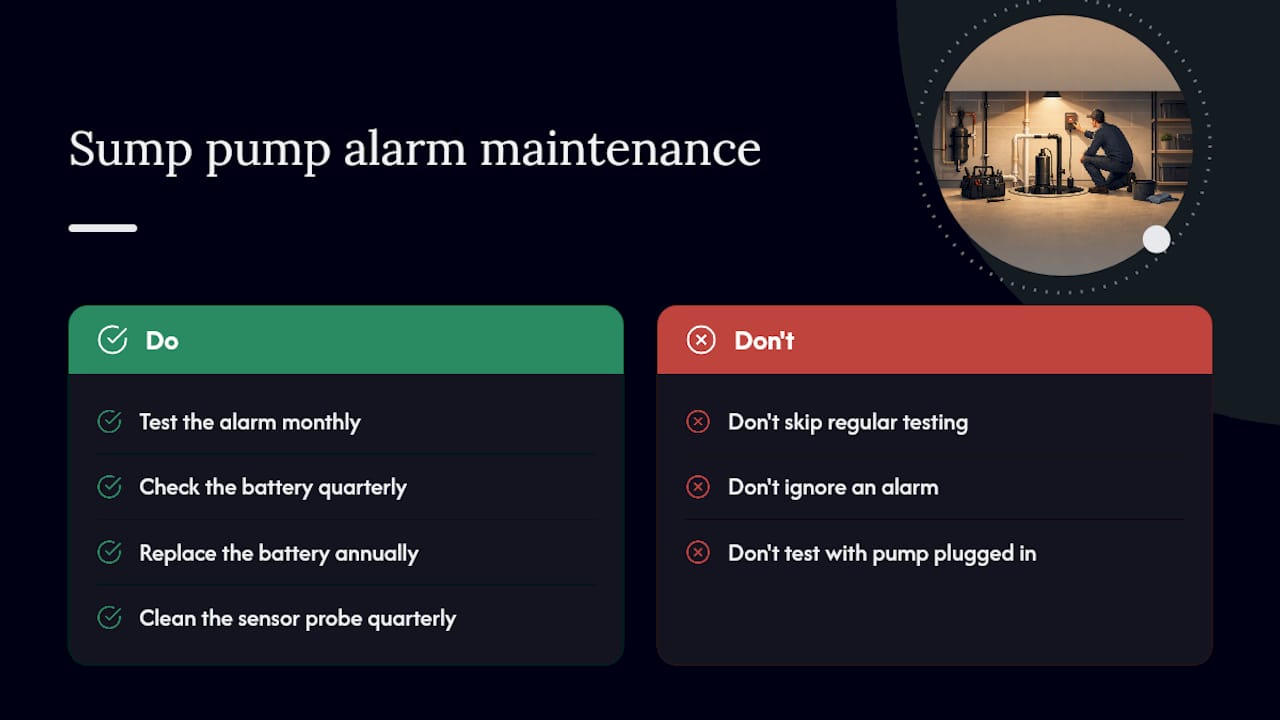
Test the alarm monthly by slowly raising the sensor float by hand (with the pump unplugged) and confirming the alarm sounds. If the alarm uses a separate battery, check it quarterly and replace it annually regardless of apparent charge. Some modern systems connect to a smartphone via Wi-Fi and send push notifications; if yours does, confirm the app connection is active during your monthly check. For a broader look at smart plumbing technologies that integrate with sump systems, remote monitoring options have become genuinely practical for UK homeowners.
Clean the sensor probe quarterly with a damp cloth to remove mineral deposits, which can prevent accurate water-level detection. If the alarm sounds during normal operation (not a test), treat it as a real fault: check the pump is running, inspect the float switch, and call a plumber if the water level is not dropping.
The case for keeping it simple
Most homeowners who neglect their sump pump do not do so out of carelessness. They do it because no one ever told them the routine was this short. Five minutes a month, a slightly longer check every quarter, and one professional visit a year — that is the whole programme. The flooding events that follow neglect are not dramatic failures; they are slow, avoidable accumulations of small faults that a monthly bucket test would have caught months earlier.
Local plumbers who carry out annual sump pump inspections can provide the documented service report that makes the difference between a settled insurance claim and a disputed one. That piece of paper, filed alongside your dated photographs, is worth considerably more than the cost of the service itself.
Your-local-plumber can handle your annual sump pump service
Keeping on top of sump pump maintenance is straightforward once the routine is set — but the annual professional service is the one step that genuinely requires a qualified engineer with the right tools and the authority to issue a written service report.

Your-local-plumber provides annual sump pump inspections, emergency call-outs for pump failures, and battery-backup installation across the UK. Every visit includes a full motor and impeller check, electrical connection inspection, float and alarm testing, and a written service report you can file for insurance or property sale purposes. Pricing is fixed and confirmed before any work begins, and engineers are available 24/7 for urgent failures.
To book an inspection or arrange an emergency call-out, visit Your-local-plumber and request a service today.
Sources
Further reading and official guidance for UK homeowners:
- Sump Pump Repair: The Complete UK Guide to Troubleshooting, Costs & Maintenance (2026) - UK Construction Blog
- Sump Pumps: Complete Guide to Dry, Safe Properties, Compliance, and Risk Prevention
- Sump Pump Maintenance Checklist (Free PDF) — 11 Tasks | PM Assist
- Why Should You Regularly Test Your Sump Pump? - Sumps and Pumps
- Sump Pump Protection: How to Keep Homes, Heritage Sites, and Businesses Dry, Safe, and Compliant