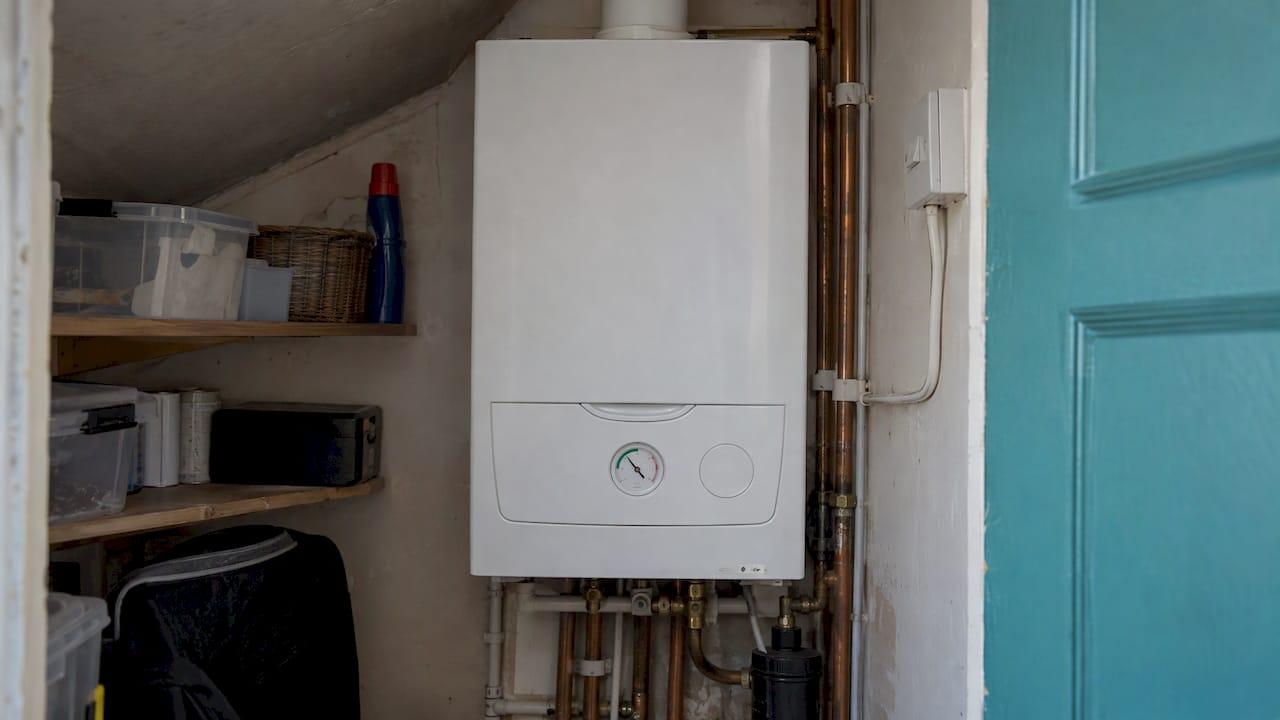
A faulty boiler pressure gauge usually shows itself in one of three ways: the needle never moves, it sticks or jumps in steps, or it shows a reading that does not match how the heating behaves. The gauge is only a messenger. Before you blame the dial, work out whether the pressure itself is genuinely wrong, because a replacement gauge will not cure a leak, a faulty valve or a tired expansion vessel. This guide shows the checks anyone can make safely, what points to the gauge and what points to the system, and when to stop and ring an engineer.
TL;DR
- A needle that stays still, sticks, or does not drop back to zero when the system is depressurised points to a damaged gauge. A reading that changes with the heating points to the system.
- A typical cold pressure is about 1.5 bar, but your own boiler manual sets the limits. Below 1 bar the boiler has lost pressure.
- If repressurising does not make the needle move, close the filling loop and call a Gas Safe registered engineer. Never open up the boiler yourself.
- Do not fit a new gauge just because the number looks wrong. Confirm the real pressure and the pattern of change first.
- Our engineers diagnose boiler faults at £110 per hour, with no call-out fee and payment only after successful work.
Table of Contents
- What the pressure gauge actually does
- Signs the gauge itself is faulty
- Signs the pressure is the problem, not the gauge
- Safe checks you can make yourself
- How to repressurise, and what the result tells you
- Can high pressure make a boiler dangerous?
- Who should do the repair
- What a diagnosis visit looks like with us
- Perspective: why we diagnose before we replace
- Need an engineer to check your boiler gauge?
- FAQ
- Sources
What the pressure gauge actually does
The gauge shows the pressure of the water in your sealed heating circuit. When the system is cold, most manufacturers want a reading in a narrow band. Vaillant says a typical cold-system pressure is about 1.5 bar, though you should always use the limits in your own manual. Viessmann UK gives roughly 0.5 to 1 bar with the heating off and 1 to 1.5 bar with it on, which shows that the figures differ between makes.
Pressure also moves naturally. Heated water expands, and the expansion vessel and pressure-relief valve absorb and control that rise. So a needle that climbs a little when the radiators warm up is normal. A needle that never moves at all, or one that behaves oddly, is the thing to investigate.
Some boilers have a dial with a needle. Many newer combis have a digital display or a bar graph. The advice below applies to both, although a digital reading that looks wrong can also come from the pressure sensor behind it rather than a dial.

Signs the gauge itself is faulty
The clues that the gauge, rather than the system, is at fault tend to be physical or mechanical:
- A cracked, fogged or damaged lens. If you cannot read the dial properly, you cannot trust it.
- A needle that sticks. It stays at one value however much you top up or release.
- Corrosion on or around the gauge.
- A needle that does not return to zero when the gauge is disconnected from pressure. Capital Boiler Parts lists these as reasons not to trust a gauge, and says replacement should follow diagnosis of the wider system.
- Jerky movement. On some boilers the needle jumps up in steps rather than sweeping smoothly, and reacts slowly when pressure is applied. That is a hint of a worn mechanism, but it is not proof, so compare it against how the heating behaves.
A blocked sensing port can also give a false reading. Debris or a blockage at the point where the gauge senses pressure can make it inaccurate, as one heating reference explains for hydronic systems. In practice this means swapping the dial alone may not cure the problem, which is another reason to leave the diagnosis to an engineer.
If you want to see what a damaged dial looks like, a stand-alone glycerine-filled pressure gauge shows the kind of smooth needle movement and zero return you would expect from a healthy dial. The gauge on your boiler is part of a gas appliance, so replacing it is an engineer's job, not a DIY one.
Signs the pressure is the problem, not the gauge
Often the gauge is perfectly honest and the system is the culprit. These patterns suggest a real pressure fault:
- The needle falls over days or weeks. The boiler needs topping up repeatedly. That means water is going somewhere: a leak, a weeping valve or an air problem. Our guide to what to do when a boiler loses pressure covers this in detail.
- The needle shoots up when the heating runs. A reading that climbs sharply towards 3 bar when the heating operates, then drops low once cold, more commonly points to an expansion-vessel problem than a failed sensor. See our page on expansion vessel failure.
- Water drips from the pressure-relief pipe. That is the safety valve doing its job, and the cause needs finding. Read why a pressure relief valve drips.
- The boiler shuts down or shows a fault code. Check the manual to see whether the code relates to low pressure. Our list of common boiler fault codes helps you read the usual ones.
- Radiators are cold at the top or gurgle. Air in the system can disturb pressure readings too. A gurgling boiler is worth reading about.
If the pressure is consistently above 2.5 bar when cold, the system is under strain. We cover that case in boiler pressure above 2.5 bar.
Safe checks you can make yourself
These checks involve looking, not dismantling. None of them need tools.
- Read the gauge with the heating off and the boiler cool. Note the number. Compare it with the range in your manual.
- Check for a fault code. Vaillant advises checking the manual to see whether the error code corresponds with low pressure. It says a reading below 1 bar means the boiler has lost pressure.
- Look for water. Check for damp patches, drips or stains around radiator valves and pipe connections, and beneath the boiler. Vaillant lists these as signs of a leak.
- Look at the gauge. Is the glass cracked or misted? Is there rust around it?
- Watch the needle while the heating warms up. Note how far it rises, then how far it falls when the system cools. A small rise is normal. A large swing is worth reporting to an engineer.
- Try repressurising only if your manual allows it. See the next section.
Avoid trying to test the sensor with a meter. Resistance tests should not be used on a live circuit, and sensor testing is model-specific, following the manufacturer's data. That is work for an engineer.
How to repressurise, and what the result tells you
If the gauge reads below 1 bar, repressurising can show whether the gauge is alive. Citizens Advice says to repressurise only with the heating off and the boiler cool, set the pressure between 1 and 1.5 bar, and close the valves properly. Follow the exact steps in your manual, because filling loops differ between boilers.
Now watch the needle:
- It rises and settles at the right figure. The gauge works. The question then becomes why the pressure dropped. If it changes again within the following week, Citizens Advice says to ask a Gas Safe engineer to inspect the boiler.
- It does not move at all. Vaillant says to close the filling loop immediately and call a Gas Safe registered engineer. Do not keep filling. If you cannot see the true pressure, you risk overfilling the system.
- It rockets past 2 or 3 bar. Close the filling loop at once. Do not carry on. Call an engineer.
Why you should not simply buy a new gauge
It is tempting to order a part online. But a replacement is not necessarily the correct repair. Repeated pressure loss can reflect leaks, a pressure-relief valve, an air vent or heat exchanger problem, while spikes during heating can point to the expansion vessel. A new dial on top of one of those faults would just report the same problem accurately.
Can high pressure make a boiler dangerous?
The thought worries many people, and it is a fair question. The short answer is that boilers have safeguards. Vaillant says the built-in safety device automatically releases pressure to prevent it becoming dangerous. Viessmann UK adds that modern boilers normally shut down above a safety threshold, and that a working pressure-relief valve should stop pressure climbing dangerously. The cause should still be investigated by a qualified heating engineer.
The usual causes of high pressure, according to Viessmann, are a filling loop left too open, topping up too often, a faulty pressure-relief valve or an expansion-vessel problem. That matters here because a faulty gauge can hide how high the pressure really is. If you cannot trust the reading, treat the boiler as unverified and have it checked rather than carrying on regardless.
Who should do the repair
Gas boilers are not DIY territory. Gas Safe Register says only a qualified and competent Gas Safe registered engineer should service a gas boiler or carry out repairs. That includes swapping a gauge, a sensor or any pressurised component. Whoever you book, ask to see their Gas Safe ID card, and Citizens Advice also suggests comparing quotes.
Regular servicing helps catch gauge and pressure problems early. Gas Safe Register recommends servicing in line with the manufacturer's instructions and, where those are not available, annually.
What a diagnosis visit looks like with us
The aim of a visit is to answer one question: is the gauge wrong, or is the pressure wrong? Our engineers check the reading against the boiler's own limits, look at the filling loop, the pressure-relief discharge, radiator connections and the expansion vessel, and then tell you what they found before any work starts.

Boiler and heating work is charged at £110 per hour. We state that there is no call-out fee, and our no fix, no fee guarantee means you pay only after successful work. You deal directly with the engineer.
If the leak is the real cause, our article on a boiler leaking water explains what to do before we arrive, and is a leaking boiler an emergency helps you judge the urgency. If the boiler keeps cutting out as well, see why a boiler keeps turning off. And if the heating ignores the thermostat while pressure looks fine, try our thermostat checklist.
Perspective: why we diagnose before we replace
In our work, a faulty gauge complaint is rarely about the gauge alone. People ring because the needle sits on zero or won't settle, and they assume a cheap part will fix it. Sometimes it does. More often the needle is telling the truth about a slow leak, a weeping valve or a worn expansion vessel.
That is why we start with the pressure, not the part. We confirm what the system is really doing, then decide whether the gauge, the sensor or something else needs attention. It saves you paying for a repair that doesn't last.
We built our service around being easy to reach and straightforward to deal with: no call-out fee, payment only after successful work, a 12-month warranty and an engineer you can speak to directly. If your gauge looks wrong tonight, you shouldn't have to sit with a boiler you can't read.
Michael
Need an engineer to check your boiler gauge?
If your needle is stuck, your pressure keeps changing or you simply can't tell whether the reading is right, we can help. We cover boiler and heating faults across Reading, Newbury, Oxford, Bristol, Swindon, Milton Keynes and many other towns, with 24/7 availability including holidays. Our urgent boiler, heating and hot water service aims for a 60 minute response.

Book an emergency heating engineer for a boiler that has lost pressure completely, or book a standard visit through our plumbing and heating services. If the diagnosis shows the boiler is at the end of its life, we supply and fit new boilers from £1,300, and you can request a new boiler quote, which is free on site.
FAQ
How do you know if a boiler pressure gauge is faulty?
Look for a cracked or misted lens, a needle that sticks, corrosion, or a needle that won't return to zero when depressurised. Then repressurise following your manual: if the system is filling but the needle stays put, the gauge or its sensor is suspect. Stop filling and call a Gas Safe registered engineer.
Can a boiler lose pressure without a leak?
Yes, though a leak is the most common cause. Air in the system, a faulty pressure-relief valve or a failing expansion vessel can all make pressure fall or swing. Because of that, a repeat drop within a week deserves a visit from a Gas Safe engineer.
Can a boiler explode if the pressure is too high?
Boilers have a pressure-relief valve and usually shut down above a safety threshold, so a working system should not reach dangerous pressure. Still, high pressure means something is wrong. Close the filling loop, follow your manual and have a qualified engineer investigate the cause.
How much does it cost to replace a boiler pressure gauge?
The cost depends on the boiler and on whether the gauge is the real fault, so the engineer needs to diagnose first. With us, boiler and heating work is charged at £110 per hour with no call-out fee, and you pay only after successful work.
Sources
- Why is my boiler losing pressure? | Vaillant
- What do I do if my boiler had no pressure | Vaillant
- What to do if your boiler pressure is too high | Viessmann UK
- Getting your broken boiler repaired or replaced | Citizens Advice
- The home boiler guide | Gas Safe Register
- Best Boiler Pressure Gauges: How to Choose
- How to Test Boiler Pressure Sensor Safely
- Heating Boiler Gauge FAQs
- Glycerine-filled pressure gauge