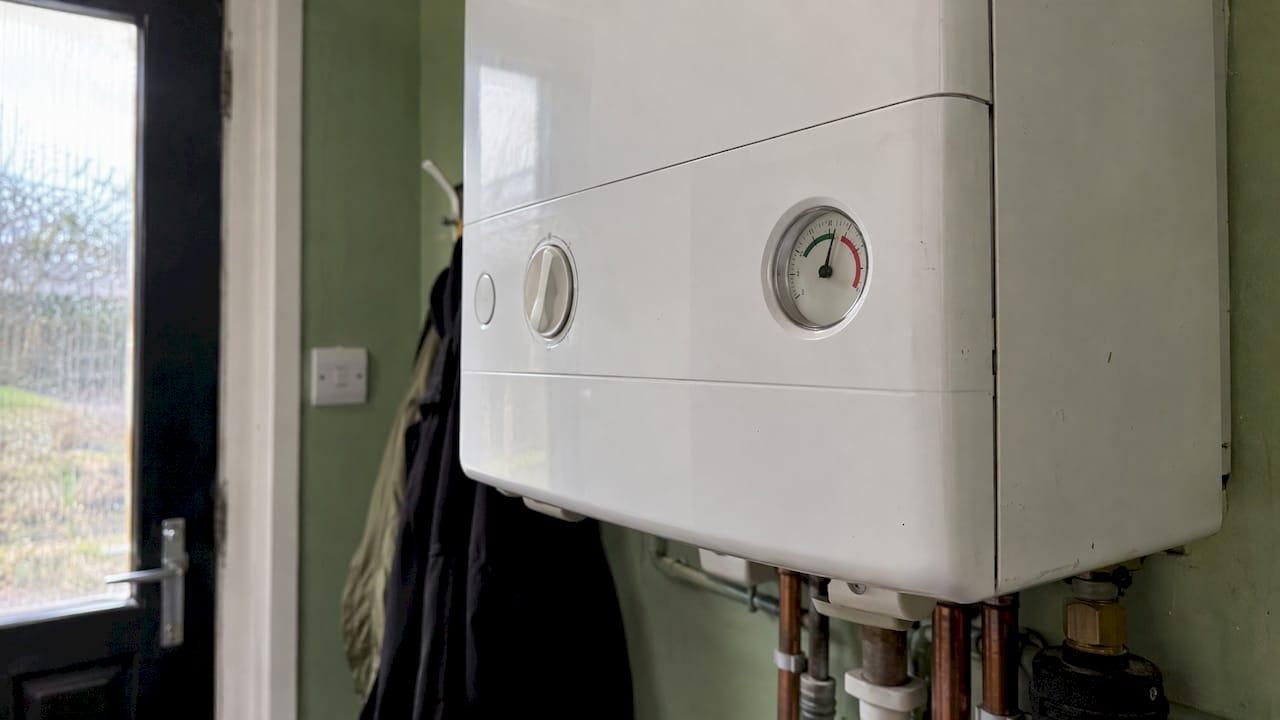
Yes, in most homes it is. Water expands as it heats, and your central heating circuit is sealed, so the gauge needle climbs when the heating runs and settles again as the system cools. A modest rise is normal physics, according to Vaillant. What matters is how high the needle goes, how far it jumps, and whether it keeps creeping up over days. This guide gives you the numbers, the likely causes and the checks that are safe to make yourself, and it tells you plainly when to stop and bring in a Gas Safe registered engineer.
TL;DR
- A small rise on the gauge when the heating is on is normal, because heated water expands inside a sealed system.
- Manufacturers give slightly different ranges, but a cold reading of around 1 to 1.5 bar is the usual target, and a hot reading above about 2.5 bar needs attention.
- A jump of more than 1 bar, or a reading that keeps climbing, points to a fault such as an expansion vessel problem, a leaking filling loop or a faulty pressure relief valve.
- You can safely check the filling loop is closed and bleed a radiator on a cooled system. Anything inside the boiler casing is a job for a Gas Safe registered engineer.
- If water drips from the pressure relief pipe or the gauge sits in the red, call an engineer rather than waiting.
Table of Contents
- Why the pressure goes up when the heating comes on
- What counts as a normal reading
- When a rise is a warning sign
- What makes the pressure climb too far
- Is 3 bar too high?
- Safe checks you can make yourself
- What to leave to a Gas Safe engineer
- What a visit usually involves
- Our view on rising boiler pressure
- Need an engineer for a pressure problem?
- If the pressure is low instead
- Keeping pressure steady through the year
- FAQ
- Sources
Why the pressure goes up when the heating comes on
Your heating circuit is a closed loop of water. When the boiler fires, that water warms up and takes up more space. It has nowhere to go, so the pressure inside the loop rises. Vaillant describes this rise as completely normal and no cause for concern, and adds that every appliance is fitted with safety controls to compensate for the increase.
The part that absorbs the extra volume is the expansion vessel, a small tank inside the boiler (or sometimes mounted beside it) with a cushion of air on one side of a rubber diaphragm. As the water expands, it squeezes the air cushion, which keeps the pressure within sensible limits. Viessmann explains that boiler pressure is controlled by the balance of air and water through the expansion vessel. When that balance is right, you see a gentle rise and fall. When it is wrong, you see the symptoms people search for: pressure shooting up, water dripping from an outside pipe, or the boiler locking out.
So the question is never "does it rise?" but "does it rise by a sensible amount and come back down?"
What counts as a normal reading
First, look at the gauge. Most boilers have a dial or digital display on the front, often with a green zone and a red zone. Always read it with the heating running if you want a true picture of the peak, and read it cold for your baseline.
Manufacturers quote slightly different figures, which is why you will see conflicting numbers online. Here is what the main UK makers and one energy company's engineer say:
| Source | Heating off (cold) | Heating on (hot) | Warning point |
|---|---|---|---|
| Vaillant UK | 1 to 1.5 bar | 1 to 2 bar | Upper limit of 3 bar |
| Viessmann UK | About 0.5 to 1 bar | About 1 to 1.5 bar | Check the gauge with the heating on for an accurate reading |
| Worcester Bosch | 1 to 1.5 bar (green) | Rise of more than 1 bar suggests the expansion vessel may need repressurising | Red zone from about 2.75 bar |
| Octopus Energy's Phil Steele, via Wales Online | 1.0 to 1.5 bar | Up to 2.0 bar | Switch off and let cool if too high |
The safest rule of thumb that fits all of them: aim for about 1 to 1.5 bar when cold, expect a rise of up to roughly 1 bar when hot, and treat anything approaching 2.5 bar or above as the point to act. Your boiler's manual, or the label on the boiler, gives the figures for your exact model, and those override any general guide.
A worked example
Say your gauge reads 1.2 bar first thing in the morning. You switch the heating on, and an hour later it reads 2.0 bar. That is a rise of 0.8 bar, well within the usual pattern. Switch the heating off, wait for the radiators to cool, and the needle should drift back towards 1.2 bar.
Now say the cold reading is 1.5 bar and the hot reading is 3 bar. That is a rise of 1.5 bar. Worcester Bosch says a rise of more than 1 bar once the system is up to temperature can mean the expansion vessel needs repressurising by a service engineer. That second pattern is worth a visit.

When a rise is a warning sign
Three patterns tell you something is wrong rather than normal:
- A big jump. The needle moves by more than about 1 bar between cold and hot.
- A high peak. The reading goes past roughly 2.5 bar. Vaillant says that with the heating on, pressure might rise slightly but should stay under 2.5 bar, and that persistent high pressure can point to a faulty pressure relief valve or an expansion vessel problem.
- A cold reading that keeps climbing. If the pressure with the heating off is higher each day, water is getting into the system from somewhere, most often the filling loop.
Other signs to watch for: water dripping from the pressure relief pipe (usually a copper pipe that exits through an outside wall), the boiler shutting down or showing a fault code, banging or whistling noises, and radiators that are slow to heat.
What makes the pressure climb too far
The manufacturers' lists overlap closely. In plain terms, these are the usual suspects.
Too much water added when topping up
It is easy to overfill when you repressurise a low system. Vaillant lists adding too much water when topping up as the first common reason for high pressure. If the pressure was fine until you last used the filling loop, this is the likeliest answer, and it is the easiest to put right.
A filling loop that is not fully closed
The filling loop is the braided hose, usually under the boiler, with a valve at each end. If either valve is slightly open, or one is passing water while closed, mains water keeps trickling in. Vaillant names a faulty external filling device as a cause, and Viessmann advises that you start by checking the filling loop is definitely closed. A tell-tale sign is pressure that rises while the heating is off.

An expansion vessel that has lost its air
Viessmann notes that with too little air in the expansion vessel, pressure may become too high and water may come out of the pressure relief valve. This is the classic reason for a hot reading that leaps far above the cold one. The vessel loses air slowly over the years, or the diaphragm fails. Our own guide covers how expansion vessel failure shows up. Recharging or replacing the vessel is not a homeowner job.
A faulty pressure relief valve
The relief valve is the safety device that discharges water if pressure gets too high. Vaillant lists one that is clogged or damaged among the common causes, and Viessmann says an engineer may also check it is not stuck. A valve that drips regularly is telling you the system is over-pressurising.
Sediment and debris
Vaillant also lists a build-up of sediment and debris that restricts water flow. In older systems, sludge can cause hot spots and uneven heating, so if the pressure problem comes with cold patches on radiators, mention that to your engineer.
An internal boiler fault
Vaillant adds a fault with the boiler's internal parts, especially where the boiler has not been serviced regularly by a Gas Safe registered engineer. This is one reason an annual service is worth keeping up.
Is 3 bar too high?
It is a common worry, and the answer needs care. Viessmann states that high pressure is not dangerous in itself, even at 3 bar, because in most cases the boiler will switch itself off above a certain pressure and a working relief valve should control it. In the same breath, it says not to simply leave it: a qualified heating engineer can advise.
Our view follows that. A single brief peak near 2.5 bar on a very cold day, which drops back once the system cools, is worth watching. A repeated 3 bar peak, or a cold reading that is already high, is worth a call. Do not run the boiler for weeks on the assumption that the safety valve will cope.
Safe checks you can make yourself
Work through these in order. They need no tools beyond a radiator key and a cloth, and none involves opening the boiler.
- Switch the heating off and let the system cool. Viessmann advises making sure the boiler is off and has cooled before bleeding radiators, to avoid scalding.
- Read the cold gauge. If it sits at about 1 to 1.5 bar, your baseline is fine and the rise you saw was probably normal.
- Check the filling loop. Make sure both valves are fully closed and the hose is not weeping. Do not top up while the pressure is already high.
- Look at the relief pipe outside. Any dripping or staining around the end of the pipe suggests the valve has been discharging.
- Bleed a radiator if the cold pressure is high. Vaillant says that if pressure at room temperature is below 2.5 bar no action is needed, though bleeding a couple of radiators will lower it, and above 2.5 bar it advises reducing it before running the appliance, or getting help from your installer or a local plumber. Worcester Bosch says that where overfilling is the cause, bleed a radiator until the gauge returns to between 1 and 1.5 bar.
- Re-read the gauge cold, then run the heating again. Note both numbers in your phone. This record helps an engineer enormously.
If you have not bled a radiator before, our walkthroughs on a ten-minute radiator bleed and radiator bleeding best practice cover the method step by step, and our guide to boiler pressure above 2.5 bar goes further on the home checks.
What to leave to a Gas Safe engineer
In the UK, work on gas appliances must by law be done by a Gas Safe registered engineer. That rules out the following for homeowners: opening the boiler casing, touching gas pipework or fittings, replacing internal components, and repressurising an expansion vessel. Viessmann is direct about this. If pressure keeps creeping up and you are unsure why, there may be a filling-loop fault or the vessel may need repressurising, and these are not tasks to attempt yourself. You can check any engineer's registration on the Gas Safe Register website before they start.
Stop using the boiler and call someone promptly if:
- the gauge is in the red zone and does not fall after bleeding a radiator;
- water is running, not just dripping, from the relief pipe;
- you smell gas at any point (leave the property and call the National Gas Emergency Service on 0800 111 999);
- the pressure rises again within a day or two of correcting it.
If water is escaping from the boiler itself rather than the relief pipe, our piece on whether a leaking boiler is an emergency explains what to do while you wait.
There is a cost angle too. Octopus Energy's Phil Steele told Wales Online that overlooking pressure issues can mean paying more for poorer heating efficiency, particularly in long cold spells when boilers work hardest, and that anyone unsure or suspecting a leak should contact a qualified heating engineer.
What a visit usually involves
When an engineer arrives for a rising-pressure complaint, the order of work is predictable. They will read the gauge cold and hot, confirm the filling loop is sealing, inspect the pressure relief valve and discharge pipe, and test the expansion vessel's air charge. If the vessel has lost its charge, it can often be repressurised. If the diaphragm has failed, it is replaced. A passing filling loop valve is a quick swap.
Having your notes ready (cold reading, hot reading, when it started, whether the relief pipe has dripped, when the boiler was last serviced) usually saves time on site.
Michael, our perspective
Our view on rising boiler pressure
Most calls we hear about this start with the same sentence: "the needle goes up when the heating comes on, is that bad?" Usually, no. The skill is knowing the difference between a healthy rise and an early warning.
We pay attention to three things: the cold reading, the size of the rise, and whether the cold reading is stable from day to day. A steady cold figure with a rise of under a bar is a boiler doing its job. A cold figure that drifts up, or a hot figure that leaps, is a system asking for attention, and it is cheaper to deal with early than after the relief valve has been dripping for a month.
What we want homeowners to take away is simple. Do the safe checks, write down the numbers, and do not be shy about asking for help. Our approach is built around no call-out fee, a no fix no fee guarantee, payment only after successful work, and direct contact with the engineer who attends, so you are never paying just to find out what is wrong. Our heating and boiler work is charged at £110 per hour, and we back our repairs with a 12-month warranty.
Pressure faults are rarely dramatic, but they are rarely worth ignoring either.
Michael
Need an engineer for a pressure problem?
If your gauge keeps climbing, the relief pipe is dripping or you simply want the system checked, we can help. We offer 24/7 availability including holidays, same-day emergency response and a 60-minute response time on our emergency heating engineer service. Heating and boiler work is £110 per hour, with no call-out fee and payment only after successful work. You can book an emergency heating engineer online, or see our plumbing services for non-urgent jobs.

If the boiler is old and the pressure faults keep returning, a replacement may be the more sensible route. New boilers supplied and fitted start from £1,300, and you can request a free new boiler quote with an on-site visit.
If the pressure is low instead
Some readers arrive here because the problem is the opposite: pressure that falls rather than rises. Viessmann says that when pressure is too low the boiler may struggle to ignite or not fire at all, and that you can repressurise by letting water in until the needle reaches the green zone, then watching it for a few days in case it drops again, which could indicate a leak. Worcester Bosch says a system usually needs topping up once or twice a year, and that you should contact your installer if it needs it much more often. Our guide to a boiler losing pressure covers the steps, and if a radiator stays cold while the rest heat up, see radiator cold at the top.
The link with the rising-pressure problem is that overfilling after a top-up is one of the most common causes of a high reading. Add water slowly, watch the gauge, and stop at about 1 to 1.5 bar.
Keeping pressure steady through the year
A few habits make pressure problems less likely:
- Glance at the gauge monthly. Note the cold figure. A baseline makes any change obvious.
- Top up gently. Open the filling loop a little at a time, close both valves fully, and never leave the loop connected.
- Bleed radiators when they are cold at the top. Trapped air affects circulation and often leads people to top up unnecessarily.
- Service the boiler every year. A service lets an engineer check the expansion vessel charge and relief valve before they fail.
- Act on drips. A relief pipe that has begun to drip is the system's own warning.
If you notice water around the boiler or a radiator valve, our guides on a leaking radiator pipe and boiler leaking water will help you make the area safe first.
FAQ
Why does my boiler pressure go up when the heating is on?
Water expands as it heats, and the heating circuit is sealed, so the pressure rises. Vaillant calls this a completely normal effect. The expansion vessel absorbs most of the extra volume, so the needle should rise by a modest amount and drop back as the system cools.
What is too high for boiler pressure when the heating is on?
There is no single number for every boiler, so check your manual. As a guide, Vaillant says the reading should stay under 2.5 bar with the heating on, and Worcester Bosch puts the red zone from about 2.75 bar. Readings at or above those figures, or a rise of more than 1 bar, are worth an engineer's attention.
How do I lower boiler pressure safely?
Switch the heating off and let the radiators cool, confirm the filling loop is closed, then bleed a radiator slowly until the gauge returns to about 1 to 1.5 bar. If the pressure climbs back again, there is a fault such as a leaking filling loop or an expansion vessel problem, and you should call a Gas Safe registered engineer.
Is boiler pressure of 3 bar dangerous?
Viessmann says it is not dangerous in itself, because the boiler should shut down and the relief valve should discharge. It is still a sign something needs checking, so do not leave it. Switch the heating off, let the system cool and arrange an engineer's visit if it happens repeatedly.
Can I fix an expansion vessel myself?
No. Repressurising or replacing an expansion vessel involves working on the sealed heating circuit and boiler internals, which should be left to a Gas Safe registered engineer. What you can do is record your cold and hot gauge readings so the engineer can see the pattern straight away.
Sources
- What pressure should my boiler be? | Vaillant UK
- Boiler pressure too high? | Vaillant
- What to do if your boiler pressure is too high | Viessmann UK
- Is Your Boiler Broken? Here's What To Do Next | Viessmann UK
- Boiler Pressure | Worcester Bosch
- Boiler owners urged to make a two-minute check | Wales Online