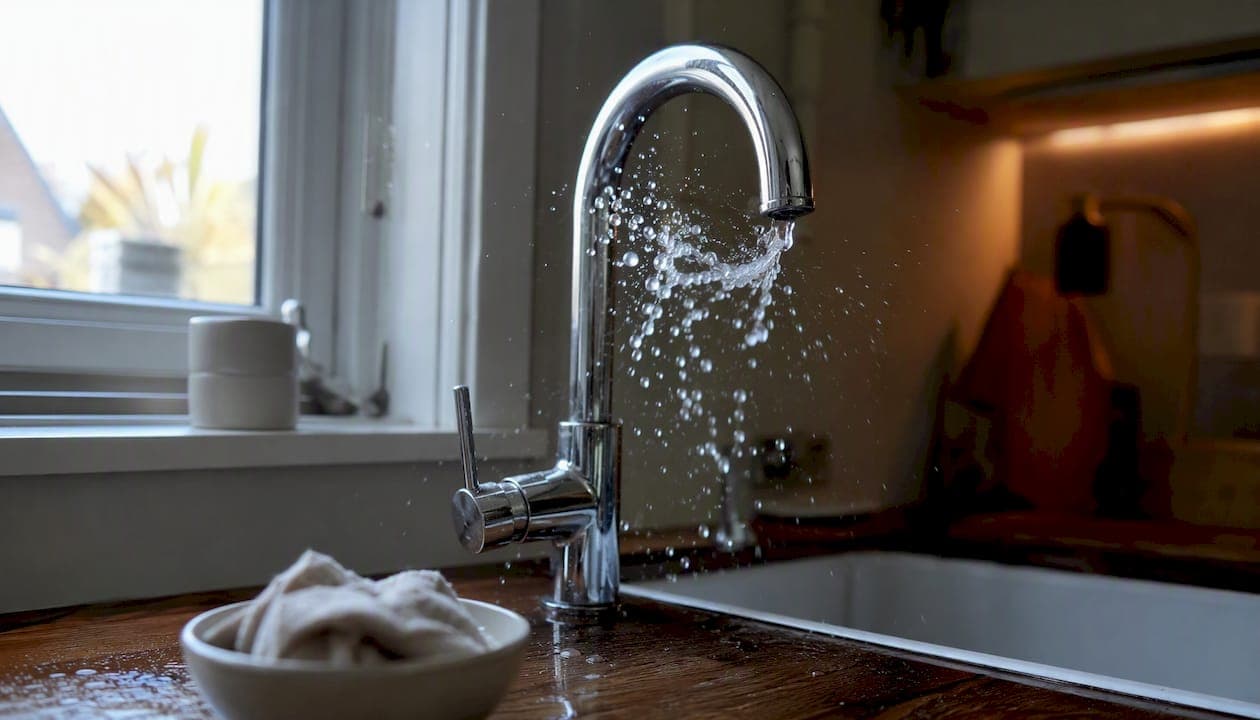
If your kitchen tap is spluttering, the most likely cause is trapped air in the pipework, known as an airlock. The fastest first check: turn on another tap in the house. If only the kitchen tap is affected, the fault is almost certainly local to that tap or its supply line. If several taps splutter at once, you are dealing with a system-wide pressure or air issue.
Try these steps in the next five minutes:
- Check other taps in the house to confirm whether it is one tap or several.
- Remove and clean the aerator (the small mesh filter at the tap spout) — a partial blockage here is the single most common cause of spluttering on a single tap.
- Open both hot and cold fully and run them for 30–60 seconds to flush any trapped air.
- Check whether recent mains work has happened nearby. Southern Water notes that pressure management work and burst pipes on the network regularly introduce air into household systems.
- If flushing does not clear it, the hosepipe method (connecting a working tap to the affected one) is the next practical step.
Pro Tip: If the water looks milky or cloudy alongside the spluttering, that is usually entrained air, not contamination. Run the tap for a minute and it should clear. If it does not clear, or if there is an odour, stop and call a professional.
Table of Contents
- What causes a kitchen tap to splutter?
- How to diagnose the problem yourself
- Step-by-step DIY fixes you can try at home
- When should you stop DIY and call a plumber?
- What a plumber will check and fix
- How long does it take and what will it cost in the UK?
- Simple maintenance habits that prevent tap spluttering
- Key takeaways
- A local plumber's view on tap spluttering
- Not keen on DIY? Book Your-local-plumber today
- Useful sources and further reading
What causes a kitchen tap to splutter?
Spluttering taps in the UK have a handful of root causes, and knowing which one you are dealing with saves time and avoids unnecessary work.
Airlocks and trapped air are the most frequent culprit. Air enters the pipework when mains pressure drops, after plumbing work, or when a system is drained and refilled. The air pocket sits in the pipe, compresses as water pushes against it, then releases suddenly, producing that characteristic spitting and gurgling. Toolstation's airlock guide confirms that airlocks reduce flow and cause noisy, irregular delivery at taps.
- Clogged aerator or flow restrictor. The aerator screws onto the tap spout and mixes air into the water stream. Limescale, sediment, and debris build up inside it over time, partially blocking flow and creating turbulence that reads as spluttering. This is the most common cause on a single tap that has been fine for years.
- Worn cartridge or internal valve. The cartridge controls water flow inside the tap body. As it wears, it can allow uneven flow, vibration, or partial restriction, all of which produce spluttering or a noisy tap.
- Faulty pressure reducing valve (PRV) or pressure controls. The PRV sits on the mains supply and keeps household pressure within a safe range. A failing PRV can cause pressure to fluctuate, which drives air into the system and produces irregular flow. UK plumbing forum cases show that a faulty PRV or worn stop tap can produce recurring spluttering that looks exactly like an airlock but returns after every temporary fix.
- Loose joints or micro-leaks letting air in. A small leak on the supply side does not just lose water; it draws air into the pipe under low-pressure conditions, feeding a persistent airlock.
- Sediment or corrosion in pipework. Older galvanised or copper pipes accumulate scale and debris. Partial blockages create turbulence and restrict flow in ways that mimic an airlock.
- Hot-tap specific: overheating. If the spluttering is only on the hot tap and the water spits or steams, the cause may be the hot water system rather than the pipework. Manufacturer guidance warns that excessively high water temperature or a malfunctioning thermostat can cause steam and spitting from the hot tap, which requires a different fix entirely.
How to diagnose the problem yourself
Work through these checks in order. Each one narrows the fault and tells you whether to continue with DIY or book a plumber.
- Is it constant or intermittent? Spluttering that happens only when an appliance (dishwasher, washing machine) starts or stops, or when a stop tap is operated, is more likely to be a pressure surge or water hammer than a simple airlock.
- Look at the water colour. Milky or cloudy water alongside spluttering is almost always entrained air and clears after flushing. Discoloured (brown or yellow) water with an odour is a different matter entirely.
Stop and call a plumber if you find: an active leak, discoloured water that does not clear after several minutes of running, a damaged pipe, or any sign of water near electrical fittings.
Step-by-step DIY fixes you can try at home
What you will need:
- Flat-head or cross-head screwdriver
- Adjustable spanner or tap spanner
- Small container or bowl
- Old cloths or towels
- Washing-machine hose or garden hose (for the hosepipe method)
- Bucket
Fix 1: Clean the aerator
- Turn off the tap and place a cloth in the sink to catch small parts.
- Unscrew the aerator from the end of the spout by hand or with a cloth-wrapped spanner (turn anticlockwise).
- Disassemble the aerator: you will find a mesh screen, a flow restrictor disc, and a rubber washer. Note the order.
- Rinse each part under running water. Soak in white vinegar for 20–30 minutes if there is visible limescale.
- Reassemble and refit. Run the tap to check flow.
Fix 2: Flush the tap and system
- Turn both hot and cold taps on fully.
- Run them for 60–90 seconds. This dislodges small air pockets and clears loose sediment.
- Turn off and wait 30 seconds, then run again. Repeat two or three times.
Fix 3: The hosepipe (washing-machine hose) method
This technique uses the pressure from a working tap to force air out of the affected one. Diy Fix It's airlock guide describes it as a standard UK method for clearing stubborn airlocks.
- Connect one end of a washing-machine hose (or a short garden hose with push-fit connectors) to the cold tap that is working normally.
- Connect the other end to the spluttering tap's spout. Hold it firmly in place.
- Turn on the working tap first, then the affected tap. The pressure from the working supply forces air back through the line and out.
- Hold for 30–60 seconds, then turn off both taps and disconnect the hose.
- Run the affected tap on its own to check whether the spluttering has cleared.
Fix 4: Drain and refill the system
Use this only if the spluttering affects multiple taps and the flush method has not worked.
- Turn off the main stopcock.
- Open all taps in the house to drain the pipework fully.
- Close all taps, then reopen the stopcock slowly.
- Open taps one at a time, starting at the lowest point in the house, to allow air to escape progressively.
Safety caveats:
- Isolate the hot water cylinder before draining if your system has one. Draining a pressurised cylinder without isolating it first can cause scalding.
- Never work near live electrical fittings or gas pipework.
- Do not apply forcible pressure methods (such as a compressor) if you suspect a leak. Increased pressure will worsen a marginal leak.
Pro Tip: Before you drain the system, check the signs of hidden leaks in your pipework. Draining a system that has a small leak can draw air back in immediately, undoing the fix.
When should you stop DIY and call a plumber?
Some symptoms tell you clearly that the problem is beyond a safe home fix. Act on these promptly.
Call a plumber urgently if:
- Pressure drops suddenly and severely across multiple taps and does not recover.
- There is a visible leak, water pooling under the sink, or damp patches on walls or ceilings.
- Discoloured water (brown, yellow, or cloudy with an odour) does not clear after several minutes of running.
- You hear loud banging or knocking in the pipes when taps or appliances operate — this is water hammer, which can stress pipe joints over time.
- You cannot isolate the water supply (the stopcock is stuck or broken).
- Hot water spits or steams, which may indicate an overheating issue in the hot water system rather than a simple airlock.
Book a non-urgent professional visit if:
- Spluttering returns within a few days of a DIY fix. UK Plumbers Forums cases show that recurring symptoms after temporary clearing often point to a faulty PRV or worn tap valve that needs replacement, not just flushing.
- You suspect the PRV or main stopcock is faulty. These components affect the whole house and are worth a professional check.
- The tap is more than ten years old and has had recurring valve or cartridge issues.
- You have low water pressure across the house that predates the spluttering.
When you call, tell the plumber: what the tap is doing, whether it is one tap or several, when it started, and what you have already tried. That information cuts diagnostic time considerably.
What a plumber will check and fix
A qualified plumber will not just flush the tap and leave. The diagnostic process is systematic.
On arrival, a plumber will typically:
- Test water pressure at the mains and at individual outlets to identify where pressure is being lost.
- Check the PRV setting and condition. A PRV outside its set range (usually 1–3 bar for domestic UK properties) needs adjustment or replacement.
- Inspect the stopcock and any isolation valves for partial closure or wear.
- Examine flexible supply tails and pipe joints under the sink for micro-leaks drawing air in.
- Remove and inspect the tap cartridge and aerator for wear, scale, or damage.
- Listen for water hammer or pressure surges that might be misread as an airlock.
- Use a pressure logger or camera inspection for persistent or unexplained faults.
Common professional repairs:
- Cartridge or valve replacement. A worn cartridge is a straightforward swap, usually completed in under an hour.
- Aerator descale or replacement. If cleaning has not worked, a new aerator costs very little and takes minutes to fit.
- PRV replacement. More involved, as it requires isolating the mains supply, but it resolves recurring pressure-related spluttering definitively.
- Leak repair. Fixing the joint or section of pipe that is drawing air in stops the airlock from returning.
- Pipework rerouting or resizing. For persistent low-pressure or air problems in older properties, a plumber may recommend upgrading undersized pipework.
The difference between a quick on-site repair and a scheduled return visit usually comes down to parts availability. A cartridge for a common tap brand is often on the van; a specific PRV or a replacement section of pipework may require a return visit once parts are sourced. A good plumber will tell you this upfront.
How long does it take and what will it cost in the UK?
Costs vary by region, the complexity of the fault, call-out fees, parts, and whether you need an emergency response. The figures below are indicative ranges, not guarantees. Always check the provider's current pricing before booking.
| Fix | Typical time | Skill level | Approximate cost band |
|---|---|---|---|
| Clean aerator (DIY) | 30 minutes | Low | Low (parts under £5) |
| Flush pipes (DIY) | 20 minutes | Low | Nil |
| Hosepipe airlock method (DIY) | 20–90 seconds | Low | Nil |
| Drain and refill system (DIY) | 30–90 seconds | Medium | Nil to low |
| Cartridge replacement (plumber) | 30–60 minutes | Professional | Medium |
| PRV replacement (plumber) | 1–2 hours | Professional | Medium to high |
| Leak repair (plumber) | 30 minutes to half a day | Professional | Medium to high |
| Full pipe inspection and reroute | Half a day or more | Professional | High |
A few points worth knowing:
- Emergency call-out rates are higher than standard daytime rates. If the issue is not urgent, booking a scheduled visit saves money.
- VAT at 20% applies to most plumbing labour and parts in the UK.
- Parts costs vary significantly by tap brand and age. Cartridges for common UK tap brands (Bristan, Grohe, Armitage Shanks) are widely stocked; parts for discontinued or imported taps can be harder to source and more expensive.
- For pressure and valve work, see the practical guide to fixing low water pressure for a fuller picture of what is involved.
Simple maintenance habits that prevent tap spluttering
Most tap spluttering is preventable with a short annual routine. These habits take less than an hour a year and catch problems before they become repairs.
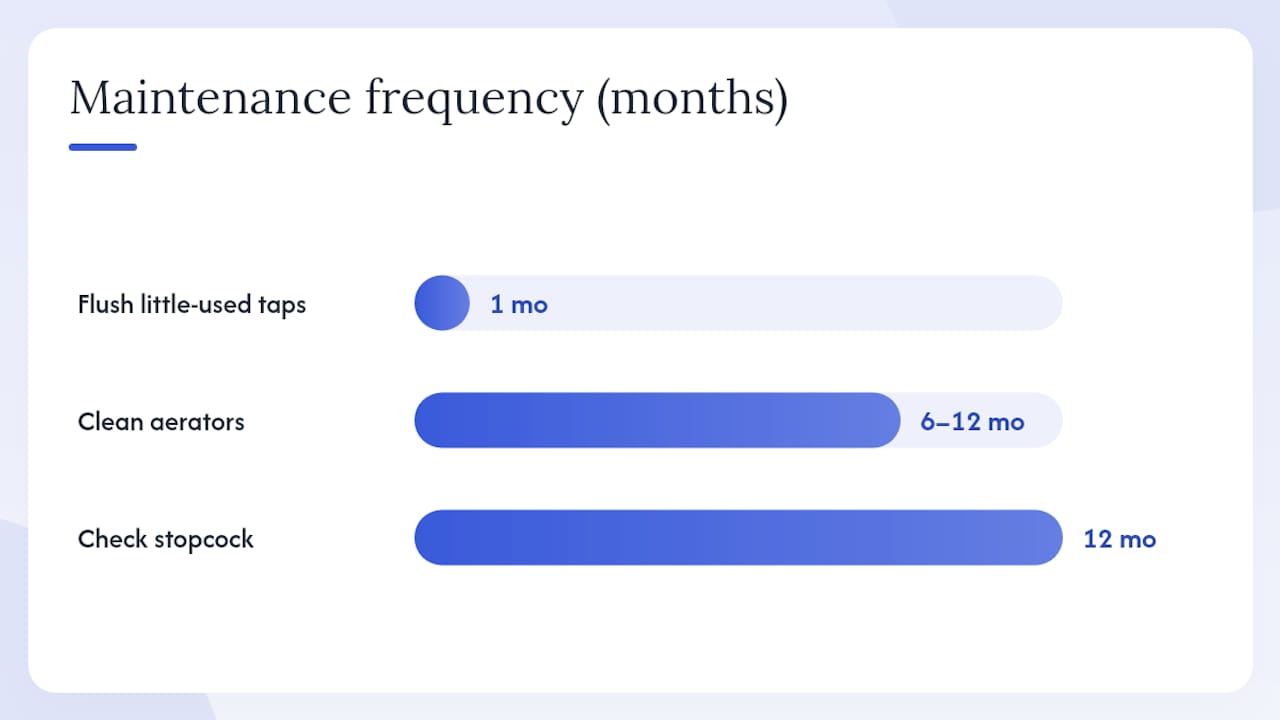
- Clean aerators every 6–12 months. Limescale builds up faster in hard-water areas (much of southern England and the Midlands). A quick vinegar soak once or twice a year keeps flow smooth.
- Check the stopcock annually. Turn it fully off and back on to confirm it moves freely. A stopcock that has not been operated in years can seize, leaving you unable to isolate the supply in an emergency. The homeowner's guide to plumbing valves covers what to look for.
- Flush little-used taps monthly. Taps in spare bathrooms or utility rooms that sit idle for weeks can develop airlocks or stagnant water in the supply lines. Running them for a minute each month prevents both.
- Look for early signs of leaks. Damp patches, discolouration on cabinet floors under the sink, or a slight drop in pressure are worth investigating early. Small leaks draw air in and create the conditions for airlocks.
- Consider a water softener or descaler if you are in a hard-water area. Scale build-up inside valves and aerators is the primary cause of recurring blockages in hard-water regions. A whole-house softener reduces maintenance frequency noticeably, though it is an upfront investment.
- Follow up after any mains work in your area. Water companies send notices when they carry out pressure management or repair work on local mains. After any such work, run your taps for a couple of minutes to purge any air that has entered the system.
Pro Tip: Keep a simple note on your phone or inside a kitchen cupboard with the date of the last aerator clean, stopcock check, and any local mains work notices. When spluttering starts, that log tells you immediately whether recent mains work is the likely cause, saving you from unnecessary DIY.
Key takeaways
A spluttering kitchen tap is almost always caused by trapped air, a blocked aerator, or a pressure fault, and most cases can be resolved with a simple flush or a five-minute aerator clean before any professional work is needed.
| Point | Details |
|---|---|
| Check one tap vs. several first | Single-tap spluttering points to a local fault; multiple taps suggest a system-wide air or pressure issue. |
| Clean the aerator first | A blocked aerator is the most common single-tap cause and takes under 30 minutes to clean or replace. |
| Use the hosepipe method for airlocks | Connecting a working tap to the affected one with a washing-machine hose clears stubborn airlocks without tools. |
| Call a plumber for recurring symptoms | If spluttering returns after DIY fixes, a faulty PRV, worn cartridge, or hidden leak is the likely cause. |
| Your-local-plumber covers tap and valve work | Your-local-plumber handles tap repairs, PRV replacement, and leak detection with 24/7 availability across the UK. |
A local plumber's view on tap spluttering
The conventional advice on tap spluttering tends to stop at "flush the pipes and clean the aerator." That is correct as far as it goes, but it misses the cases that actually end up costing homeowners money: the recurring splutter that clears for a week and comes back.
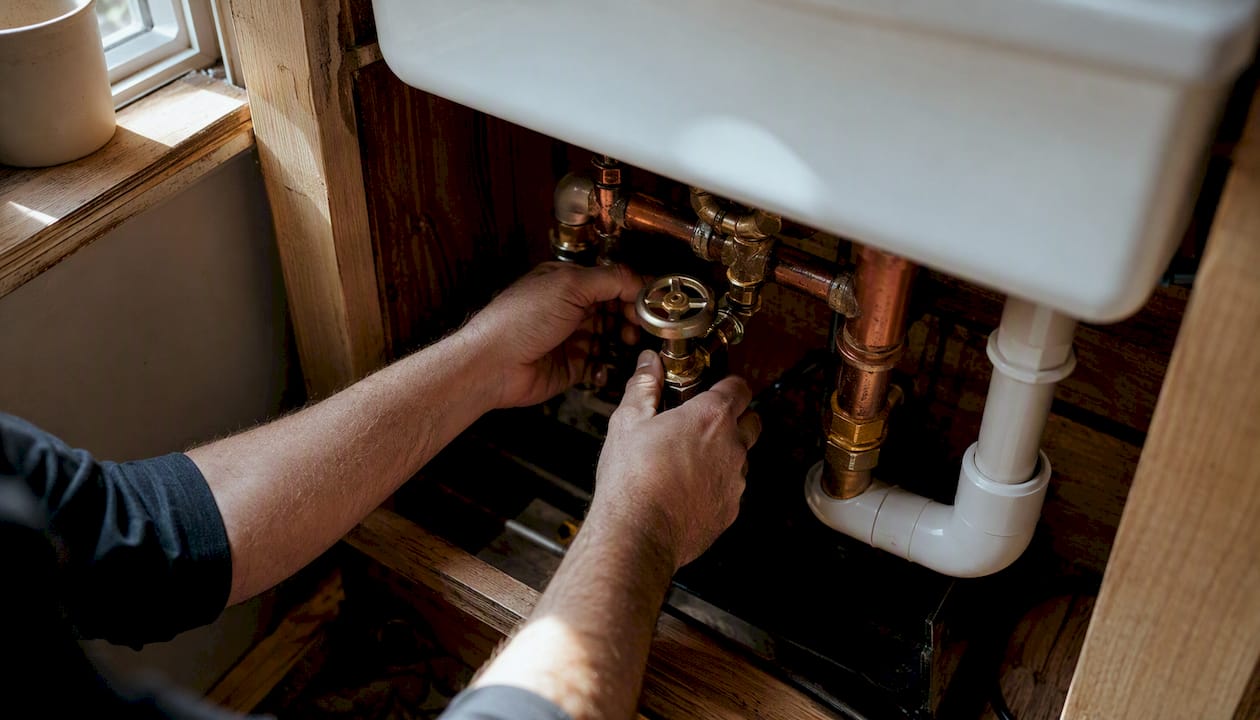
In most of those cases, the aerator and the airlock are symptoms, not the root cause. The real fault is usually a PRV that is drifting out of range, a partially seized isolation valve that nobody has touched in a decade, or a micro-leak on a flexible tail that is too small to notice but large enough to draw air in every time pressure drops. Flushing the system clears the air temporarily, but the entry point remains open.
The diagnostic step most homeowners skip is checking whether the spluttering is tied to a specific event: an appliance cycling, a neighbour's supply being used, or the time of day when mains pressure is lowest. That pattern almost always points to a pressure or valve issue rather than a static airlock, and it changes what the fix needs to be.
The other thing worth saying plainly: a tap that is more than ten years old and has started spluttering is often telling you the cartridge is near the end of its life. Cleaning the aerator will not fix a worn cartridge. If the tap is old enough, replacing the cartridge (or the tap itself) is a more durable solution than repeated flushing.
Not keen on DIY? Book Your-local-plumber today
Tap spluttering that clears with a flush is satisfying to fix yourself. Tap spluttering that keeps coming back, or that comes with pressure drops, leaks, or discoloured water, is a different job entirely.

Your-local-plumber provides fast, transparent-priced tap repairs, PRV and valve replacements, and leak detection for homeowners across the UK. There are no hidden call-out fees, and engineers are available 24 hours a day, seven days a week for urgent faults. For a straightforward tap repair, a same-day or next-day visit is typically available.
Services relevant to tap spluttering include:
- Tap cartridge and valve replacement
- Aerator descale and replacement
- PRV inspection and replacement
- Leak detection and pipe repair
- Full pressure testing and system diagnostics
To book or get a quote, visit the online booking page or call 07760 547 999. For urgent faults, the emergency plumbing service aims for a 60-minute response time.
Useful sources and further reading
External UK sources:
- How to Clear an Airlock | Toolstation
- Low water pressure | Southern Water
- Air lock in pipework | Diy Fix It
- Water or steam spitting from spout - Support Home Page
- Why does my water appear milky or cloudy?
- Cause of spluttering kitchen tap? | UK Plumbers Forums: International Plumbing Advice | Plumbing and Gas Engineer Forums
- Your guide to noise in pipes | Scottish Water
Further reading on the Your-local-plumber blog:
- Pipe maintenance habits homeowners should build now — a practical maintenance schedule to reduce faults and extend tap life.
- Essential plumbing maintenance checklist for UK homeowners — covers aerator care, stopcock checks, and seasonal tasks.
- Common causes of water leaks in your home — helps identify the leaks that draw air into pipework and feed persistent airlocks.